Janmashtami

Utsav · Janmāṣṭamī

Janmashtami

॥ जन्माष्टमी ॥

The midnight birth of Bhagavān Śrī Krishna — a sacred vigil of bhajan, butter and divine love that celebrates the Lord's descent to restore dharma.

॥ ॐ ॥

Bhādrapada Kṛṣṇa 8

Tithi

Aug – Sep

Season

Midnight

Moment

The Birth Day

Meaning

Introduction

The Birth of Divine Love

॥ ॐ ॥

Janmāṣṭamī — also Krishna Janmāṣṭamī or Gokulāṣṭamī — is the joyous festival that celebrates the divine birth of Bhagavān Śrī Krishna, the eighth avatāra of Viṣṇu and one of the most beloved forms of God in Sanātana Dharma.

It falls on the eighth day (Aṣṭamī) of the waning moon (Kṛṣṇa Pakṣa) in the month of Bhādrapada (August–September) — the very tithi on which Devakī gave birth to the Lord in a prison cell of Mathurā at the stroke of midnight.

Unlike most utsavs, Janmāṣṭamī is centred on the moment of midnight. Devotees fast through the day, gather in temples and homes through the evening, and the whole night dissolves into bhajan, butter, lullaby and bliss — until the cradle is rocked and the cry of Bāl Gopāl rises again.
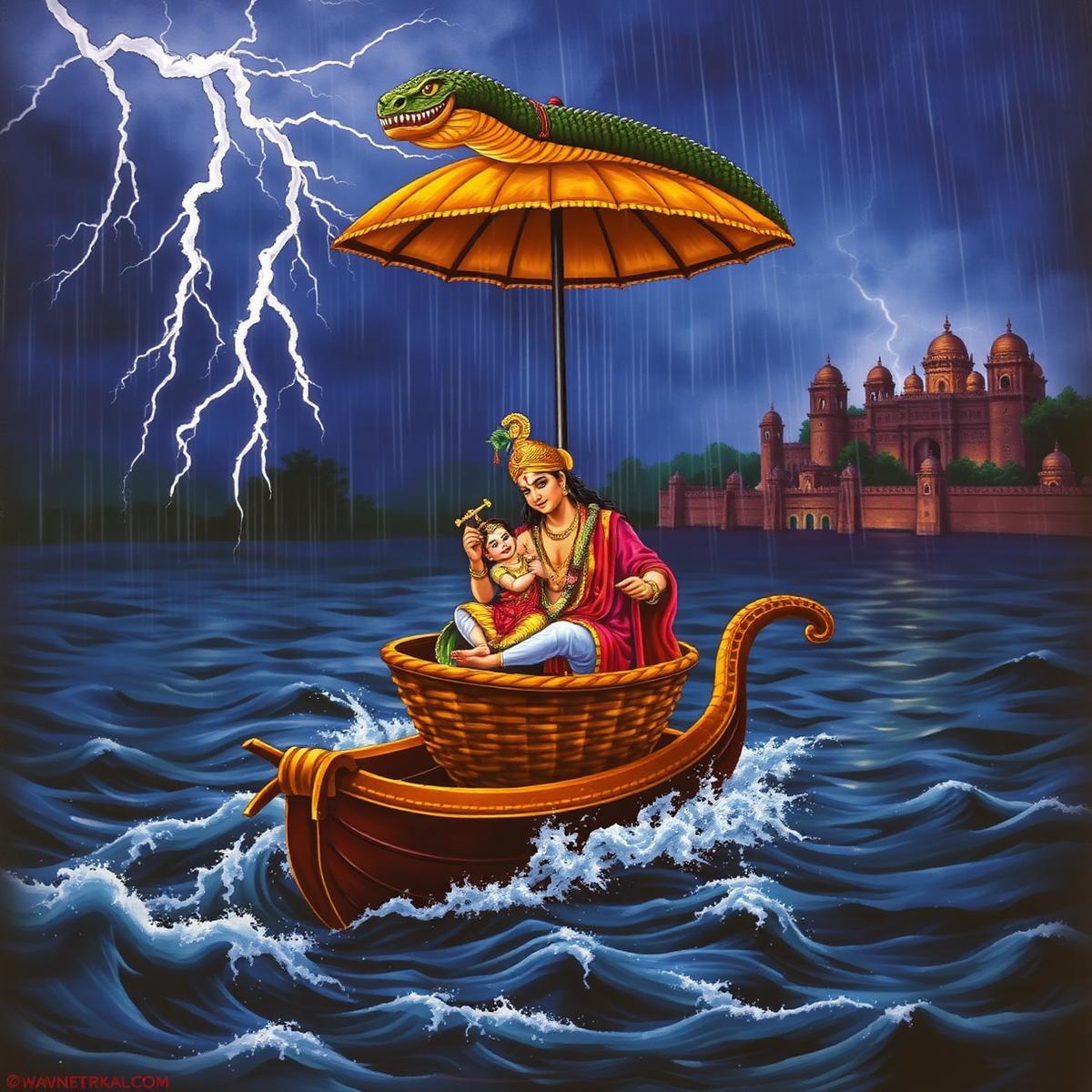
Vasudeva carrying baby Krishna across the stormy Yamuna river, sheltered by Sheshnaga
Vasudeva crossing the Yamunā with Bāl Krishna

Chapter I · The Original Story

A Midnight in Mathurā

The tyrant Kaṃsa imprisoned his own sister Devakī and her husband Vasudeva, slaying their first seven children. On the eighth night, the cell filled with light, and the Lord appeared as a four-armed infant — telling Vasudeva to carry him to Gokul.

The chains fell, the guards sank into sleep, and the prison gates swung open. In a furious monsoon storm Vasudeva carried the child across the rising Yamunā; the great serpent Śeṣa spread his hood as an umbrella, and the river herself parted in reverence. In Gokul, the child was exchanged with the newborn daughter of Yaśodā and Nanda, and the Lord began his earthly līlā.

कृष्णस्तु भगवान् स्वयम्

"Krishna is the Bhagavān Himself." — Śrīmad Bhāgavatam 1.3.28

Chapter II · The Inner Meaning

Three Sacred Themes

Behind the butter, the cradle and the kīrtan — three eternal truths.

हरे कृष्ण

Path of Bhakti

Janmashtami is the festival of loving devotion — the easiest, sweetest path to the Lord, taught by Krishna himself.

धर्मसंस्थापनार्थाय

To Restore Dharma

'Whenever dharma declines, I take birth' — Krishna's descent is the eternal promise of the Bhagavad Gītā.

लीला माधुर्यम्

Sweetness of Leela

From stealing butter to lifting Govardhana — the divine plays show God as playful, loving and close to every heart.

Chapter III · The Sacred Life

From the Prison Cell to Kurukṣetra

Six unforgettable scenes of the Lord's earthly journey.

1

जन्म

Janma in the Prison

At midnight in Kaṃsa's prison cell, Devakī gives birth to her eighth child — a baby with four arms holding conch, disc, mace and lotus.

2

यमुना तरण

Crossing the Yamunā

The chains fall, the doors open, the guards sleep. Vasudeva carries the child through a stormy night; Śeṣanāga shelters them; the river parts.

3

बाल लीला

Bāla-Līlā in Gokul

Yaśodā raises him as her own — butter is stolen, calves are herded, the demoness Pūtanā falls, and every Gokul home is filled with laughter.

4

गोवर्धन धारण

Govardhana Dhāraṇa

The young cowherd lifts Mount Govardhana on a single finger for seven days, sheltering Vraja from Indra's rage.

5

कंस वध

Vadha of Kaṃsa

Returning to Mathurā, Krishna fulfils the prophecy — the tyrant is slain, Devakī and Vasudeva are freed, Ugrasena is restored to the throne.

6

गीतोपदेश

Gītopadeśa

On the field of Kurukṣetra, the playful cowherd reveals himself as the eternal teacher — and the Bhagavad Gītā is given to the world.

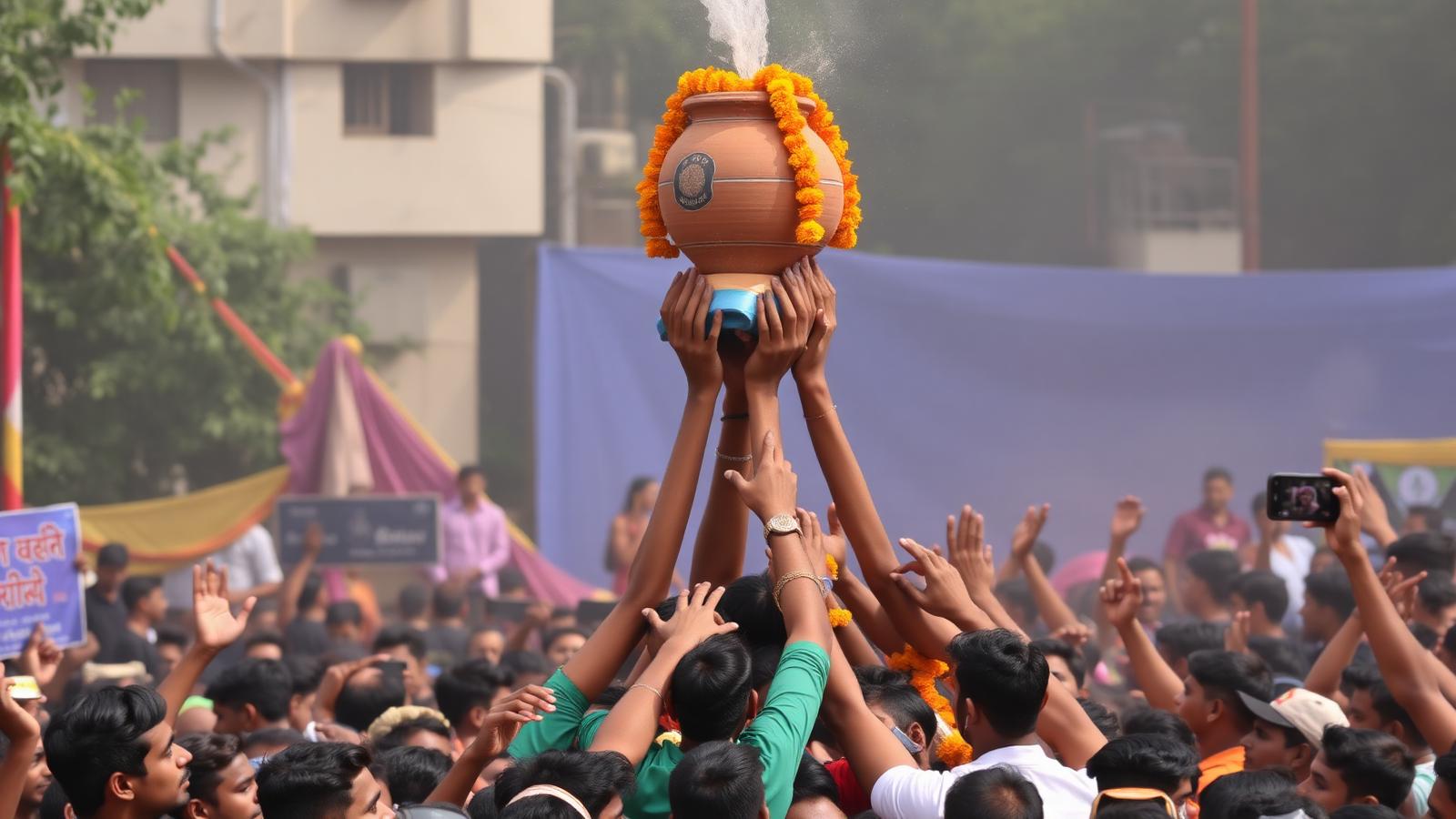
Dahi Handi celebration with a human pyramid breaking a clay pot of curd

Chapter IV · The Day After

Dahi Handi · Gokulāṣṭamī

The morning after the midnight birth, the streets of Maharashtra and beyond fill with cheering crowds. A clay handi of curd, butter and sweets is hung high between buildings — and young Govindas form towering human pyramids to break it open. The whole city becomes Vraja for a day, and every boy a little Mākhan Chor.

॥ गोविंदा आला रे ॥

Chapter V · The Beloved Leelas

Many Plays, One Beloved

Janmāṣṭamī holds many sacred stories — each one binding the heart a little tighter to Krishna.

The Eighth Child

King Kaṃsa, told that Devakī's eighth child would slay him, imprisoned the couple. Seven children were killed in succession — and on the eighth night, the Lord himself appeared.

Pūtanā & the Demons of Gokul

Kaṃsa sent demoness after demon — Pūtanā with poisoned milk, Śakaṭāsura, Tṛṇāvarta, Bakāsura, Aghāsura — and the divine child lifted them all away as if it were play.

Mākhan Chor

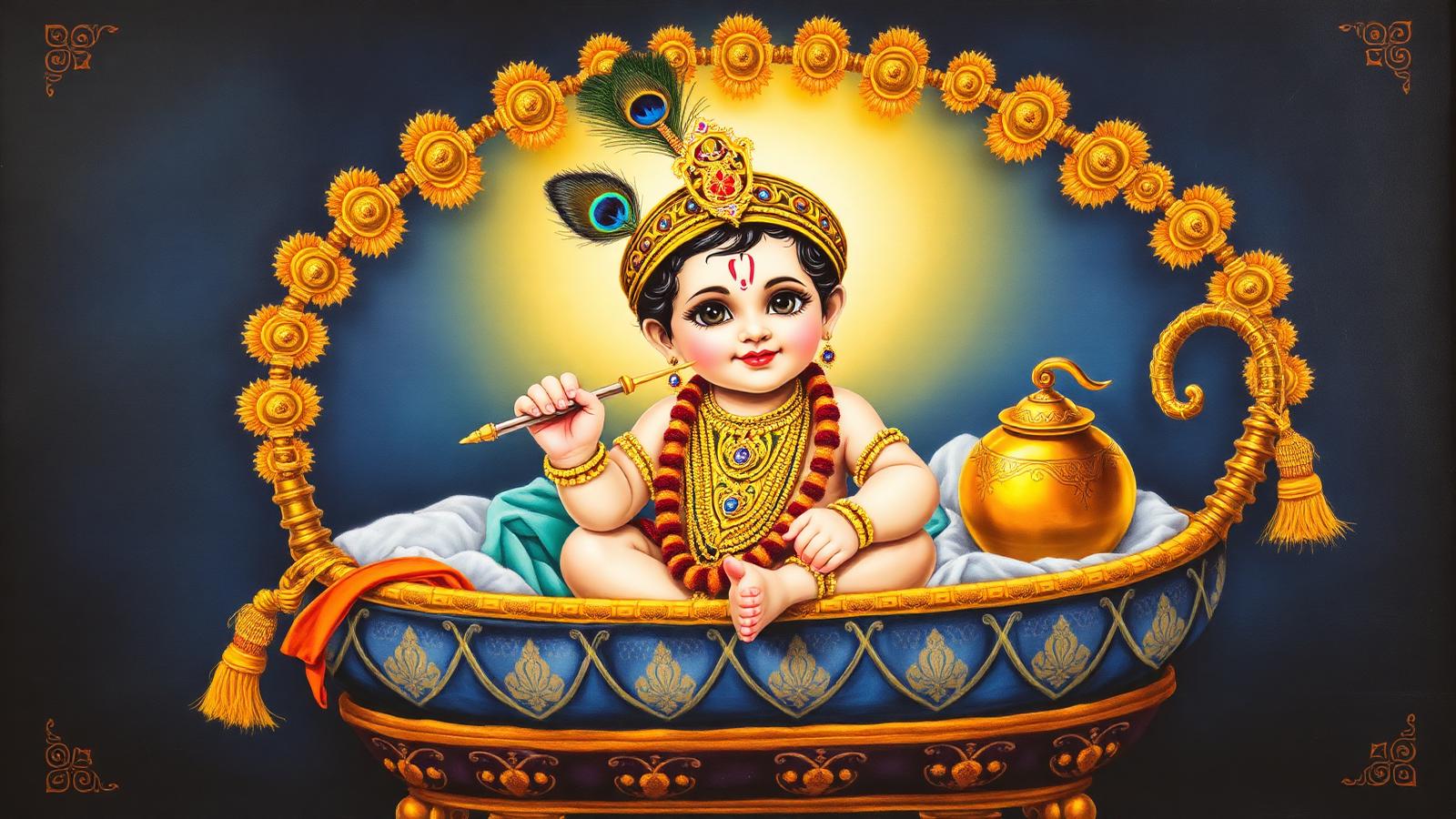
The little one stole butter from every gopī's house — not from hunger, but to bind every Vraja-heart in love. Even today his images are placed beside butter pots and laḍḍū.

Kāliya Daman

When the great serpent Kāliya poisoned the Yamunā, the boy Krishna leapt into the river and danced upon its many hoods until it surrendered — purifying the waters of Vraja.

Rāsa-Līlā with the Gopīs

On a full-moon night in Vrindāvan the flute called, and the gopīs ran to the forest. Each saw a Krishna beside her — the eternal play of the soul and the Beloved.

Sudarśana & Sudāmā

He held the wheel of time as Pārtha-sārathi, and as a king of Dvārakā he washed the feet of his poor childhood friend Sudāmā — the same Lord in every form.

Chapter VI · Sacred Practices

Rituals & Household Traditions

Every gesture of Janmāṣṭamī — the empty stomach, the rocking cradle, the butter on tiny lips, the kīrtan that does not stop — is a small sādhanā. Together they make the home a little Vraja for a single luminous night.

Vrata — The Sacred Fast

Many devotees observe a strict Nirjala fast until midnight; some take only fruits, milk and falāhārī foods until the next morning.

Bhajan & Kīrtan

Temples and homes resound with bhajans, the Hare Krishna mahāmantra, and readings from the Daśama Skandha of Śrīmad Bhāgavatam.

Midnight Abhiṣeka

At the stroke of midnight Bāl Gopāl is bathed with pañcāmṛta — milk, curd, ghee, honey and sugar — dressed in fresh silks and offered ārati.

Jhulan Sevā

The infant Krishna is placed in a beautifully decorated cradle (jhūlā) and gently swung while lullabies and lori bhajans are sung through the night.

Chappan Bhog

Fifty-six varieties of foods — butter, mākhan-miśrī, peḍā, panjīrī, fruits and sweets — are arranged before the Lord and shared as prasāda.

Dahi Handi

The next day, in Maharashtra and beyond, young men form towering human pyramids to break a hanging pot of curd — reliving Krishna's mākhan-chorī.

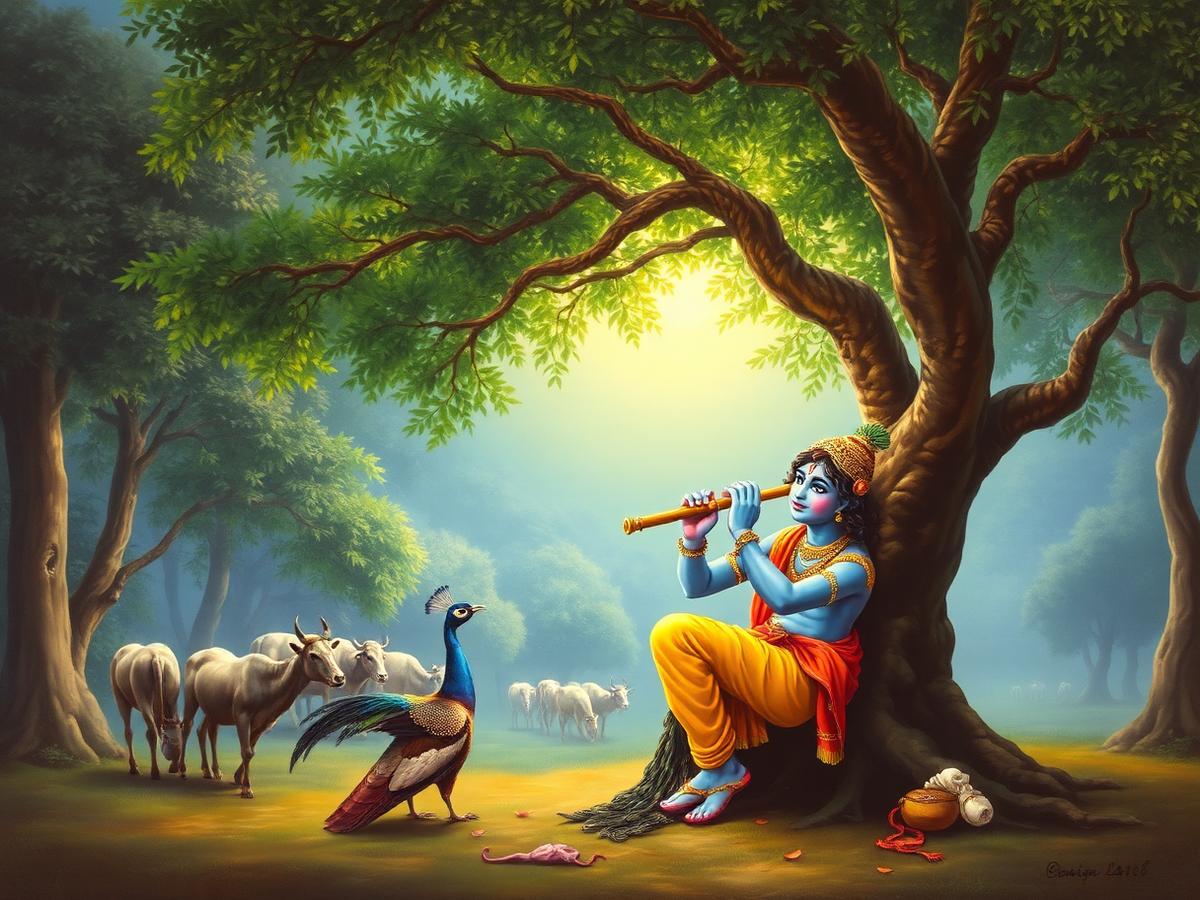
Young Krishna playing the bansuri flute under a tree in Vrindavan
The flute of Vrindāvan — calling every heart home

Chapter VII · Across Bhārata

Regional Celebrations

One midnight — countless living traditions of the same Lord.

Mathurā & Vrindāvan

The very birthplace and playground of Krishna — Janmasthān, Banke Bihari, Dwārkādhīsh and ISKCON temples overflow with lakhs of devotees through the night.

Maharashtra

The next day's Gokulāṣṭamī is famous for Dahi Handi — towering human pyramids called Govindas competing to break the curd-pot, cheered by the whole street.

Gujarat (Dwārakā)

Lord Krishna's own kingdom — special abhiṣeka at Dwārkādhīsh and a great Bhāgavata-pārāyaṇa in every household and haveli.

South India

Tamil Nadu, Karnataka and Andhra observe Gokulāṣṭamī with rangolī of tiny baby feet leading from the door to the puja room — Krishna walking into the home.

Manipur & North-East

In Manipur, the Gauḍīya tradition celebrates with elaborate Rās-līlā performances — devotees in classical Manipuri attire dancing the Mother of all rāsas.

Global Diaspora

From ISKCON temples in London, New York and Moscow to Bali and Trinidad — Hare Krishna kīrtans roll through the midnight in every continent.

Mantras of the Night

Prayers for the Midnight Vigil

॥ ॐ ॥

Bhagavad Gītā 4.7–8

यदा यदा हि धर्मस्य ग्लानिर्भवति भारत । अभ्युत्थानमधर्मस्य तदात्मानं सृजाम्यहम् ॥ परित्राणाय साधूनां विनाशाय च दुष्कृताम् । धर्मसंस्थापनार्थाय सम्भवामि युगे युगे ॥

"Whenever there is a decline in dharma, O Bhārata, and adharma rises — at that time I manifest Myself. To protect the righteous, to destroy the wicked, and to firmly re-establish dharma — I am born age after age."

Hare Krishna Mahāmantra

हरे कृष्ण हरे कृष्ण कृष्ण कृष्ण हरे हरे । हरे राम हरे राम राम राम हरे हरे ॥

"Hare Krishna, Hare Krishna, Krishna Krishna, Hare Hare — Hare Rāma, Hare Rāma, Rāma Rāma, Hare Hare. The great mantra of deliverance for the Kali age."

Celebrate with Meaning

A few mindful gestures turn the night into a true offering of love.

Safe Govindas

If you host or join a Dahi Handi, insist on helmets, harnesses, and age limits — Krishna's joy must never come at the cost of another mother's son.

Annadāna & Seva

Distribute mākhan, panjīrī and meals to cowherds, children and the poor — feeding others on this night is feeding Krishna himself.

The Inner Cradle

After the midnight ārati, sit silently before Bāl Gopāl and let the Krishna in your own heart awaken — the real Janmāṣṭamī.

॥ ॐ ॥

Awaken the Krishna Within

The birth of Krishna is not merely a historical event — it is the eternal birth of divine consciousness in every sincere heart. As we rock the little cradle on Janmāṣṭamī night, we are really rocking the cradle of our own awakening.

॥ हरे कृष्ण हरे कृष्ण कृष्ण कृष्ण हरे हरे ॥

"Hare Krishna — may Lord Krishna bless you with love, joy and spiritual awakening."

॥ जय श्री कृष्ण ॥