Kumbh Mela

Utsav · Kumbha Melā

Kumbh Mela

॥ कुम्भ मेला ॥

The largest spiritual gathering on earth — every twelve years, the drops of amṛta return to the rivers, and humanity walks to the water.

॥ ॐ ॥

Every 12 Years

Cycle

Four Sacred Tīrthas

Sites

Tens of Millions

Pilgrims

Samudra Manthan

Origin

Introduction

The Mela of the Pot of Nectar

॥ ॐ ॥

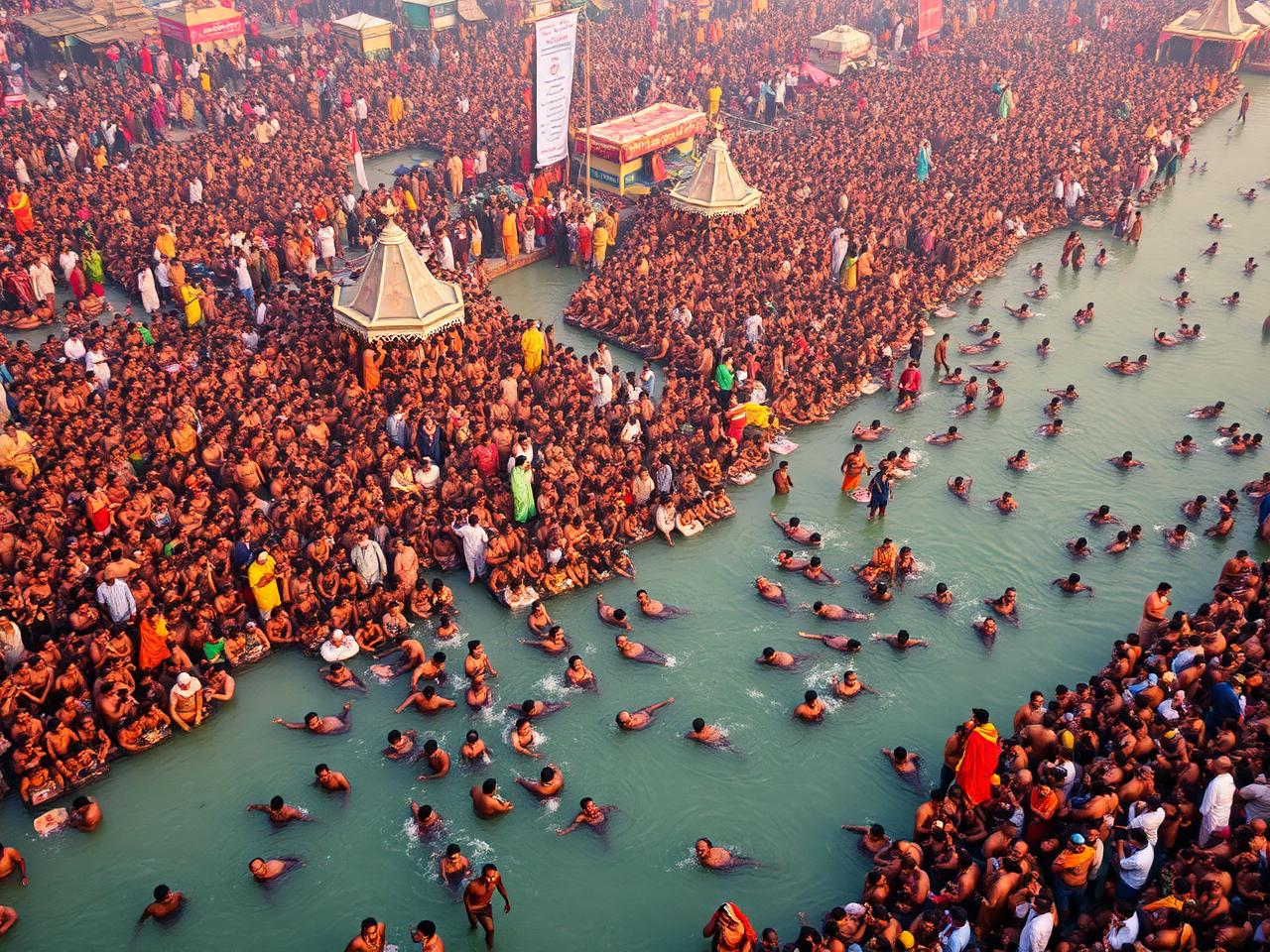
The Kumbha Melā is the largest peaceful gathering of human beings on earth — a sacred pilgrimage held every twelve years at four holy river sites in Bhārata: Prayāgrāj, Haridwar, Nāsik and Ujjain.

Recognized by UNESCO as Intangible Cultural Heritage of Humanity, the Mahā Kumbh of 2025 at Prayāgrāj welcomed more than 650 million pilgrims over its weeks — sādhus, sannyāsīs, yogīs, families and seekers from every corner of the world, all walking to one river.
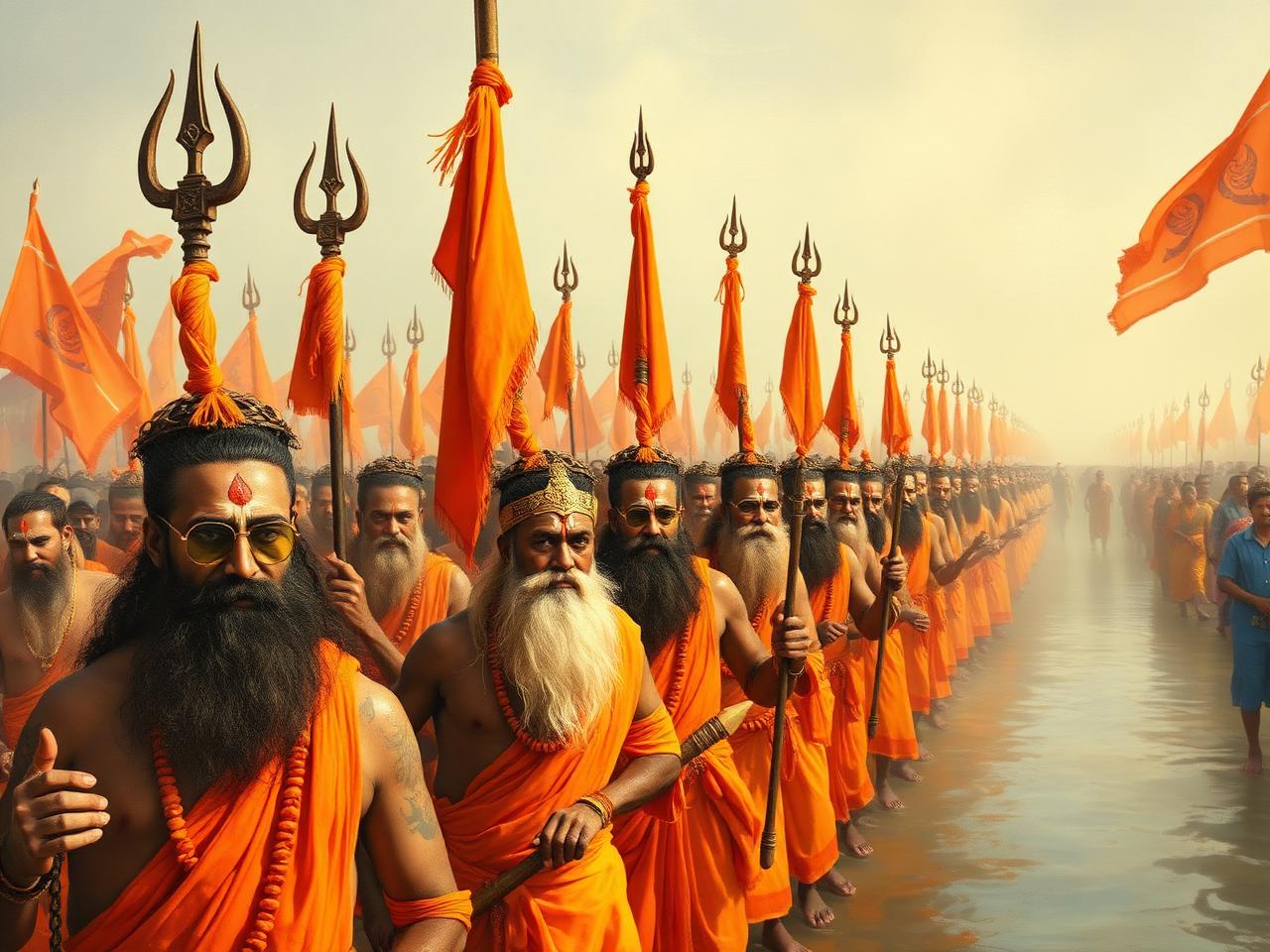
Naga sadhus procession at the Kumbh Mela
The Śāhī Snāna — akhāḍās walking to the river

Chapter I · The Origin

Drops of Amṛta

When the devas and asuras churned the cosmic ocean using Mount Mandara as the churning rod and Vāsuki the serpent as the rope, the divine physician Dhanvantari rose with a kumbha — a pot — of amṛta, the nectar of immortality.

A great struggle followed. Indra's son Jayanta seized the pot and fled across the heavens. As he flew, four drops fell to the earth — at Prayāgrāj, Haridwar, Nāsik and Ujjain. The very rivers of those places became sanctified forever, and the festival returns to each in turn, every twelve years.

गङ्गा गङ्गेति यो ब्रूयात् योजनानां शतैरपि ।

"Even one who utters 'Gaṅgā, Gaṅgā' from a hundred yojanas away is freed from sin — what then of the one who bathes at the Kumbh?"

Chapter II · Inner Meaning

Three Sacred Themes

अमृत स्नान

The Bath of Nectar

On select tithis the river itself becomes amṛta — a single dip is said to wash karma of countless lifetimes.

संगम

The Cosmic Confluence

Where two or three sacred rivers meet, all dimensions converge — the visible Gaṅgā, the Yamunā, and the unseen Sarasvatī.

साधु संगम

Meeting of Saints

Every akhāḍā, every sampradāya, every yogi and renunciate gathers in one place — the rarest of dharma-darśanas.

Chapter III · The Four Sacred Sites

Where the Drops Fell

Prayāgrāj (Triveṇī Sangam)

Confluence of Gaṅgā, Yamunā and the invisible Sarasvatī. The grandest Kumbh — Mahā Kumbh every 12 years, Ardh-Kumbh every 6, Māgh Melā every year.

Haridwar (Gaṅgā)

Where the Gaṅgā enters the plains; Kumbh Melā every 12 years, with Hara-kī-Paurī as the principal ghāṭ for the snāna.

Nāsik (Godāvarī)

Held at Trimbakeśvara and Rām-kuṇḍa on the Godāvarī — known as Siṃhastha Kumbh, every 12 years.

Ujjain (Kṣiprā)

On the banks of Kṣiprā at the Mahākāleśvara Jyotirliṅga — Siṃhastha Kumbh every 12 years.

Chapter IV · The Sacred Stories

Legends & Origins

Samudra Manthan

When the devas and asuras churned the cosmic ocean, the pot (kumbha) of amṛta arose. Drops fell at four places on earth — Prayāgrāj, Haridwar, Nāsik and Ujjain — sanctifying their rivers forever.

Jayanta's Twelve-Day Flight

Indra's son Jayanta carried the kumbha for twelve celestial days (twelve earthly years) before reaching home. That is why the great Kumbh returns to each tīrtha every twelve years.

Ādi Śaṅkara's Sannyāsī Akhāḍās

Ādi Śaṅkarācārya organized the wandering sannyāsīs into akhāḍās partly so they could meet, debate and protect dharma at the Kumbh — a tradition unbroken for over a thousand years.

Chapter V · Sacred Practices

Rituals of the Mela

Śāhī Snāna

The 'royal bath' — the various akhāḍās process in order to the river before dawn on the most auspicious tithis. The first dip is theirs.

Saṅkalpa & Snāna

Pilgrims take a sankalpa — name, gotra, tithi — and bathe with mantras to Gaṅgā, Sūrya and Viṣṇu, often three times facing the rising sun.

Dīpa-dāna at Dusk

Tiny dīyās on leaf-boats are released into the river at evening ārati — the river becomes a moving sky of light.

Pravacana & Satsang

Discourses by mahāmaṇḍaleśvaras, kīrtans, Yajñas and parvacanas run day and night across the entire Kumbh-nagar.

Daan & Sevā

Anna-dāna, vastra-dāna, vidya-dāna — giving food, clothes and books at the Kumbh is considered especially meritorious.

Akhāḍā Darśana

Visiting the camps of the thirteen recognized akhāḍās — Nāga, Vairāgī, Udāsīna and others — is a rare blessing of the festival.

Mantras

Prayers at the Sangam

॥ ॐ ॥

Gaṅgā Stotra

गङ्गे च यमुने चैव गोदावरि सरस्वति । नर्मदे सिन्धु कावेरि जलेऽस्मिन् सन्निधिं कुरु ॥

"O Gaṅgā, Yamunā, Godāvarī, Sarasvatī, Narmadā, Sindhu and Kāverī — may all of you be present in this water of my bath."

Prayāga Mahātmya

तीर्थानां परमं तीर्थं प्रयागम् ।

"Among all the tīrthas, Prayāga is the supreme tīrtha — and at Kumbh, its glory multiplies a thousand-fold."

॥ ॐ ॥

The Inner Sangam

The outer Kumbh is a great pilgrimage. The inner Kumbh is the meeting of breath, mind and awareness in the heart — the true Triveṇī, accessible to every sincere seeker, in every age.

॥ हर हर गङ्गे ॥

"Har Har Gaṅge — may the river of grace flow into every heart."