Navratri

Utsav · Navarātri

Navratri

॥ नवरात्रि ॥

Nine sacred nights of the Divine Mother — Durgā, Lakṣmī and Saraswatī — culminating in Vijayadaśamī, the eternal victory of light over darkness.

॥ ॐ ॥

9 Nights · 10 Days

Duration

Āśvina Śukla 1–9

Sharad Tithi

Chaitra Śukla 1–9

Chaitra Tithi

Nine Nights

Meaning

Introduction

Nine Nights of the Divine Mother

॥ ॐ ॥

Navratri — Sanskrit Nava-rātri, "nine nights" — is among the most important and widely loved festivals of Sanātana Dharma. For nine nights and ten days devotees worship the Divine Mother in her many forms, awaken Śakti within, and re-live the cosmic victory of light over darkness.

It is celebrated twice each year — Sharad Navratri in Āśvina (Sept–Oct), the most popular, and Chaitra Navratri in Chaitra (Mar–Apr) which ends on Rāma Navamī. Both periods are considered the most auspicious of the year to seek the Mother's grace.

Where Diwali blazes with lamps and Shivratri rests in stillness, Navratri dances — circles of devotees around a lit garbo, the dhāk drums of Bengal, the Rāmlīlā of the north and the silent vigil of the south — nine nights, one Mother.
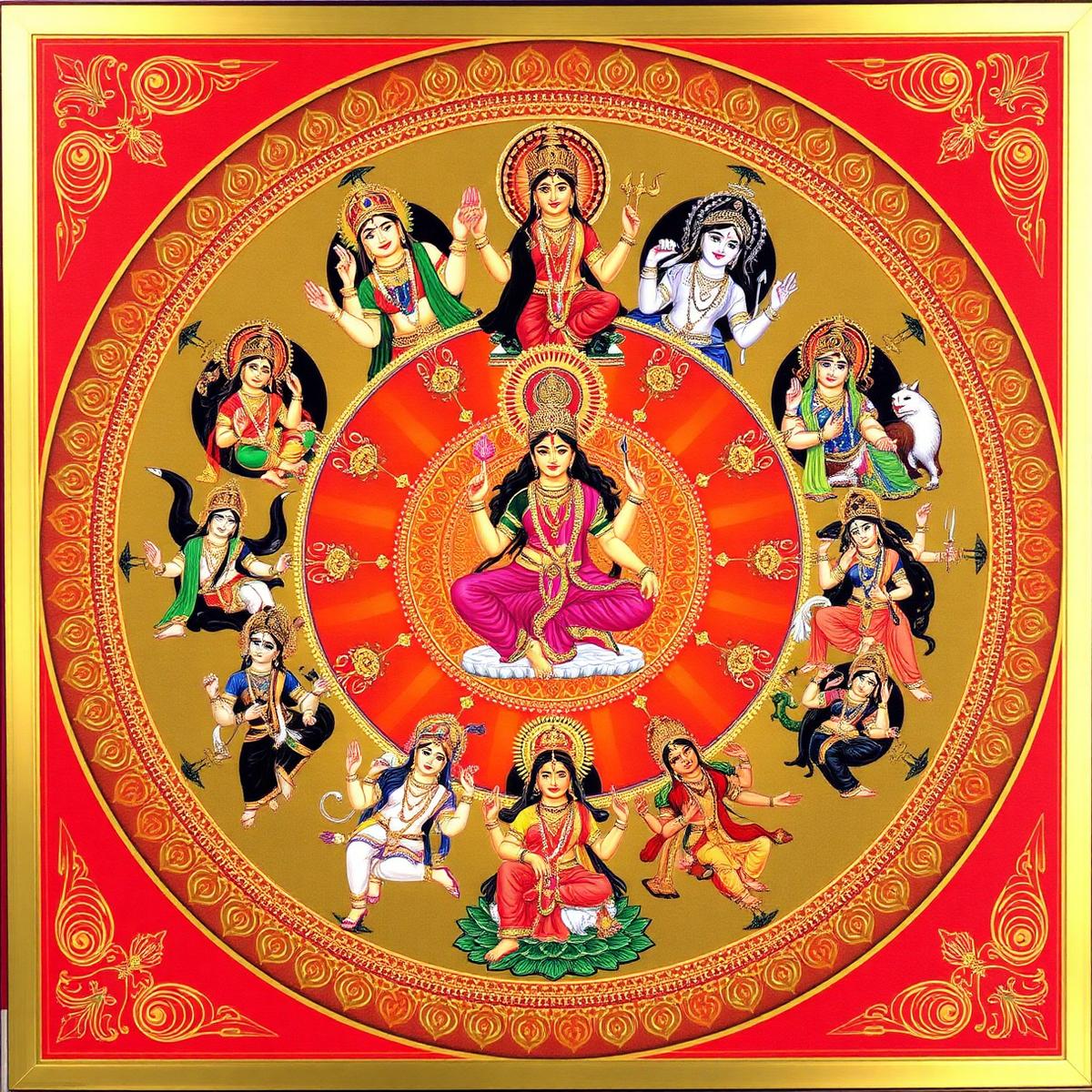
Mandala of the Nine Forms of Goddess Durga — Navadurga
Navadurgā — the nine forms of the Mother

Chapter I · The Original Story

Durgā Slays Mahiṣāsura

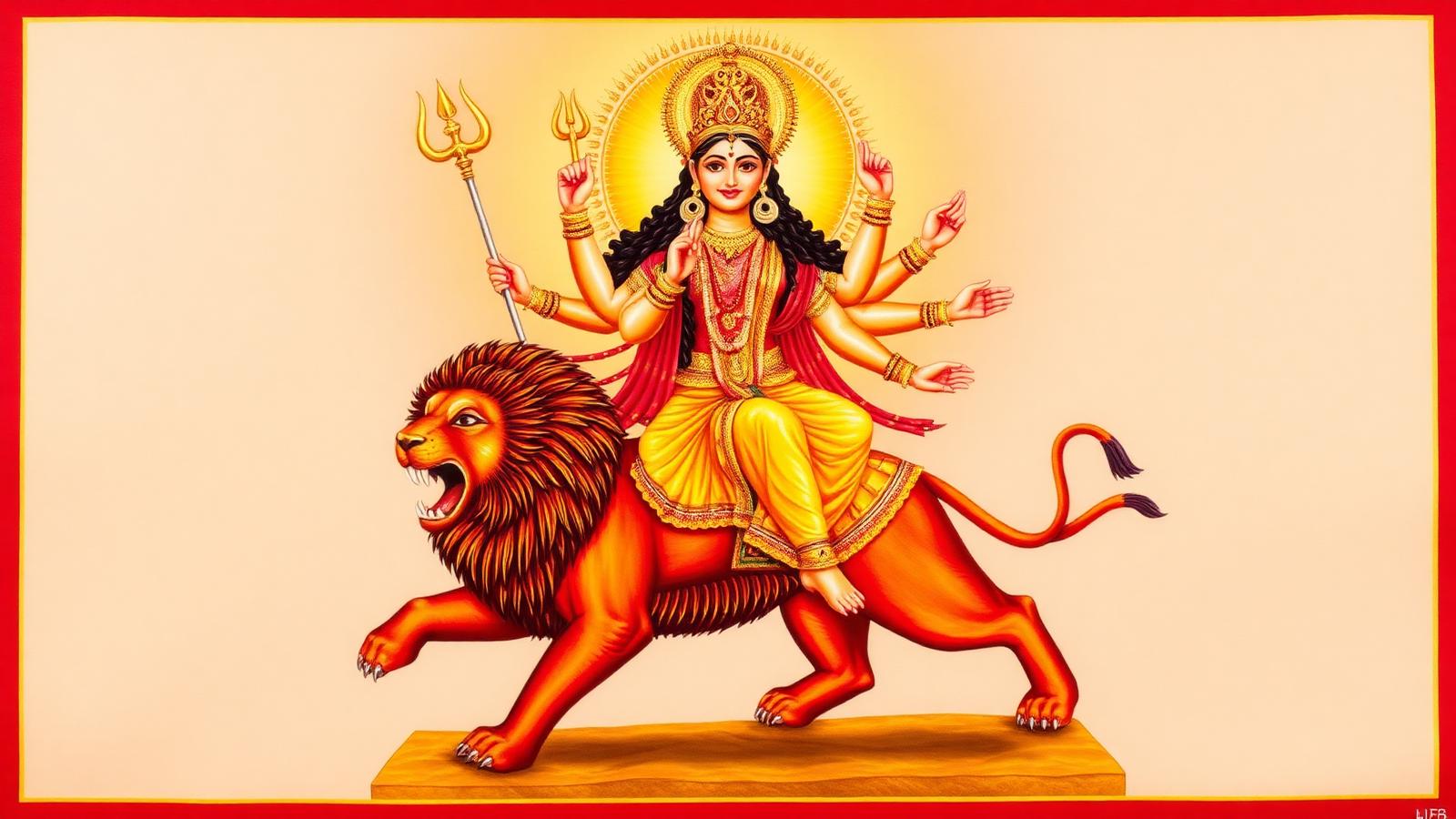
When the buffalo-demon Mahiṣāsura defeated the gods and seized the throne of heaven, the devas combined their tejas into one blazing form — and the great Goddess Durgā arose, ten-armed, lion-borne, weapons in every hand.

For nine nights she battled the shape-shifting demon, and on the tenth dawn she pierced him with her triśūla. The worlds were freed; the Mother was crowned Mahiṣāsura-mardinī — the Slayer of Mahiṣa. That tenth day is Vijayadaśamī — the dawn of every Navratri's promise.

जय जय हे महिषासुरमर्दिनि

"Victory, victory to thee, O Slayer of Mahiṣāsura!"

Chapter II · The Inner Meaning

Three Sacred Themes

Behind the dance, the dhāk and the bilva — three eternal truths.

या देवी सर्वभूतेषु

She Who is in All Beings

The great refrain of the Devī Māhātmya — the Mother who dwells as Śakti in every form, every breath, every act.

शक्तिजागरणम्

Awakening of Shakti

Nine nights to awaken the dormant divine energy within — the Mother sleeping at the base of the spine, rising as awareness.

धर्मविजयः

Victory of Dharma

Durgā slays Mahiṣāsura, Rāma worships her before Laṅkā — adharma falls and the Mother seats Dharma on the throne.

Chapter III · The Nine Forms

Navadurgā — Nine Mothers, Nine Nights

Each night the Mother takes a new form — a new lesson, a new offering.

1

शैलपुत्री

Śailaputrī

Daughter of the Mountain

Pārvatī as the daughter of Himavān — rooted, pure, the first step of the journey upward.

2

ब्रह्मचारिणी

Brahmacāriṇī

The Great Ascetic

The Goddess of austerity and unbroken vow — she who performed tapas to win Shiva.

3

चन्द्रघण्टा

Candraghaṇṭā

Bearer of the Moon-bell

Crowned with a half-moon shaped like a bell — bestower of courage and serenity together.

4

कूष्माण्डा

Kūṣmāṇḍā

Creator of the Cosmic Egg

She who, with a single smile, brought the universe into being from the void.

5

स्कन्दमाता

Skandamātā

Mother of Skanda

The Mother of Kārtikeya — the gentle holder of the warrior-child of the gods.

6

कात्यायनी

Kātyāyanī

Daughter of Sage Kātyāyana

The warrior Goddess born from the combined fire of the devas to vanquish Mahiṣāsura.

7

कालरात्रि

Kālarātri

Dark Night of Dissolution

The fierce, formidable form — destroyer of ego, ignorance and every shadow of fear.

8

महागौरी

Mahāgaurī

The Radiantly Pure

After tapas the Mother shines white as the conch — purity restored, grace flowing.

9

सिद्धिदात्री

Siddhidātrī

Bestower of Siddhis

She who grants all attainments — worldly, yogic and the supreme siddhi of liberation.

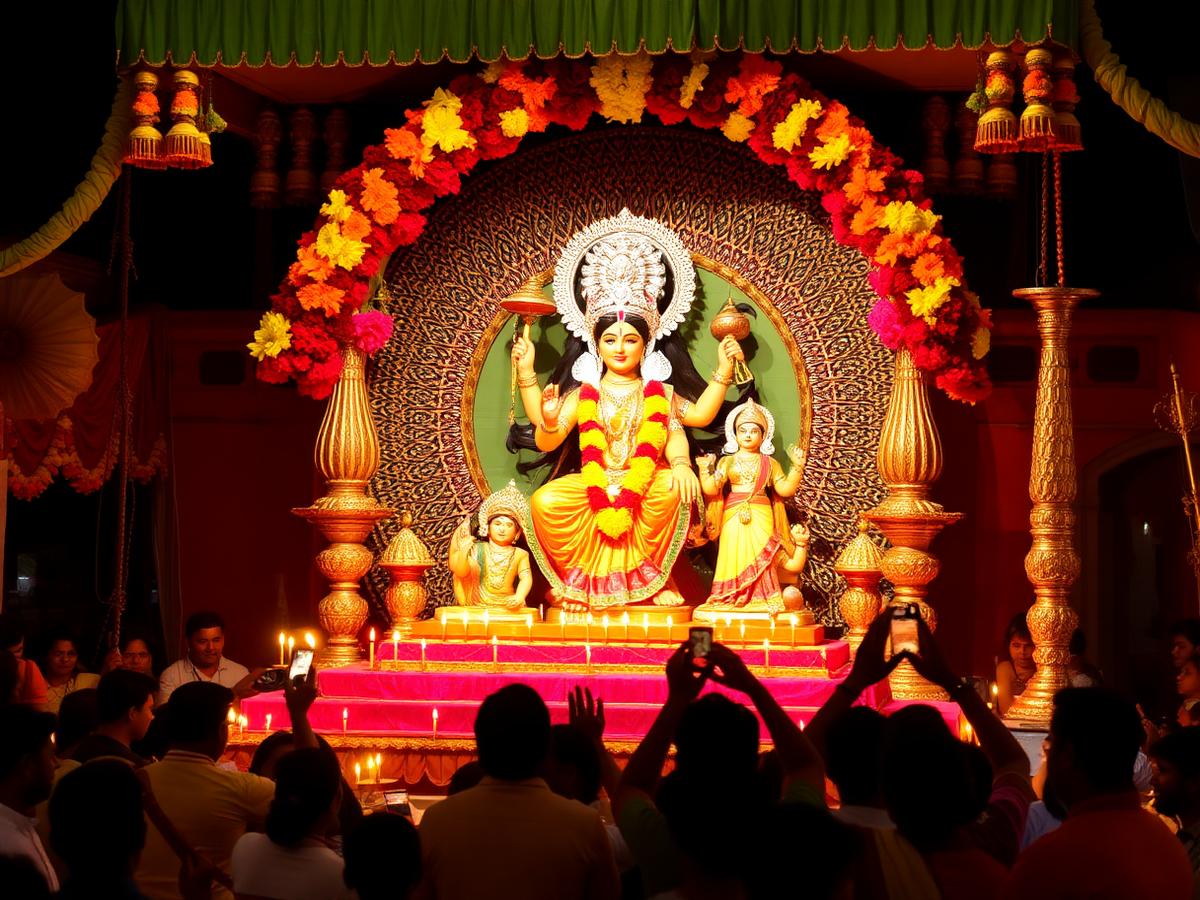
Grand Durga Puja pandal with idol of Maa Durga in Bengal

Chapter IV · The Heart of the Festival

Durgā Pūjā · Mā Āsche

In Bengal the Mother is said to come home to her parents for five sacred days — from Ṣaṣṭhī to Daśamī — bringing with her Lakṣmī, Saraswatī, Gaṇeśa and Kārtikeya. Pandals rise like temples, the dhāk drum thunders, dhunuchi nāch swirls in incense smoke, and on the tenth day she is sent back to Kailāsa with red sindoor and the tearful bidāi.

॥ जय माँ दुर्गा ॥

Chapter V · Stories of the Nine Nights

Many Legends, One Mother

Navratri holds many sacred stories — and every one of them ends in the Mother's victory.

Durgā Slays Mahiṣāsura

When the buffalo-demon Mahiṣāsura conquered the heavens, the devas combined their tejas into a single blazing Goddess. After nine nights of furious battle, Durgā slew him on the tenth dawn — Vijayadaśamī.

Rāma's Akāla-Bodhana

Before the war against Rāvaṇa, Lord Rāma invoked Durgā out of season (akāla-bodhana) and worshipped her for nine nights. With her grace he triumphed — and Sharad Navratri took the form we now keep.

The Devī Māhātmya

The Saptaśatī of seven hundred verses tells of the Mother's three great victories — over Madhu-Kaiṭabha, Mahiṣa, and Śumbha-Niśumbha — recited through every night of Navratri.

Three Goddesses, Three Triads

First three days are offered to Durgā (destruction of evil), the next three to Lakṣmī (abundance), and the last three to Saraswatī (wisdom) — the threefold journey of the seeker.

Chaitra Navratri & Rāma Navamī

The Spring Navratri culminates on the ninth day with the birth of Lord Rāma — Śakti and Avatāra meeting in a single sacred week.

Kumārī Pūjā

On Aṣṭamī or Navamī, nine young girls are bathed, dressed and worshipped as the living Goddess — the Mother received not as image, but as breath and laughter.

Chapter VI · Sacred Practices

Rituals & Household Traditions

Every act of Navratri — installing the ghaṭa, sowing the barley, lighting the akhanḍ jyoti, dancing the garbā — is a small sādhanā. Together they prepare the home and the heart to receive the living Mother.

Ghaṭa Sthāpana

On Pratipadā a sacred pot is installed with barley seeds, water and a coconut — the seat of the Mother for nine nights.

Daily Pūjā

Each day a different form of Navadurgā is invoked with specific flowers, naivedya and colour of the day.

Pāṭha of Devī Māhātmya

The Saptaśatī — seven hundred verses of the Mother — is recited; one chapter a day, or the whole at midnight.

Vrata & Fasting

Many observe nine days of fasting on fruit, milk and falāhārī foods; some keep a strict Nirjala fast on the eighth night.

Garbā & Dāṇḍiyā

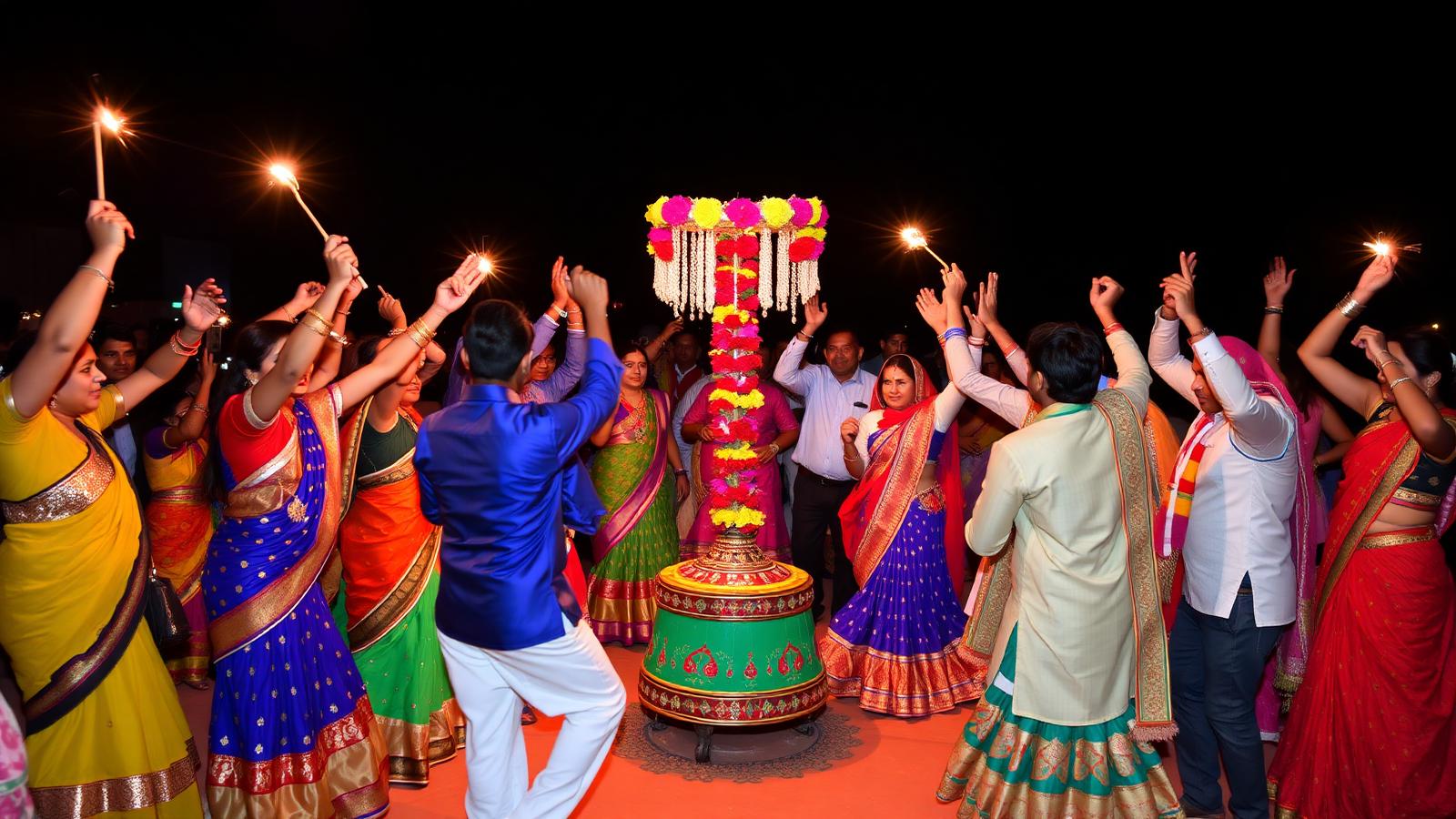
Around a lit garbo (lamp-pot symbolising the womb of the Goddess) devotees dance through the night — circles within circles, like the cosmos itself.

Kanyā Pūjā & Daana

On Aṣṭamī or Navamī, young girls are fed pūrī, halwā and chana, then their feet washed and tilak applied — the Mother served with one's own hands.

Devotees performing Garba and Dandiya dance around a decorated lamp
Garbā around the Mother's lamp

Chapter VII · Across Bhārata

Regional Celebrations

Nine nights — countless living traditions of the one Mother.

Gujarat

The home of Garbā and Dāṇḍiyā Rās — nine nights of dance around the decorated garbo, every village and city alive till dawn.

West Bengal & Odisha

Durgā Pūjā — magnificent pandals, the Mother arriving with her four children, dhāk drums, dhunuchi nāch and the bidāi of Vijayā Daśamī.

North India

Nine days of fasting, Rāmlīlā in every mohallā, and the burning of Rāvaṇa's effigy on Daśaharā — Rāma's victory enacted in flame.

Tamil Nadu & Karnataka

Golu / Bombe Habba — tiered displays of dolls and deities; women visit one another with kumkum, tāmbūla and stories of the Goddess.

Mysore

The royal Mysore Daśarā — a 400-year tradition of caparisoned elephants, the Chāmuṇḍī procession and the great Jambū Sāvārī.

Maharashtra

Bhondlā evenings, the daily worship of the Mother, and Vijayā Daśamī with new beginnings of work, learning and weapons (āyudha pūjā).

Mantras of the Mother

Prayers of the Nine Nights

॥ ॐ ॥

Devī Māhātmya 5.7

या देवी सर्वभूतेषु शक्तिरूपेण संस्थिता । नमस्तस्यै नमस्तस्यै नमस्तस्यै नमो नमः ॥

"To that Goddess who abides in all beings as Power — salutations to her, salutations to her, salutations to her again and again."

Mahiṣāsura Mardinī Stotra

अयि गिरिनन्दिनि नन्दितमेदिनि विश्वविनोदिनि नन्दिनुते । गिरिवरविन्ध्यशिरोऽधिनिवासिनि विष्णुविलासिनि जिष्णुनुते ॥

"Hail, Daughter of the Mountain, joy of the earth, delight of the universe — adored by all, dwelling on Vindhya's crown, beloved of Viṣṇu, praised by Indra."

Celebrate with Meaning

A few mindful gestures turn the nine nights into a true inner offering.

Eco-Friendly Idols

Choose clay idols that return to the river, natural flowers and biodegradable decorations — honour the Mother by honouring her earth.

Kanyā Sevā & Daana

Feed and clothe young girls, serve those in need — every act of seva on these nights is offered straight at the Mother's feet.

Inner Vijaya

Use the nine nights to slay one inner asura — anger, fear, addiction, pride. The real Vijayadaśamī is the morning that inner battle ends.

॥ ॐ ॥

Awaken the Mother Within

Whether danced in Gujarat, drummed in Bengal, enacted in Ayodhyā or whispered in silence on the southern coast — the message of Navratri is one and eternal: the Divine Mother lives in you, and her victory is your victory.

॥ या देवी सर्वभूतेषु शक्तिरूपेण संस्थिता ॥

"To the Goddess who abides in all beings as Power — salutations again and again."

॥ जय माता दी ॥ ॥ जय दुर्गे ॥