Maha Shivratri

Utsav · Mahāśivarātri

Maha Shivratri

॥ महाशिवरात्रि ॥

The Great Night of Shiva — a sacred vigil of fasting, abhisheka and meditation when the grace of the Lord is most accessible to seekers.

॥ ॐ ॥

Phālguna Kṛṣṇa 14

Tithi

Feb – Mar

Season

Four Praharas

Vigil

Great Night

Meaning

Introduction

The Great Night of Shiva

॥ ॐ ॥

Maha Shivratri — "the Great Night of Shiva" — is the most sacred night of the year for devotees of Lord Mahādeva. Observed on the fourteenth night (Caturdaśī) of the waning moon (Kṛṣṇa Pakṣa) in the month of Phālguna (February–March), it is unlike any other Hindu utsav.

Where most festivals are filled with light, music and feasting — Shivratri is a night of austerity made luminous. Fasting, silence, vigil, and the long Rudra Abhiṣeka are its language. The energy of Shiva, the yogis say, becomes most accessible on this Amāvasyā-eve, and even a small effort offered tonight bears great fruit.

It is the night when Shiva married Pārvatī, when he appeared as the infinite Jyotirlinga, when he drank the cosmic poison — and above all, the night when the seeker can taste a drop of his own meditation.
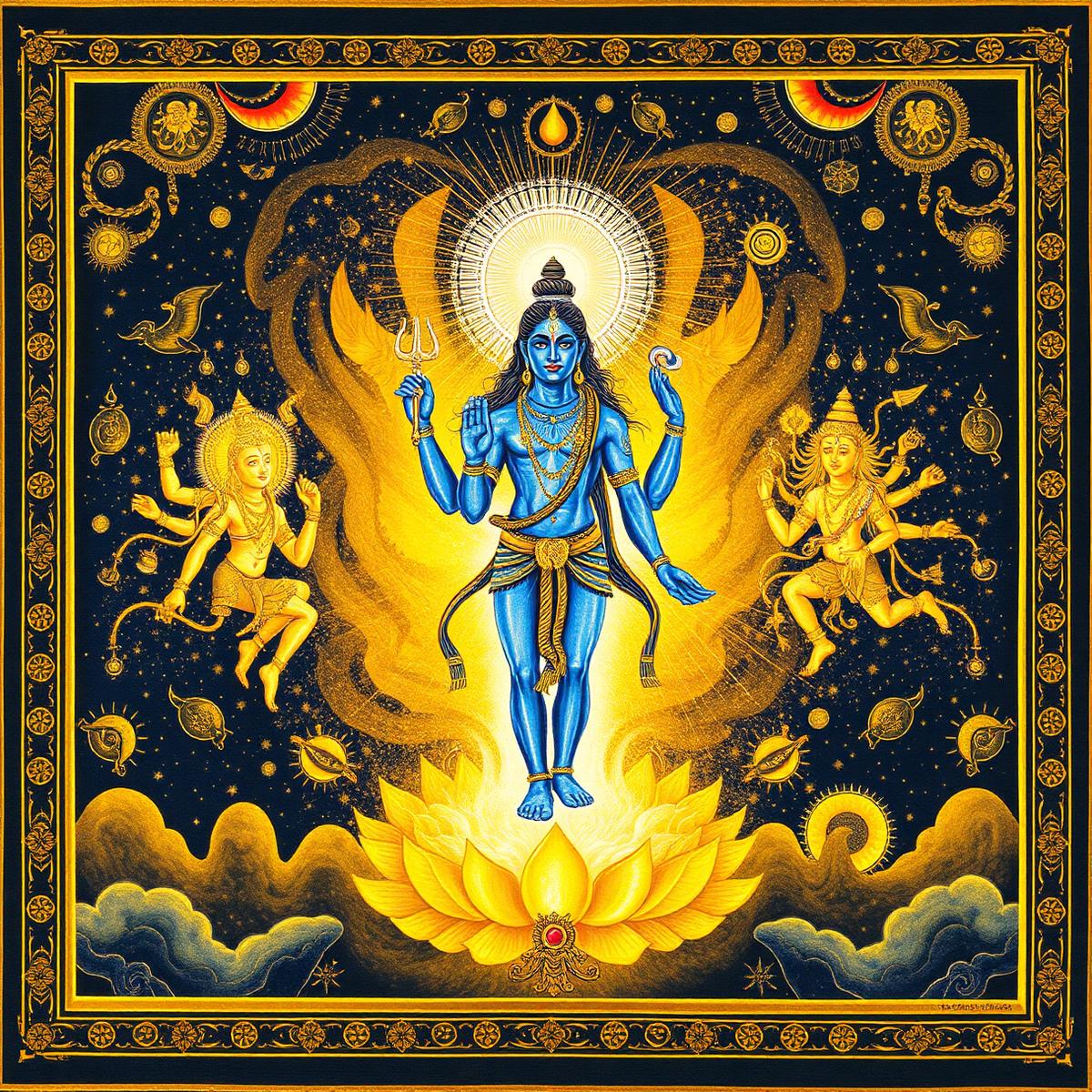
Lingodbhava — Shiva appears as an infinite pillar of light between Brahma and Vishnu
Lingodbhava — the Infinite Jyotirlinga

Chapter I · The Original Mystery

A Pillar of Light Without End

When Brahmā and Viṣṇu argued over who was greater, Shiva appeared between them as a blazing column of light stretching beyond the netherworlds and beyond the heavens. Brahmā flew up as a swan, Viṣṇu plunged down as a boar — neither could find its end.

Humbled, they bowed before the Formless. From that column the Jyotirlinga took form on earth — and that night became Mahā Shivarātri, the festival of the Limitless made worship-able.

न तस्य प्रतिमा अस्ति

"Of Him there is no likeness — He is the formless, the boundless Light."

Chapter II · The Inner Meaning

Three Sacred Themes

Behind the abhiṣeka, the bilva and the long night — three eternal truths.

ॐ नमः शिवाय

Surrender to Shiva

The five-syllable mantra carried through every prahara of the night — the simplest and supreme key to the Lord's grace.

शिव-शक्ति ऐक्यम्

Union of Shiva & Shakti

The night of the divine marriage — the eternal balance between Consciousness (Shiva) and Energy (Shakti).

अन्तर्जागरणम्

Inner Awakening

Unlike most utsavs of joy, Shivratri is austerity made luminous — fasting, vigil and meditation that awaken the Self.

Chapter III · The Four Praharas

A Night in Four Sacred Quarters

Each prahara has its own substance, its own mantra, its own gift.

1

प्रथम प्रहर

Prathama Prahara

Dusk – ~9 PM · Milk (Kṣīra)

The first quarter — the Linga is bathed in milk, invoking purity, calmness and the cooling grace of Soma.

2

द्वितीय प्रहर

Dvitīya Prahara

~9 PM – Midnight · Curd (Dadhi)

Curd is poured upon Mahādeva — to remove pride, to invoke contentment and quiet strength.

3

तृतीय प्रहर

Tṛtīya Prahara

Midnight – ~3 AM · Ghee (Ghṛta)

Ghee is offered — the night deepens, the mind grows still, the inner lamp of awareness glows brighter.

4

चतुर्थ प्रहर

Caturtha Prahara

~3 AM – Dawn · Honey (Madhu)

Honey, the sweetness of liberation — the final prahara closes with the rising sun and the heart bathed in Shiva.

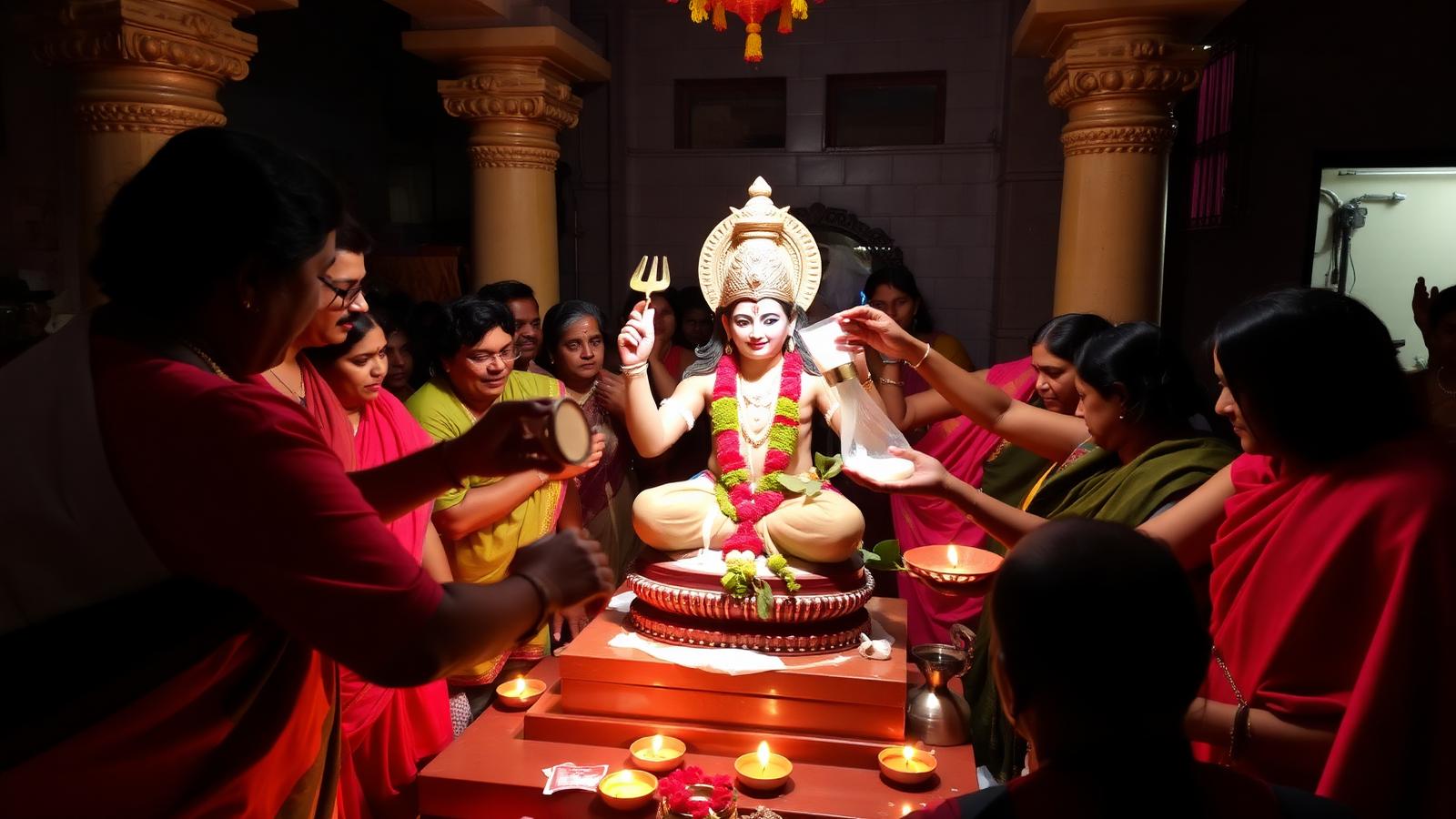
Devotees performing Rudra Abhishek on a Shiva Linga at night

Chapter IV · The Heart of the Night

Rudra Abhiṣeka

The Linga is bathed with milk, curd, ghee, honey, sugar and pure water — the pañcāmṛta. Bilva leaves are placed three at a time upon the crown of the Lord while the great Śrī Rudraṃ–Camakam is chanted. Each drop is a prayer; each leaf is an offering of the seeker's own ego at the feet of Shiva.

ॐ नमः शिवाय ॥

Chapter V · Stories of the Night

Many Legends, One Lord

Shivratri holds many sacred stories — and each one points back to the same silent Mahādeva.

Marriage of Shiva & Pārvatī

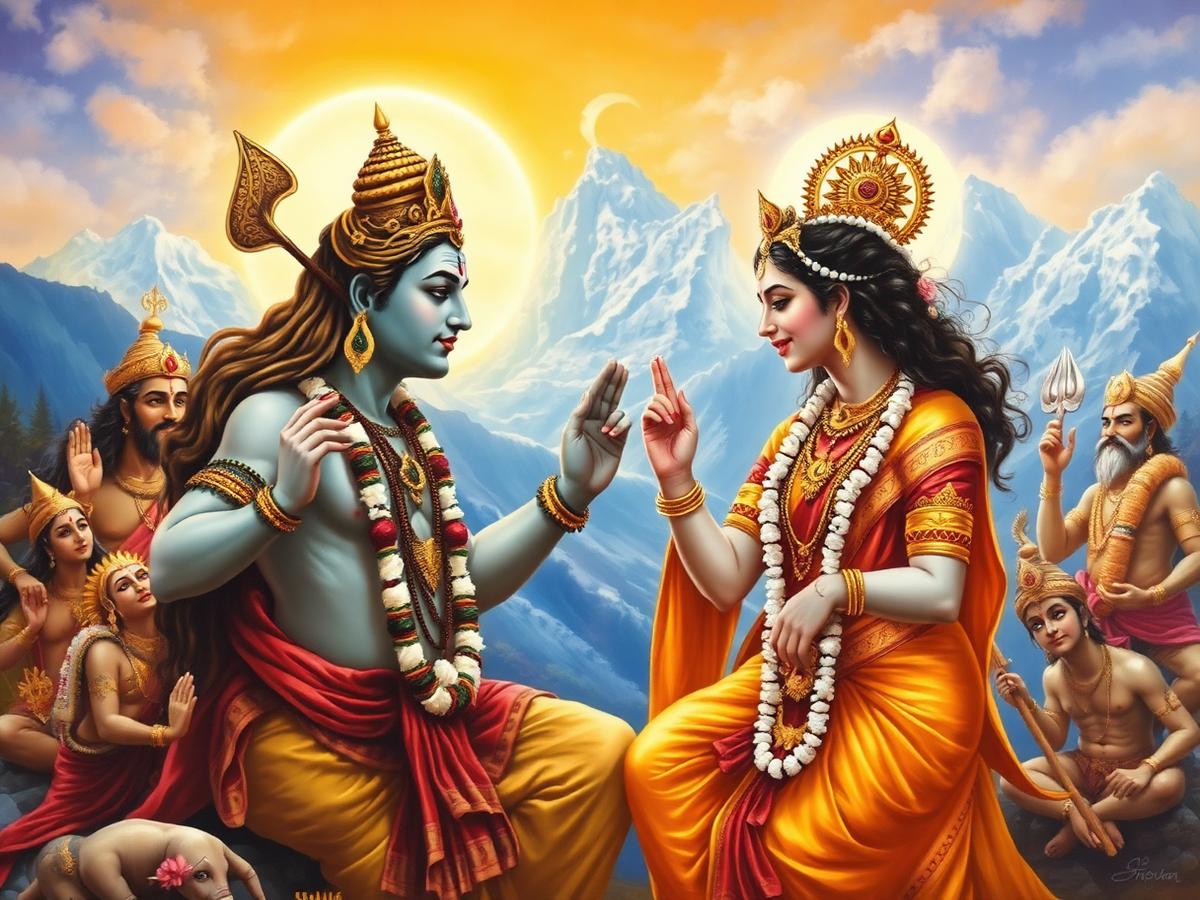
After Pārvatī's long penance, the great ascetic descended from Kailāsa and accepted her as his eternal consort. Shivratri is celebrated as the night of their divine union — the perfect coming-together of Consciousness and Energy.

Lingodbhava — Infinite Jyotirlinga

When Brahmā and Viṣṇu disputed who was greater, Shiva appeared as an infinite column of light. Neither could find its beginning nor its end. Humbled, they bowed — and the worlds knew the formless Supreme.

Drinking the Halāhala

From the churning ocean rose the world-destroying poison Halāhala. To save the cosmos Shiva drank it; Pārvatī held his throat — and the poison stayed, turning it blue. He became Nīlakaṇṭha — the blue-throated saviour.

Tāṇḍava — The Cosmic Dance

On this night the Lord is said to have danced the Tāṇḍava — creation, preservation and dissolution rising and falling in a single rhythm of pure awareness.

The Hunter & the Bilva Tree

A hunter, hiding from a tiger in a bilva tree, unknowingly dropped leaves and water on a Linga below all night. At dawn Shiva appeared and granted him liberation — proof that even unwitting devotion on this night is never lost.

Night of Cosmic Stillness

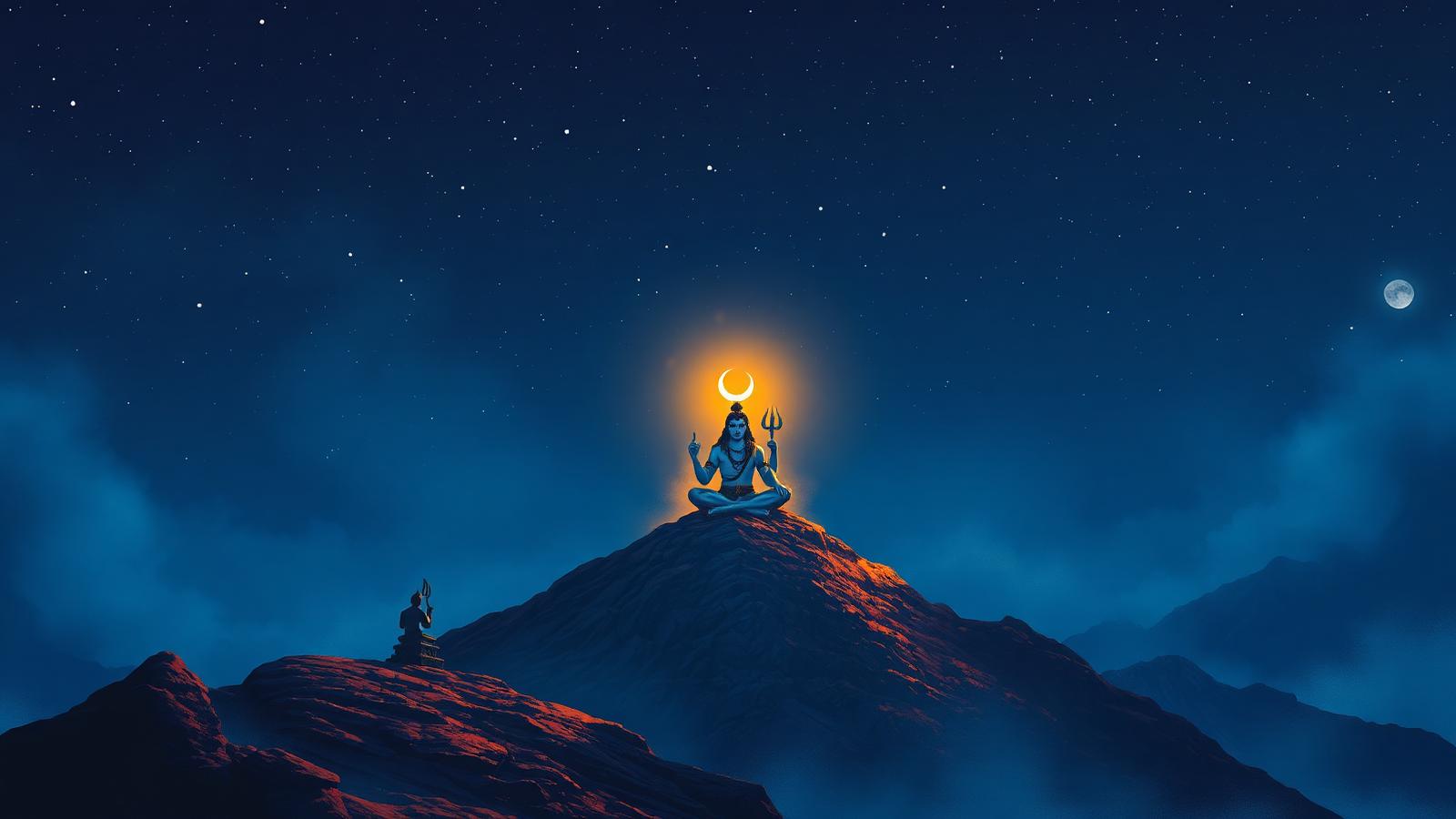
Yogis say the planetary alignment of this Caturdaśī raises the natural energy of the earth — those who sit upright and awake can taste a glimpse of Shiva's own meditation.

Chapter VI · Sacred Practices

Rituals & Household Traditions

Every gesture of Shivratri — the empty stomach, the steady chant, the cold water on the Linga — is a small sādhanā. Together they prepare the body and the mind to receive the silent grace of Mahādeva.

Vrata — The Sacred Fast

Many keep a Nirjala (waterless) fast; others take only milk, fruits and water. The hunger turns inward and quietens the senses.

Jāgaraṇa — Night Vigil

Staying awake the whole night, chanting, listening to Shiva kathā and singing bhajans — alertness itself becomes worship.

Rudra Abhiṣeka

The Linga is bathed with milk, curd, ghee, honey and Gaṅgā water; bilva leaves are offered while the Rudraṃ–Camakam are chanted.

Pañcākṣarī Japa

Continuous repetition of 'Om Namaḥ Śivāya' — the heartbeat of the night. 108, 1008 or simply unbroken till dawn.

Temple Darśana

Visit a Shiva temple — especially a Jyotirlinga — for the long midnight āratī and to stand in the river of devotees.

Dhyāna on Sadāśiva

Between the rituals, sit in silence. Watch the breath, the mind, the witness — meet the Shiva who already sits inside.

Divine marriage of Shiva and Parvati on Mount Kailash
Śiva–Pārvatī Vivāha — the eternal union

Chapter VII · Across Bhārata

Regional Celebrations

One night of Shiva — countless living traditions.

Varanasi (Kāśī)

The City of Light dissolves into one vast jāgaraṇa — Vishwanath temple flows with devotees through the night and into the Gaṅgā at dawn.

Ujjain — Mahākāl

The famous Bhasma Āratī of Mahākāleśvara draws lakhs; the Lord is anointed with sacred ash before the first prahara.

Somnath & Twelve Jyotirlingas

Every Jyotirlinga across Bhārata receives massive crowds — Kedarnath, Rameshwaram, Trimbakeshwar, Mallikarjuna and the rest.

Pashupatinath, Nepal

Sadhus from across the Himalayas converge at Pashupatinath — sacred fires, ash-smeared yogis and an unbroken night of bhajan.

South India

Tamil Nadu and Karnataka observe long temple processions; in Chidambaram the Naṭarāja is bathed in the four praharas of abhiṣeka.

Kashmir — Herath

Kashmiri Pandits celebrate Shivratri as Herath — a three-day household worship of Vatuk Bhairava and Shiva-Pārvatī.

Mantras of the Night

Prayers for the Great Vigil

॥ ॐ ॥

Mahāmṛtyuñjaya Mantra · Ṛgveda 7.59.12

ॐ त्र्यम्बकं यजामहे सुगन्धिं पुष्टिवर्धनम् । उर्वारुकमिव बन्धनान् मृत्योर्मुक्षीय माऽमृतात् ॥

"We worship the three-eyed Lord, fragrant and nourishing of all. As a ripe cucumber is freed from its stem, may He free us from death — not from immortality."

Śiva Pañcākṣara Stotra

नागेन्द्रहाराय त्रिलोचनाय, भस्माङ्गरागाय महेश्वराय । नित्याय शुद्धाय दिगम्बराय, तस्मै नकाराय नमः शिवाय ॥

"Salutations to Shiva — garlanded by the serpent-king, the three-eyed, smeared with sacred ash, the great Lord, eternal, pure, sky-clad. To Him — Om Namaḥ Śivāya."

Celebrate with Meaning

A few mindful gestures can turn the night into a true inner offering.

Pure Offerings

Use unprocessed milk, raw bilva leaves and Gaṅgā water — keep the offerings simple and unspoilt, as Shiva himself loves.

Silent Sadhana

Replace one prahara with mauna (silence) and meditation — the Lord of Yogis is best worshipped by stillness.

The Inner Linga

After the night vigil, sit before a single diya and remember: the column of light Brahmā and Viṣṇu sought is shining within your own heart.

॥ ॐ ॥

Awaken the Shiva Within

Maha Shivratri is not merely a festival of rituals — it is a powerful spiritual opportunity for inner transformation. The greatest victory it celebrates is not over an outer enemy, but over our own ignorance, ego and forgetfulness of the Self.

॥ ॐ नमः शिवाय ॥

"Om Namaḥ Śivāya — may the Great Lord grant you peace, strength and the awakening of the Self."

॥ हर हर महादेव ॥