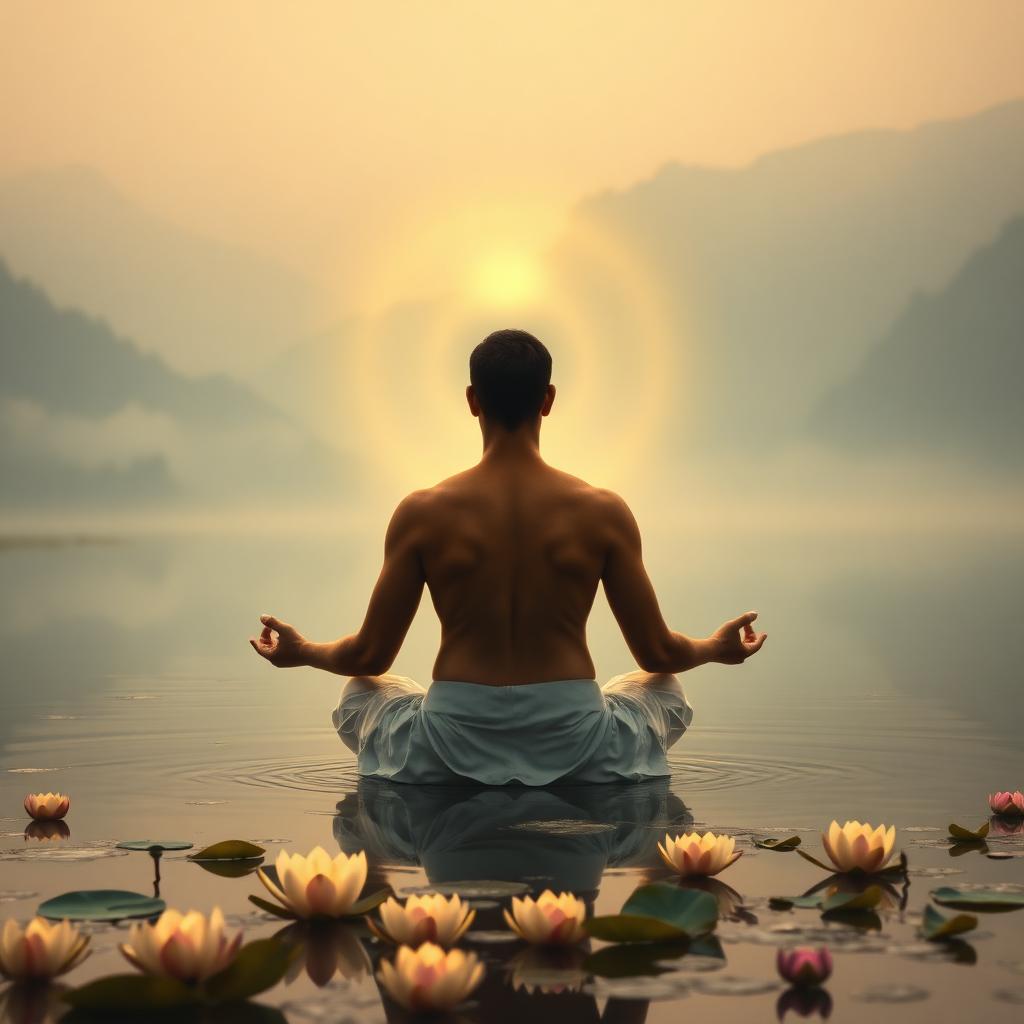
Meditation

Vidya · Dhyana

Meditation

॥ ध्यानं परमं तपः ॥

Dhyana — the unbroken flow of awareness that quiets the mind and reveals the eternal light of the Self.

॥ ॐ ॥

Introduction

The Direct Path to Inner Freedom

॥ ॐ ॥

Dhyana — meditation — is one of the most essential practices in Sanatan Dharma. The word comes from the Sanskrit root dhyai: "to contemplate, to focus the mind." It is the direct path to inner peace, self-awareness and spiritual realisation.

While many today practise meditation for stress relief, in its original sense Dhyana is a profound spiritual discipline aimed at realising the true nature of the Self. Patanjali defines it as the continuous, unbroken flow of awareness toward a single object — the state in which the mind becomes steady, one-pointed and free from distraction.

Patanjali Yoga Sutras 3.2

Unbroken Flow of Awareness

तत्र प्रत्ययैकतानता ध्यानम्

"Dhyana is the continuous, unbroken flow of awareness toward a single object."

When Dharana — one-pointed concentration — becomes effortless and continuous, it ripens into Dhyana. And when Dhyana becomes complete, it dissolves into Samadhi — pure absorption in the Self.

Chapter I

Dhyana in the Eight Limbs

The seventh limb of Patanjali's Ashtanga Yoga — the ripening of all that comes before.

1

Yama

Moral Restraints

2

Niyama

Personal Observances

3

Asana

Physical Postures

4

Pranayama

Breath Control

5

Pratyahara

Withdrawal of Senses

6

Dharana

Concentration

7

Dhyana

Meditation

You are here

8

Samadhi

Absorption

Chapter II

Types of Meditation

Sanatan Dharma offers a meditation for every temperament.

मन्त्र ध्यान

Mantra Dhyana

Repetition of a sacred sound or mantra.

Concentration & purification

त्राटक

Trataka

Steady gazing at a single point — flame, symbol or yantra.

Sharpening focus

चक्र ध्यान

Chakra Dhyana

Meditating upon the energy centres along the spine.

Awakening inner energy

योग निद्रा

Yoga Nidra

Yogic sleep — guided deep relaxation with full awareness.

Healing & stress relief

आत्म विचार

Atma Vichara

Self-inquiry — 'Who am I?', taught by Ramana Maharshi.

Self-realisation

भक्ति ध्यान

Bhakti Dhyana

Meditation upon a chosen form of the Divine.

Emotional union

ज्ञान ध्यान

Jnana Dhyana

Contemplation on the great truths of Vedanta.

Intellectual awakening

अनापान

Breath Awareness

Observing the natural rhythm of breath.

Calming the mind

Chapter III

How to Begin Your Practice

A simple sequence — practised daily, it transforms the inner life.

1

Find Your Seat

Choose a quiet place. Sit comfortably with the spine naturally erect.

2

Relax & Settle

Close the eyes gently. Allow the body to soften from head to toe.

3

Observe the Breath

Watch the natural flow of inhalation and exhalation without forcing it.

4

Choose a Focus

A mantra (Om · So'ham · Ram), the breath at the nostrils, or a divine form.

5

Return Gently

Whenever the mind wanders, bring it back without judgement or struggle.

6

Be Consistent

Start with 10–15 minutes daily. Same time, same place — preferably Brahma Muhurta.

Best Time: ब्रह्म मुहूर्त — Brahma Muhurta (early morning, 4–6 AM), when the world is quiet and the mind is naturally clear.

Chapter IV

Powerful Mantras for Meditation

Sacred sounds that have steadied countless minds across millennia.

Om

The primordial sound — the seed of all mantras and the universe itself.

सोऽहम्

So'ham

'I am That' — the natural mantra carried on the breath.

ॐ भूर्भुवः स्वः

Gayatri Mantra

The supreme Vedic mantra to the radiant Sun of consciousness.

ॐ त्र्यम्बकं यजामहे

Mahamrityunjaya

The great death-conquering mantra of Lord Shiva.

हरे कृष्ण हरे कृष्ण

Hare Krishna

The Mahamantra of devotion — the easiest path in Kali Yuga.

Chapter V

Benefits of Meditation

A practice that nourishes body, mind and spirit alike.

Physical

  • Reduces stress and anxiety
  • Lowers blood pressure
  • Improves immunity and sleep
  • Increases energy and vitality

Mental

  • Improves concentration and memory
  • Reduces negative emotions
  • Cultivates emotional stability
  • Brings clarity of mind

Spiritual

  • Awakens inner awareness
  • Leads to Self-realisation
  • Brings lasting peace
  • Freedom from suffering

Chapter VI

Great Meditators

From the Puranas to the modern age — lives shaped by Dhyana.

Arjuna's Training

Krishna teaches Arjuna how to steady the mind, comparing it to a flickering lamp in the wind — sheltered, it becomes still.

Dhruva's Penance

A young boy of five, through intense meditation in the forest, attained the direct vision of Lord Vishnu and a place among the eternal stars.

Ramana Maharshi

At just sixteen, he realised the Self spontaneously through the inquiry 'Who am I?' — and devoted his life to teaching that very path.

Eternal Verses

The Voice of Stillness

॥ ॐ ॥

Yoga Sutras 3.2

तत्र प्रत्ययैकतानता ध्यानम् ॥

"Dhyana is the continuous, unbroken flow of awareness toward a single object."

Yoga Sutras 1.2

योगश्चित्तवृत्तिनिरोधः ॥

"Yoga is the cessation of the modifications of the mind."

Bhagavad Gita 6.19

यथा दीपो निवातस्थो नेङ्गते सोपमा स्मृता । योगिनो यतचित्तस्य युञ्जतो योगमात्मनः ॥

"As a lamp in a windless place does not flicker — so is the disciplined mind of the yogi absorbed in the Self."

Chapter VII

Modern Relevance

Ancient stillness for a restless age.

Stress & Anxiety

A natural antidote to burnout, restlessness and overwhelm.

Scientifically Validated

Modern research confirms its profound benefits for body and mind.

Focus & Balance

Sharpens attention, deepens emotional steadiness.

Living Wisdom

Brings the ancient teachings of Sanatan Dharma into daily life.

Patanjali Yoga Sutras 1.2

योगश्चित्तवृत्तिनिरोधः ॥

"Yoga is the cessation of the modifications of the mind."

Meditation is not an escape from life — it is the art of living with greater awareness, peace and purpose. When the mind becomes still, the light of the Self shines forth.

॥ ॐ शान्तिः शान्तिः शान्तिः ॥