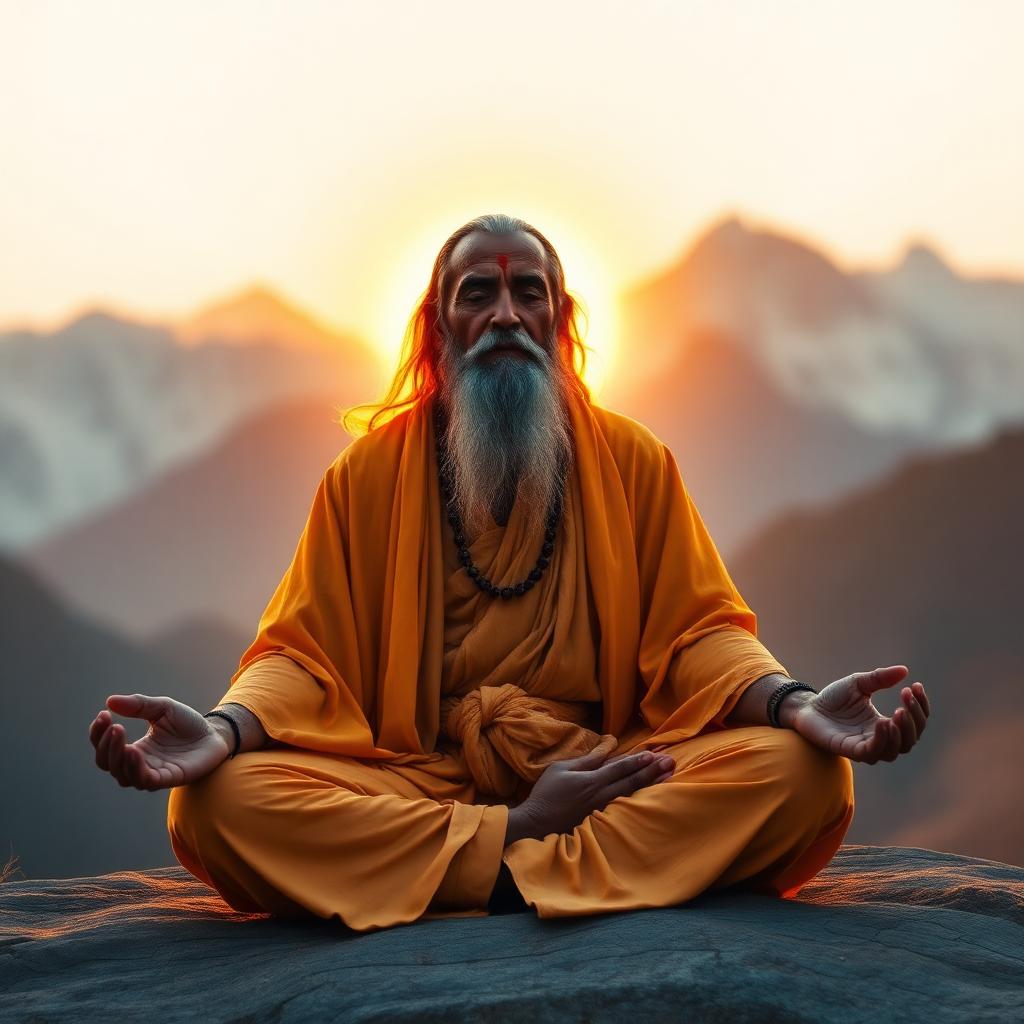
Yoga

Vidya · Yoga

Yoga

॥ योगश्चित्तवृत्तिनिरोधः ॥

The science of union — joining the individual self (Atman) with the Supreme Self (Brahman) through body, breath and mind.

॥ ॐ ॥

Introduction

A Complete Science of Life

॥ ॐ ॥

Yoga is one of Sanatan Dharma's most profound gifts to humanity — a complete science that integrates body, mind and spirit. The word comes from the Sanskrit root yuj, meaning "to unite" or "to join." Yoga is the union of the individual self (Atman) with the Supreme Self (Brahman).

Though widely associated today with physical postures (asanas), true Yoga is a spiritual path leading to Self-realisation, inner peace and liberation (moksha). It is not a religion — it is a universal science of transformation, open to all.

Chapter I

Origin & History

From Vedic hymns to Patanjali's Sutras — a continuous living lineage.

Vedic Roots

References to Yoga appear in the Rigveda and other Vedas as the discipline of inner union.

Upanishadic Depth

The Upanishads contain profound teachings on meditation and the nature of the Self.

Patanjali's Yoga Sutras

Around 200 BCE – 200 CE, Patanjali systematised the entire science into the eightfold Ashtanga Yoga.

Bhagavad Gita

Krishna teaches Yoga as a practical path for daily life — through Karma, Bhakti and Jnana.

Patanjali Yoga Sutras 1.2

Cessation of the Mind

योगश्चित्तवृत्तिनिरोधः

"Yoga is the cessation of the fluctuations of the mind."

When the mind grows still, the light of the Self shines forth — and the goal of all Yoga, Kaivalya (absolute freedom), is realised.

Chapter II

Ashtanga Yoga — The Eight Limbs

A progressive ladder from outer conduct to inner absorption.

1

Yama

Moral Restraints

Non-violence, truth, non-stealing, continence, non-possessiveness.

2

Niyama

Personal Observances

Purity, contentment, austerity, self-study, surrender to the Divine.

3

Asana

Physical Postures

A steady and comfortable seat — stability of body for meditation.

4

Pranayama

Breath Control

Regulation of vital energy through conscious breathing.

5

Pratyahara

Withdrawal of Senses

Turning the senses inward, away from external objects.

6

Dharana

Concentration

Fixing the mind upon a single point or object.

7

Dhyana

Meditation

Unbroken, continuous flow of awareness toward the chosen focus.

8

Samadhi

Absorption

Complete union with the object of meditation — Self-realisation.

Chapter III

The Many Paths of Yoga

Different temperaments — different roads — one summit.

कर्म योग

Karma Yoga

Selfless action performed without attachment to results.

Scripture

Bhagavad Gita

Suited For

Action-oriented people

भक्ति योग

Bhakti Yoga

Devotion and love directed wholeheartedly toward the Divine.

Scripture

Gita · Bhagavata Purana

Suited For

Emotional seekers

ज्ञान योग

Jnana Yoga

Knowledge and Self-inquiry — discerning the real from the unreal.

Scripture

Upanishads · Gita

Suited For

Intellectual seekers

राज योग

Raja Yoga

The royal path — meditation and mastery of the mind.

Scripture

Yoga Sutras of Patanjali

Suited For

Seekers of inner stillness

हठ योग

Hatha Yoga

Physical postures and breathwork to balance body and energy.

Scripture

Hatha Yoga Pradipika

Suited For

Physical & energetic balance

कुण्डलिनी योग

Kundalini Yoga

Awakening of the dormant spiritual energy at the spine's base.

Scripture

Tantric texts

Suited For

Advanced practitioners

मन्त्र योग

Mantra Yoga

Chanting of sacred sounds to focus the mind and uplift the heart.

Scripture

Various Vedic & Tantric texts

Suited For

Devotional & mental focus

Chapter IV

Benefits of Yoga

A practice that nourishes body, mind and spirit alike.

Physical

  • Improves flexibility, strength and posture
  • Enhances immunity and overall health
  • Helps manage chronic conditions

Mental

  • Reduces stress, anxiety and depression
  • Improves concentration and emotional balance
  • Promotes better sleep and clarity

Spiritual

  • Awakens inner awareness and peace
  • Leads to Self-realisation and liberation
  • Strengthens connection with the Divine

Chapter V

Great Yogis Through the Ages

From the battlefield to the modern world — Yoga lived and taught.

Arjuna & Krishna

On the battlefield of Kurukshetra, Krishna unveils Karma, Bhakti and Jnana Yoga — showing Yoga is practical even in the most difficult moments of life.

Sage Patanjali

Considered the father of classical Yoga, he systematised the ancient teachings into the 196 Yoga Sutras and the eightfold path.

Swami Vivekananda

Carried Yoga to the modern world through his historic 1893 Chicago address, presenting it as a universal and scientific path.

Eternal Verses

The Voice of Yoga

॥ ॐ ॥

Yoga Sutras 1.2

योगश्चित्तवृत्तिनिरोधः ॥

"Yoga is the cessation of the modifications of the mind."

Bhagavad Gita 2.50

योगः कर्मसु कौशलम् ॥

"Yoga is skill in action."

Bhagavad Gita 6.23

तं विद्याद्दुःखसंयोगवियोगं योगसंज्ञितम् ॥

"Know that state — free from the contact with sorrow — to be Yoga."

Chapter VI

Modern Relevance

Ancient wisdom for a restless age.

Global Practice

Practised by millions worldwide for health, stress relief and fitness.

Scientifically Validated

Modern research confirms benefits for body and mind.

International Yoga Day

Celebrated every 21 June since 2015, recognised by the United Nations.

Beyond Fitness

True Yoga is not exercise — it is inner transformation and Self-realisation.

Patanjali Yoga Sutras 1.2

योगश्चित्तवृत्तिनिरोधः

"Yoga is the cessation of the modifications of the mind."

The ultimate aim of Yoga is not to become someone new, but to realise who we truly are — the eternal, peaceful and divine Self. May your practice bring health, peace and spiritual awakening.

॥ ॐ शान्तिः शान्तिः शान्तिः ॥