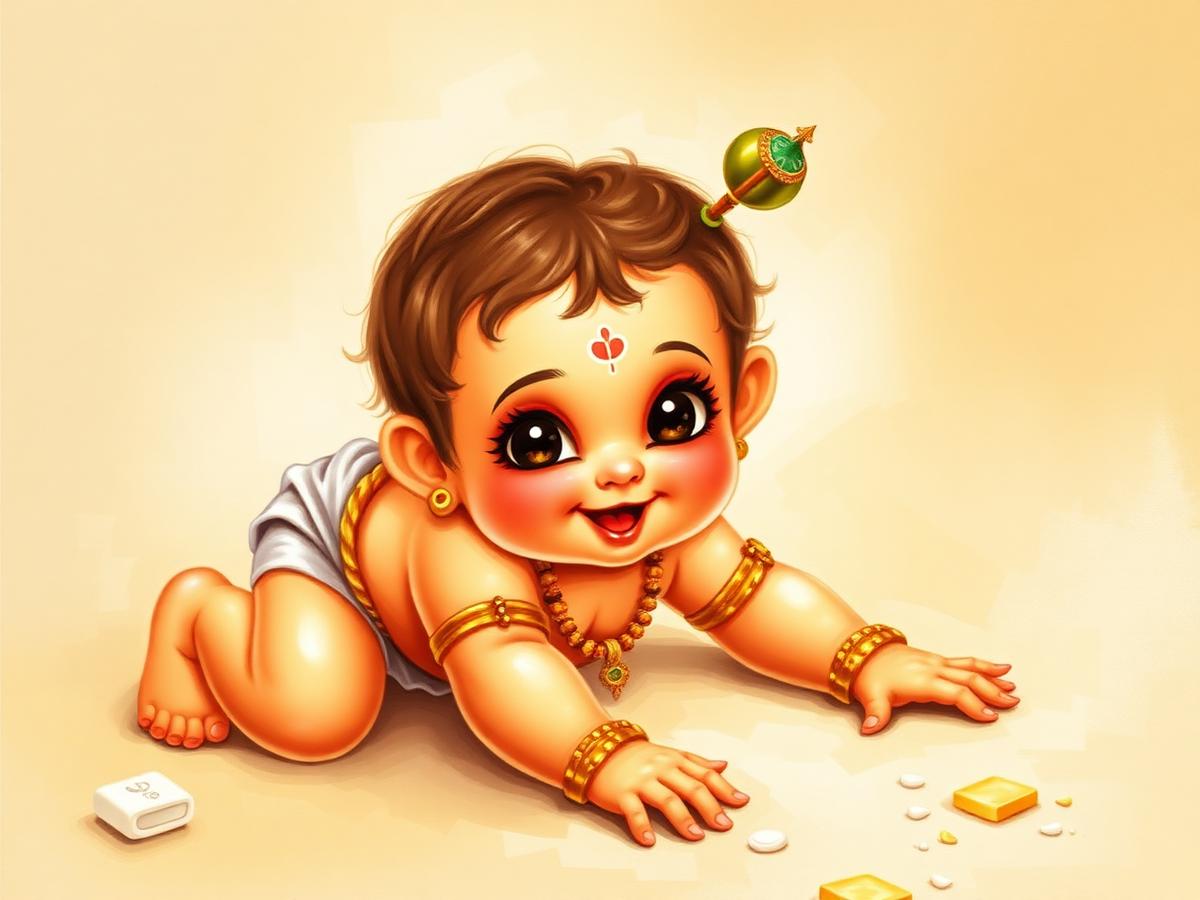
Children & Progeny

Mantra · Santāna

Children & Progeny

॥ सन्तान ॥

Santāna — children as divine blessings, sacred responsibility and the living continuity of dharma.

॥ ॐ ॥

Santāna

Sanskrit

Santāna Gopāla

Primary Deity

Saṁskāra

Sacred Rite

Pitṛ Ṛṇa

Sacred Debt

Introduction

Children as Divine Blessings

॥ ॐ ॥
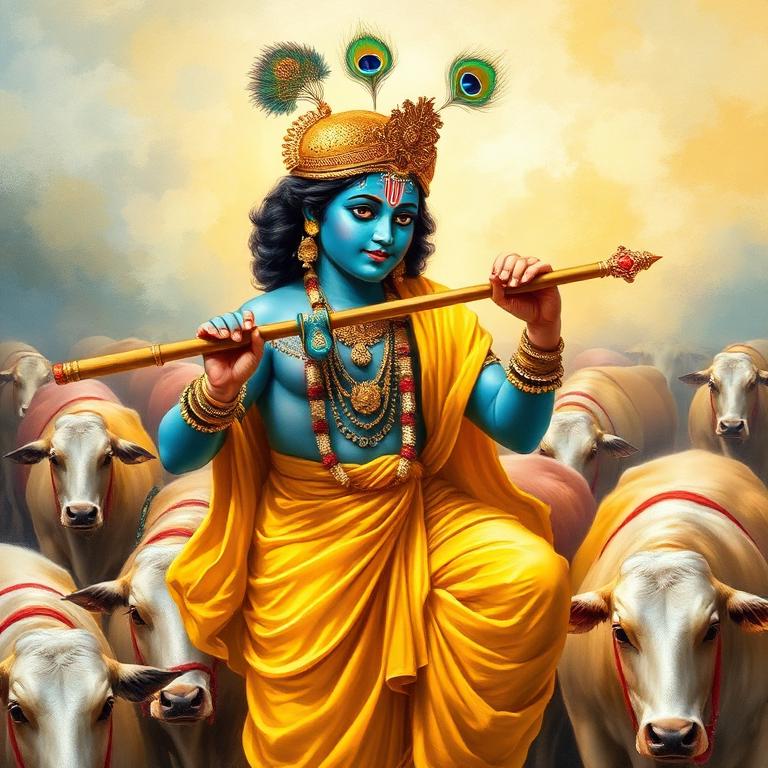
Bāla Kṛṣṇa — the divine child
Bāla Kṛṣṇa — childhood as a doorway to the Divine

In Sanatan Dharma, children and progeny hold a sacred place. Having children is not a mere biological or social act — it is a dharmic responsibility and a means of spiritual growth.

The word Santāna comes from san — to continue, to extend. Children are seen as the living bridge between past, present and future — carriers of dharma, lineage and grace.

The Manusmṛti speaks of three sacred debts (ṛṇa): to the gods, to the sages, and to the ancestors. Righteous progeny is part of how the second and third debts are honoured.
Chapter I

Five Purposes of Progeny

Vaṁśa Continuity

Carrying forward the family name and traditions.

Pitṛ Tarpaṇa

Performing rites that bless the ancestral line.

Dharmic Duty

Raising righteous children who serve dharma.

Spiritual Growth

Parenting itself becomes a path of patience and sevā.

Repaying Ṛṇa

Honouring the debt to ancestors, sages and gods.

Chapter II

Sacred Saṁskāras of the Child

From conception to formal education — the journey of nurturing a soul.

Garbhādhāna

Conception ritual — blessings for healthy conception.

Puṁsavana

Performed in early pregnancy for the well-being of the foetus.

Sīmantonnayana

Hair-parting rite for the expectant mother and child.

Jātakarma

Birth ritual welcoming the newborn into the family.

Nāmakaraṇa

The naming ceremony, usually on the 11th or 12th day.

Niṣkramaṇa

The child's first outing into the wider world.

Annaprāśana

First feeding of solid food, with blessings.

Cūḍākaraṇa

Muṇḍana — the first sacred haircut.

Upanayana

The sacred thread ceremony, the beginning of formal study.

Chapter III

Deities for Progeny

DeityRole
Santāna Gopāla (Kṛṣṇa)Bestower of children
Shiva-PārvatīDivine parents themselves
Lord ViṣṇuProtector of family
Goddess LakṣmīFamily well-being
Lord GaṇeśaRemoves obstacles
Aśvinī KumārasDivine physicians of progeny

Chapter IV

Mantras for Children

॥ ॐ ॥

Santāna Gopāla Mantra · For Progeny

ॐ श्रीं ह्रीं क्लीं ग्लौं देवकीसुत गोविन्द । वासुदेव जगत्पते देहि मे तनयं कृष्ण त्वामहं शरणं गतः ॥

The supreme mantra to invoke Kṛṣṇa's grace for the blessing of children.

Shiva Mantra · For Progeny

ॐ नमः शिवाय ॥

Daily Shiva worship — the cosmic father — for healthy children.

Vāsudeva Mantra

ॐ नमो भगवते वासुदेवाय ॥

The twelve-syllable mantra for protection of the family.

Lakṣmī-Nārāyaṇa Mantra

ॐ श्रीं ह्रीं श्रीं महालक्ष्म्यै नमः ॥

For prosperity and joy in the household.

Chapter V

Stories of Progeny

Daśaratha & His Four Sons

After the Putrakāmeṣṭi yajña, King Daśaratha was blessed with Rāma, Bharata, Lakṣmaṇa and Śatrughna — fruit of intense devotion and the grace of the sages.

Kuntī & Karṇa

The mantra given to Kuntī by sage Durvāsā brought forth Karṇa — showing that progeny in the highest sense is a gift of divine grace.

Markaṇḍeya

Destined to die at sixteen, the boy's life was extended by his parents' devotion to Shiva — children too are protected by parental tapas.

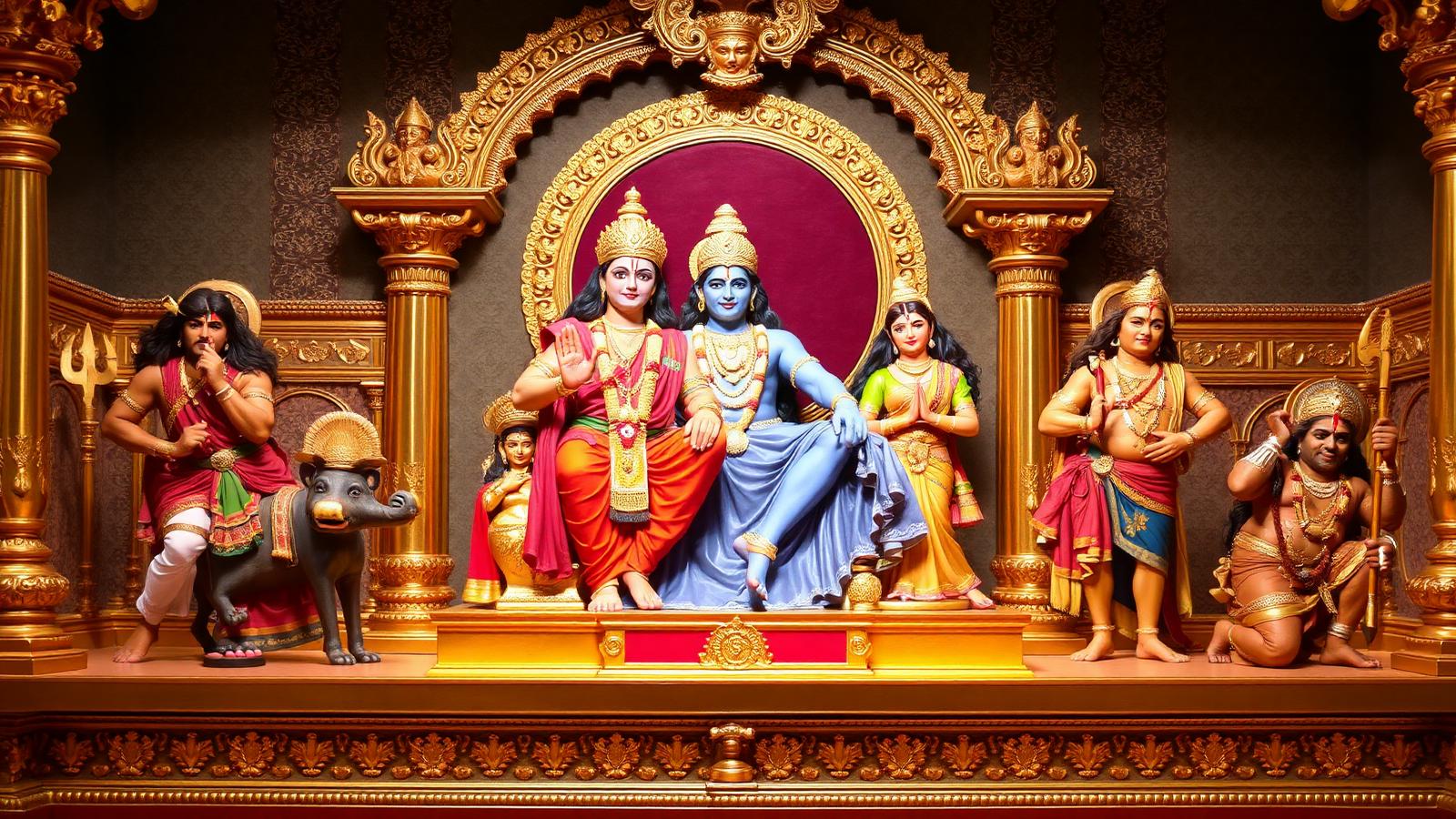
Rāma Darbār — the ideal family
The Rāghava brothers — fruit of Daśaratha's tapas
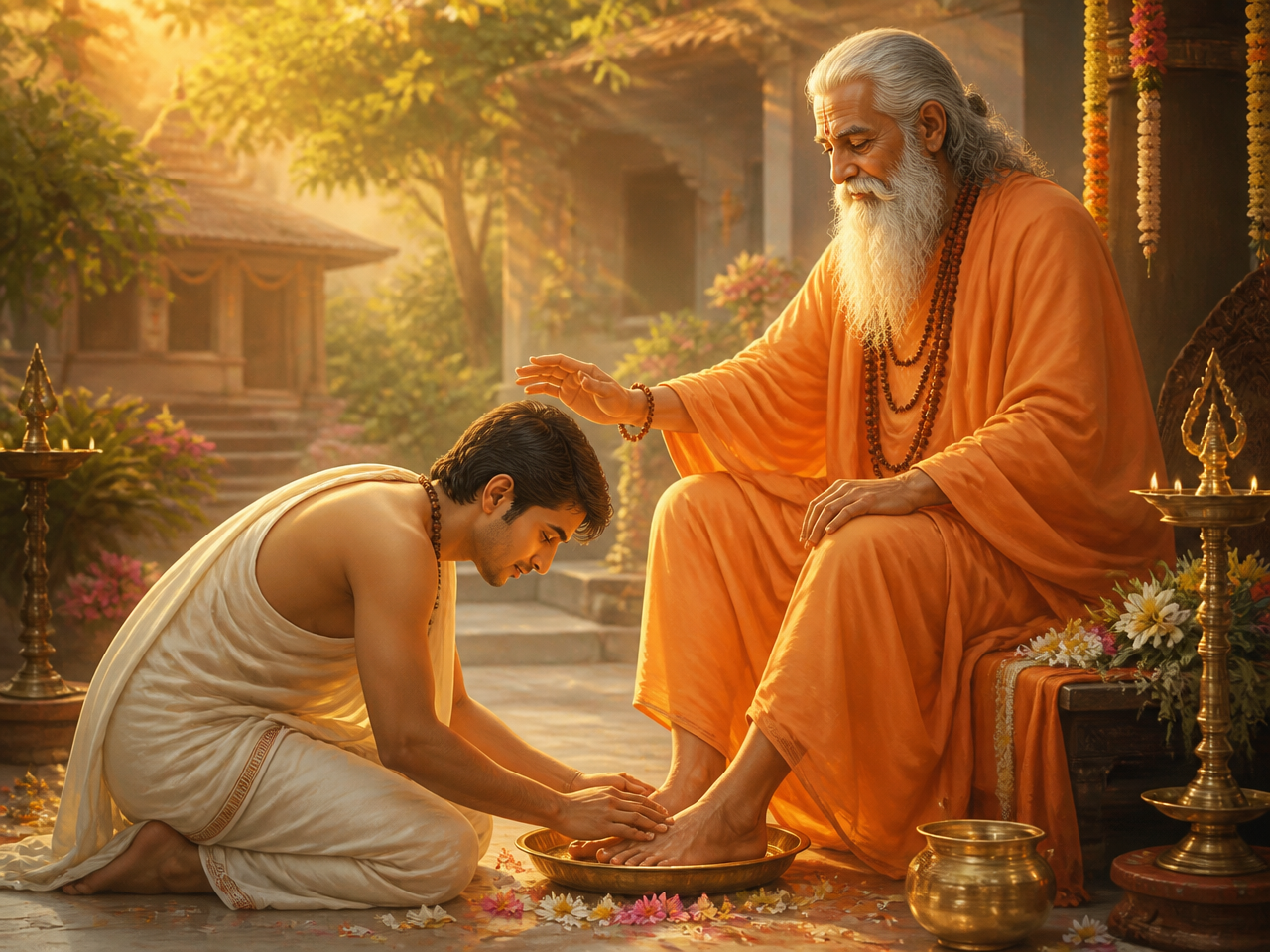
Parent as the first guru
Parents — the first Gurus of every child

Chapter VI

Qualities to Cultivate

Respect for Elders

The first virtue — to revere parents, teachers and the wise.

Truthfulness

Satya — the foundation of every other virtue.

Compassion

Ahiṁsā in thought, word and deed toward all beings.

Self-Discipline

Dharma lived as habit, not as effort.

Devotion

A heart that turns naturally toward the Divine.

Gratitude

Recognising every gift as grace.

Chapter VII

Modern Relevance

Sāttvic Home

A peaceful, prayerful environment shapes the child more than any school.

Stories of the Ṛṣis

Bedtime tales from Rāmāyaṇa, Mahābhārata and the Purāṇas plant seeds for life.

Balance, Not Pressure

Modern education with spiritual roots — confident, kind, anchored children.

A Sacred Responsibility

पुत्रो नाम्ना पुनाति इति पुत्रः ।

"A 'putra' is one who purifies and uplifts the parents — the meaning of the very word." — Smṛti tradition