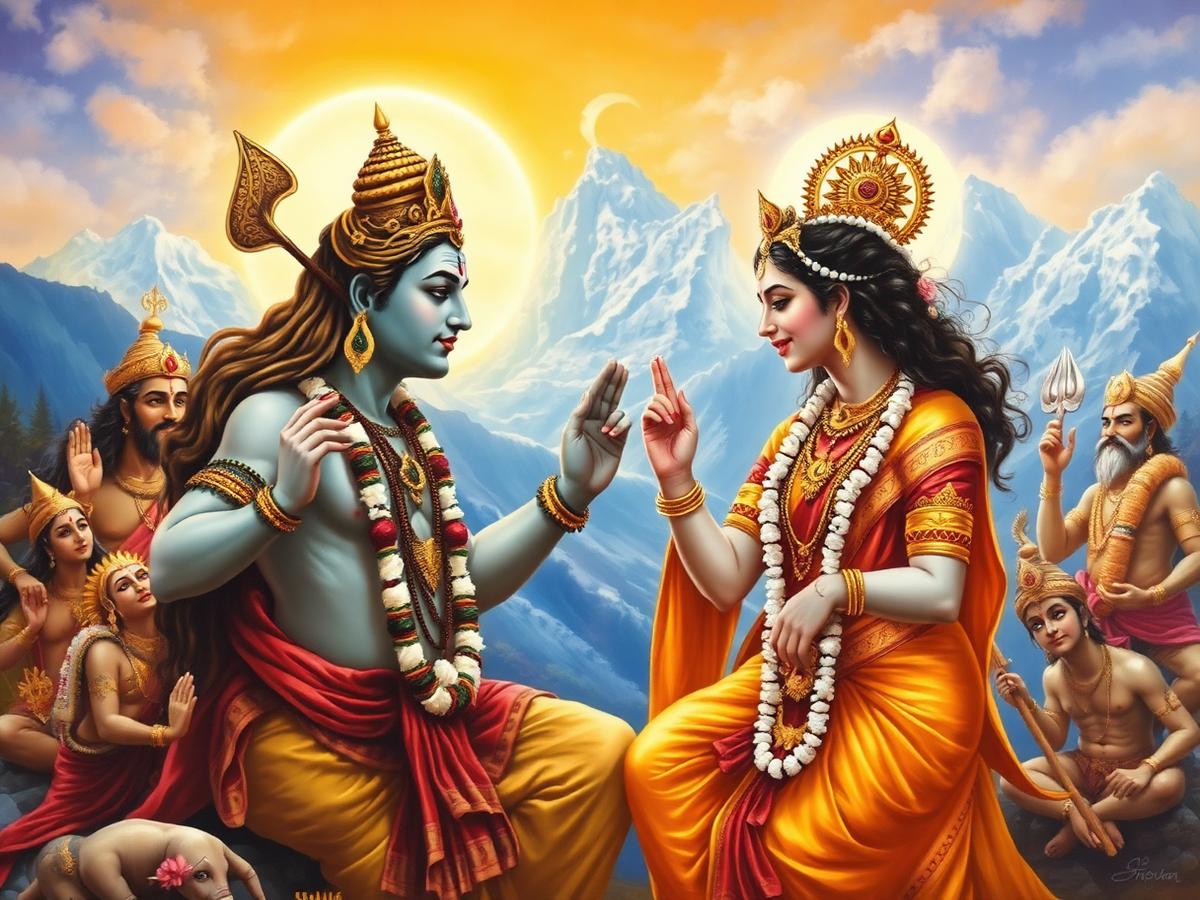
Marriage & Harmony

Mantra · Vivāha

Marriage & Harmony

॥ विवाह ॥

Vivāha — to carry forward together. The sacred Sanatan vision of marriage as a partnership for life and liberation.

॥ ॐ ॥

Vivāha

Sanskrit

Saṁskāra

Sacrament

Saptapadī

Core Rite

Śiva-Pārvatī

Ideal Couple

Introduction

A Sacred Saṁskāra, Not a Contract

॥ ॐ ॥
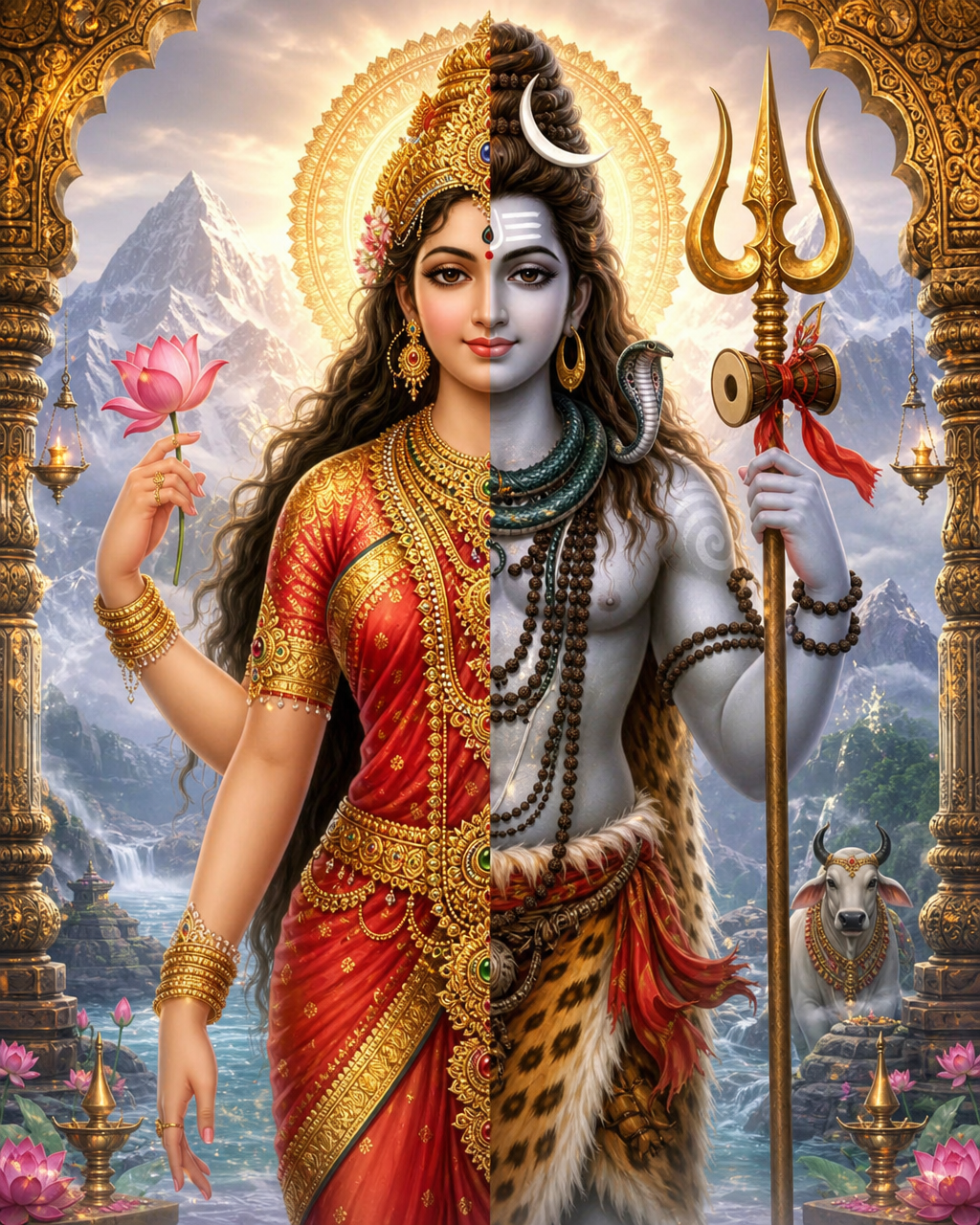
Ardhanārīśvara — Shiva and Pārvatī as one
Ardhanārīśvara — the eternal union

In Sanatan Dharma, marriage (vivāha) is a divine institution — one of the most sacred saṁskāras of life. It is not a contract; it is a soul partnership that supports both partners in fulfilling all four puruṣārthas — dharma, artha, kāma and mokṣa.

The word vivāha means "to carry forward together" — two souls walking side by side along the path of life, supporting each other in worldly duty and inner growth.
Chapter I

The Five Purposes of Marriage

Dharma

Walking together in righteousness and shared religious duty.

Praja

Continuation of the family lineage through righteous progeny.

Saha-bhāva

Companionship — emotional, mental and spiritual support.

Mutual Growth

Each partner helping the other evolve materially and inwardly.

Social Stability

A harmonious family is the seed of a harmonious society.

Chapter II

Eight Types of Vivāha

From the ancient Smṛti texts — the Brāhma form is considered the highest.

Brahma

Father gives the daughter to a worthy groom — the most ideal form.

Daiva

Daughter given to a priest during a sacrifice.

Ārṣa

Groom gives cows to the bride's family — simple and pious.

Prājāpatya

Marriage of mutual consent and shared duty.

Gāndharva

Love marriage by mutual attraction — accepted in many cases.

Āsura

Groom pays wealth — not considered ideal.

Rākṣasa

Marriage by abduction — condemned.

Paiśāca

Marriage by force or deception — strongly condemned.

Chapter III

The Sacred Rituals

Kanyādāna

The father offers the bride — considered the highest form of dāna.

Pāṇigrahaṇa

The groom accepts the bride's hand with sacred vows.

Saptapadī

Seven steps around the fire — the marriage is sealed at the seventh step.

Maṅgalsūtra & Sindūr

Outer symbols of an inner lifelong bond.

Āśīrvāda

Blessings from elders, priests and ancestors.

Vidāī

The bride's farewell — the bond of two families.

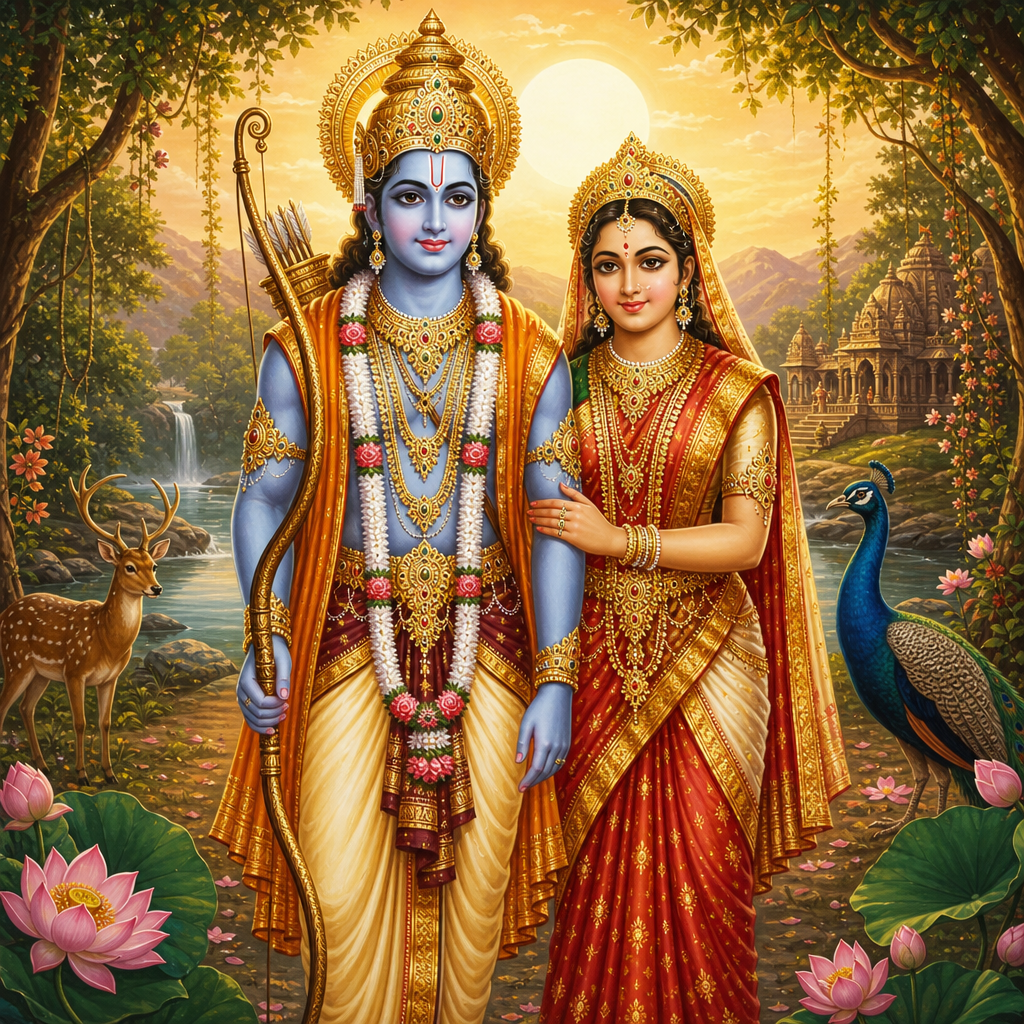
Rāma and Sītā
Rāma & Sītā — duty, loyalty and sacrifice
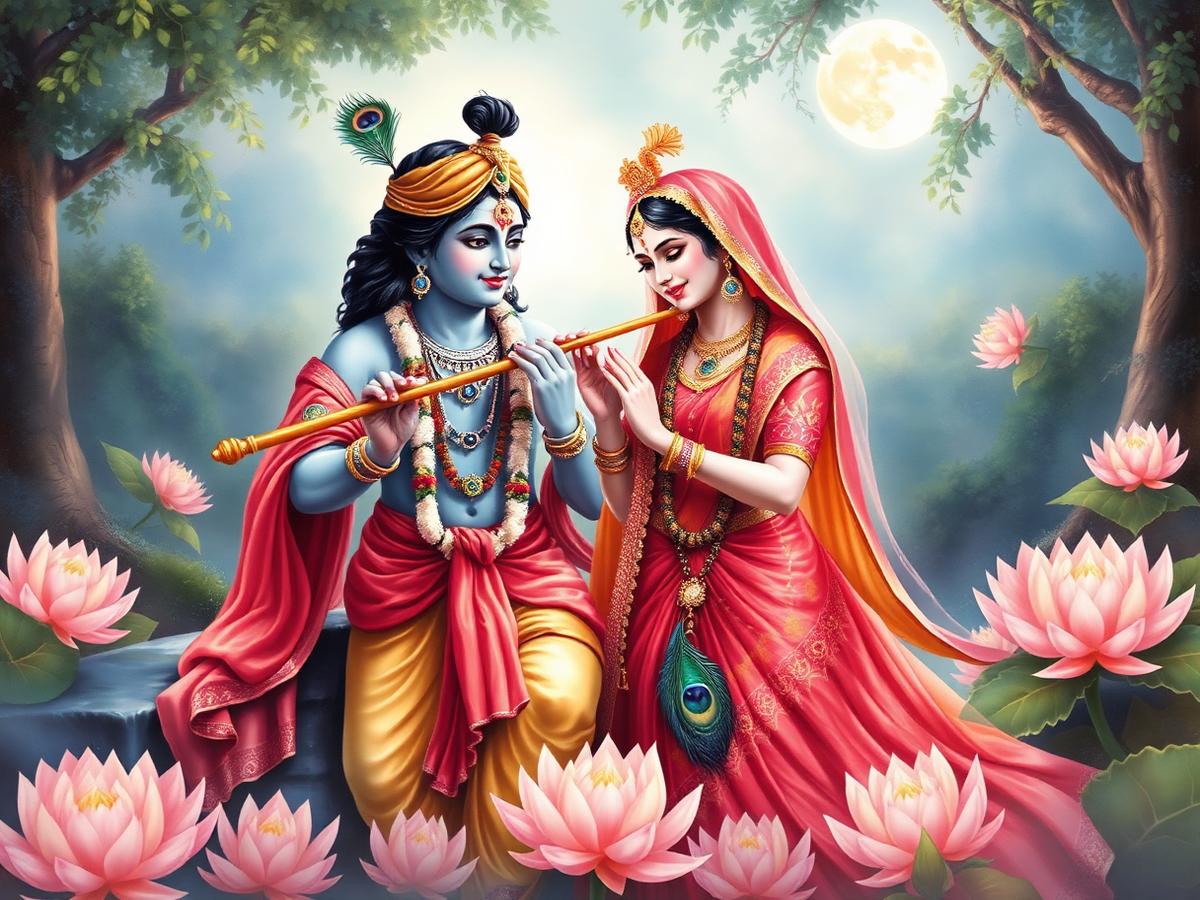
Rādhā and Kṛṣṇa
Rādhā & Kṛṣṇa — the soul's love for the Supreme

Chapter IV

Ideal Divine Couples

Śiva & Pārvatī

Consciousness & Energy

The eternal balance of awareness and shakti.

Rāma & Sītā

Duty, loyalty, sacrifice

The model of dharmic householder life.

Rādhā & Kṛṣṇa

Divine love

The soul's longing for the Supreme.

Sāvitrī & Satyavān

Devotion & wisdom

Love that turned even Yama away.

Chapter V

Mantras for Marital Harmony

॥ ॐ ॥

Śiva-Pārvatī Mantra · For Harmony

ॐ नमः शिवाय ॥

The supreme mantra invoking the union of Shiva and Shakti within the home.

Maṅgala Blessing

मङ्गलं भगवान् विष्णुः मङ्गलं गरुडध्वजः । मङ्गलं पुण्डरीकाक्षः मङ्गलायतनो हरिः ॥

Invokes Viṣṇu as the source of all auspiciousness.

Saptapadī (1st step)

एकमिषे विष्णुस्त्वान्वेतु ।

May Viṣṇu walk with us — chanted on the first of the seven steps.

Gaurī Mantra · For Brides

ॐ गौर्यै नमः ॥

Traditionally chanted by brides for marital harmony and a long, blessed life.

Chapter VI

Principles of Lasting Harmony

Mutual Respect

Treating each other with dignity and honour, every day.

Shared Responsibility

Supporting each other in duties, big and small.

Open Communication

Honest, respectful dialogue — no silence between hearts.

Forgiveness

Letting small things go — protecting the bond above the ego.

Joint Sādhanā

Praying, fasting and worshipping together strengthens the soul-bond.

Beyond Ego

Putting the relationship above the small self.

Chapter VII

Modern Relevance

Joint Spiritual Practice

An evening lamp lit together is medicine for any marriage.

Sacred Festivals

Karva Chauth, Vaṭ Sāvitrī and Tulsī Vivāha keep the bond alive.

Elders & Gurus

Seeking guidance in difficulty — the wisdom of those who walked before.

A Partnership for Liberation

धर्मे च अर्थे च कामे च मोक्षे च भरतर्षभ ।
यत्रैव पत्नी तत्रैव सुखं नान्यत्र क्वचित् ॥

"Where husband and wife walk together in dharma, artha, kāma and mokṣa — there alone is true happiness."