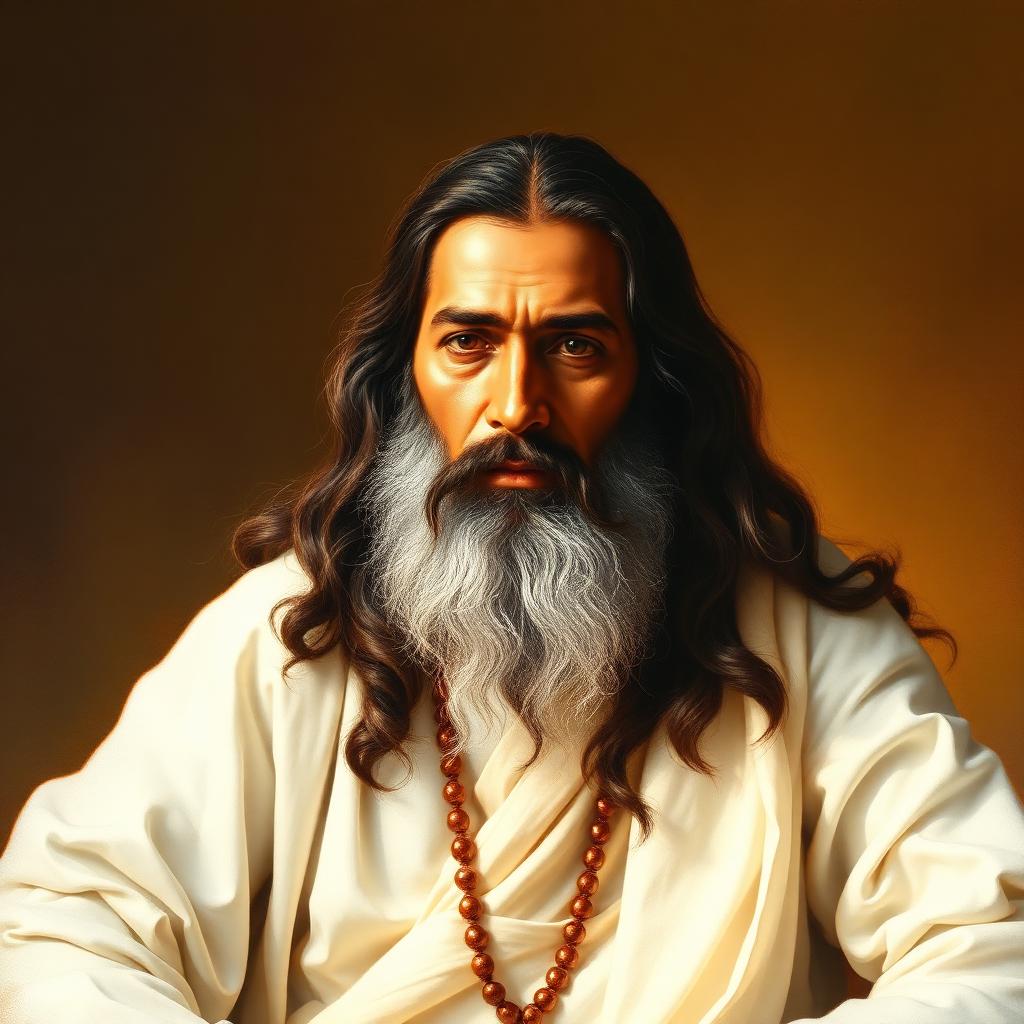
Sri Aurobindo

Saint · Seer of the Supermind

Sri Aurobindo

॥ श्री अरविन्द ॥

Revolutionary, poet, philosopher and yogi — the visionary who saw matter and spirit as one and called humanity to the next evolutionary step.

॥ ॐ ॥

1872–1950

Era

Kolkata

Birthplace

Pondicherry

Abode

Integral Yoga

Path

Introduction

A Revolutionary Who Became a Rishi

॥ ॐ ॥

Sri Aurobindo — born Aurobindo Ghose on 15 August 1872 in Kolkata — was one of the greatest philosophers, yogis and poets of modern India. Educated at St. Paul's, London and King's College, Cambridge, he returned to a Bhārata in chains and became one of the first to demand complete independence.

In 1908 his arrest in the Alipore Bomb Case turned the cell into a sanctuary; the living presence of Krishna was revealed to him, and politics dissolved into yoga. From 1910 he made Pondicherry his abode and developed the path of Integral Yoga — the spiritual evolution of humanity towards Divine Life on earth.

His vision was not escape from the world, but its transformation — the descent of the Supermind into matter itself.
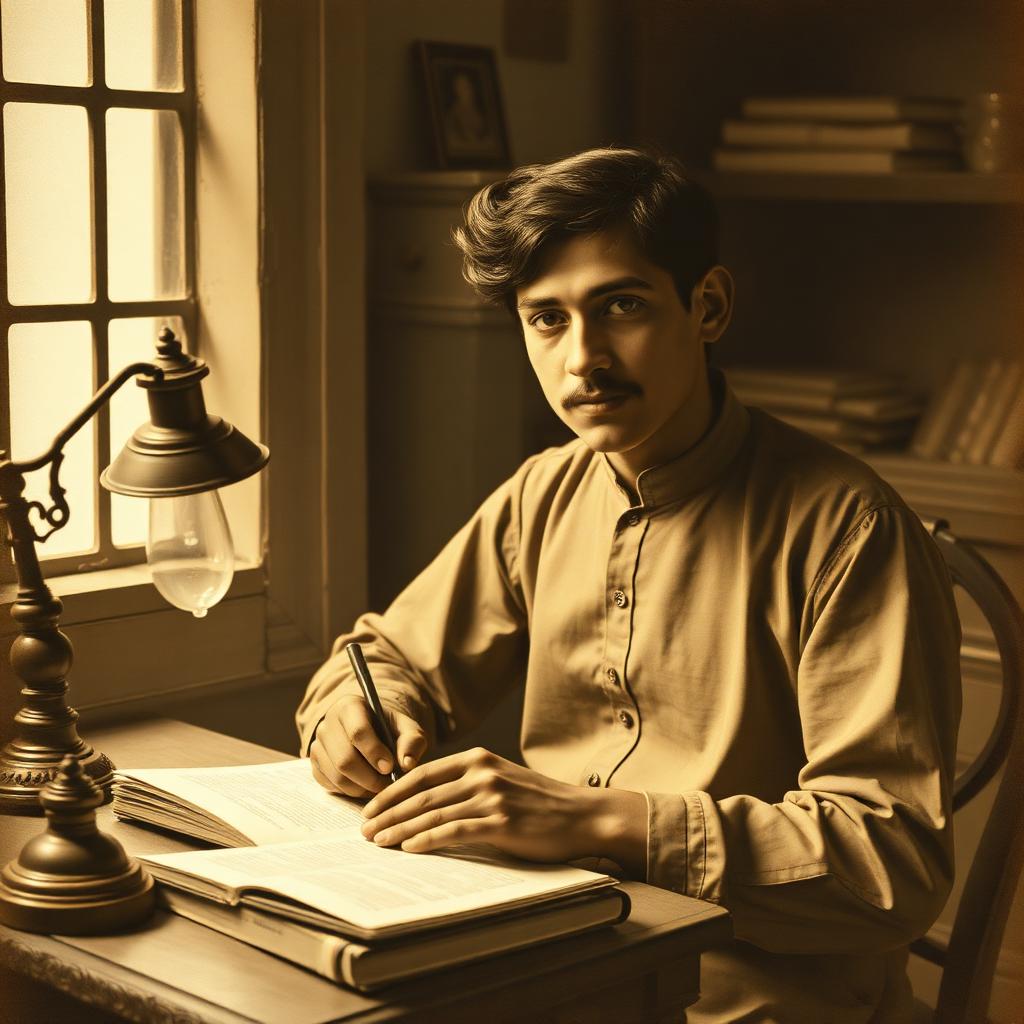
Young Aurobindo Ghose as a fiery nationalist writer in early 1900s Kolkata
Bande Mātaram — the pen as fire

Chapter I

The Voice of Pūrṇa Swarāj

From the editorial chair of Bande Mātaram and Karmayogin, the young Aurobindo electrified a generation of Indian youth. He was among the very first to call openly for Pūrṇa Swarāj — complete independence — at a time when even the Congress spoke only of reform.

He read political action through the lens of the Bhagavad Gītā — as Karma Yoga, action without attachment, offered to the Divine. The freedom of Bhārata was, for him, the freedom of her soul.

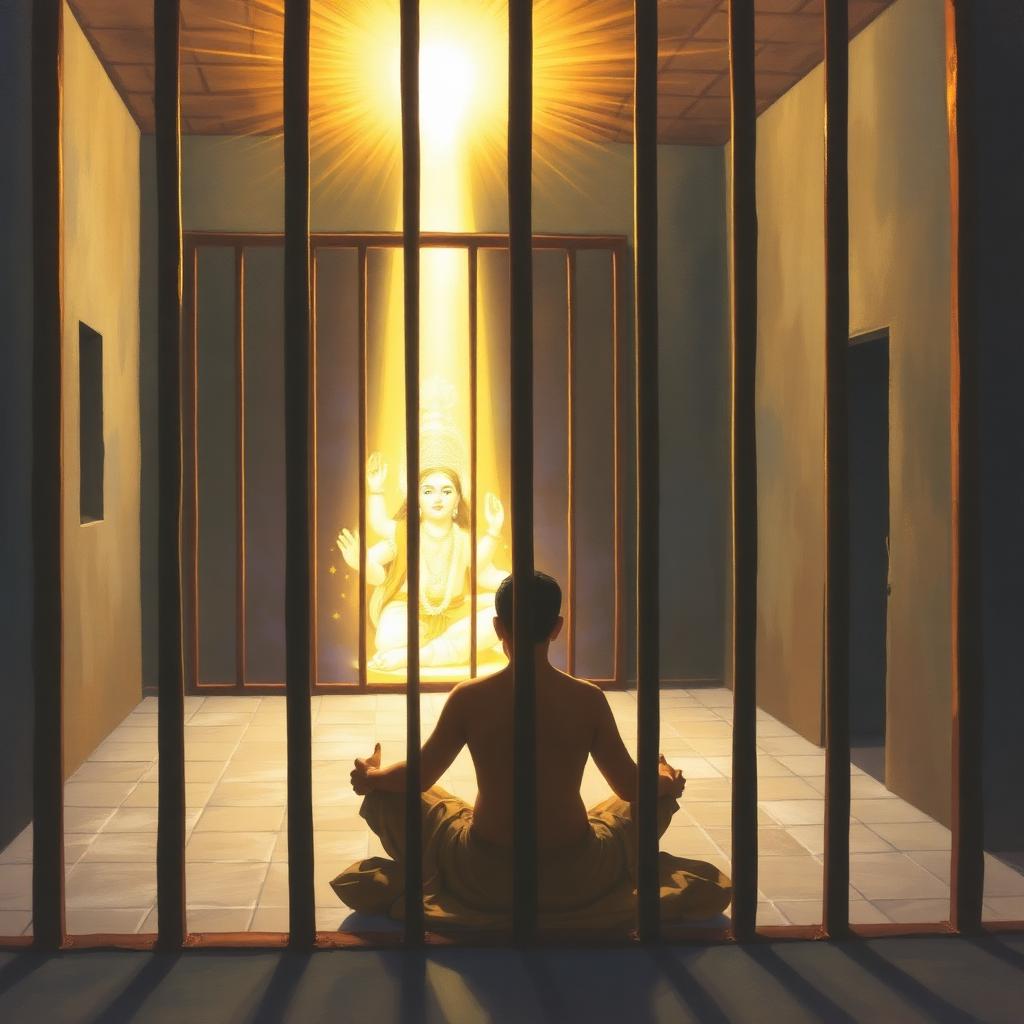
Sri Aurobindo's spiritual awakening in Alipore Jail with the vision of Krishna

Chapter II · The Alipore Vision

A Prison That Became an Ashram

In a narrow cell awaiting trial for sedition, he sat with the Gītā and the Upaniṣads. The walls melted; the guards, the judge, the prisoners — all wore one face: Vāsudeva. "It was Krishna who stood there, Krishna who was the judge, Krishna who was the gaoler." When he walked out acquitted in 1909, the revolutionary had become a yogi.

वासुदेवः सर्वम् इति ॥

"All this is Vāsudeva alone."

Chapter III · The Heart of Integral Yoga

Three Pillars of His Vision

Not retreat from the world — but its conscious divinisation.

पूर्ण योग

Pūrṇa Yoga

Integral Yoga — the synthesis of Karma, Jñāna, Bhakti and Rāja into one transforming sādhanā.

अतिमानस

Atimānasa (Supermind)

The truth-consciousness beyond mind whose descent can divinise human nature itself.

दिव्य जीवन

Divya Jīvana

The Life Divine — spirit and matter as one, the Divine to be realised here on earth.

"What the divine consciousness has willed shall be — the divinisation of earthly life is not a dream, but the next inevitable step."

Chapter IV · The Map of the Path

Principles, Stages & Works

An integral synthesis — covering inner discipline, the architecture of transformation, and the great books that map it.

Three Movements

  • Aspiration — the soul's flame turned upward
  • Rejection — releasing every falsehood within
  • Surrender — offering all to the Divine Śakti

Threefold Transformation

  • Psychic — the soul takes the lead
  • Spiritual — the cosmic Self is realised
  • Supramental — Truth-consciousness descends into matter

Major Works

  • The Life Divine — philosophical magnum opus
  • Savitri — epic of 24,000+ lines
  • The Synthesis of Yoga; Essays on the Gita

Chapter V · Episodes of Light

Three Moments from His Life

Episode 1

The Vision in Alipore

Behind every prisoner, every guard, every wall, he saw Vāsudeva — Krishna alone. The jail became his first Ashram.

Episode 2

Day of Siddhi — 24 November 1926

The descent of the Overmind into the physical. From that day Sri Aurobindo withdrew, leaving the Ashram in the Mother's care.

Episode 3

Savitri — the Mantra of Transformation

Revised line by line over decades, his epic is not poetry alone but a recorded ascent of consciousness in luminous English speech.

Chapter VI · The Mother & the Ashram

A Work Carried by Two

In 1914 Sri Aurobindo met Mirra Alfassa — known to disciples simply as The Mother. She became his spiritual collaborator and the executive Śakti of his vision. Together they founded the Sri Aurobindo Ashram in 1926.

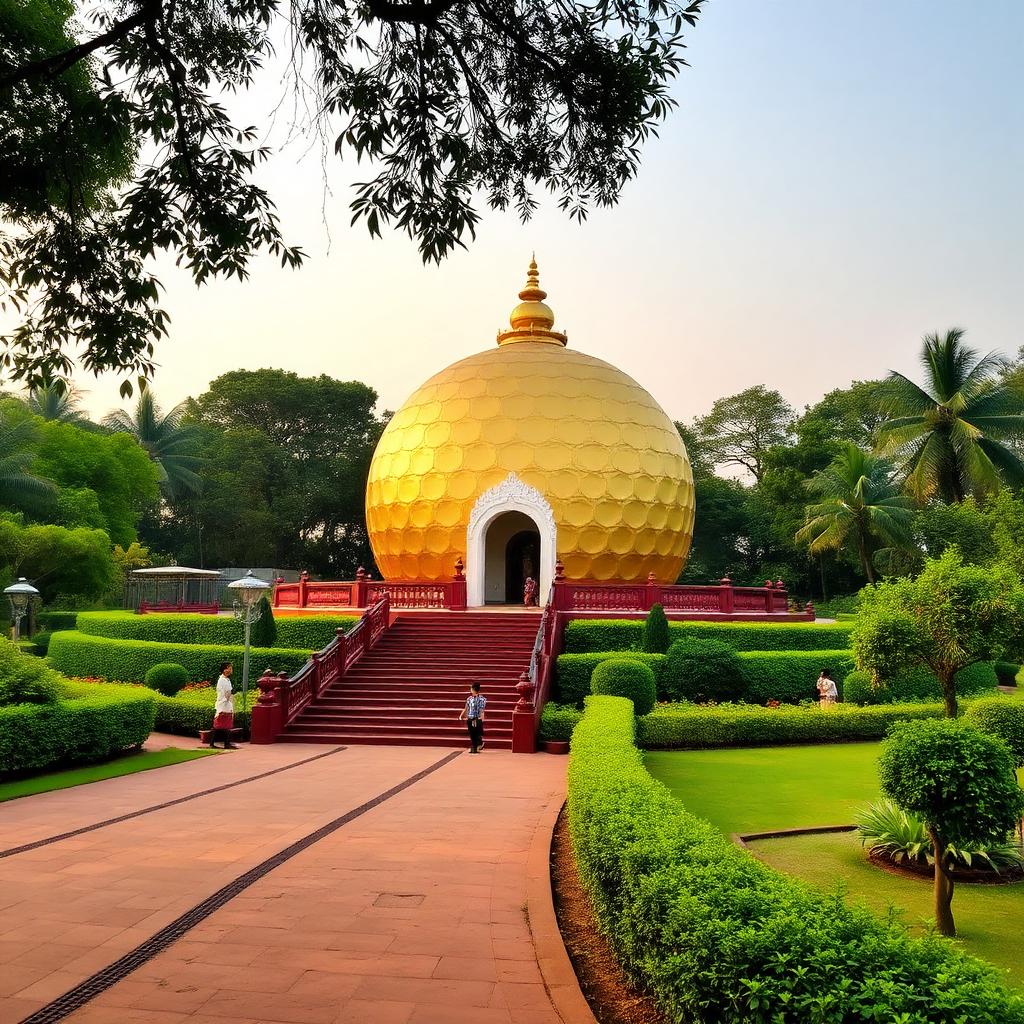
From the Mother's vision came Auroville — an international township born of his ideal of human unity — and the golden Matrimandir, a living chamber of concentration at the heart of his vision for a transformed humanity.

Matrimandir at Auroville, embodying Sri Aurobindo's vision of human unity
Matrimandir — soul of Auroville

Words of the Seer

From Savitri & the Life Divine

॥ ॐ ॥

Sri Aurobindo · Savitri

A Voice ungauged by mortal mind / Speaks in the deep silence of the soul — / The Divine alone is real, and all is He.

"From the closing cantos of Savitri — the soul's recognition that behind every veil burns one undivided Light."

Sri Aurobindo · The Life Divine

All life is Yoga.

"Every breath, every act, every thought is already a movement towards the Divine — when offered consciously, the whole of life becomes sādhanā."

Life Journey

From Kolkata to Pondicherry

  1. 1872

    Born Aurobindo Ghose in Kolkata on 15 August — later, the date of India's independence.

  2. 1879–1893

    Educated in England — St. Paul's School and King's College, Cambridge.

  3. 1893

    Returns to India; joins the Baroda State Service and immerses in Sanskrit and Indian culture.

  4. 1906–08

    Editor of Bande Mataram and Karmayogin — fiery voice of Pūrṇa Swarāj.

  5. 1908–09

    Imprisoned in the Alipore Bomb Case; in his cell, the living Krishna is revealed.

  6. 1910

    Withdraws from politics, sails to Pondicherry to begin his life of yoga.

  7. 1914

    Meets Mirra Alfassa (The Mother); together they begin Integral Yoga.

  8. 1926

    Day of Siddhi — Sri Aurobindo Ashram founded; he retires into seclusion for inner work.

  9. 1950

    Enters mahāsamādhi on 5 December at Pondicherry, leaving Savitri as his testament.

A Seer of the Future

Sri Aurobindo gave Bhārata — and the world — a new hope: that humanity is not a finished species but a transitional being, and that the Divine consciousness can descend into matter itself. The Ashram, Auroville, and the great body of his writings continue to light the path for seekers in every land.

॥ ॐ आनन्दमयि चैतन्यमयि सत्यमयि परमे ॥

"O Supreme — full of bliss, full of consciousness, full of truth."

॥ श्री अरविन्दाय नमः ॥