The Rigveda

Shastra · Rigveda

The Rigveda

॥ ऋग्वेदः ॥

The oldest surviving sacred text of humanity — 1,028 hymns of vision, fire, dawn and the cosmic Word. A doorway into Bronze-Age India and the eternal Sanatan Dharma.

॥ ॐ ॥

10

Mandalas

1,028

Hymns (Sūktas)

10,552

Verses (Ṛcas)

1500–1200 BCE

Composed

Introduction

The Eternal Hymn

॥ ॐ ॥

The Rigveda (Sanskrit: ऋग्वेद, Ṛgveda — from ṛc "praise/hymn" and veda "knowledge") is the oldest of the four Vedas and one of the most ancient surviving texts in any Indo-European language. It is a vast collection of sacred hymns (sūktas) in Vedic Sanskrit and the foundational śruti ("that which is heard") scripture of Sanatan Dharma.

Unlike later classical Sanskrit works, the Rigveda preserves an archaic poetic language and worldview from the late Bronze Age. Its 1,028 hymns (about 10,552 verses) offer unparalleled insights into early Indo-Aryan religion, cosmology, society, rituals and philosophy. The text was composed orally over centuries and transmitted with extraordinary fidelity through specialized mnemonic techniques — long before it was ever written down.
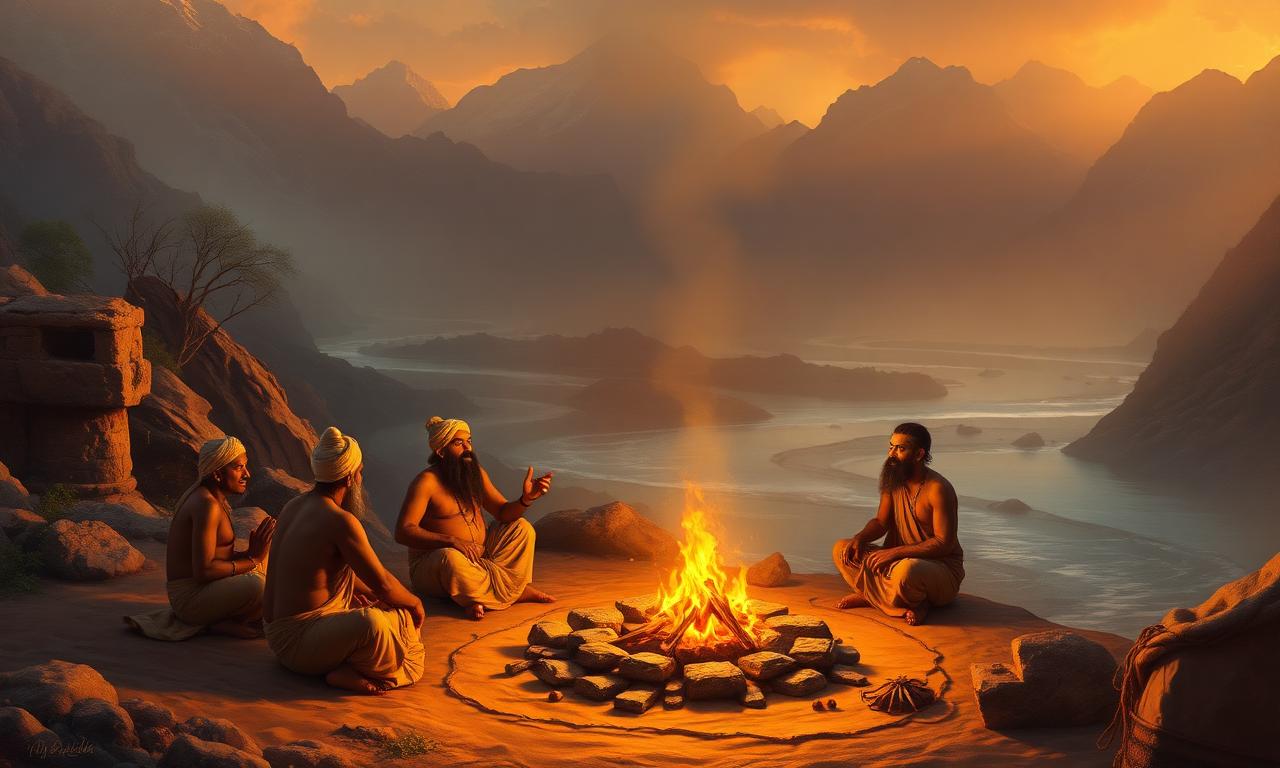
Vedic rishis chanting by the sacred fire
Rishis chanting beside the sacred fire — Sapta Sindhu

Chapter I

History, Dating & Geography

Scholars date the bulk of the Rigveda's composition to roughly 1500–1200 BCE (more broadly 1900–1200 BCE), placing it in the early Vedic period. This dating relies on linguistic evolution, internal references to bronze (but no iron), geography, and comparative evidence with the Iranian Avesta.

The Mitanni treaties from northern Syria/Iraq (c. 1450–1350 BCE) mention Vedic deities such as Indra, Varuṇa and Mitra — supporting a date around or before 1400 BCE.

Geography centres on the Sapta Sindhu ("Land of Seven Rivers") — modern Punjab, Haryana, parts of Pakistan and eastern Afghanistan. Prominent rivers include the Sindhu (Indus), Sarasvati (likely the Ghaggar-Hakra system), Vipash (Beas), Shutudri (Sutlej) and Yamuna. Society was semi-nomadic and pastoral: cattle as wealth, chariot warfare, tribal confederacies (notably the Bharatas) and priest-kings (rajas). Women like Lopamudra, Vishvavara Atreyi and Ghosha appear as composers — agency in ritual and poetry.

Chapter II

The Ten Mandalas

"Family Books" 2–7 form the oldest core. Mandalas 1 & 10 frame the collection.

I

Mandala 1

191 hymns — youngest layer, diverse themes, framing collection.

Rishi · Various

II

Mandala 2

43 hymns mainly to Agni & Indra.

Rishi · Gṛtsamāda

III

Mandala 3

62 hymns — includes the Gayatri Mantra (3.62.10).

Rishi · Viśvāmitra

IV

Mandala 4

58 hymns of devotion and ritual praise.

Rishi · Vāmadeva

V

Mandala 5

87 hymns from the Atri clan.

Rishi · Atri

VI

Mandala 6

75 hymns — heroic and ritual poetry.

Rishi · Bharadvāja

VII

Mandala 7

104 hymns — the longest family book.

Rishi · Vasiṣṭha

VIII

Mandala 8

103 mixed hymns including Vālakhilya.

Rishi · Kaṇva & Āṅgirasa

IX

Mandala 9

114 hymns entirely to Soma Pavamāna.

Rishi · Many

X

Mandala 10

191 hymns — philosophical depth, Purusha & Nasadiya Suktas.

Rishi · Various

Chapter III

Language & Sacred Meters

Vedic Sanskrit is archaic — richer in verbal forms, accents and vocabulary than classical (Pāṇinian) Sanskrit. Hymns use repetition, parallelism, kennings and sound symbolism. The oral tradition developed sophisticated pāṭha systems (padapāṭha, kramapāṭha and more) to preserve every syllable and accent flawlessly across generations.

Gāyatrī

~25% of verses — light, sacred.

3 × 8 syllables

Triṣṭubh

~40% — heroic & cosmic themes.

4 × 11 syllables

Jagatī

Flowing, expansive movement.

4 × 12 syllables

Anuṣṭubh

Foundation of later epic verse.

4 × 8 syllables
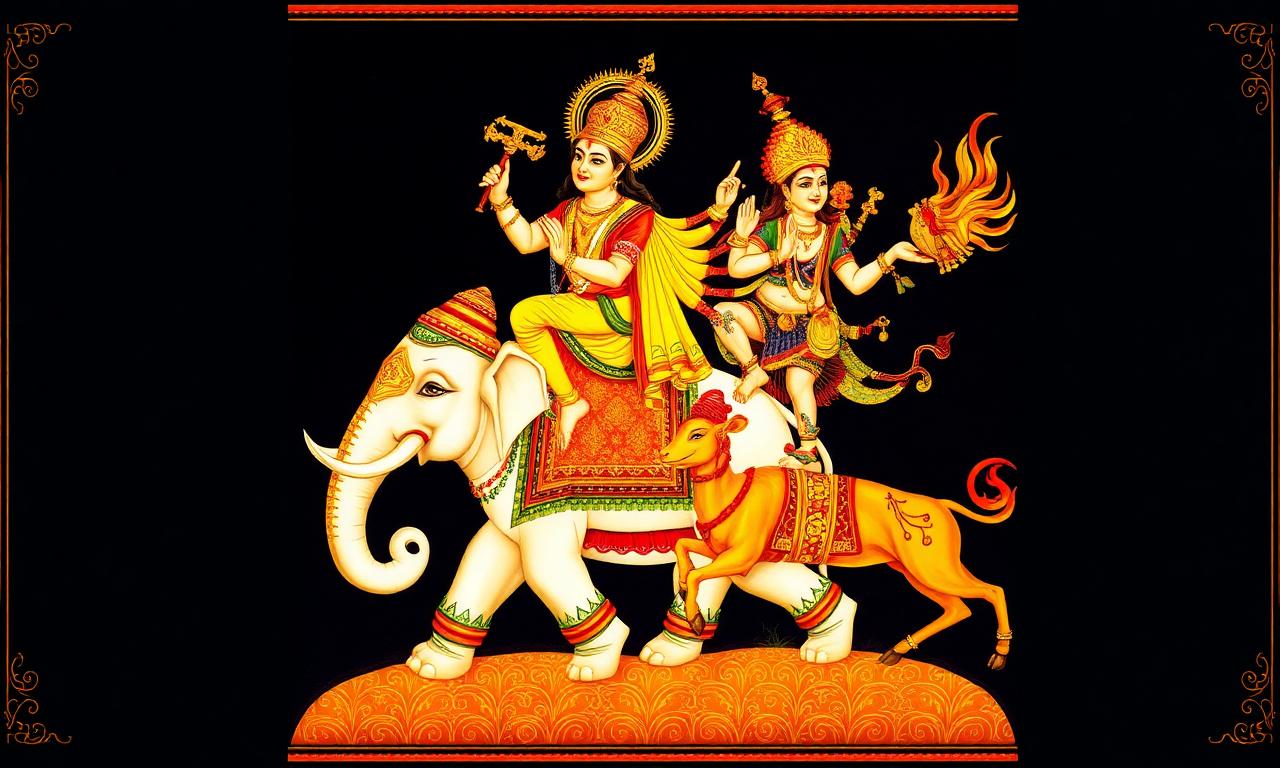
Indra and Agni — chief Rigvedic deities
Indra on Airavata & Agni on the ram

Chapter IV

Devatās — The Cosmic Powers

Henotheistic vision: each deity is praised as supreme within their hymn — personified forces of nature and cosmic principles.

Indra

King of gods, thunderbolt-wielder, slayer of Vṛtra

Hymns · ~250

Agni

Sacred fire, divine priest, messenger of gods

Hymns · ~200

Soma

Sacred plant, drink of immortality, inspirer of poets

Hymns · ~123

Varuṇa

Guardian of cosmic order (ṛta) and moral law

Hymns · Many

Uṣas

Goddess of dawn — luminous, ever-young

Hymns · 21+

Aśvins

Twin divine healers and horsemen

Hymns · 57+

Maruts

Storm gods, fierce companions of Indra

Hymns · 33+

Sarasvatī

Sacred river goddess, mother of knowledge

Hymns · 3 + many

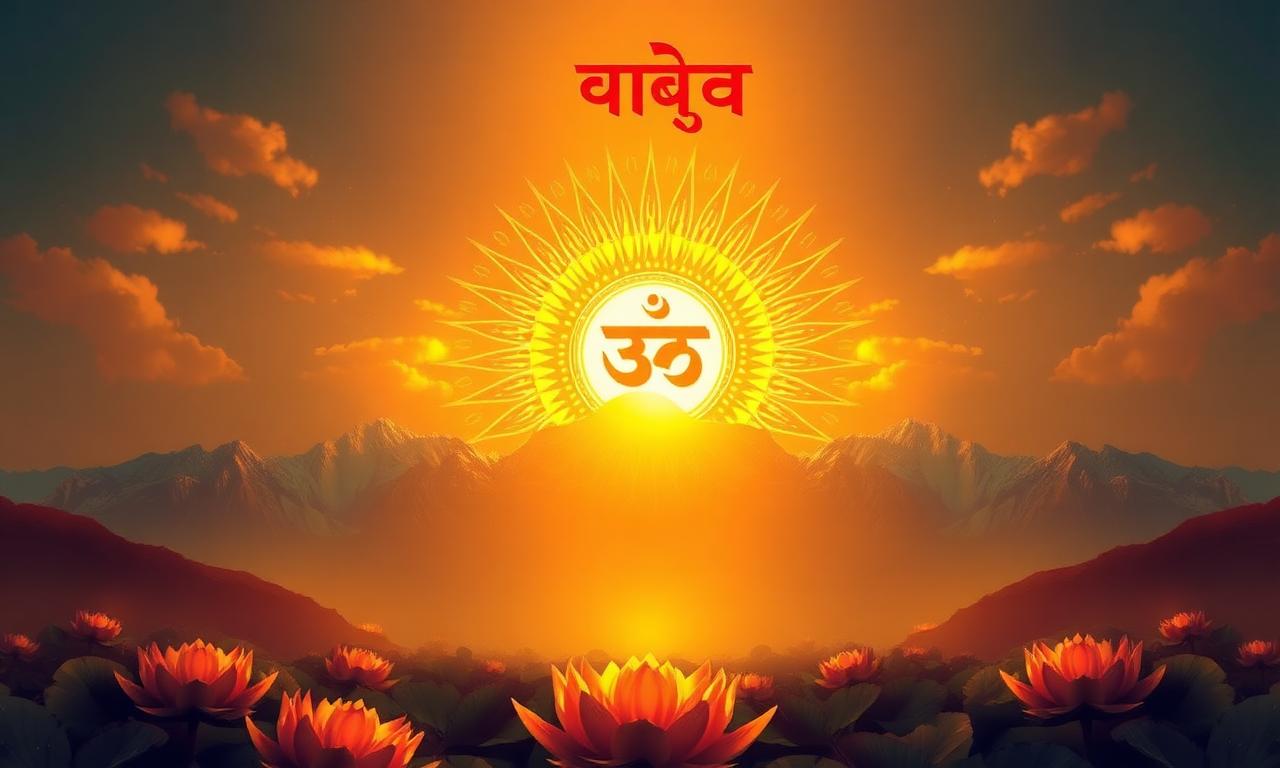
Sunrise over Himalayas — Gayatri

RV 3.62.10 — Composed by Viśvāmitra

Gāyatrī Mantra

ॐ भूर्भुवः स्वः ।
तत्सवितुर्वरेण्यम् ।
भर्गो देवस्य धीमहि ।
धियो यो नः प्रचोदयात् ॥

"We meditate on the excellent glory of the divine Savitṛ; may He stimulate our intellects and prayers."

The most chanted Vedic verse — central to upanayana initiation and daily meditation for millions.

Chapter V · RV 10.90

Puruṣa Sūkta — The Cosmic Person

Cosmic Purusha — creation hymn

The "Hymn of the Cosmic Person" describes creation through the self-sacrifice of the primordial Puruṣa — a being with a thousand heads, eyes and feet who both pervades and transcends the universe.

From his sacrifice emerge the Vedas, meters, animals, the moon (from his mind), the sun (from his eyes), and the four varṇas:

  • Brāhmaṇas

    from the mouth

  • Kṣatriyas

    from the arms

  • Vaiśyas

    from the thighs

  • Śūdras

    from the feet

It portrays an organic unity of cosmos, society and sacrifice — yajña as the primordial creative act — and profoundly shapes later Hindu thought.

Chapter VI · RV 10.129

Nāsadīya Sūkta — The Hymn of Creation

One of the most philosophically sophisticated ancient texts — seven verses in Triṣṭubh meter expressing profound wonder at origins.

"Then even non-existence was not there, nor existence…

There was that One then, and there was no other…

At first there was only darkness wrapped in darkness…

In the beginning desire descended on it — that was the primal seed, born of the mind…

But, after all, who knows, and who can say whence it all came, and how creation happened?

The gods themselves are later than creation, so who knows truly whence it has arisen?

…He knows — or maybe even he does not know."

Oral Preservation

For over 3,000 years, priestly śākhās preserved every syllable through padapāṭha, kramapāṭha and ghanapāṭha — a feat unmatched in human history.

Śākala Recension

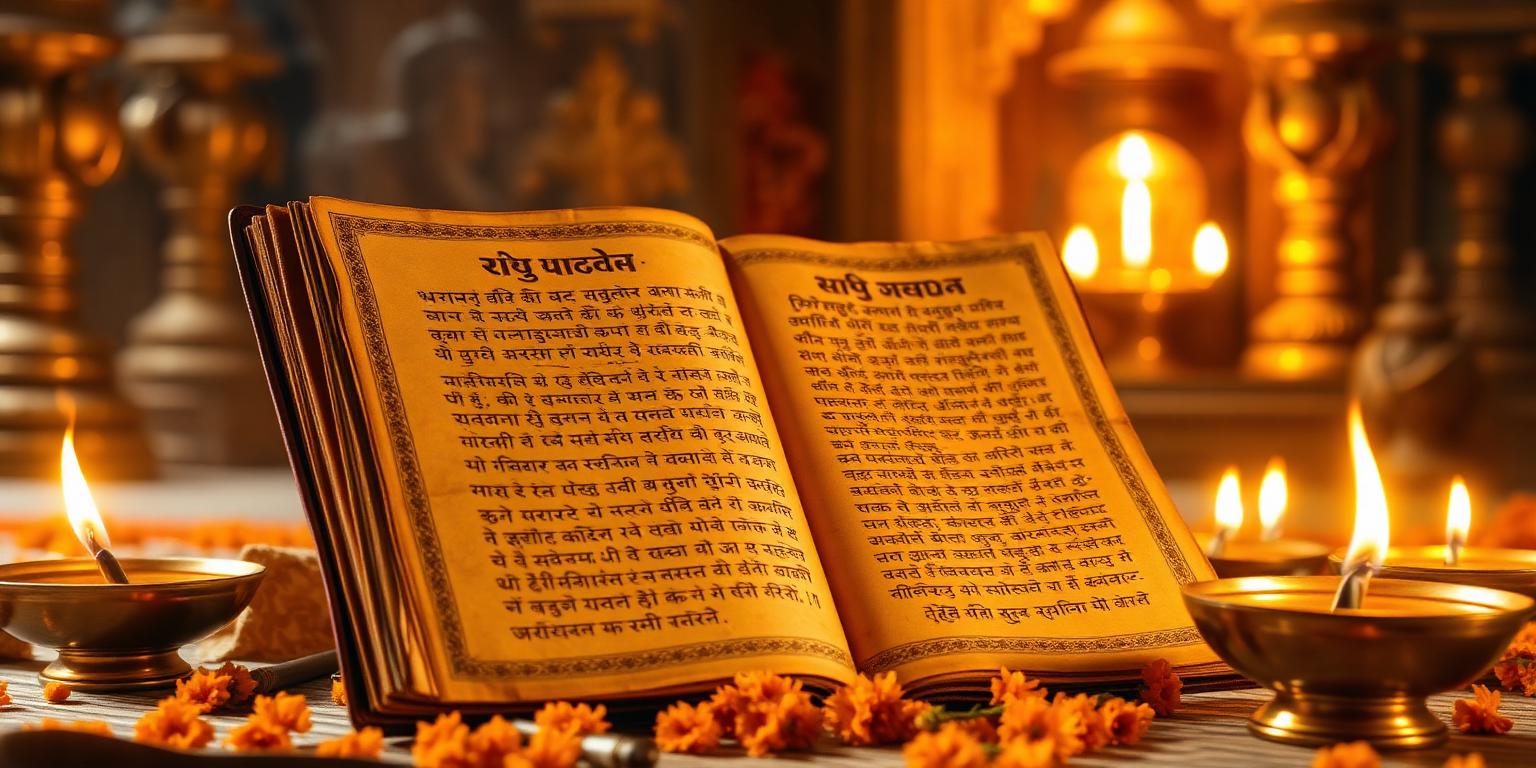
Only the Śākala recension survives in full. Manuscripts appear from the medieval era — palm-leaf and paper, often beautifully illustrated.

Great Commentaries

Sāyaṇa (14th c.) is the most authoritative traditional commentary. Modern: Jamison & Brereton, Geldner, Griffith and Sri Aurobindo's mystical reading.

Chapter VII

Significance & Living Legacy

Bedrock of Hinduism

Its rituals seed the Yajurveda and Sāmaveda; its philosophy flowers into the Upanishads and Vedānta.

Window into Antiquity

Historical data on early Indo-Aryan life, language evolution and cross-cultural contact.

Living Practice

Inspires yoga, meditation, daily chanting, Sāmavedic music and modern spiritual identity.

॥ ॐ ॥

An Enduring Legacy

The Rigveda is far more than an ancient relic. It is living poetry — vibrant, mysterious and profound — capturing humanity's earliest recorded attempts to understand the cosmos, negotiate with divine forces, celebrate existence and question ultimate origins. From the thunderous praise of Indra to the quiet agnosticism of the Nāsadīya Sūkta, it remains apauruṣeya — eternally relevant.