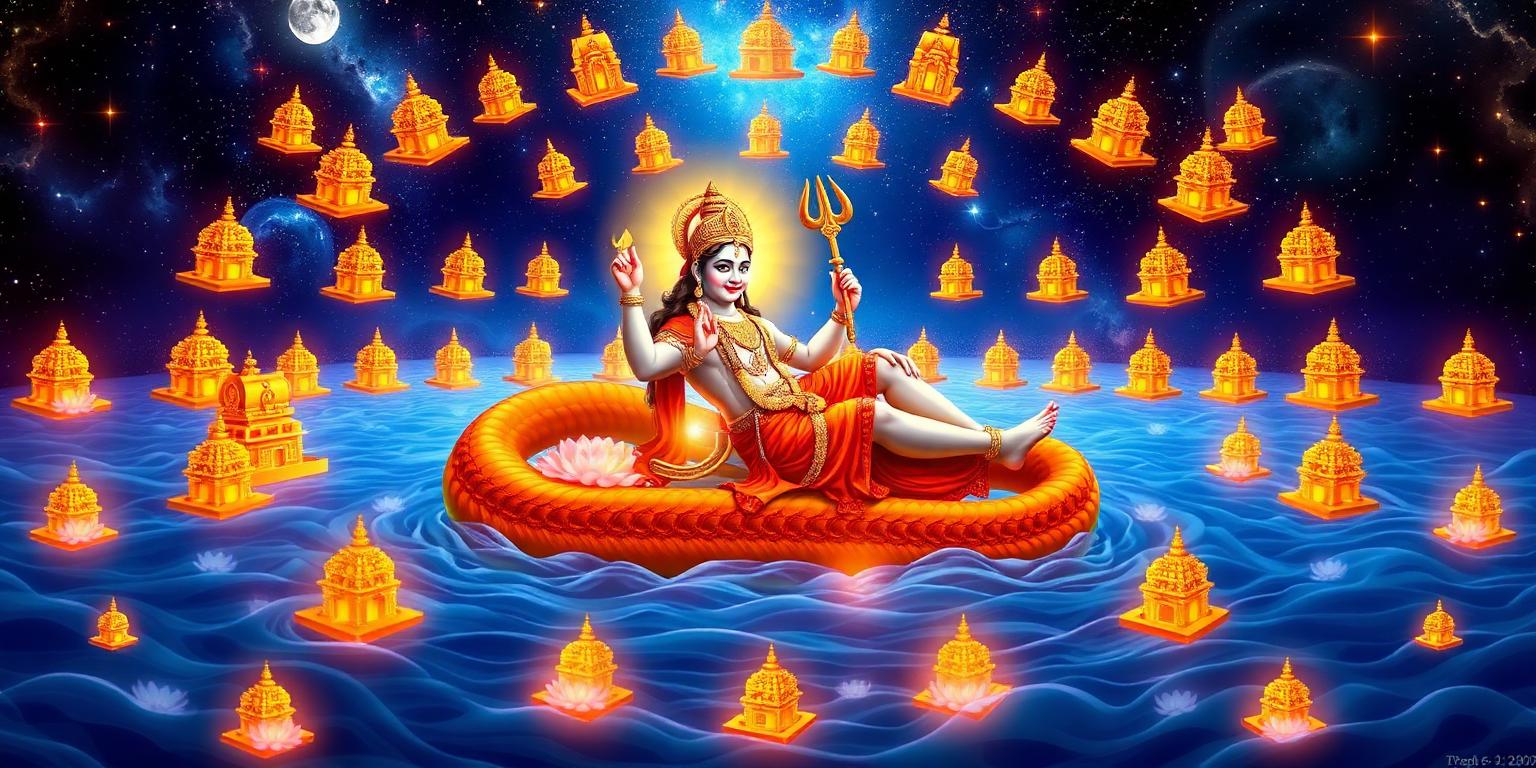
108 Holy Abodes of Vishnu

Divya Deśam

108 Holy Abodes of Vishnu

॥ अष्टोत्तरशतं दिव्यदेशम् ॥

The 108 sacred temples of Lord Vishnu sung by the twelve Alvars in the Nālāyira Divya Prabandham — living gateways to Vaikuṇṭha on earth.

॥ ॐ ॥

108

Divine Abodes

107

On Earth

12

Alvar Saints

4,000

Sacred Verses

Introduction

Heaven Brought Down to Earth

॥ नारायणाय नमः ॥

Divya Deśam joins two Sanskrit words — divya, divine; and deśa, a place or abode. One hundred and eight sacred shrines of Lord Vishnu, glorified in the Nālāyira Divya Prabandham — the four thousand Tamil verses of the twelve Alvars.

Of the 108, one hundred and seven are on the soil of Bhārata — from Muktinath in the snows of Nepal to Tiruvattāru at the southern tip, spread across Tamil Nadu, Andhra, Karnataka, Kerala and the north. The hundred-and-eighth, Paramapadam, is Vaikuṇṭha itself — the eternal abode beyond all worlds.

The Alvars sang between the sixth and ninth centuries — Poigai, Bhūdat, Pey, Tirumaḻiśai, Nammālvār, Madhurakavi, Kulaśekhara, Periyāḻvār, Āṇḍāḷ, Toṇḍaraḍippoḍi, Tiruppāṇ and Tirumaṅgai — transforming worship from cold ritual into burning, longing, embracing love. Their poetry made each temple a living abode where Vishnu himself walks, eats, listens and laughs with his devotees.
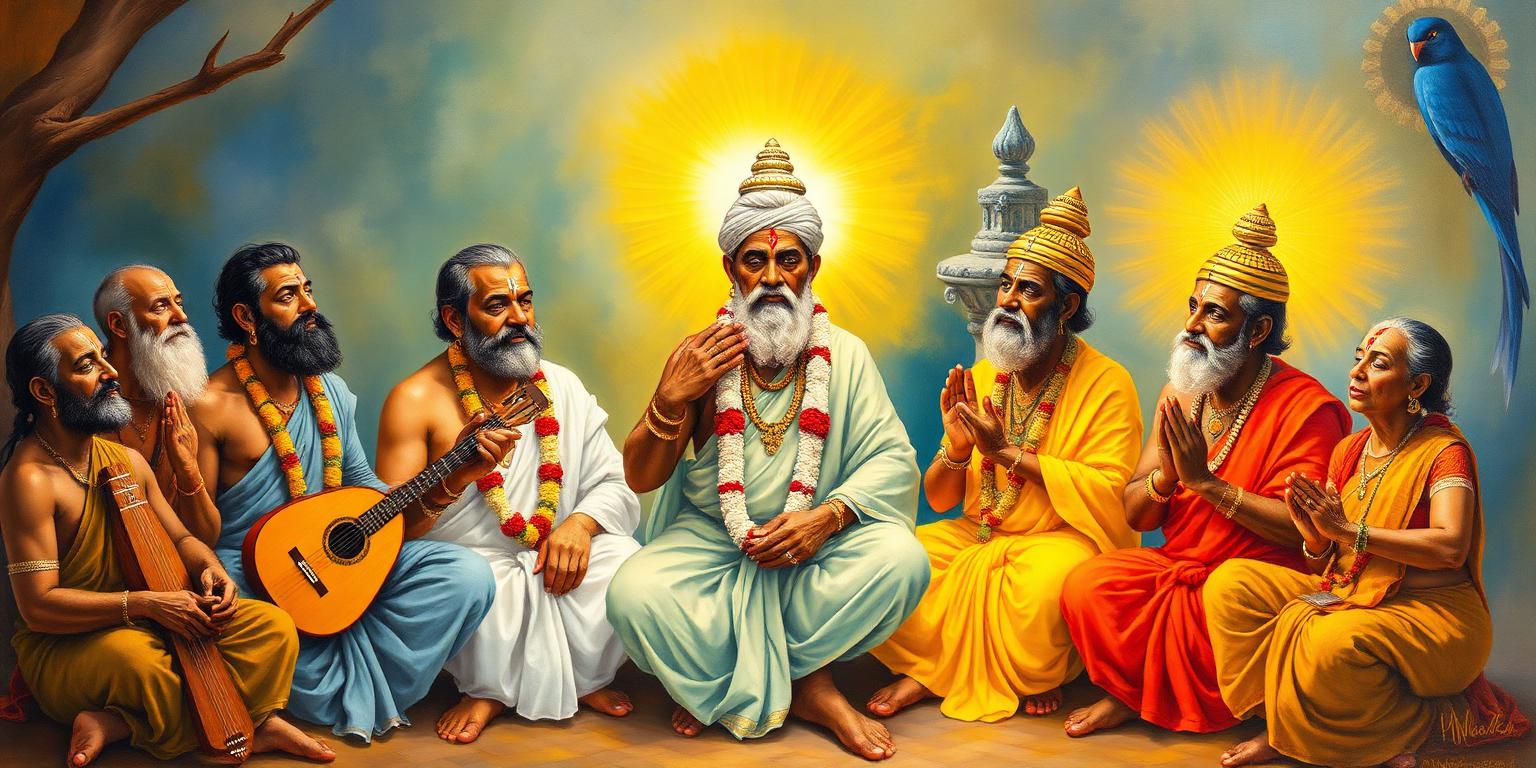
The twelve Alvar saints singing the Divya Prabandham
The Twelve Alvars — saint-poets who sang the 108 abodes into the heart of Bhārata

Chapter I

The Inner Teaching

Six themes woven through every Divya Deśam — one Vishnu, glimpsed through every devotee's tears.

Bhakti & Prapatti

Loving devotion ripening into total surrender — the easiest and surest path to the feet of Nārāyaṇa.

The Accessible Lord

Vishnu descends into stone and bronze, sand and spring, so that even the weakest devotee can touch him.

Sacred Geography

From the Himalayan Muktinath to the southern Kanyakumari, the abodes turn the land of Bhārata into a single garland of Vaikuṇṭha.

Vaikuṇṭha on Earth

Each Divya Deśam is a piece of the Lord's eternal abode — heaven brought down to the dust of the human road.

Song as Scripture

The Tamil hymns of the Alvars are held equal to the four Vedas — devotion sung is devotion realised.

One Lord, Many Forms

Ranganātha reclining, Veṅkateśvara standing, Varadarāja blessing — countless faces of the same infinite One.

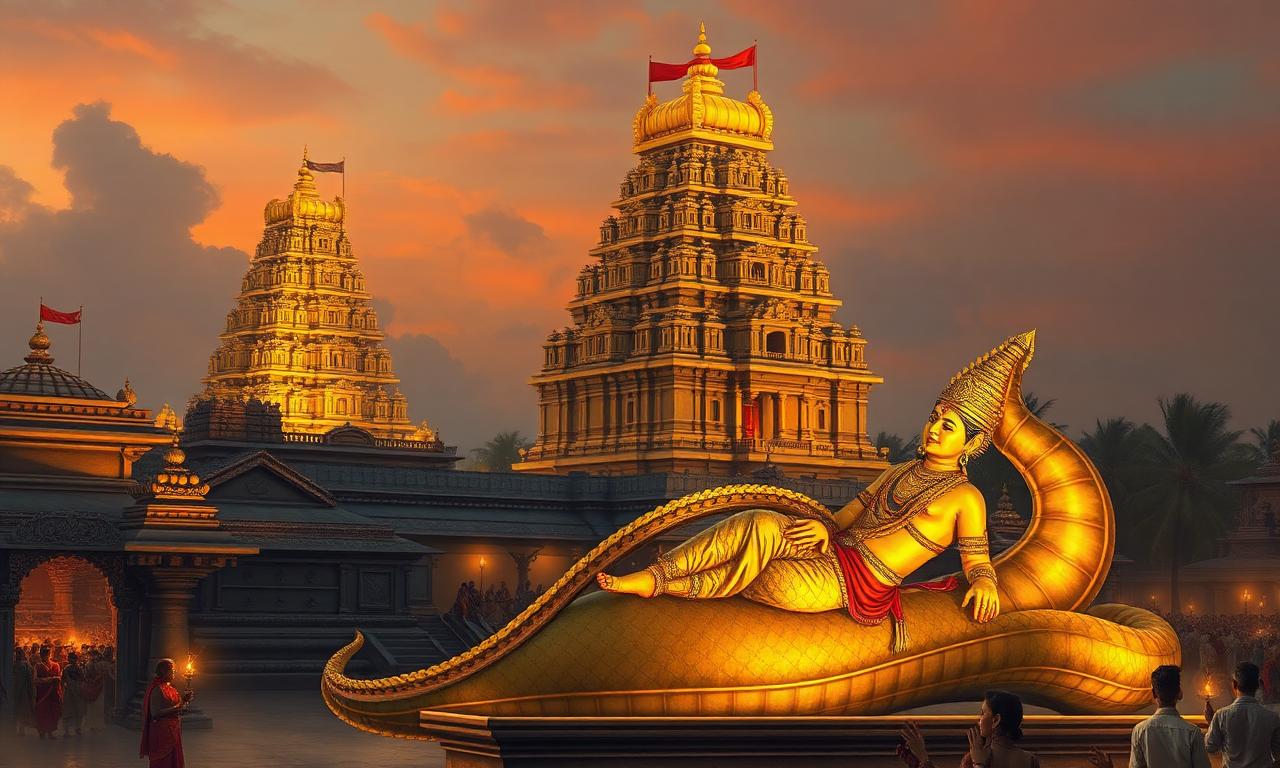
Srirangam — Lord Ranganatha reclining on Adisesha

Periya Kovil · The Foremost of the 108

Srirangam — Heaven on Earth

On an island in the Kāveri, within seven concentric walls and twenty-one towering gopurams, Lord Ranganātha reclines upon the serpent Adi-śeṣa. The golden vimāna above his head, the Alvars say, was brought down from Vaikuṇṭha by Vibhīṣaṇa. Here Rāmānujācārya lived and taught; here over 247 verses of the Prabandham were poured out in adoration; here, the saints declare, Vaikuṇṭha itself has come to dwell on earth.

श्रीरङ्गं भुवने स्वर्गं रङ्गनाथं परं तपः ॥

"Srirangam is heaven upon the earth; Ranganātha himself is the supreme austerity of the devotee."

Chapter II

Five of the Most Glorious Abodes

A glimpse into five of the 108 — each a different face of the same infinite Vishnu.

Srirangam — Ranganātha
1
Ranganātha

श्रीरङ्गम्

Srirangam

Tamil Nadu

Presiding · Raṅganātha · Raṅganāyakī

The foremost of all 108 — Periya Kovil, the largest functioning Hindu temple in the world. Lord Ranganātha reclines on the serpent Adi-śeṣa within seven concentric enclosures on an island in the Kāveri. Its golden vimāna was said to be brought from Vaikuṇṭha by Vibhīṣaṇa, the noble brother of Rāvaṇa. Praised in over 247 verses by the Alvars — more than any other shrine — and the heart of Śrī Vaiṣṇava theology systematised by Rāmānujācārya.

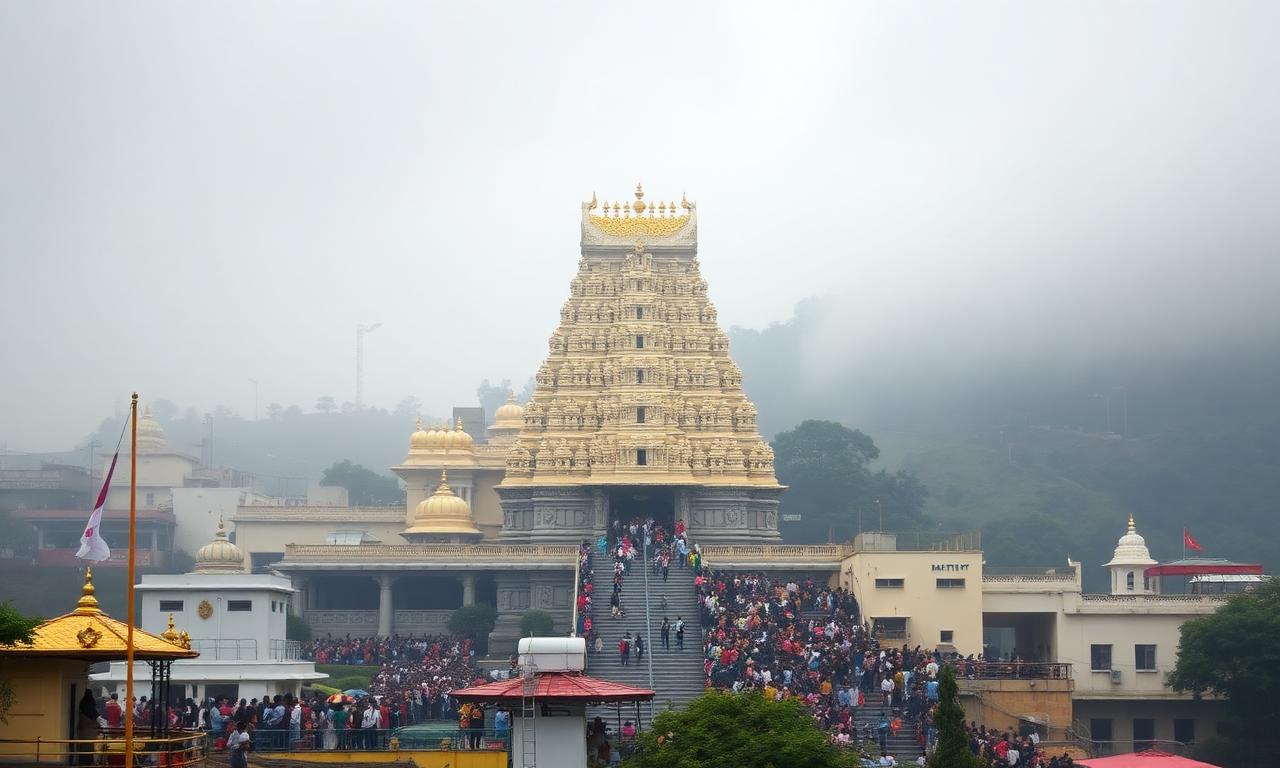
Tirumala – Tirupati — Veṅkateśvara
2
Veṅkateśvara

तिरुमला

Tirumala – Tirupati

Andhra Pradesh

Presiding · Veṅkateśvara · Padmāvatī

The most visited shrine on earth. Lord Veṅkateśvara — also called Bālājī — stands self-manifested on the seven hills of Tirumala, having descended in the Kali Yuga to fulfil the prayers of his devotees. Glorified by Nammālvār and others. Pilgrims offer their hair as a token of complete surrender, a tradition followed for over a thousand years.

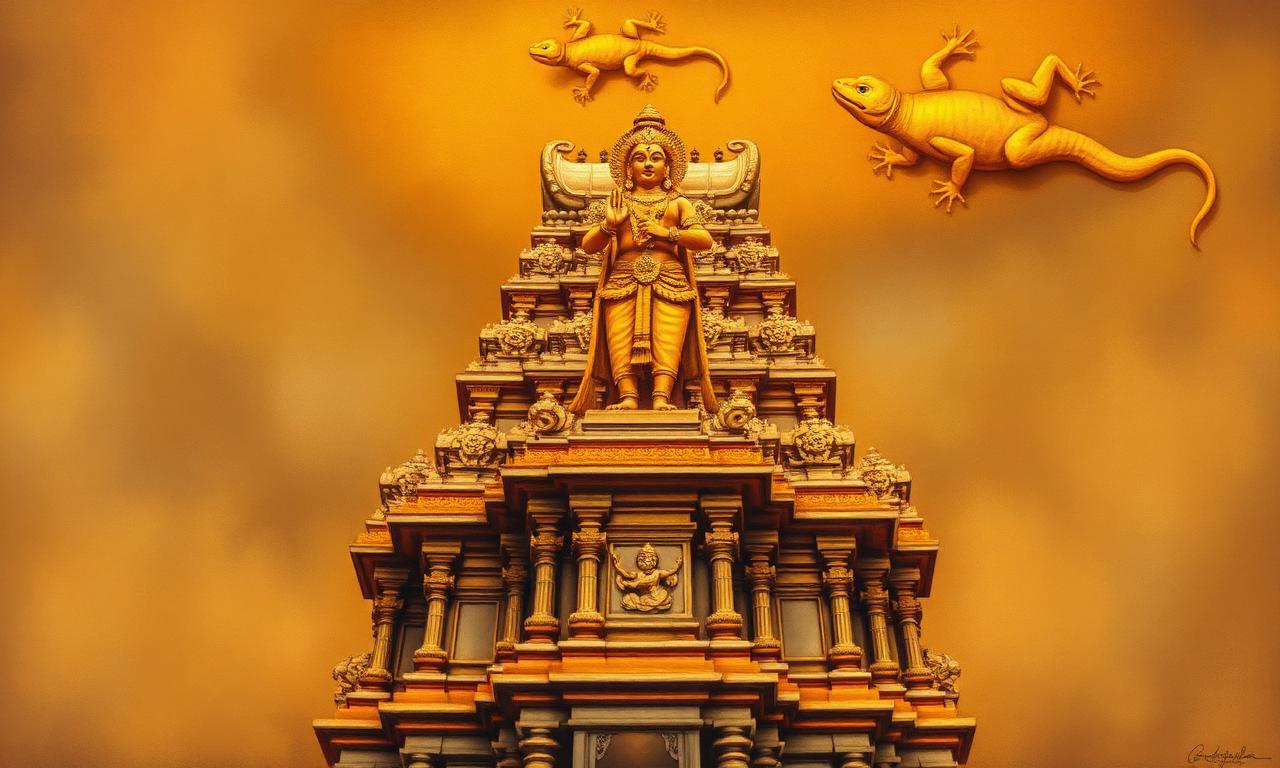
Kanchipuram — Varadarāja Perumāḷ
3
Varadarāja Perumāḷ

काञ्ची

Kanchipuram

Tamil Nadu

Presiding · Varadarāja · Perundēvī

One of the seven sacred mokṣa-purīs. Lord Varadarāja — the boon-giver — appeared on Hastagiri hill from Brahmā's aśvamedha fire. The temple is famed for the golden and silver lizards on its ceiling, the original wooden Aṭṭi-varadar (revealed every forty years), and grand Brahmotsavam festivals. A great seat of Śrī Vaiṣṇava learning where Rāmānujācārya served as the temple priest.

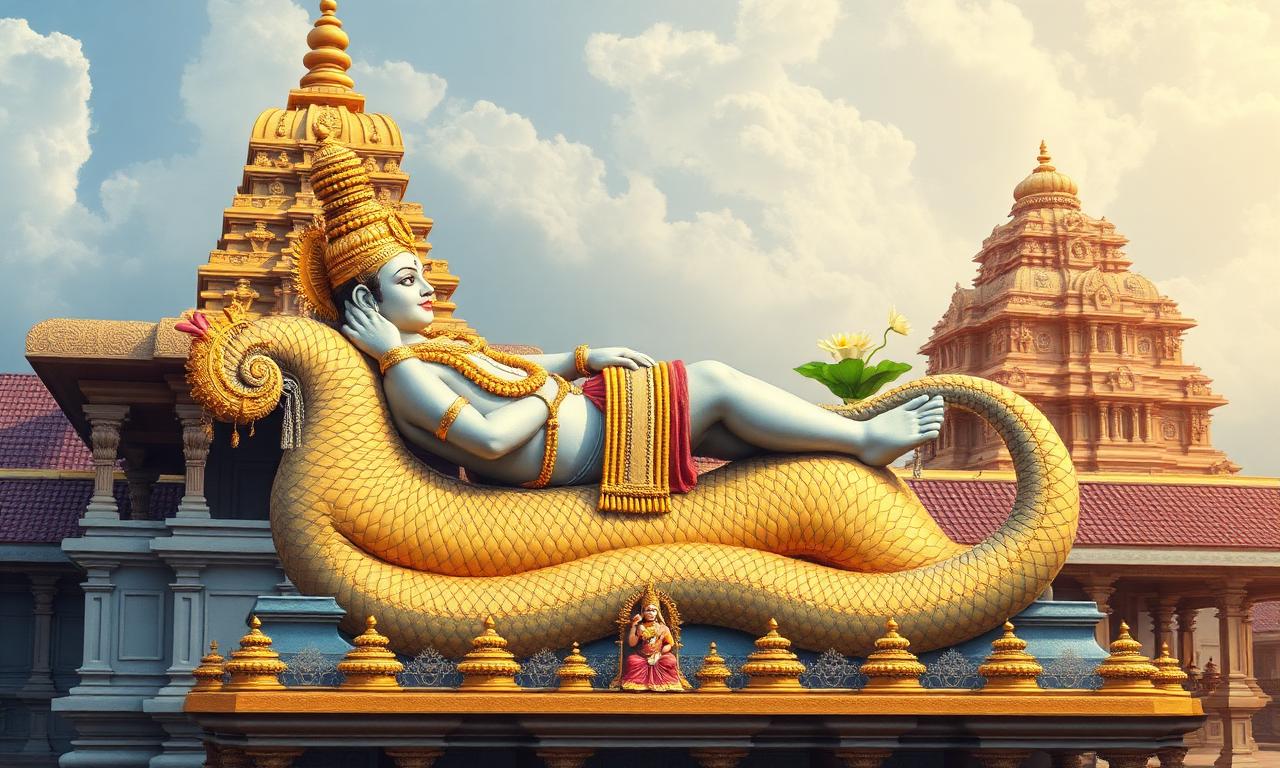
Thiruvananthapuram — Padmanābha
4
Padmanābha

अनन्तपुरम्

Thiruvananthapuram

Kerala

Presiding · Padmanābha · Hari-Lakṣmī

One of the wealthiest temples on earth. Lord Padmanābha reclines on Ananta-śeṣa in the unique anantasayana form, his viewing requiring three doors — feet, navel, face — for the eyes cannot embrace him in a single glance. A lotus rises from his navel bearing Brahmā. The Travancore royal family rules to this day as Padmanābhadāsas, servants of the Lord.

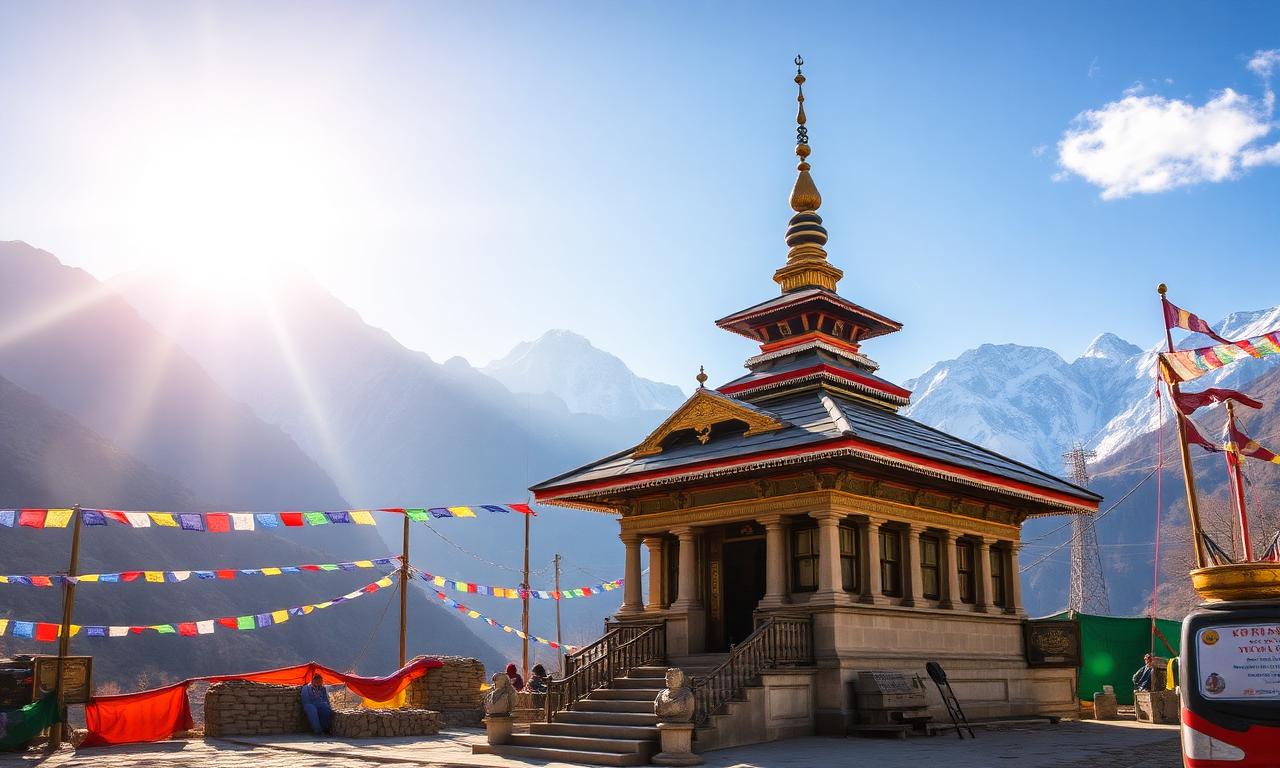
Muktinath – Saligrama Kshetra — Muktināth
5
Muktināth

मुक्तिनाथ

Muktinath – Saligrama Kshetra

Nepal · Himālaya

Presiding · Muktināth · Lakṣmī

The northernmost Divya Deśam, perched at 3,800 metres in the Himalayan rain-shadow. A rare shrine where Vishnu and Shiva are worshipped together. From the sacred Kāli-Gaṇḍakī river below come the śālagrāma stones — natural representations of Vishnu — found nowhere else on earth. One hundred and eight water spouts ring the courtyard for the final purifying bath.

Chapter III

The 108 Across the Land

The traditional regional classification of the Divya Deśams across Bhārata.

Chola Nāḍu (40 temples)

The fertile Kāveri delta — Srirangam, Tiruvarangam, Tirukkudanthai (Kumbakonam) and the great cluster around Mannārkōvil.

Pāṇḍya Nāḍu (18 temples)

The southern Tamil heartland around Madurai and the temples of Āḻvār Tirunagari, birthplace of Nammālvār.

Toṇḍai Nāḍu (22 temples)

Kanchipuram and surrounds — Varadarāja, Aṣṭa-bhūja Perumāḷ, Pāṇḍava Dūtar and the magnificent Vaikuṇṭha Perumāḷ.

Naḍu Nāḍu (2 temples)

Tirukkōvalūr — where the first three Alvars met in a narrow doorway and the Lord himself made the fourth.

Malai Nāḍu (13 temples)

Kerala — including Tiruvananthapuram, Tiruvanvandūr, Tiruvāṟanviḻai and Tirucchengannūr.

Vaḍa Nāḍu (12 temples)

North of the Tamil land — Ayodhyā, Mathurā, Vṛndāvana, Dvārakā, Bādrīnārāyaṇa, Naimiśāraṇyam and Muktinath in Nepal.

And finally — Paramapadam (Vaikuṇṭha), the 108th — the eternal abode of Vishnu, beyond every map and every horizon.

Chapter IV

A Verse from the Divya Prabandham

In the voice of Nammālvār — the foremost of the Alvars.

Tiruvāymoḻi · Nammālvār

उय्यवुमाम् उयिर्गलिर्क्केल्लाम् इन्द उलगिनिल् । मेय्यनेय वैकुण्ठन् तानेय वैत्तानिङ्के ॥ नालायिरम् पाडुम् दिव्य प्रबन्धम् ओतुवीर् । पोनार् वैकुण्ठम् पुग्गार् पुग्गार् पुग्गार् ॥

"For the salvation of every living being in this world, the True One — Vaikuṇṭhanāthan himself — has placed his abodes here. Those who recite the four thousand verses of the Divya Prabandham have gone to Vaikuṇṭha, have gone, have gone, have gone."

Chapter V

Yātrā & Practice

How devotees through the centuries have approached the 108 abodes.

The 108 Pilgrimage

Completing all 108 Divya Deśams is a lifelong sādhanā. Most devotees walk them in stages — the great Chola cluster first, then the Pāṇḍya temples, then the northern abodes. The 108th, Paramapadam, is reached only at the end of all journeys.

Reciting the Prabandham

Each morning and evening, in temples and homes across the south, the four thousand verses are chanted by trained Adhyāpakas. Listening to even a few decades a day is said to grant the merit of pilgrimage.

The Brahmotsavam

Each Divya Deśam celebrates an annual ten-day festival when the utsava-mūrti is taken in procession around the temple streets — the Lord himself coming out to bless every home.

The Inner Yātrā

The Alvars insist that the truest pilgrimage is the journey inward — recognising one's own heart as the foremost of the 108 abodes, where the Lord eternally reclines.

॥ श्रीमन्नारायण चरणौ शरणं प्रपद्ये ॥

From the reclining Ranganātha at Srirangam to the standing Veṅkateśvara at Tirumala, from the boon-giving Varadarāja at Kanchi to the snow-bound Muktināth in the Himalayas — the 108 Divya Deśams are the supreme Vaishnava contribution to the sacred geography of Bhārata. They remind every devotee that the Lord is not distant, but ever-present in these abodes — waiting, always waiting, with open arms.