Introduction
The Wooden Lord of Puri
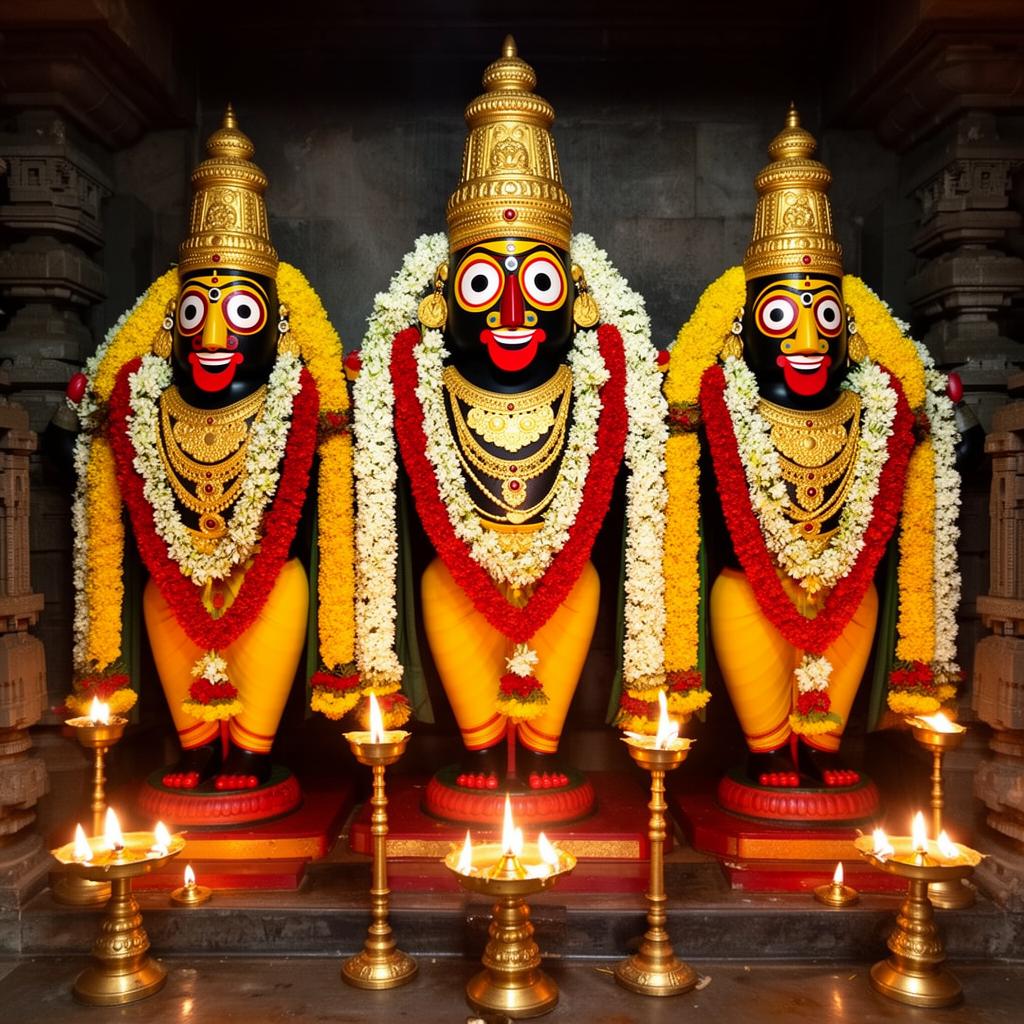
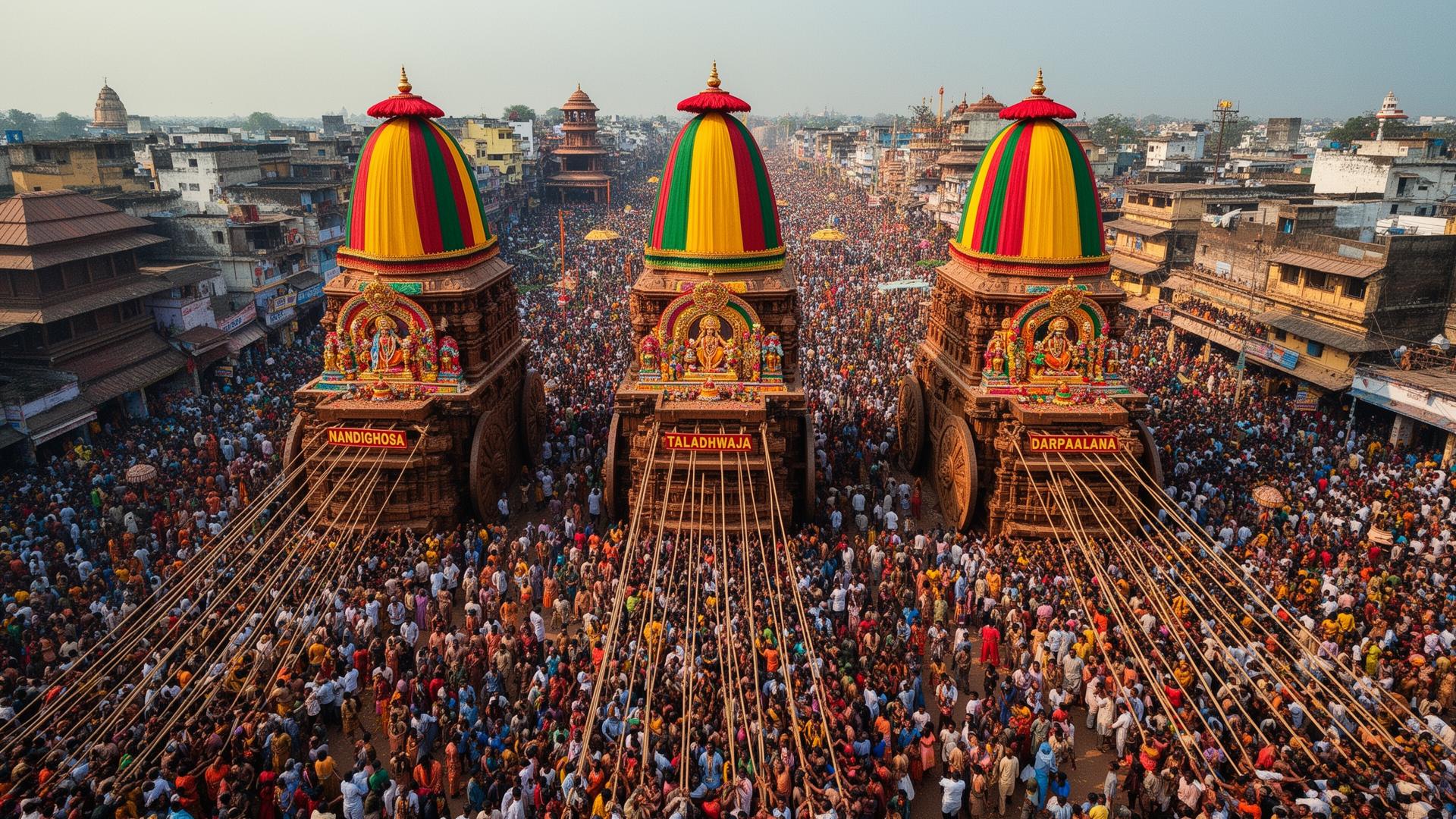
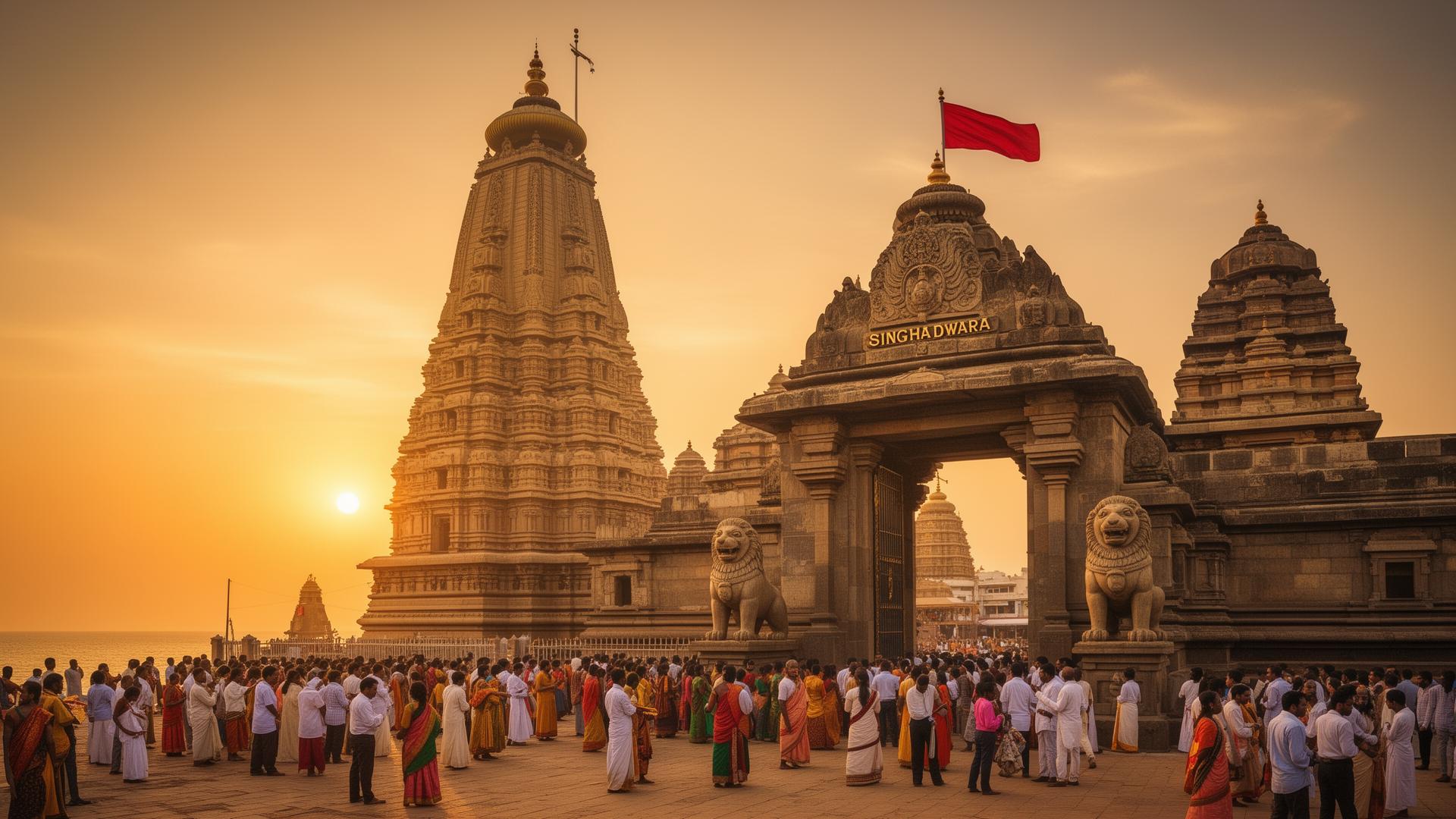
On the eastern shore of Bhārata, where the Bay of Bengal meets the golden sands of Odisha, rises the Śrī Jagannātha Mandir of Purī — the eastern Char Dham, one of the 108 Divya Desams, and the supreme abode of Lord Jagannātha, his elder brother Balabhadra, and his sister Subhadrā.
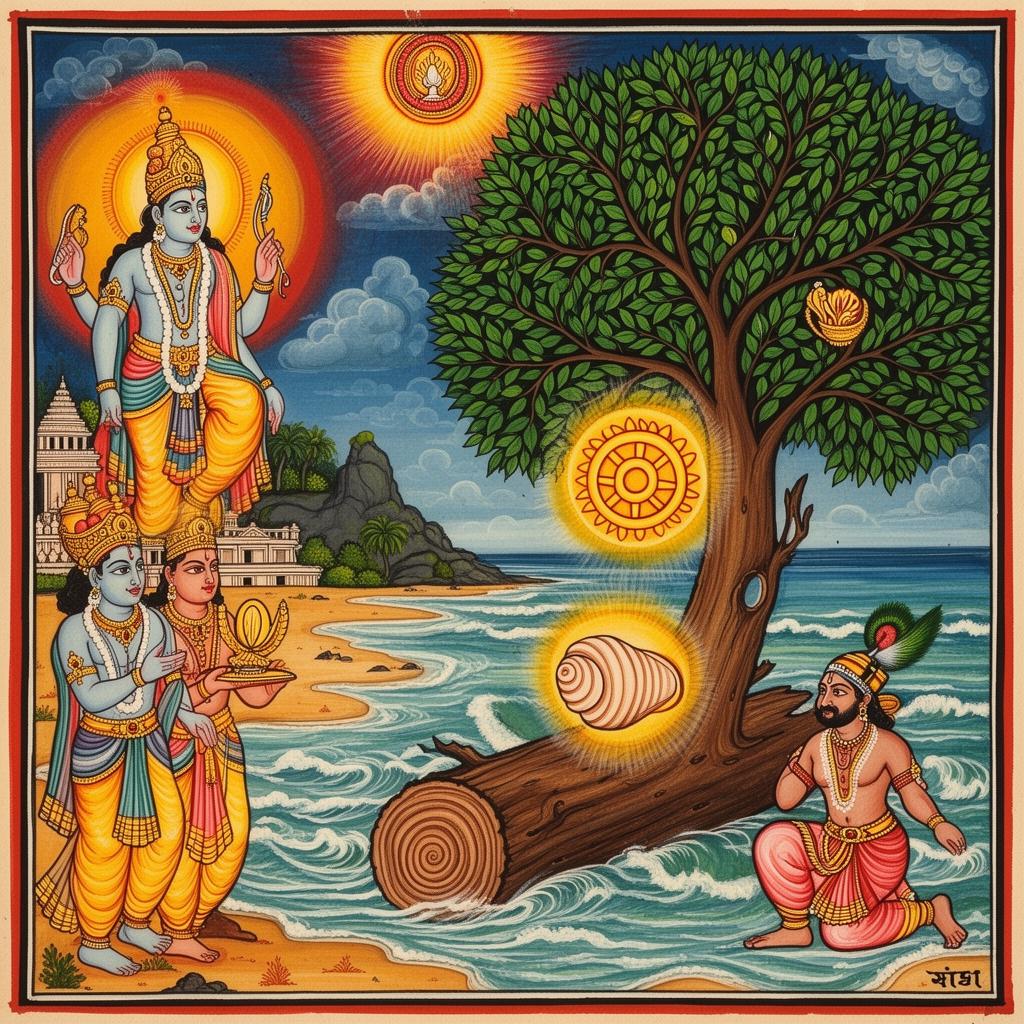
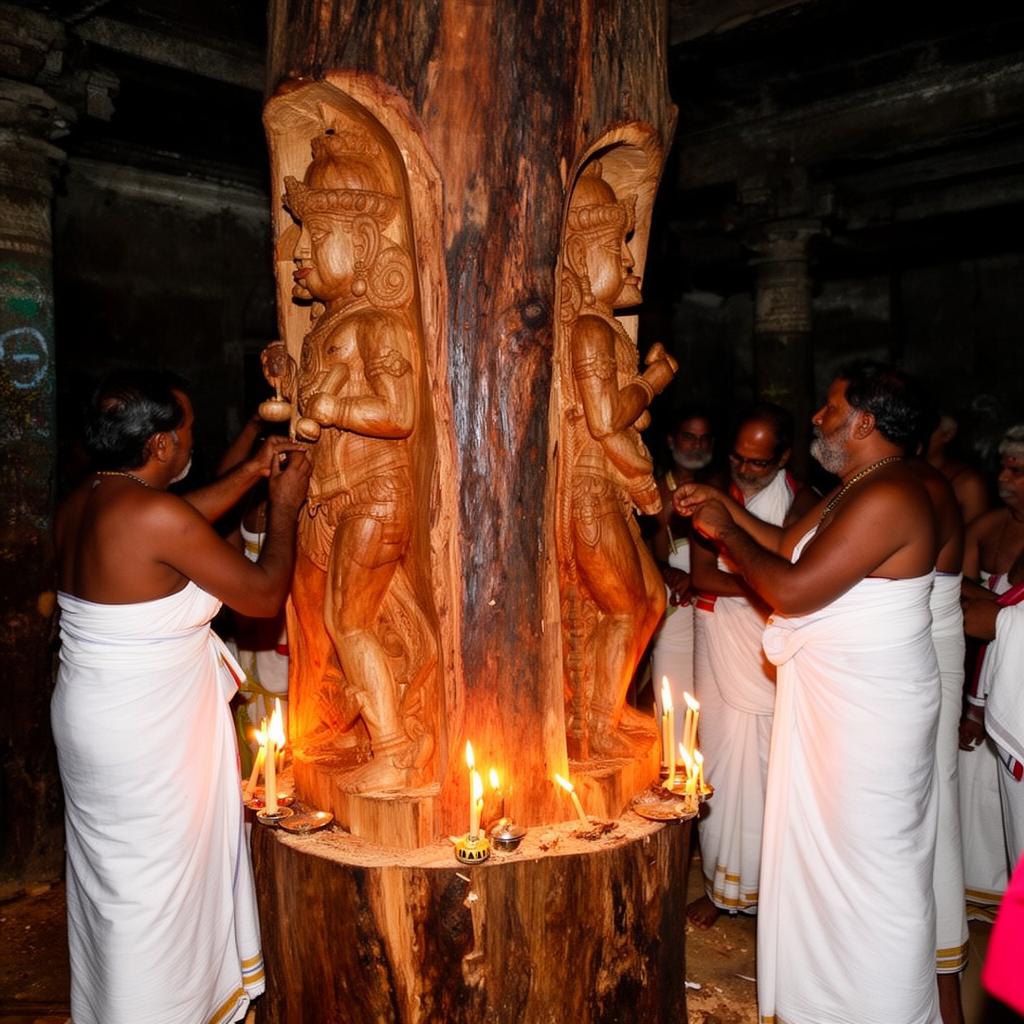
Unlike any other temple in Hinduism, the deities of Puri are carved from dāru — sacred neem wood — in a form that is at once tribal, Vedic and devotional. Their great round eyes, smiling faces and armless forms are not human likeness but pure symbol: the Lord beyond shape who comes close enough to be loved.
Within the wooden idol, tradition teaches, resides the Brahma Padārtha — the indestructible heart of Lord Kṛṣṇa himself. So Jagannātha is no mere image, but Kṛṣṇa's living presence in the Kali Yuga, and Purī is the place on earth where every soul — tribal or twice-born, prince or pauper — may stand before him as one of his own.