Lord of the Universe

Kāśī Viśvanātha

Lord of the Universe

॥ काशी विश्वनाथ ॥

The foremost of the twelve Jyotirlingas — Shiva enthroned at the heart of his eternal city on the banks of the holy Gaṅgā.

॥ ॐ ॥

Foremost

Among Jyotirlingas

Ahilyābāī · 1780

Rebuilt by

2021

Corridor Opened

Mā Gaṅgā

On the Banks of

Introduction

The Eternal Light of Kāśī

॥ ॐ नमः शिवाय ॥

The Kāśī Viśvanātha Mandir of Vārāṇasī is the supreme abode of Lord Shiva — foremost among the twelve Jyotirlingas, heart of all Shaiva tradition. The presiding deity is Viśvanātha — the Lord of all that exists, the consciousness underlying every world.

The temple rises on the western bank of Mā Gaṅgā, in a city older than every chronicle that records it. Hindu tradition holds Kāśī to be founded by Shiva himself, balanced upon the three points of his triśūla — a city that the earth cannot swallow and time cannot end.

It is taught that to die in Kāśī is to be liberated — for at the final moment Shiva himself whispers the Tāraka Mantra into the dying ear, and the soul crosses the ocean of becoming, never to return. The Gaṅgā at his feet, the Liṅga in the sanctum, the lamp burning forever at Maṇikarṇikā — together they form the most concentrated point of grace upon this earth.
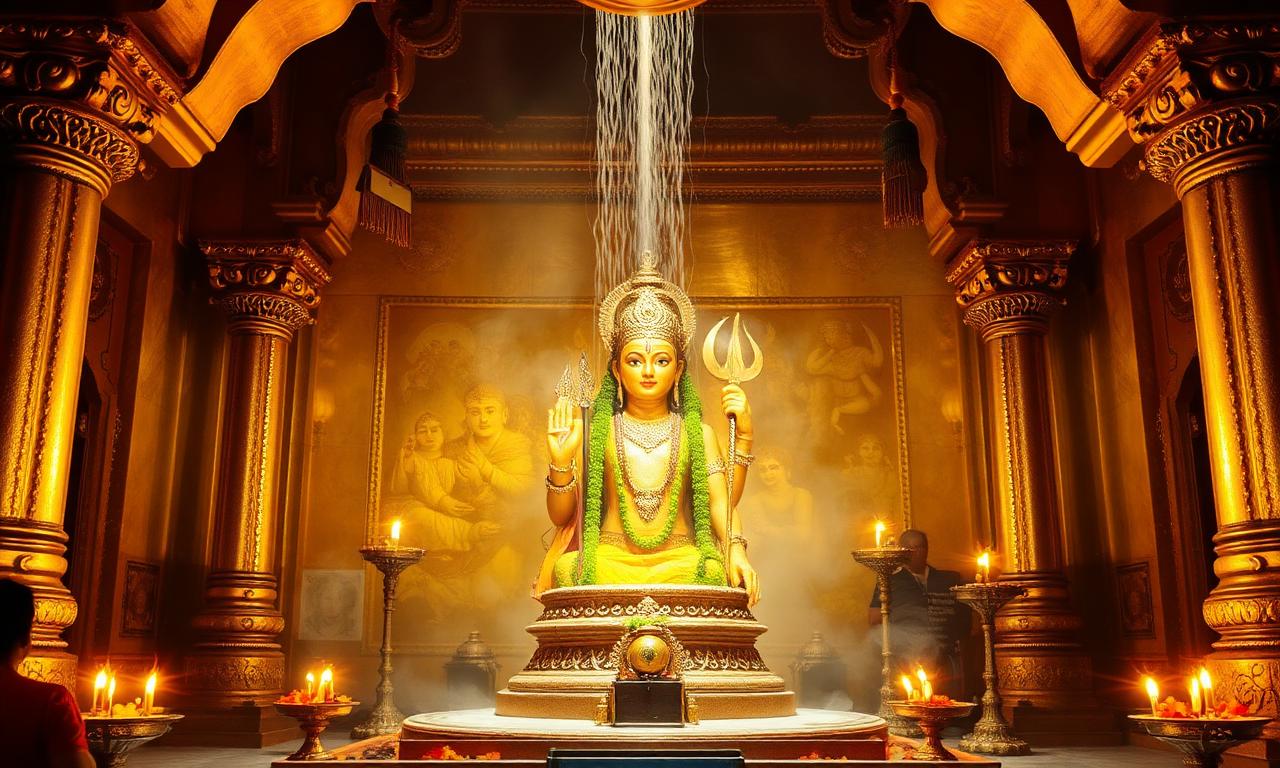
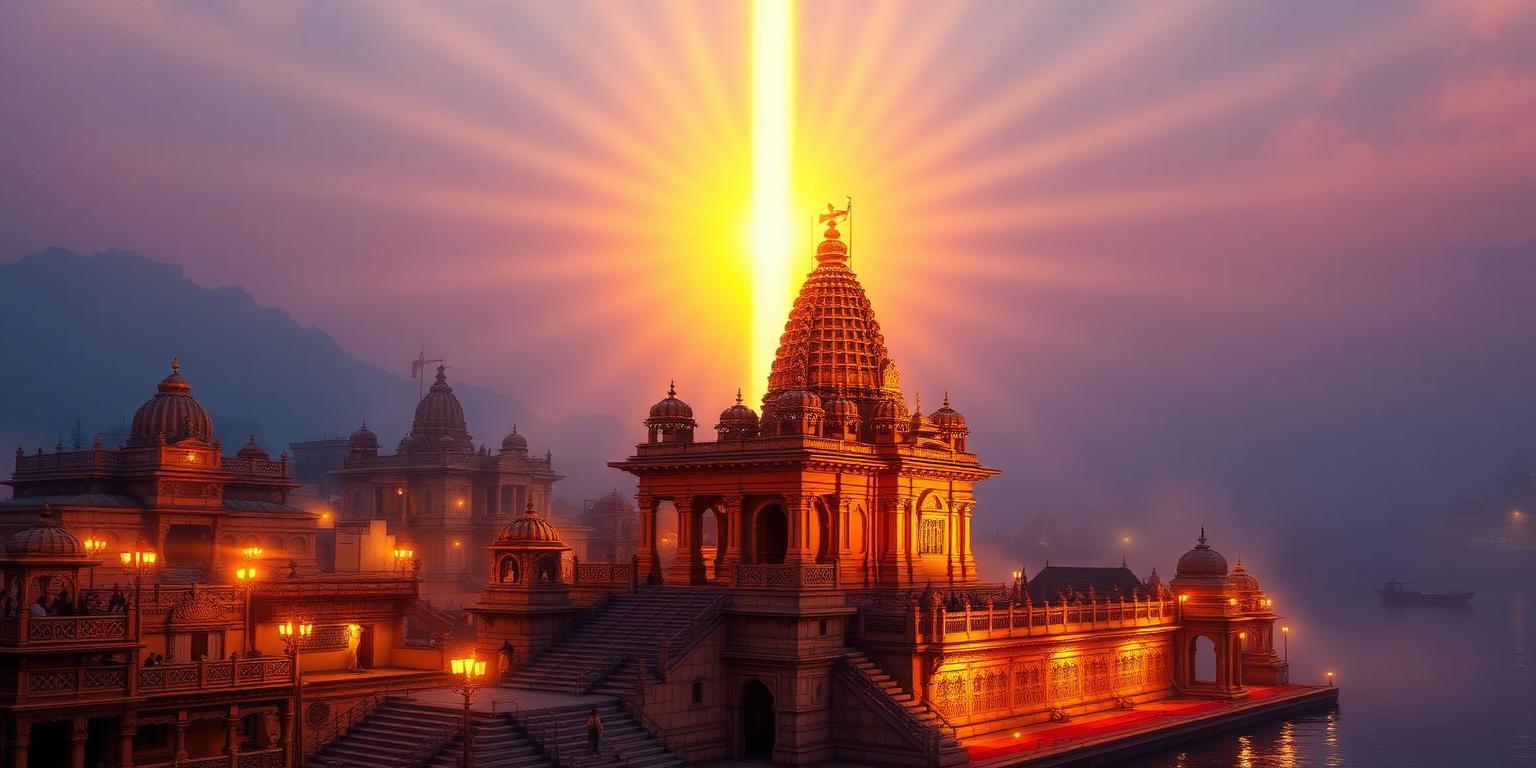
The Viśvanātha Jyotirlinga in the sanctum
The Viśvanātha Jyotirlinga — rudrābhiṣeka in the inner sanctum

Chapter I

Why Kāśī is Supreme

Six teachings that make Viśvanātha the foremost of all twelve Jyotirlingas.

Viśvanātha — Lord of All

Shiva not as one deity among many, but as the very Lord of the Universe — the consciousness in which all worlds appear.

Mokṣa in Death

It is taught that Shiva himself whispers the Tāraka Mantra into the ear of one who dies in Kāśī — and the soul crosses, never to return.

Gaṅgā at his Feet

The river herself bends north to bow before Kāśī. Snāna in the Gaṅgā followed by darśana of Viśvanātha is the supreme act of Hindu pilgrimage.

The City That Never Dies

Destroyed and rebuilt across a thousand years, the temple has always risen again — a living symbol of devotion that cannot be erased.

Saints of Kāśī

Kabīr, Tulsīdās, Rāmānanda, Trailaṅga Svāmī — Kāśī has been the cradle of saints whose songs and silences still echo in her lanes.

Seat of Learning

From the ancient gurukulas to Banaras Hindu University, Kāśī has been the eternal seat of Veda, Tantra, music, philosophy and the arts.

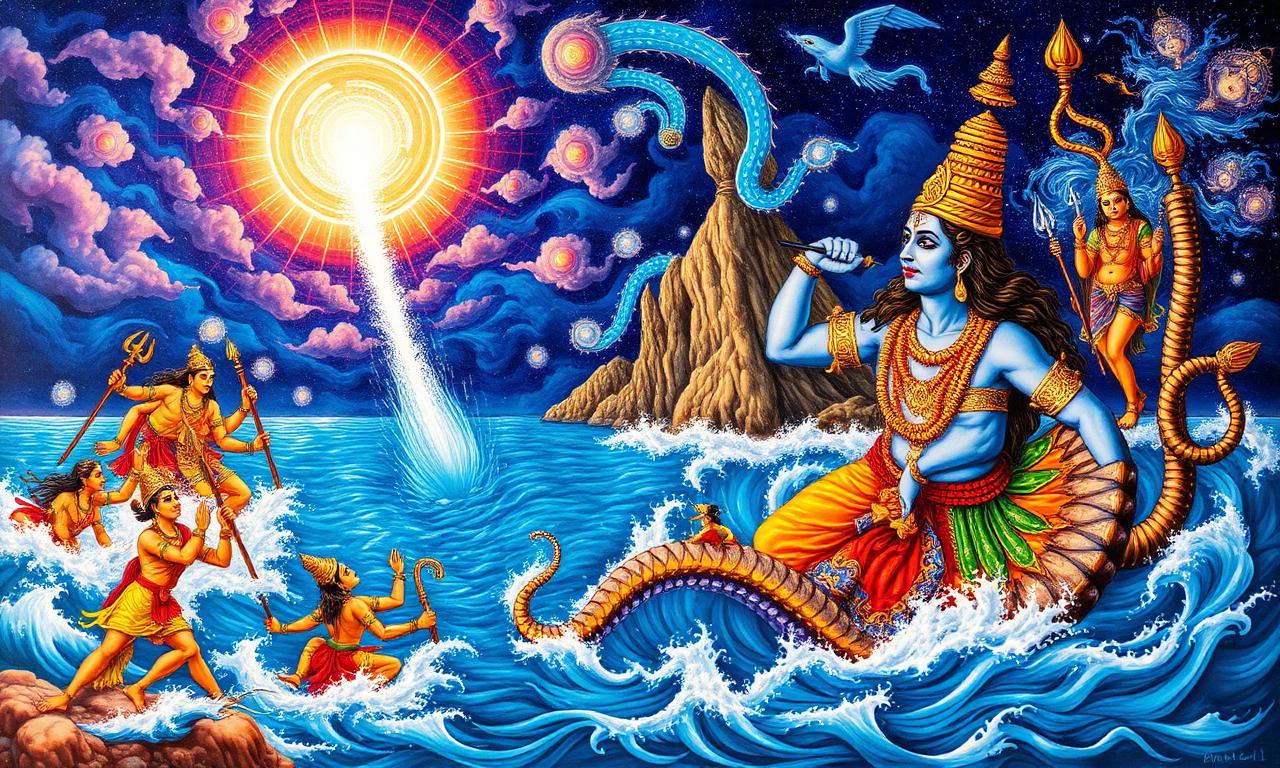
Shiva as Nilakantha drinking the halahala poison

The Origin · Śiva Purāṇa

The Lord Who Drank the Poison

When the gods and the asuras churned the cosmic ocean, the deadly halāhala poison rose first — black, scalding, threatening to extinguish all creation. The gods fled. Shiva alone stepped forward, gathered the poison in his palm, and drank it. Pārvatī clasped his throat to keep it from going further — and the poison stayed there forever, turning his throat a deep blue. From that day he is Nīlakaṇṭha, the Blue-Throated One. To honour his act and to give the world a place where this infinite grace could be touched, he manifested as the Viśvanātha Jyotirliṅga in Kāśī.

नीलकण्ठाय शर्वाय सर्वज्ञाय शिवाय च ॥

"Salutations to the Blue-Throated One — the destroyer, the all-knowing, the auspicious Shiva."

Chapter II

A Temple That Cannot Die

Eight centuries of destruction, devotion, and rebuilding — Kāśī always rises again.

Vedic Era

Kāśī is older than memory. The Skanda and Śiva Purāṇas declare it founded by Shiva himself, balanced on the points of his triśūla.

1194 CE

The original ancient temple is razed during the campaigns of Qutb-ud-din Aibak. Devotees rebuild in secret.

16th c.

Rebuilt under Rāja Todar Mal in Akbar's reign, only to be destroyed again under Sikandar Lodī and later rulers.

1669 CE

Aurangzeb orders the temple demolished; the Gyānvāpī mosque is built on part of the site. The original liṅga is hidden, the worship continues nearby.

1780 CE

Ahilyābāī Hōḷkar, queen of Indore, raises the present temple from her personal wealth — an act of devotion remembered to this day.

19th c.

Mahārājā Ranjit Siṅgh of Punjab plates the spire with 1,000 kilograms of gold; from his offering the temple becomes Suvarṇa Mandir, the Golden Temple of Kāśī.

2021 CE

The Kāśī Viśvanātha Corridor is inaugurated — a grand marble pathway opening the temple directly to the Gaṅgā ghats for the first time in centuries.

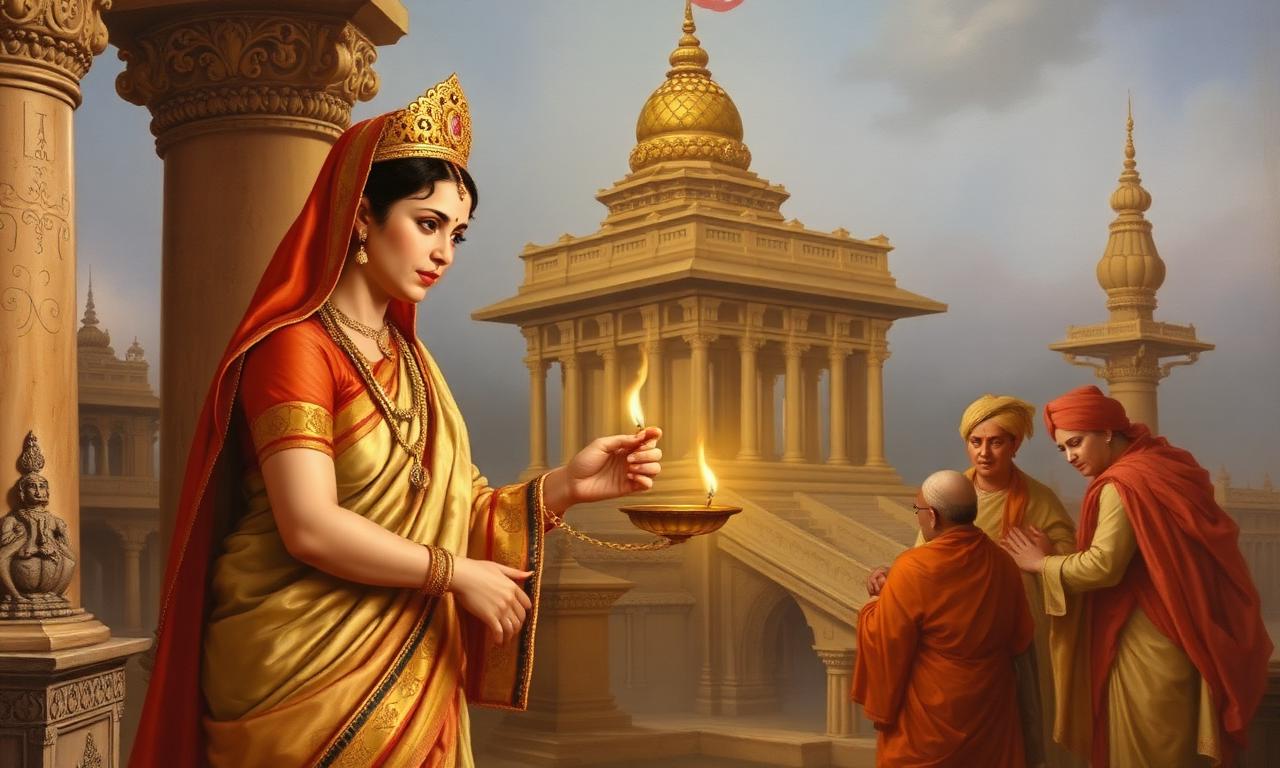
Ahilyabai Holkar rebuilding the Kashi Vishwanath temple in 1780

A Queen's Devotion

Ahilyābāī Hōḷkar — 1780

॥ मातृशक्ति ॥

For a hundred years after Aurangzeb's demolition, the great temple lay in ruin and the worship of Viśvanātha continued only in silence. Then in 1780, Ahilyābāī Hōḷkar, the philosopher-queen of Indore, opened her personal treasury and raised the present temple from the dust — a single woman restoring the heart of Bhārata. Her name is invoked every dawn in the maṅgala āratī alongside the names of the saints.

Some decades later, Mahārājā Ranjit Singh of Punjab donated a thousand kilograms of gold to plate her spire. From that day Kāśī Viśvanātha has been the Suvarṇa Mandir — the Golden Temple of Vārāṇasī, glittering above the lanes of the eternal city.

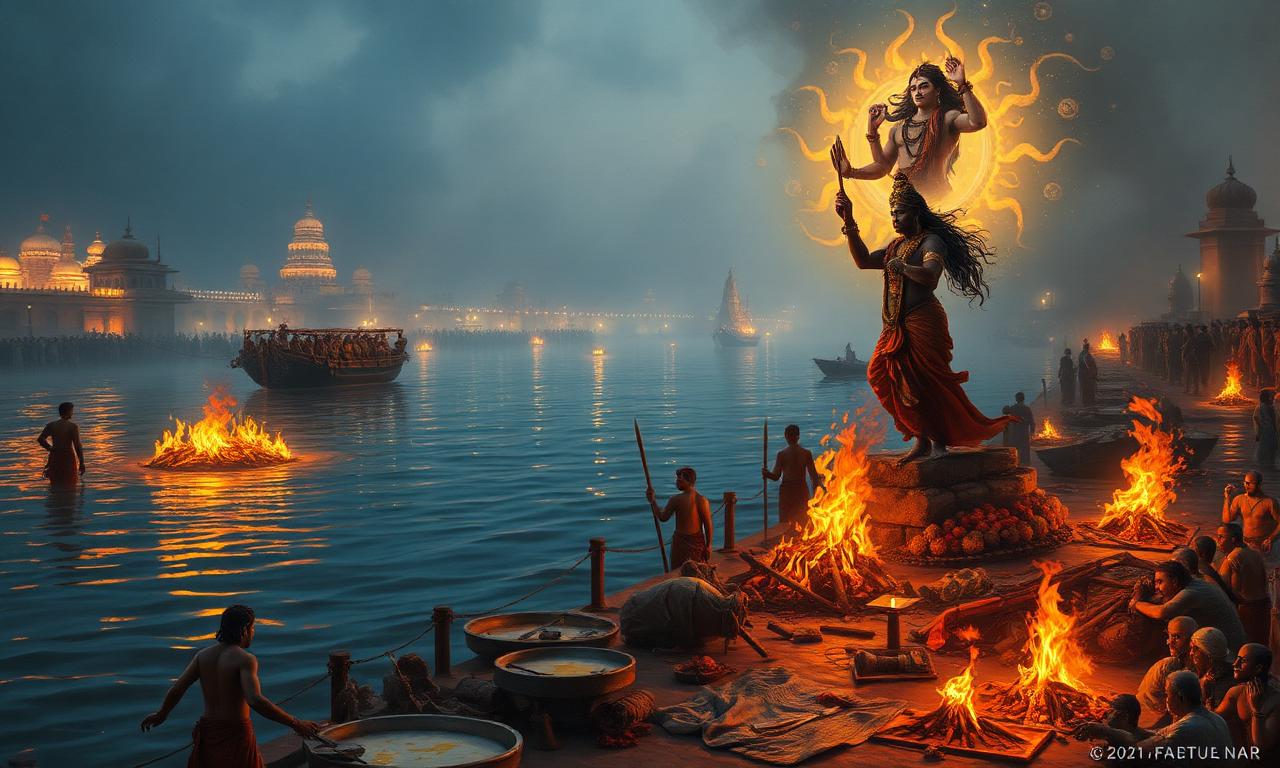
Manikarnika Ghat — the cremation ground of Varanasi

Chapter III · Mokṣa

The Tāraka Mantra

At Maṇikarṇikā, the great cremation ghat, a single fire has burned without break for as long as anyone remembers. The Kāśī Khaṇḍa of the Skanda Purāṇa teaches that here, at the moment of leaving the body, Shiva himself bends close to the dying ear and whispers the Tāraka Mantrathe mantra that ferries one across — and the soul is freed from all return. This is why the old, the dying, the sannyāsīs and the seekers come to Kāśī to spend their last days. Kāśyāṁ maraṇam muktiḥ — death in Kāśī is liberation itself.

काश्यां तु मरणान् मुक्तिः सत्यं सत्यं वदाम्यहम् ॥

"Death in Kāśī is liberation — this is the truth, this is the truth, I declare it true."

Chapter IV

Daily Worship & Festivals

The unbroken rhythm of āratī, abhiṣeka and seva that has continued at Kāśī for thousands of years.

Maṅgalā Āratī (3 AM)

The temple opens with the first āratī of the day — performed in the silent hours before dawn, when the priests bathe and adorn the Lord.

Bhoga & Madhyāhna Āratī

The midday offering of sacred food, followed by the noon āratī — the Lord is offered His meal as a child is fed by a mother.

Saptarṣi & Śayana Āratī

The seven-sage āratī at sunset and the bedtime āratī at night — closing the day with the same love with which it opened.

Rudrābhiṣeka

The continuous bathing of the liṅga with Gaṅgā water, milk, honey, curd and ghee while the Śrī Rudram is chanted — the heart of Kāśī worship.

Mahāśivarātri

The great night of Shiva, when the temple stays open through the night and lakhs of devotees keep vigil in the lanes of Kāśī.

Śrāvaṇa Mās

The whole month of Śrāvaṇa (Jul–Aug) belongs to Shiva. Kāṅvariyās carry Gaṅgā water from Haridvāra in pots slung on shoulder poles to bathe the liṅga at Kāśī.

Chapter V · 2021

The Viśvanātha Corridor

॥ काशी कॉरिडोर ॥

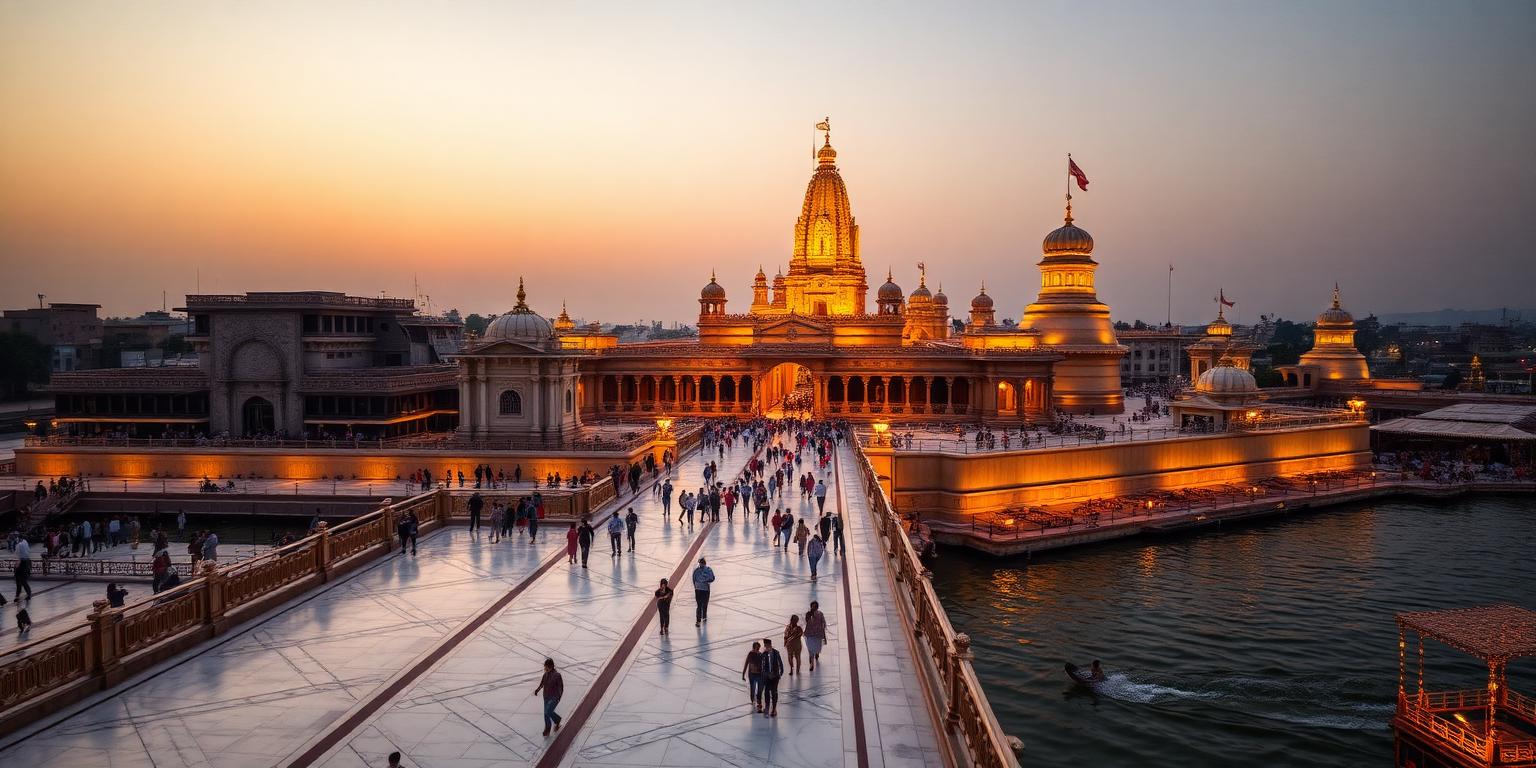
For centuries the temple sat hidden among the narrow lanes of Vishwanath Gali, almost invisible from the river. In December 2021 the Kāśī Viśvanātha Corridor was inaugurated — a sweeping marble pathway clearing five centuries of encroachment and opening the temple directly to the Gaṅgā at Lalitā Ghat.

5 lakh sq ft precinct connecting the temple to the river ghats.

Restoration of over 40 lost temples hidden within demolished houses.

Pilgrim facilities, crowd management and direct Gaṅgā-darśana for the first time in centuries.

Kashi Vishwanath Corridor at twilight
॥ ॐ नमः शिवाय ॥

From the cosmic moment when Shiva drank the poison and rose as Nīlakaṇṭha, through a thousand years of destruction and rebuilding, to the new marble Corridor opening to the Gaṅgā at dawn — Kāśī Viśvanātha has remained what it has always been: the supreme abode of the Lord of the Universe, the surest gateway to liberation, the eternal light that no darkness has ever extinguished.

हर हर महादेव ॥