The Five Elemental Shrines

Pañca Bhūta Sthalam

The Five Elemental Shrines

॥ पञ्च भूत स्थलम् ॥

Five sacred Shiva temples of the South — Earth, Water, Fire, Air and Space — together enshrining the whole of creation as the body of the Lord.

॥ ॐ ॥

5

Elemental Shrines

TN · AP

Across

Tēvāram · Tirumurai

Glorified in

Tamil Śaiva Siddhānta

Tradition

Introduction

Five Elements, One Shiva

॥ पञ्चभूतात्मकं शिवम् ॥

Pañca Bhūta Sthalam joins three words — pañca, five; bhūta, the great elements of creation; and sthala, a sacred place. Five shrines in the Tamil land where Shiva himself is enshrined as Earth, Water, Fire, Wind and Space.

From the cool sand of Kāñcī, through the spring waters of Tiruvānaikkāval, the fire-mountain of Aruṇācala, the swaying liṅga of Śrī-Kālahasti, to the empty curtain of Cidambaram — together they unfold a single teaching: the whole universe is the body of Shiva, and so is yours.

The Nāyanār saints — Appar, Sundarar, Sambandar — sang these shrines into the heart of South India in the seventh and eighth centuries. Their Tēvāram hymns still ring at every dawn āratī, joining the elements outside to the elements within.
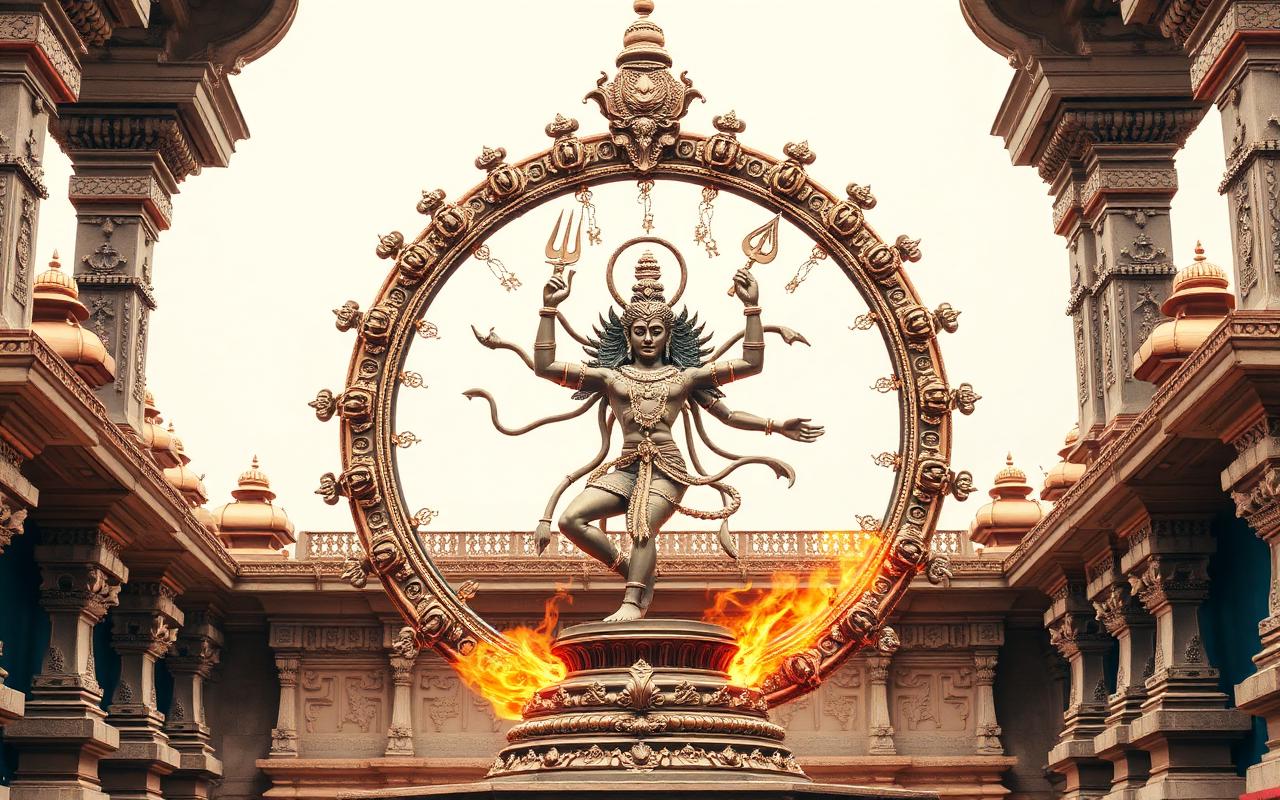
Nataraja in the Hall of Consciousness at Chidambaram
Naṭarāja — Shiva as Space, dancing the cosmos into being

Chapter I

The Inner Meaning

Six teachings woven through the five shrines — one Shiva, glimpsed through every element.

Shiva as Lord of Elements

Earth, water, fire, wind and ether are not inert matter — they are the very limbs of Shiva, the substance of his cosmic play.

Macrocosm and Microcosm

The same five elements that build the universe build the human body. To know one is to know the other — and to know Shiva.

Elemental Meditation

Each shrine offers a distinct sādhanā — sand, water, flame, breath, silence — refining a different layer of the seeker.

Devotion through the Senses

Touch the cool sand of Kāñcī, the spring water of Tiruvānaikkāval, the beacon of Aruṇācala — the temples teach with the body, not only the mind.

The Saints of Tēvāram

Appar, Sundarar and Sambandar — the great Nāyanārs — sang these shrines into the heart of the Tamil land, hymns still chanted at every dawn.

Shiva–Shakti Inseparable

Each Sthalam pairs Shiva with a fierce or compassionate Goddess — Kāmākṣī, Akhilāṇḍeśvarī, Apītakucāmbāḷ — energy and consciousness together.

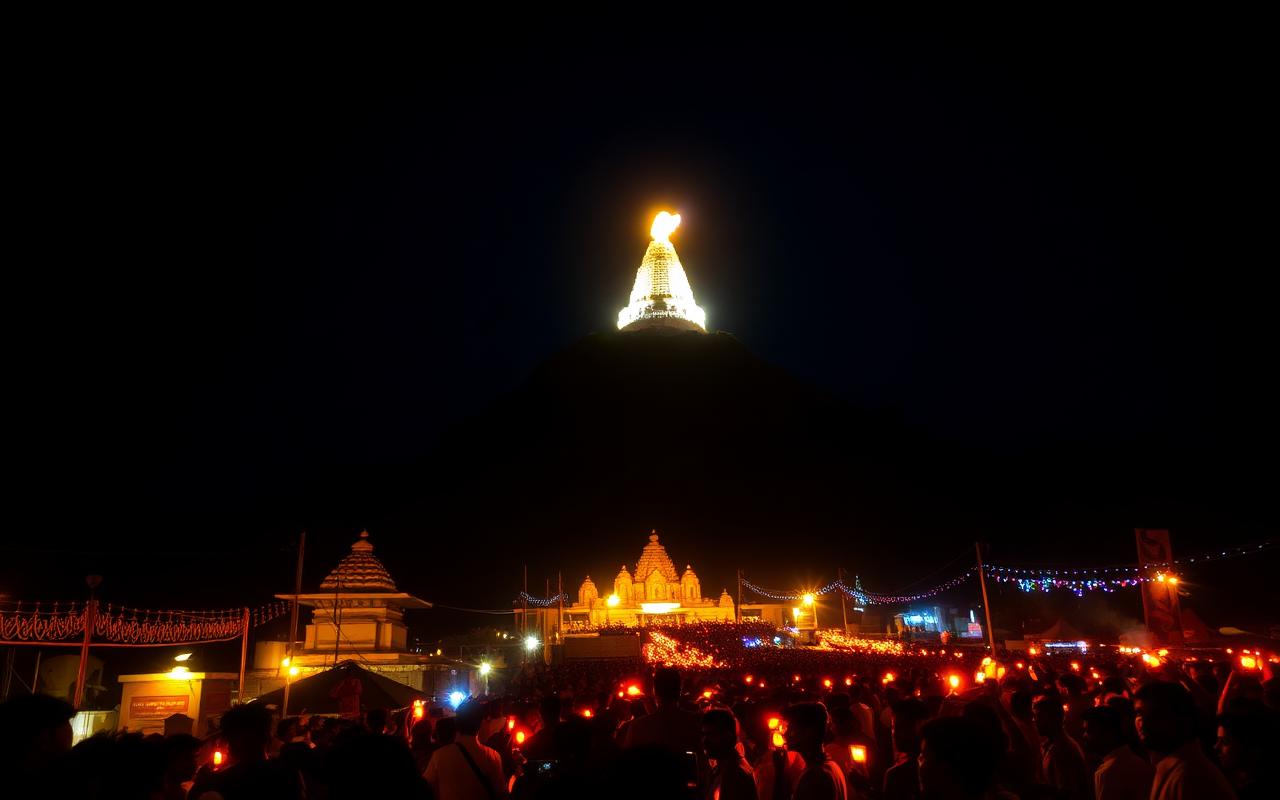
Arunachala beacon at Karthigai Deepam

Aruṇācala · The Mountain that is the Liṅga

The Red Mountain that Burns Forever

When Brahmā and Viṣṇu quarrelled over supremacy, Shiva rose between them as a pillar of fire whose ends neither could find. To bless the world he became Aruṇācala — the red mountain still standing in the Tamil plain. Each Kārtikai Dīpam a flame the size of a house is lit upon its summit; villages for thirty miles around fall silent and bow. "Look at the mountain," said Ramaṇa Maharṣi, "and the mountain will look back."

अरुणाचलं शिवम् ज्योतिर्लिङ्गं स्वयं प्रभुम् ॥

"Aruṇācala is Shiva — the self-luminous Lord, the very flame of awareness."

Chapter II

The Five Elemental Abodes

Each Sthalam holds one of the great elements as the living form of Shiva.

Ekambareswarar Temple — Pṛthvī · Earth
1
Pṛthvī · Earth

एकाम्बरेश्वर

Ekambareswarar

Kanchipuram · Tamil Nadu

Presiding · Ekāmranātha · Kāmākṣī

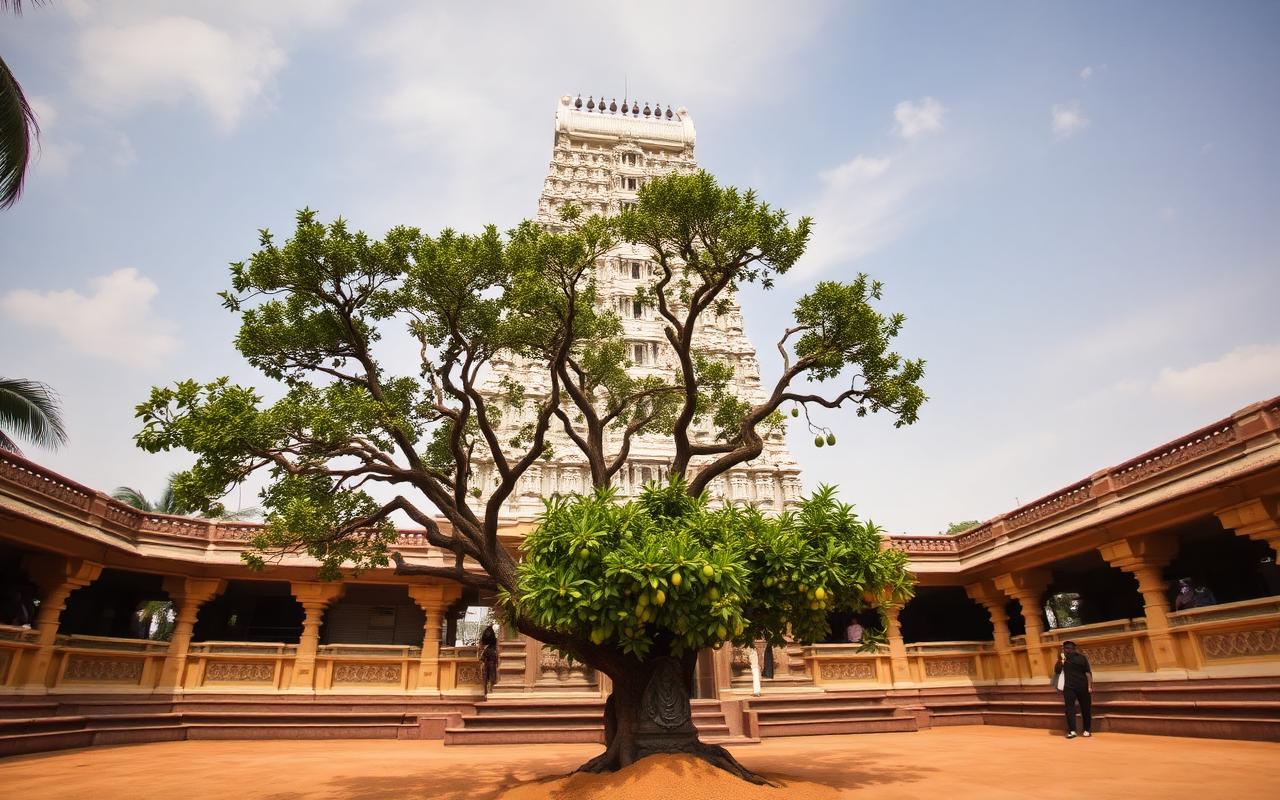
Parvatī once playfully covered Shiva's eyes and plunged the worlds into darkness. To atone, she performed long tapas at Kāñcī beneath a single mango tree (eka-āmra). Shiva manifested before her as a liṅga of pure sand — never to be bathed, never to dissolve. The sacred mango still stands in the courtyard, said to be thousands of years old; one of the seven mokṣa-purīs of Bhārata.

Jambukeswarar Temple — Appu · Water
2
Appu · Water

जम्बुकेश्वर

Jambukeswarar

Thiruvanaikaval · Tamil Nadu

Presiding · Jambukeśvara · Akhilāṇḍeśvarī

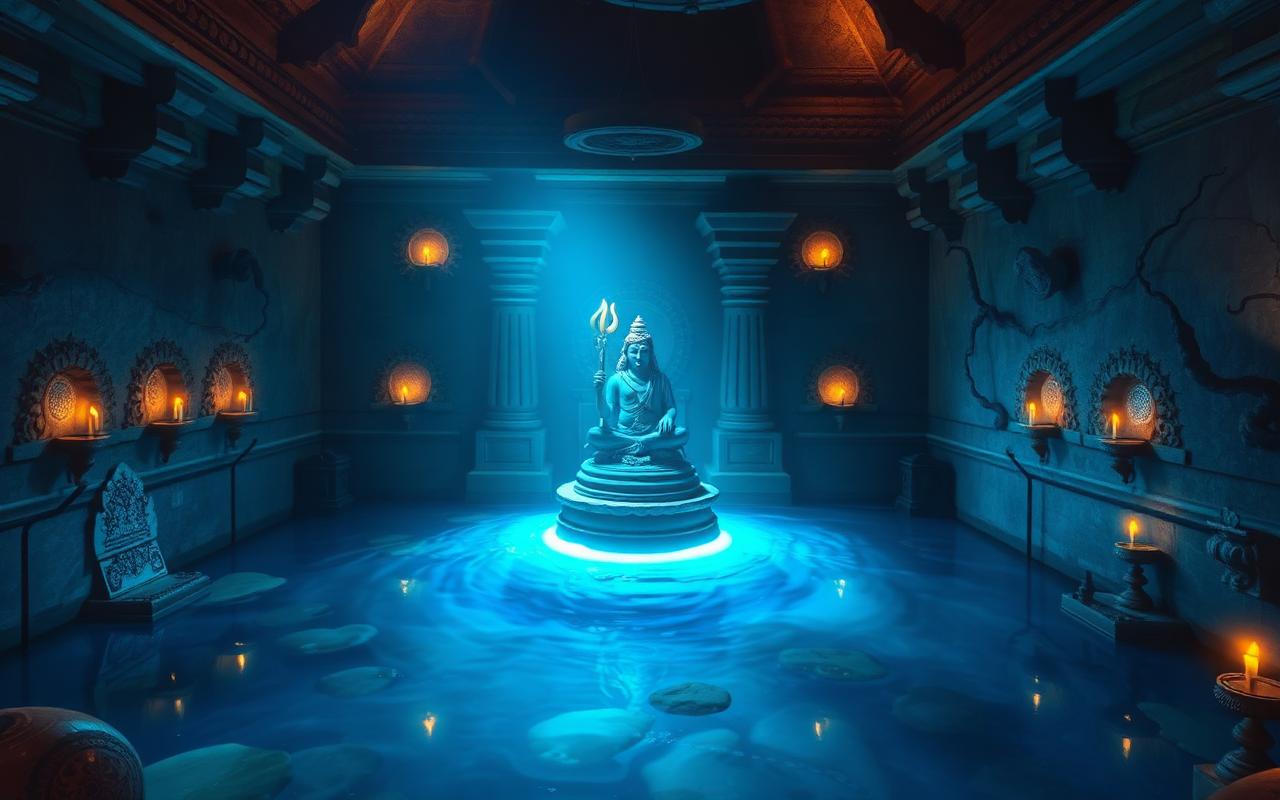
A spider and an elephant both worshipped the same liṅga in the forest — the spider weaving a canopy of web, the elephant pouring water from its trunk. Their love and quarrel ended in liberation. The sanctum liṅga, beneath a jambu (rose-apple) tree, is always submerged in a natural underground spring — the cool, life-giving presence of Shiva as Water itself.

Arunachaleswarar Temple — Agni · Fire
3
Agni · Fire

अरुणाचलेश्वर

Arunachaleswarar

Tiruvannamalai · Tamil Nadu

Presiding · Aruṇācaleśvara · Apītakucāmbāḷ

When Brahmā and Viṣṇu quarrelled over supremacy, Shiva rose between them as a column of fire — Aruṇācala, the red mountain itself the liṅga. Each year on Kārtikai Dīpam, a vast beacon is lit upon its summit, visible for many yojanas. To circle the mountain on foot — girivalam — is to walk around the body of Shiva himself.

Srikalahasteeswarar Temple — Vāyu · Air
4
Vāyu · Air

श्रीकालहस्तीश्वर

Srikalahasteeswarar

Srikalahasti · Andhra Pradesh

Presiding · Kālahastīśvara · Jñānaprasūnāmbikā

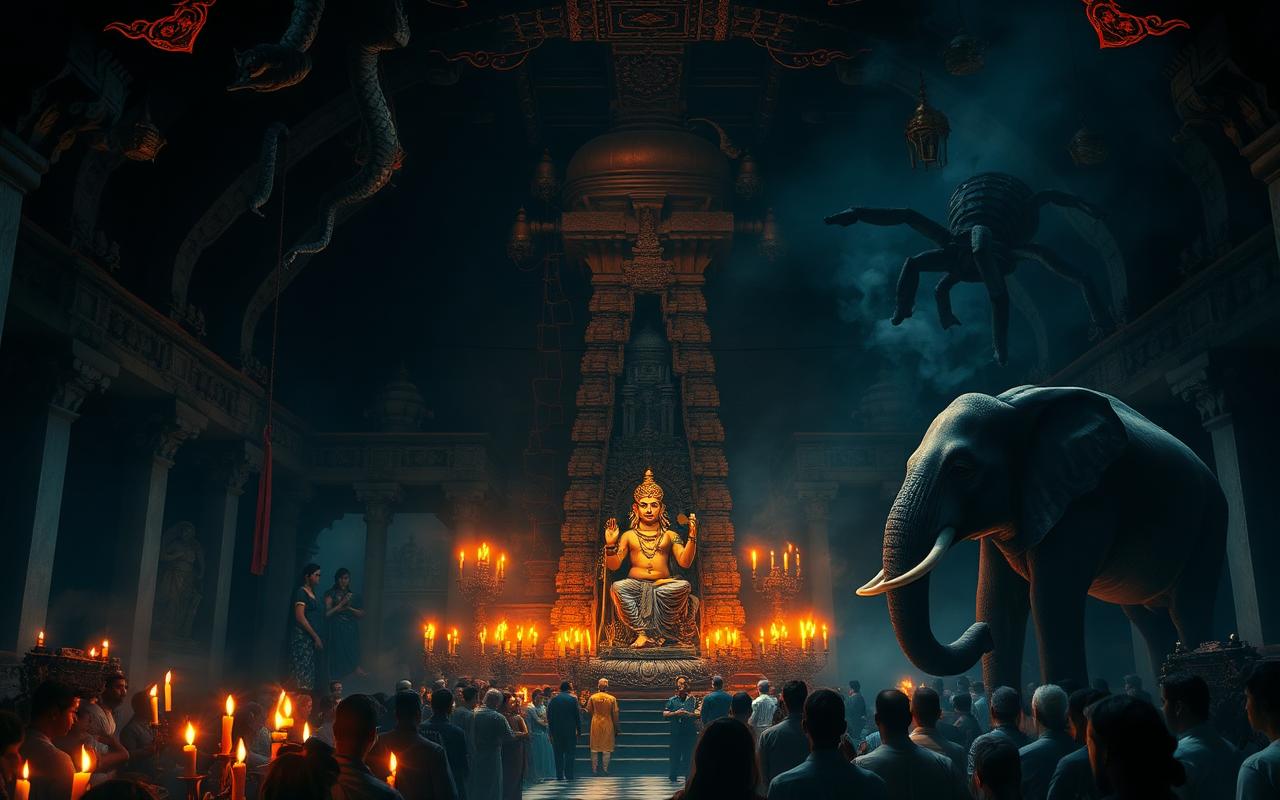
A spider (Śrī), a serpent (Kāla) and an elephant (Hasti) — natural enemies — each worshipped the liṅga here with such fierce devotion that the Lord liberated all three; from their names came Śrī-Kāla-Hasti. The stone liṅga sways gently within the sanctum, though no wind enters. Here too Kaṇṇappa Nāyanār offered his own eyes to Shiva — the supreme bhakta of the south.

Thillai Natarajar Temple — Ākāśa · Space
5
Ākāśa · Space

नटराज

Thillai Natarajar

Chidambaram · Tamil Nadu

Presiding · Naṭarāja · Śivakāmasundarī

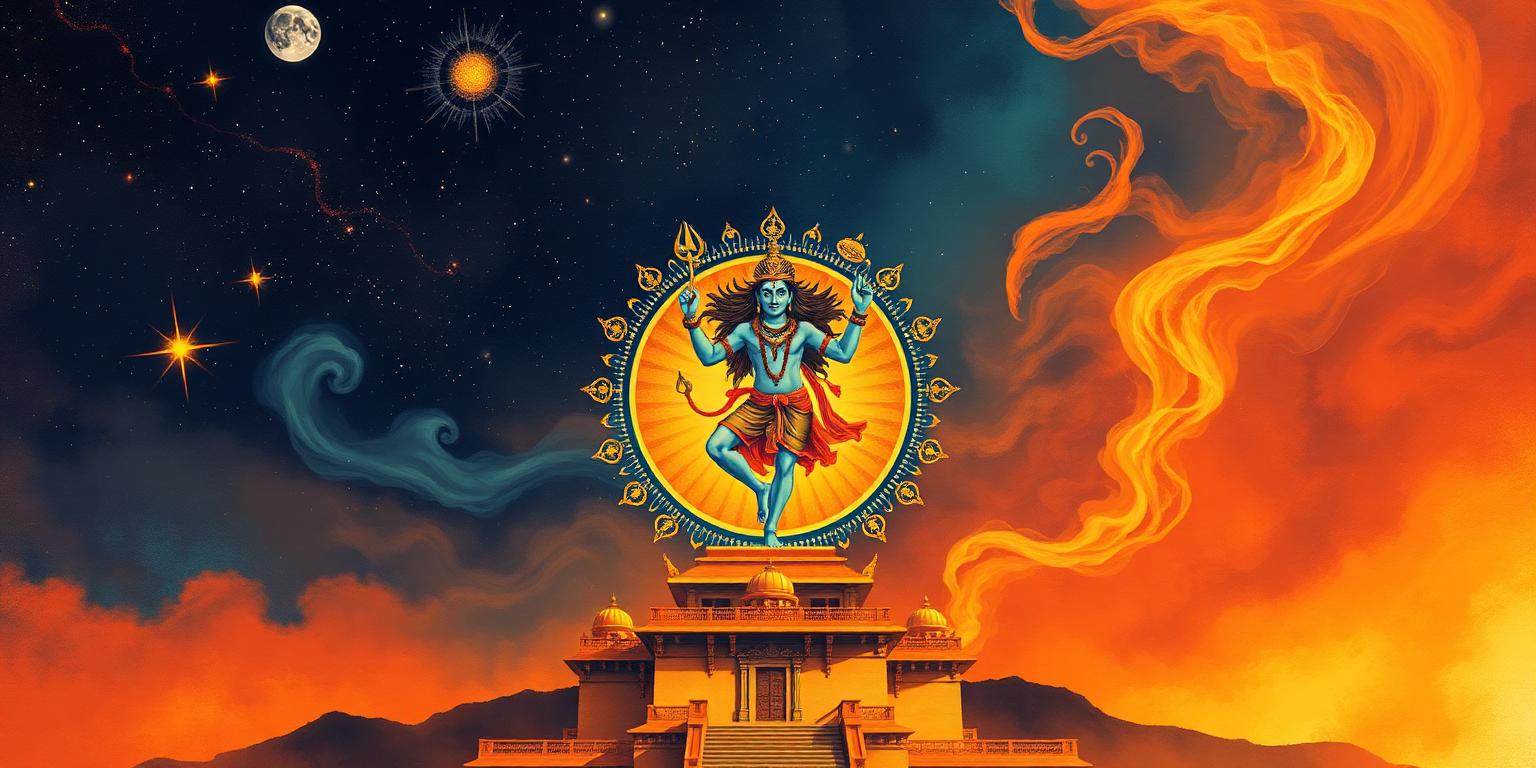
In the Cit-Sabhā, the Hall of Consciousness, Shiva dances the eternal Ānanda Tāṇḍava — creation, sustenance, dissolution, concealment and grace. There is no liṅga here. Behind the golden curtain hangs only empty space, hung with bilva leaves — the Cidambara Rahasya, the Secret of Chidambaram: nothing visible, yet everything present. This is Shiva as Ākāśa, as pure awareness itself.

Chapter III

In Praise of the Five Elements

A meditation joining all five Sthalams in a single breath.

Tēvāram · In praise of the Pañca Bhūta

पृथिव्यां काञ्चिनगरे जम्बुके च जलात्मकम् । अरुणाचलमग्निरूपं वायुं श्रीकालहस्तिनम् ॥ आकाशं चिदम्बरे च पञ्चभूतेषु शङ्करम् । यो ध्यायेत् सततं भक्त्या स याति परमां गतिम् ॥

"In the earth at Kāñcī, in water at Jambuka, as fire at Aruṇācala, as wind at Śrī-Kālahasti, as space at Cidambaram — whoever meditates with steady devotion upon Śaṅkara enshrined in the five elements attains the supreme abode."

Chapter IV

Yātrā & Practice

How devotees through the centuries have walked the five elements.

The Yātrā Circuit

Many devotees travel the five Sthalams in a single yātrā — from Kāñcī's earth to Cidambaram's silence — purifying one elemental layer of body and mind at each shrine.

Best Times to Visit

Mahāśivarātri, every Pradoṣa, and Mondays are auspicious throughout the year. Kārtikai Dīpam at Tiruvannamalai (Nov–Dec), Pankuni Uttiram at Chidambaram, and the Tamil month of Aippasi at Kanchipuram are especially powerful.

Approach with Reverence

Bathe in the temple tank before darśana, wear clean traditional cloth, carry bilva, water and flowers. In Chidambaram, simply stand in silence before the curtain — the darśana is given inside.

Inner Pilgrimage

The Tantras locate the same five elements in the cakras of the subtle body — earth at mūlādhāra, water at svādhiṣṭhāna, fire at maṇipūra, wind at anāhata, ether at viśuddha. The outer yātrā is, finally, a journey inward.

Conclusion

The Dance of the Five Elements

॥ ॐ नमः शिवाय ॥

From the sand of Kāñcī to the silence of Cidambaram, the Pañca Bhūta Sthalam reveal Shiva as the very substance of the world. The earth beneath your feet, the water in your veins, the warmth of your breath, the wind in your lungs, the space in which your thoughts arise — all of it is the body of the Lord, all of it is the dance of Naṭarāja still going on, within and without.