The Seven Sacred Cities

Sapta Purī

The Seven Sacred Cities

॥ सप्त पुरी मोक्षदायिकाः ॥

The seven holy cities of Bhārata — Ayodhyā, Mathurā, Haridvāra, Kāśī, Kāñcī, Ujjain and Dvārakā — gateways to liberation, sanctified by avatars, rivers and the eternal presence of Shiva.

॥ ॐ ॥

7

Sacred Cities

5

States

2

Jyotirlingas Within

2

Kumbh Sites

Introduction

Seven Cities, One Liberation

॥ सप्तपुरी मोक्षदायिनी ॥

Sapta Purīsapta, seven; purī, a city sacred enough to be the very abode of a god. Seven cities of Bhārata where the Divine has walked, ruled, danced, slept, taught and given liberation.

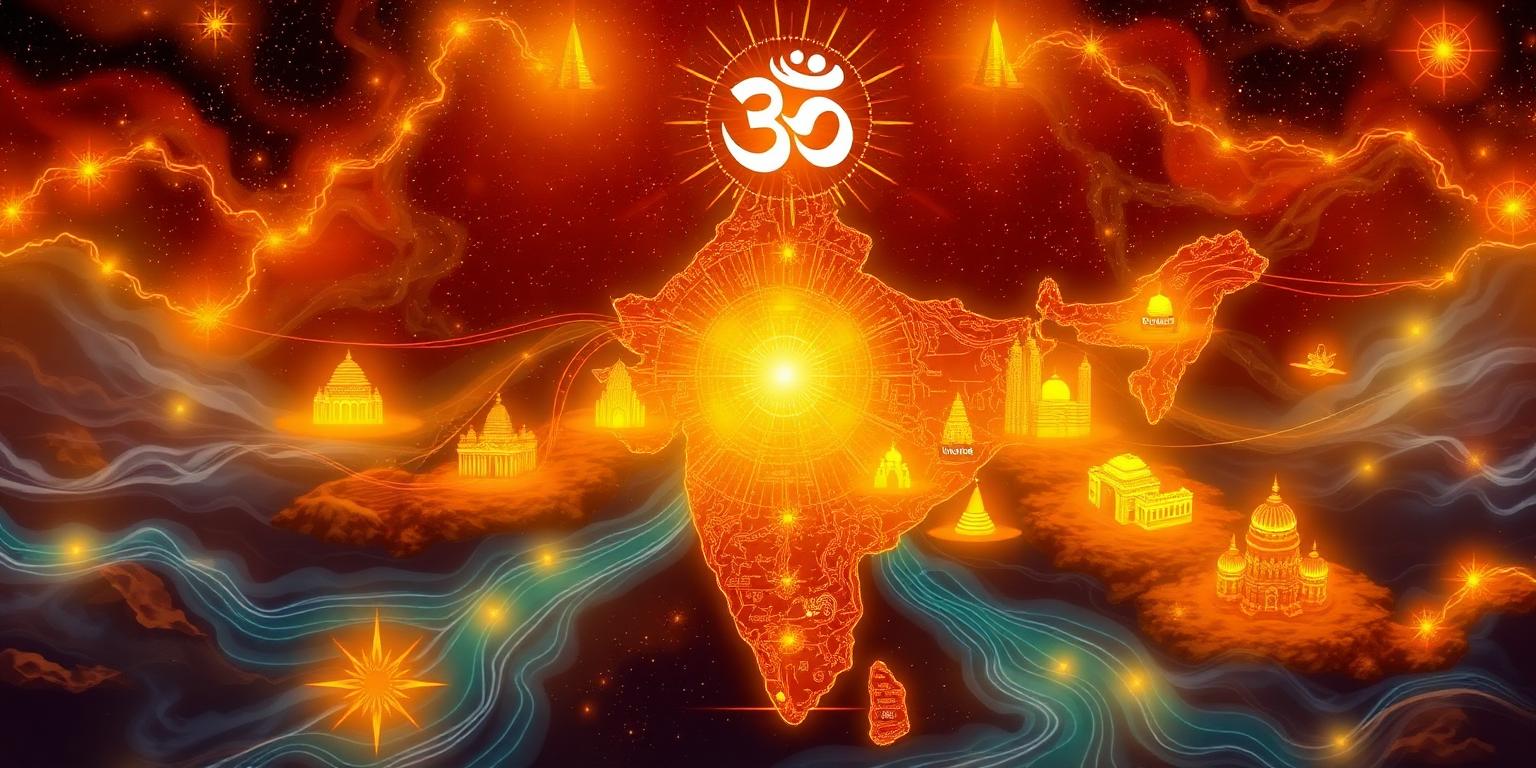
From Ayodhyā in the north where Rāma was born, through Mathurā on the Yamunā where Kṛṣṇa took his first breath, to Haridvāra where the Gaṅgā touches the plain, to eternal Kāśī on her further bank — and then south to Kāñcī, west to Ujjain on the Śiprā and at last to Dvārakā by the Arabian Sea — these seven cover the whole of the holy land.

The Purāṇas declare them mokṣadāyikāḥ — bestowers of liberation. Bathe in their waters, walk their streets with faith, and the burden of lifetimes is said to fall away. To die within their boundaries is to be carried, without further return, to the feet of the Lord.
Kāśī — the eternal city of Shiva
Kāśī — the eternal city, foremost of the seven Mokṣa-purīs

Chapter I

The Inner Teaching

Six themes that bind the seven cities into a single, living pilgrimage.

Mokṣa-dāyini

Even to die within these seven cities is said to grant liberation — Shiva himself whispers the tāraka mantra in Kāśī.

Sacred Geography

North, south, east, west — together the seven cities map the body of Bhārata as a single, breathing pilgrimage.

Unity of Sampradāyas

Vaishnava, Shaiva and Shākta streams flow together — Ayodhyā, Mathurā, Dvārakā beside Kāśī, Ujjain, Kāñcī, and the river-city Haridwar.

Purifying Waters

Sarayū, Yamunā, Gaṅgā, Śiprā and the Arabian Sea — bathing in their waters is held to wash away the accumulated weight of lifetimes.

Living Tradition

Each city is not a museum but a living organism — āratīs at dawn, melas every twelve years, festivals through every month of the year.

Glorified in the Purāṇas

The Skanda and Matsya Purāṇas declare these seven the supreme tīrthas of the Kali Yuga — wells of grace easily available to all.

Kāśī — the eternal city

Kāśī · The Foremost of the Seven

The City That Cannot Die

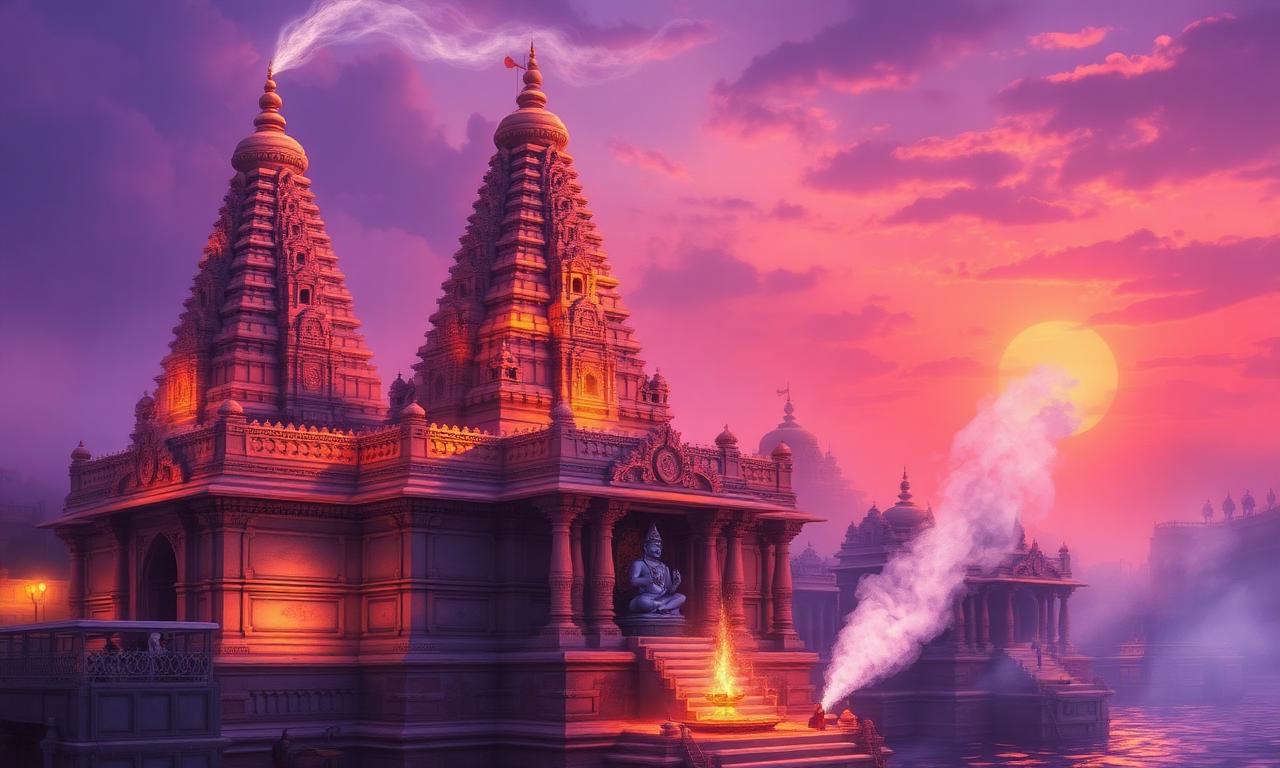
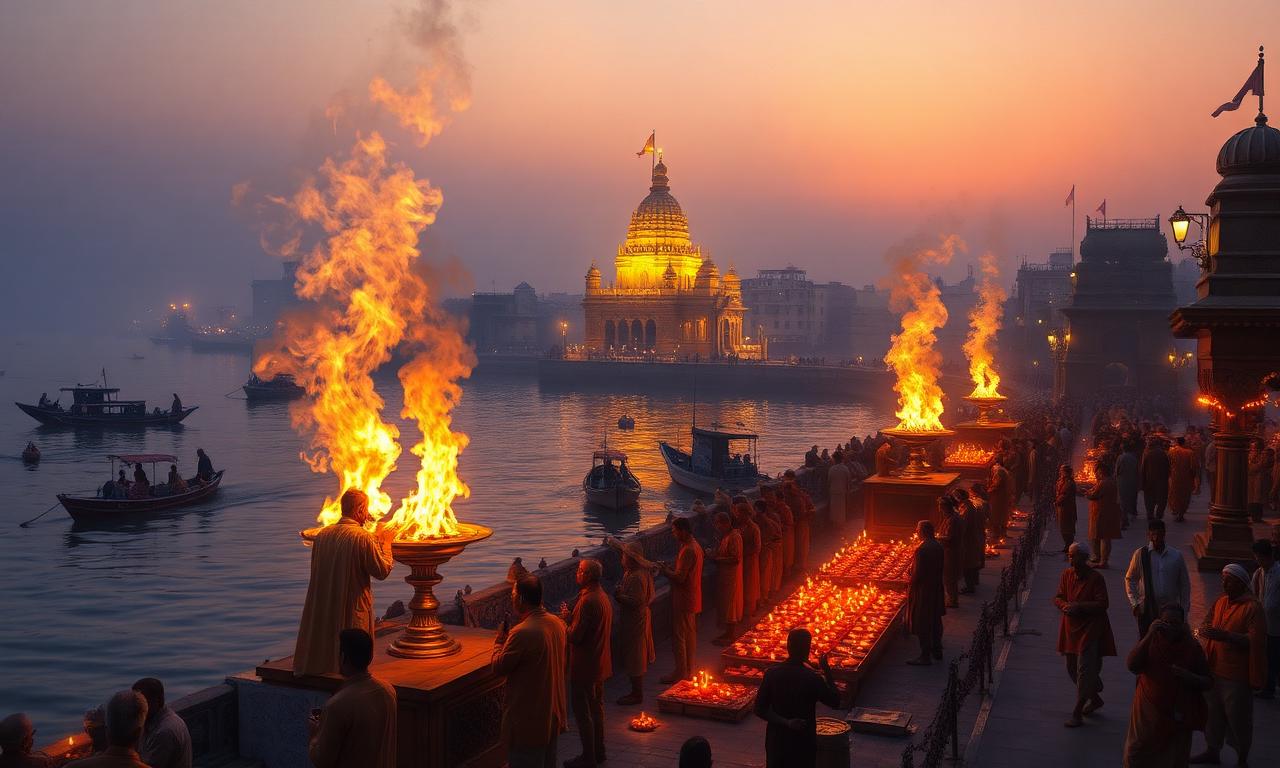
Kāśī is older than memory, older than history. Built upon the triśūla of Shiva himself, the city has never been destroyed; though invaders have come and gone, the river has flowed and the lamps have burned without break for thousands of years. To bathe in the Gaṅgā at dawn, to behold the Viśvanātha Liṅga, to die at Manikarṇikā Ghāṭ — these are said to end the long wheel of birth and death. "Kāśyāṁ maraṇam muktiḥ" — death in Kāśī is liberation itself.

काश्यां हि काशते काशी काशी सर्वप्रकाशिका ॥

"In Kāśī, the Light itself shines forth as Kāśī — and Kāśī illumines all."

Chapter II

The Seven Cities

Each Purī a gateway, each gateway a different face of the same liberation.

Ayodhyā — Rāma Janma-bhūmi
1
Rāma Janma-bhūmi

अयोध्या

Ayodhyā

Uttar Pradesh · Sarayū

Presiding · Śrī Rāma · Sītā

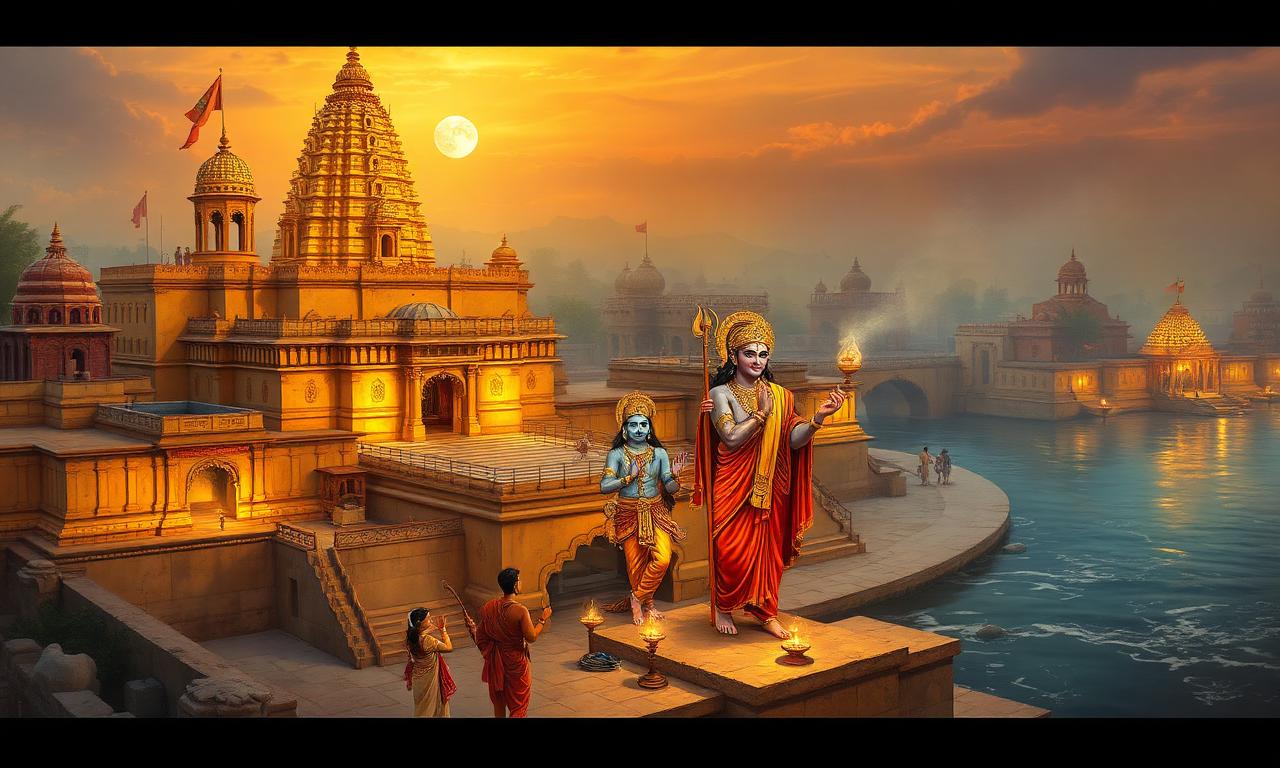
The birthplace of Lord Rāma, capital of the Ikṣvāku dynasty and the heart of the Rāmāyaṇa. The newly consecrated Rām Mandir on the Janma-bhūmi has fulfilled the longing of generations. Ayodhyā stands for Rāma Rājya — the ideal of dharma in rule, the perfect king as the perfect God. Pilgrims bathe in the Sarayū, circle the Kanak Bhavan, and walk the 14-kosi parikrama tracing the limits of Rāma's beloved city.

Mathurā — Kṛṣṇa Janma-bhūmi
2
Kṛṣṇa Janma-bhūmi

मथुरा

Mathurā

Uttar Pradesh · Yamunā

Presiding · Śrī Kṛṣṇa · Yaśodā

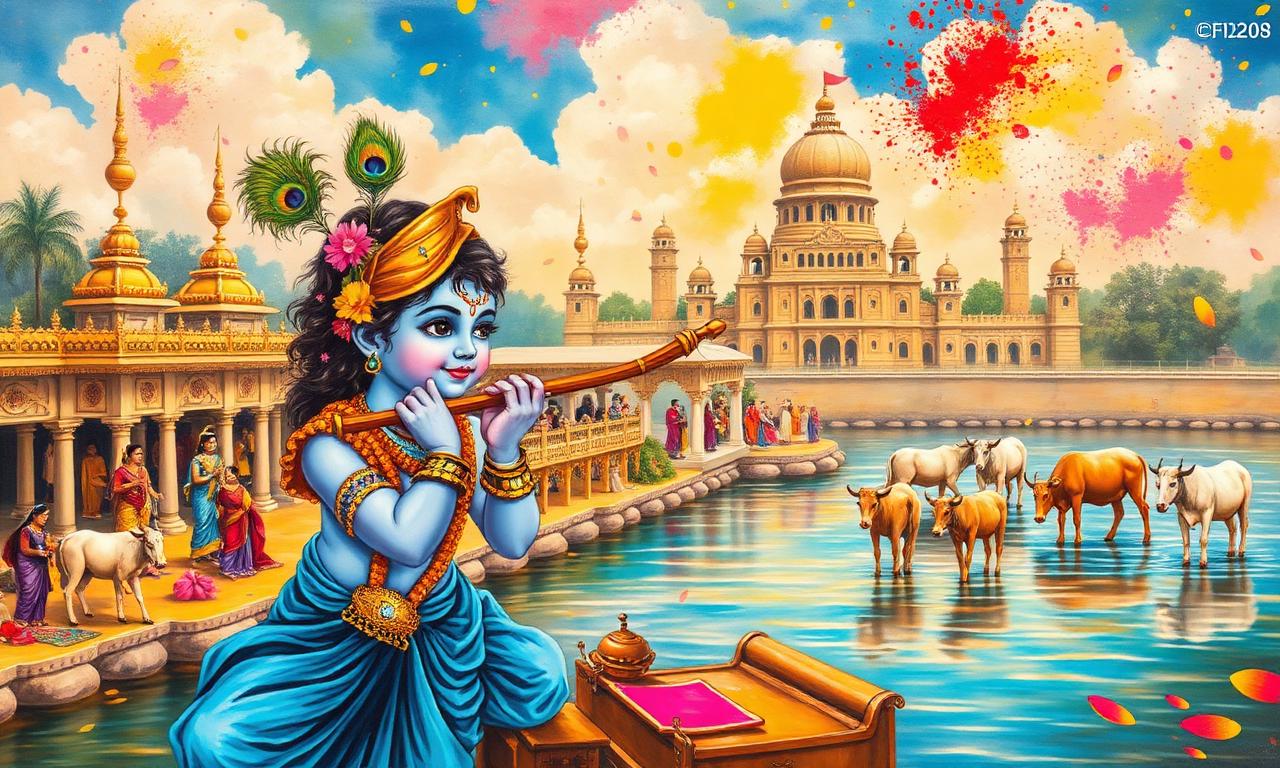
The birthplace of Lord Kṛṣṇa — born at midnight in the prison cell of Kaṁsa, carried across the Yamunā to Gokul. Mathurā and its surrounds — Vṛndāvana, Govardhana, Gokul, Barsānā — form the Braj region, the eternal playground of Kṛṣṇa's līlās. The city erupts in colour at Holi, in song at Janmāṣṭamī, and in continuous rāsa through every hour of every day.

Haridvāra — Gaṅgā-dvāra
3
Gaṅgā-dvāra

हरिद्वार

Haridvāra

Uttarakhand · Gaṅgā

Presiding · Mother Gaṅgā · Hari

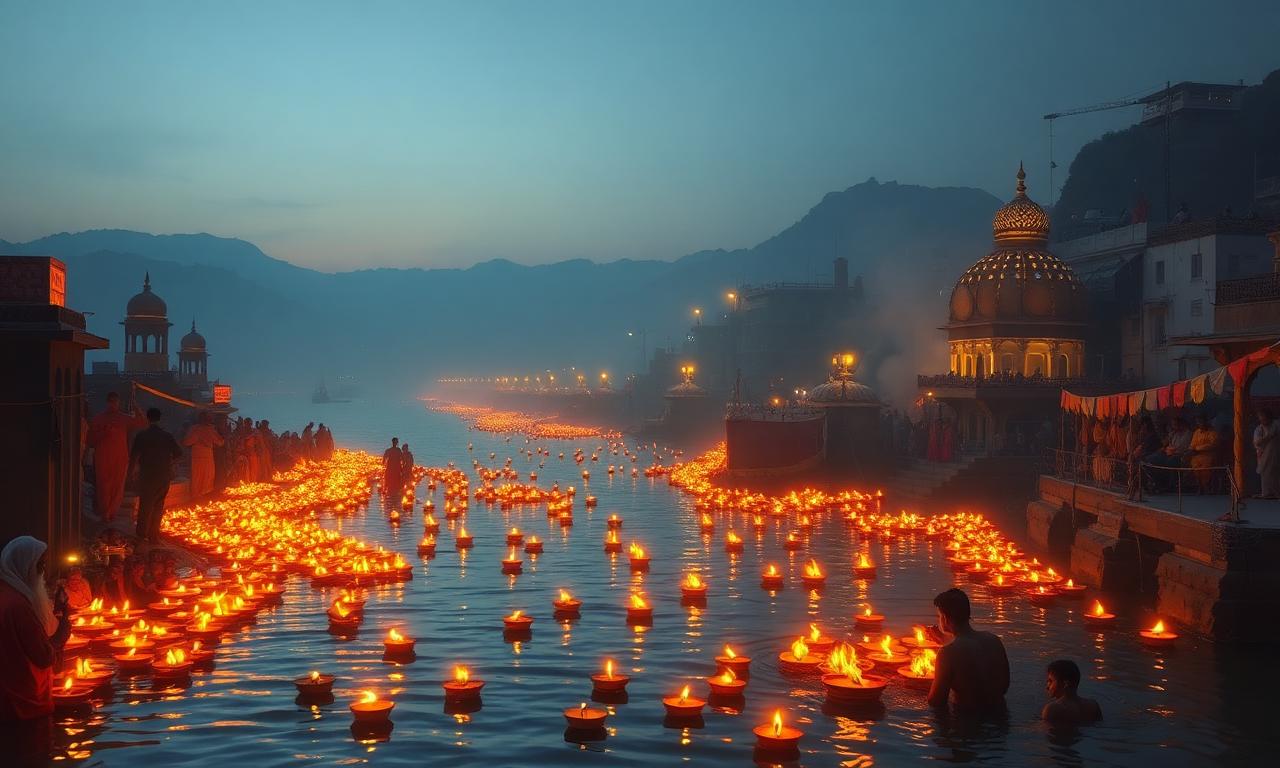
Hari-dvāra — the very gateway of Hari, where the Gaṅgā leaves the embrace of the Himālayas and steps onto the plain. King Bhagīratha's tapas brought her here to liberate his ancestors. One of the four sites of the Kumbha Melā, and the supreme tīrtha for śrāddha rites. Each evening at Har Ki Pauri, thousands of lamps float on the river while the Gaṅgā Āratī rises into the mountain dusk.

Kāśī (Vārāṇasī) — Mokṣa-purī
4
Mokṣa-purī

काशी

Kāśī (Vārāṇasī)

Uttar Pradesh · Gaṅgā

Presiding · Viśvanātha · Annapūrṇā

Older than history, older than tradition — Kāśī is the eternal city of Shiva, the Mokṣa-purī supreme. Here stands the Kāśī Viśvanātha, foremost of the twelve Jyotirlingas. To die within Kāśī is to be liberated, for Shiva himself whispers the tāraka mantra into the ear of the dying. At dusk the river burns with the lamps of the Gaṅgā Āratī at Dashashvamedha Ghat — one of the most luminous sights on the earth.

Kāñcī (Kanchipuram) — City of Thousand Temples
5
City of Thousand Temples

काञ्ची

Kāñcī (Kanchipuram)

Tamil Nadu

Presiding · Ekāmranātha · Varadarāja · Kāmākṣī

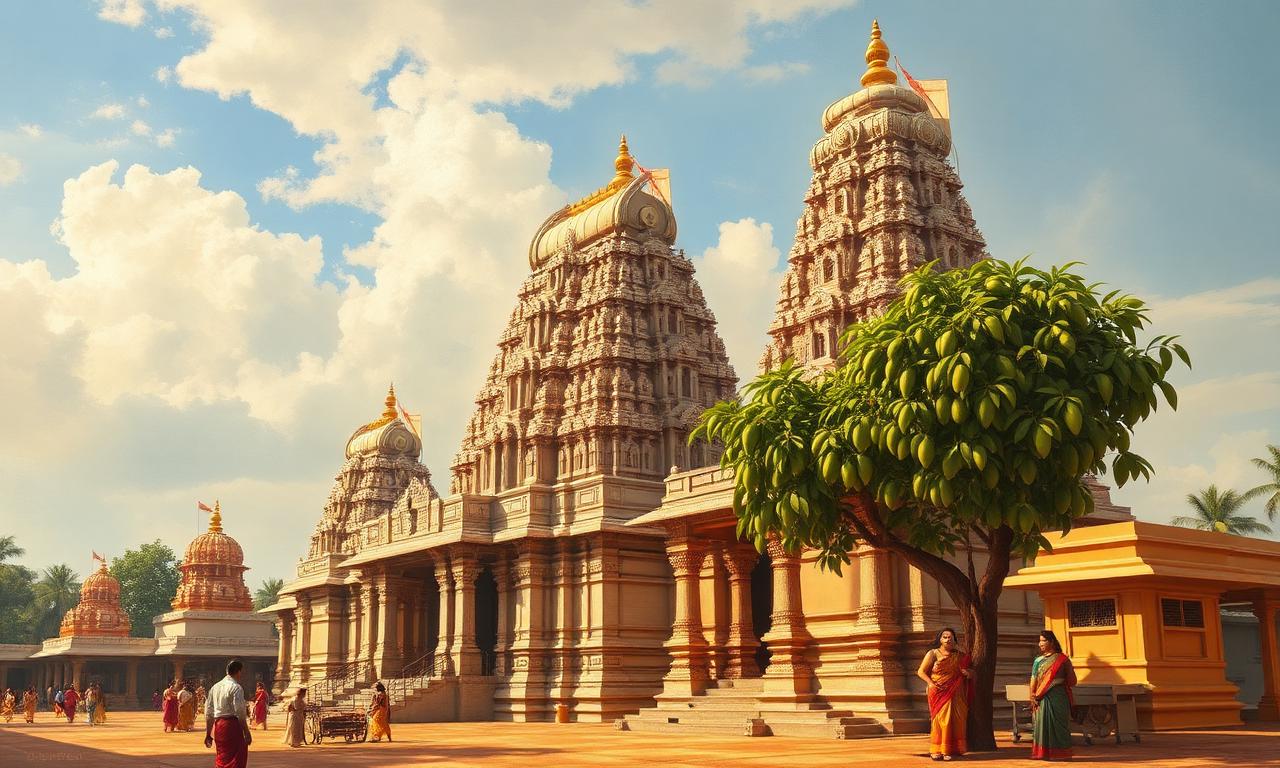
The southern seat of the seven — uniquely both Śiva-Kāñcī and Viṣṇu-Kāñcī. Home to Ekāmbareśvara (the Earth of the Pañca Bhūta Sthalam), the Divya Deśam Varadarāja Perumāḷ, and the Śakti Pīṭha Kāmākṣī Ammaṉ — Shiva, Vishnu and the Goddess in a single sacred city. A great seat of learning, the home of Ādi Śaṅkara's Kāmakoṭi Pīṭham, and the source of the finest silk in the south.

Ujjain (Avantikā) — Kāla's own City
6
Kāla's own City

उज्जयिनी

Ujjain (Avantikā)

Madhya Pradesh · Śiprā

Presiding · Mahākāla · Hariśiddhi

One of the oldest cities of the world, ruled by King Vikramāditya — the city by whose meridian the ancients reckoned all time. Here stands Mahākāleśvara, one of the twelve Jyotirlingas, the only one facing south — the Lord of Time himself. The world-famous Bhasma Āratī at three before dawn anoints the liṅga with sacred ash. Every twelve years the Siṁhastha Kumbha Melā draws millions to the banks of the Śiprā.

Dvārakā — Kṛṣṇa's Western Capital
7
Kṛṣṇa's Western Capital

द्वारका

Dvārakā

Gujarat · Arabian Sea

Presiding · Dvārakādhīśa · Rukmiṇī

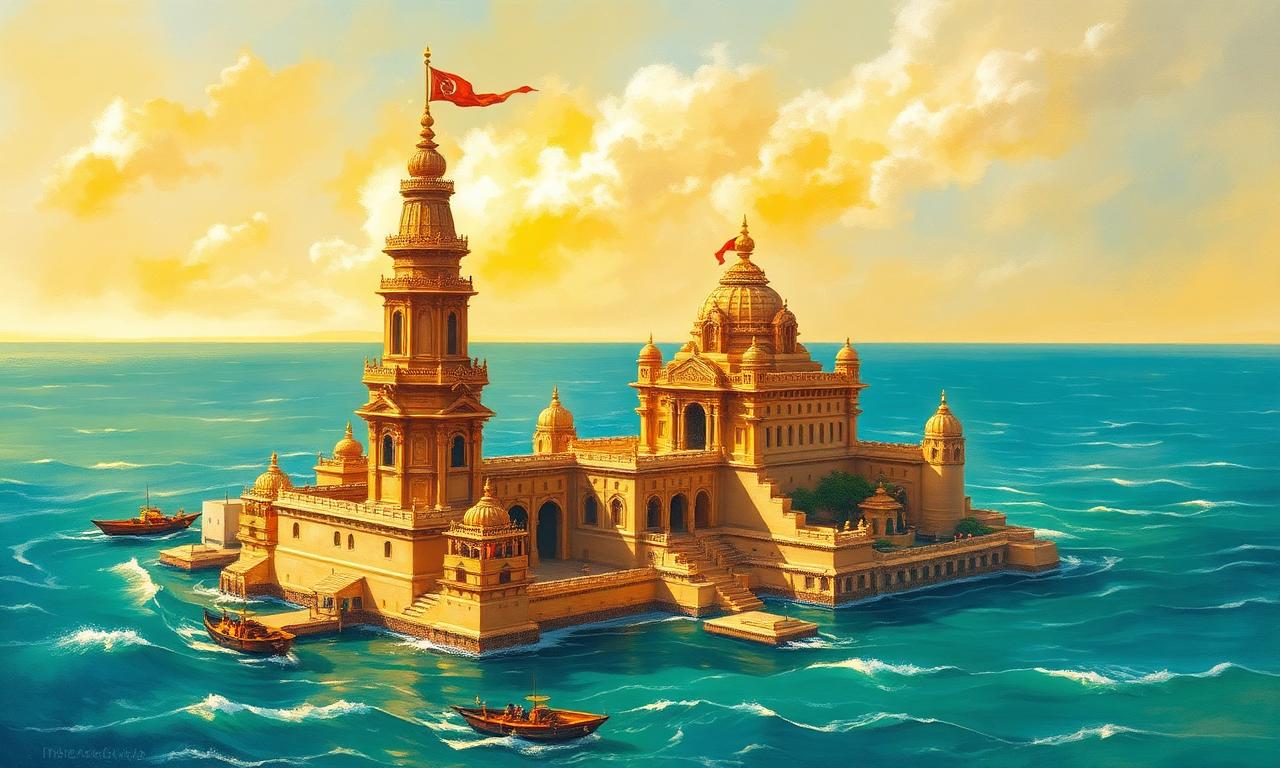
When Kṛṣṇa left Mathurā, he raised the golden city of Dvārakā on the western shore — capital of the Yadu kingdom, kingdom of dharma in action. After his departure from the earth, the sea reclaimed the city; archaeologists have traced ancient walls beneath the waves. The towering Dvārakādhīśa temple stands today as one of the four Char Dhām, its flag changing five times a day above the western sea.

Chapter III

All Streams in Seven Cities

The Sapta Purī unite every great sampradāya of Sanātana Dharma.

Vaiṣṇava Cities (3)

Ayodhyā (Rāma), Mathurā (Kṛṣṇa) and Dvārakā (Kṛṣṇa-rāja) — the three great birthplaces and capital of Vishnu's avatāras.

Śaiva Cities (2)

Kāśī (Viśvanātha) and Ujjain (Mahākāleśvara) — two of the twelve self-manifested Jyotirlingas, eternal seats of Lord Shiva.

Śākta & Tīrtha (1)

Haridvāra — the river-mother Gaṅgā herself, gateway of all gods, and one of the four Kumbha Melā cities.

Sarva-sampradāya (1)

Kāñcī — uniquely sacred to Shiva, Vishnu and the Goddess together, home to Pañca Bhūta, Divya Deśam and Śakti Pīṭha shrines in one city.

Chapter IV

The Sapta-Purī Verse

A single śloka that names all seven cities of liberation.

Garuḍa Purāṇa · Sapta-Purī Stotram

अयोध्या मथुरा माया काशी काञ्ची अवन्तिका । पुरी द्वारावती चैव सप्तैता मोक्षदायिकाः ॥

"Ayodhyā, Mathurā, Māyā (Haridvāra), Kāśī, Kāñcī, Avantikā (Ujjain), and the city of Dvārakā — these seven cities are bestowers of liberation."

Chapter V

Yātrā & Practice

How devotees through the centuries have walked the seven cities.

The Seven Cities Yātrā

A traditional pilgrim begins at Ayodhyā, crosses to Mathurā, climbs to Haridvāra, descends to Kāśī for liberation, journeys south to Kāñcī, returns north-west to Ujjain, and ends at the sea in Dvārakā — a full circle of the holy land.

Sacred Bathing (Snāna)

Bathing in the Sarayū at Ayodhyā, the Yamunā at Mathurā, the Gaṅgā at Haridvāra and Kāśī, the Śiprā at Ujjain, and the Gomatī at Dvārakā is said to dissolve the karmas of countless lifetimes.

Festivals & Melās

Rām Navamī at Ayodhyā, Janmāṣṭamī at Mathurā, Mahā Śivarātri at Kāśī and Ujjain, Kumbha Melā at Haridvāra and Ujjain, Brahmotsavam at Kāñcī, and Janmāṣṭamī at Dvārakā — each city has its day of greatest grace.

The Inner Sapta-Purī

The Tantras teach that the seven cities also dwell within — as the seven cakras of the subtle body. The outer pilgrimage is the mirror of an inner journey from mūlādhāra to sahasrāra, from earthly devotion to liberation.

॥ सप्तपुरीषु मोक्षं प्राप्नुयात् ॥

From the sands of Ayodhyā where Rāma was born to the western sea where Kṛṣṇa raised his golden city — from the gateway of the Gaṅgā at Haridvāra to the eternal flame of Kāśī, the temple-forest of Kāñcī, and the Lord of Time at Ujjain — the seven cities together form a single garland around the neck of Bhārata. To walk them, to bathe in their waters, to remember them with love is to draw closer to that which has no city and no boundary at all.