The First Jyotirlinga

Somnātha Mandir

The First Jyotirlinga

॥ श्री सोमनाथ ॥

The most ancient and foremost of the twelve Jyotirlingas — Shiva enthroned by the western sea, the Lord who restored light to the Moon.

॥ ॐ ॥

First & Foremost

Among Jyotirlingas

Prabhāsa Pāṭan · Gujarāt

Location

1951 · Sardar Patel

Reconsecrated

The Arabian Sea

Facing

Introduction

The Lord by the Western Sea

॥ ॐ नमः शिवाय ॥

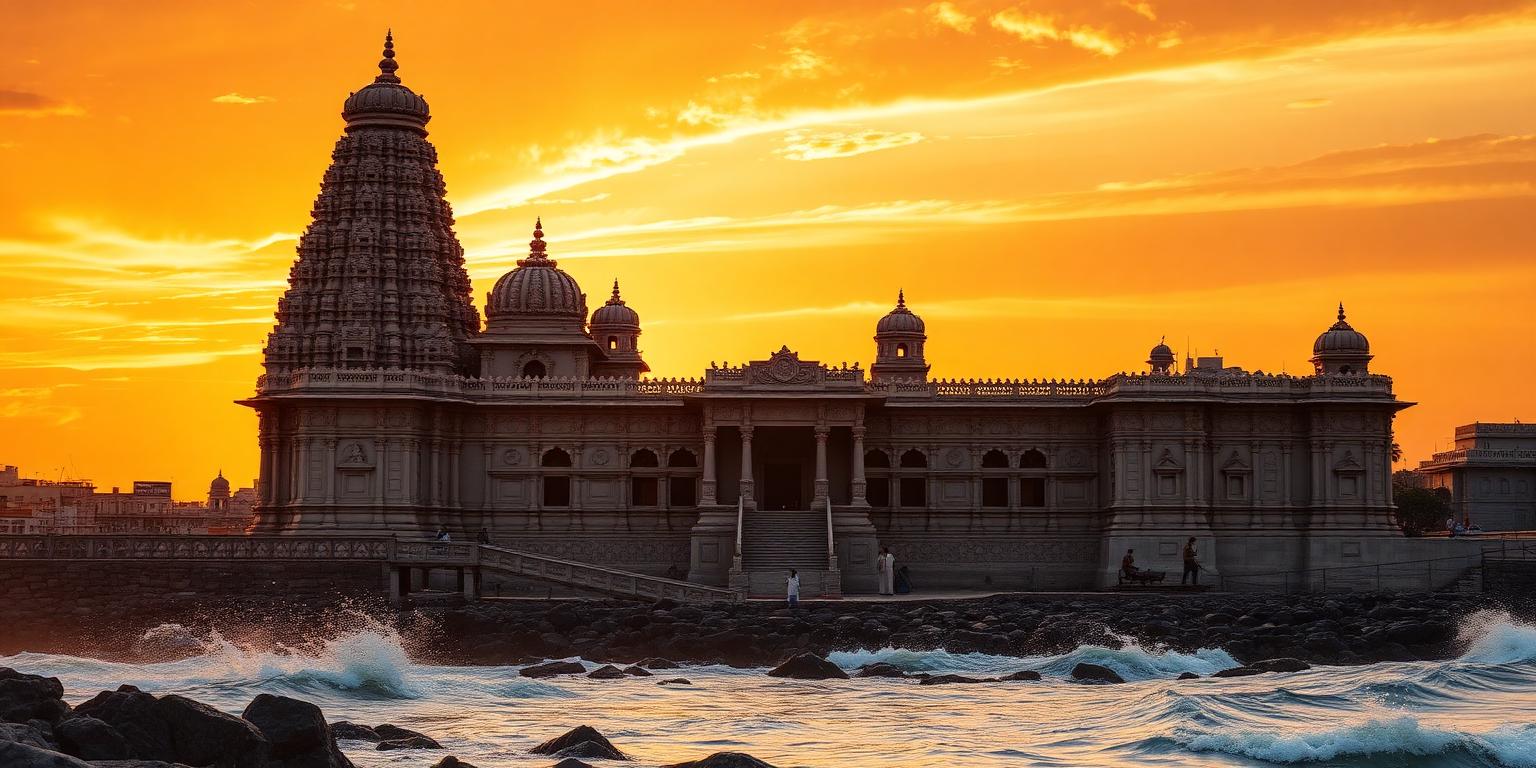
The Somnātha Mandir at Prabhāsa Pāṭan, near Verāval on the western coast of Gujarāt, is the most ancient and the foremost of the twelve Jyotirlingas. The presiding deity is Somanātha — the Lord of Soma, the Moon — whose grace restored Chandra's lost radiance and from whom the yātrā of all twelve Jyotirlingas traditionally begins.

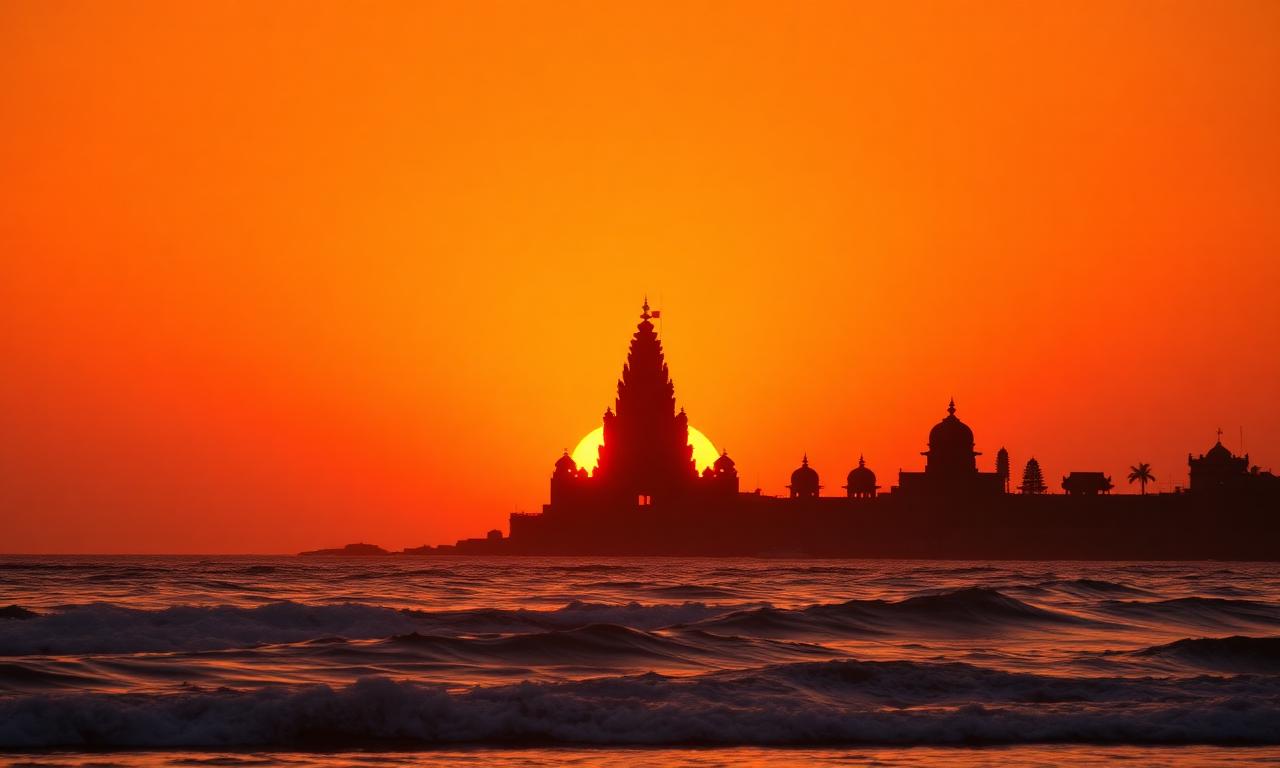
The temple rises in classical Māru-Gurjara style above the rocks of the Arabian Sea. A famous pillar in the courtyard — the Bāṇa Stambha — points southward with the legend: "From this point onward, there is no land in a straight line, only the unbroken ocean, until the South Pole." Nowhere else is the meeting of sacred geography and devotion so visible.

Razed by Mahmūd of Ghazni in 1026, destroyed again by Alā-ud-dīn, Aurangzeb and others, the temple stands today reconsecrated in free Bhārata — a living testament that faith outlasts every sword. Each crashing wave below the spire repeats the same teaching: this Lord cannot be silenced.
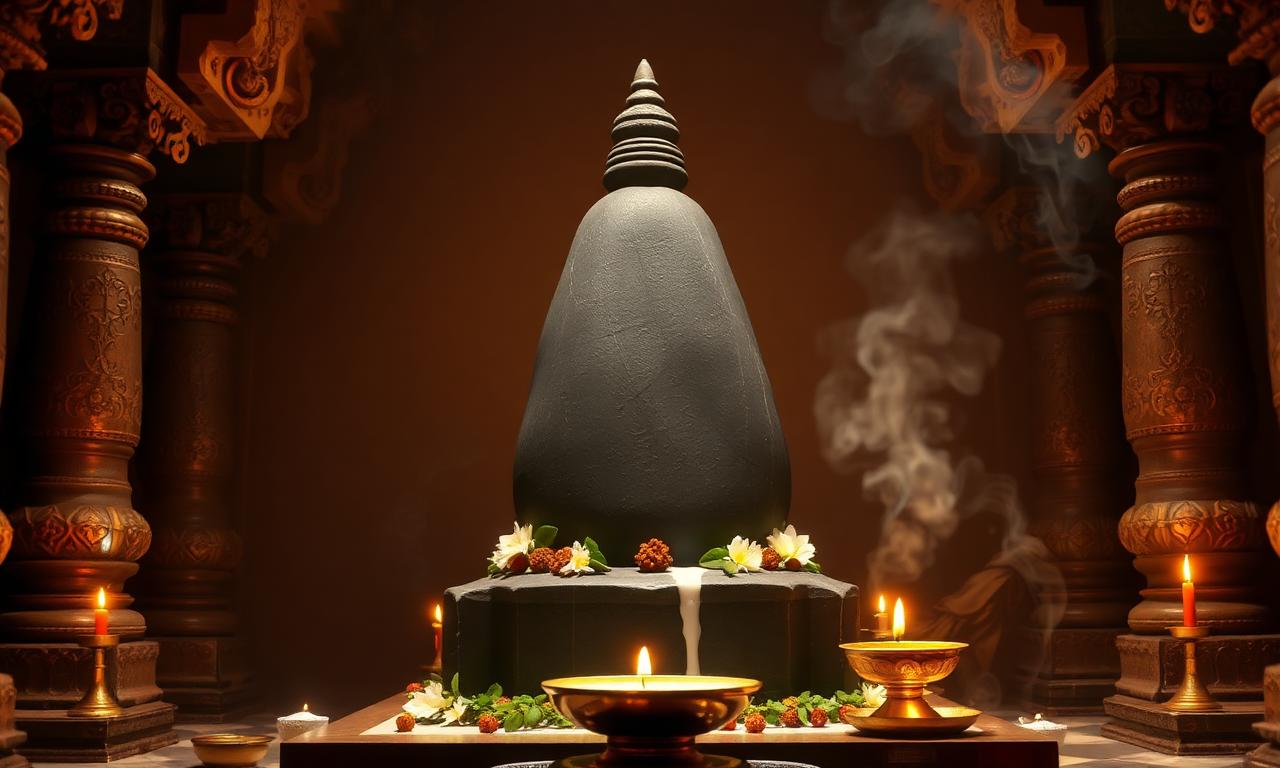
The Somnath Jyotirlinga in the inner sanctum
The Somanātha Jyotirliṅga — abhiṣeka in the inner sanctum

Chapter I

Why Somnath is Supreme

Six teachings that make Somanātha the eternal first among the twelve Jyotirlingas.

Lord of the Moon

Soma means Moon, Nātha means Lord — Shiva who restored the lost radiance of Chandra and gave him his waxing-waning rhythm.

Ādi Jyotirliṅga

Traditionally honoured as the first of the twelve self-manifested liṅgas — the Jyotirlinga yātrā of Bhārata begins here.

Temple That Cannot Die

Razed seventeen times by sword and fire over a thousand years — and seventeen times raised again. The supreme symbol of the indestructibility of dharma.

Where Three Rivers Meet the Sea

At Triveṇī Saṅgama — the confluence of Hiraṇyā, Kapilā and the unseen Sarasvatī with the ocean — the geography itself is sacred.

Remover of Curses

As Shiva freed Chandra from the curse of Dakṣa, devotees come to Somnath to be released from the doṣas and karmic shadows of their own lives.

Sardar's Sankalpa

The Iron Man of India, Sardar Vallabhbhāī Paṭel, made it his sankalpa that this temple would rise from ruin — and so it did, in free Bhārata.

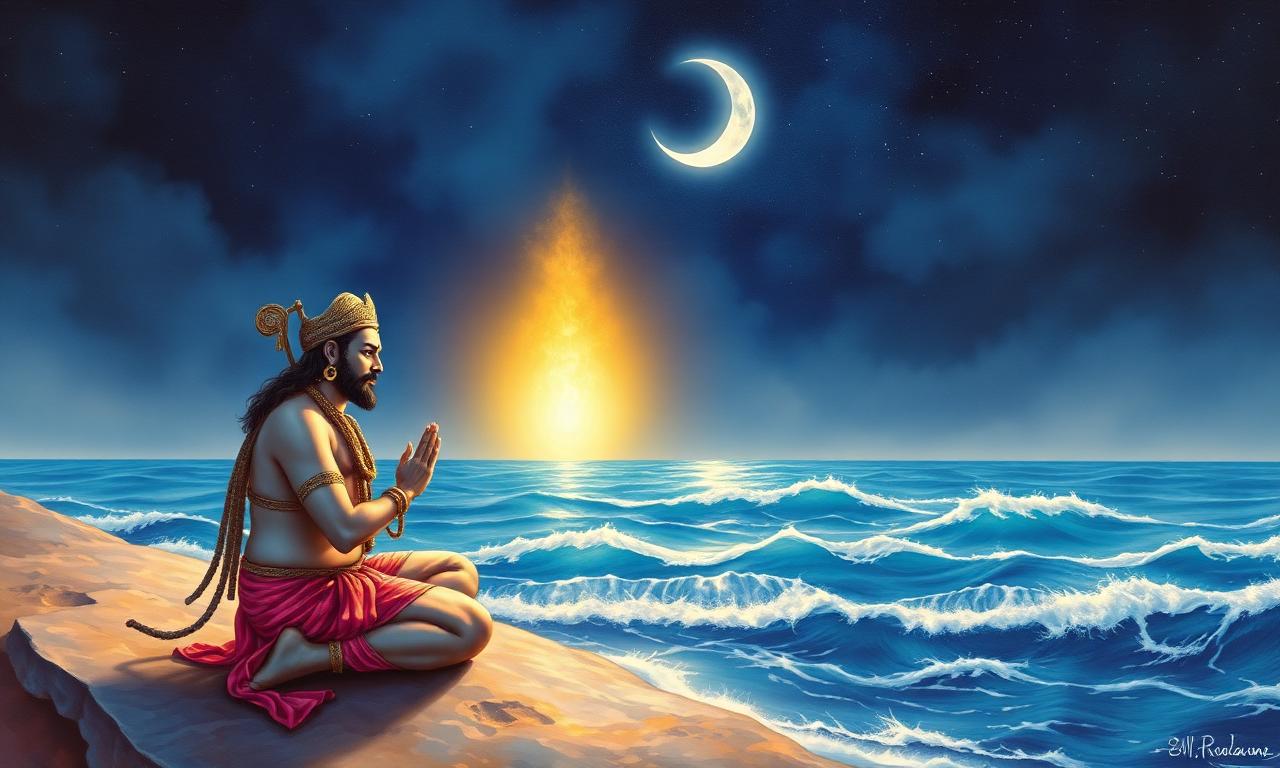
Chandra the Moon God performing penance to Shiva at Prabhasa

The Origin · Śiva Purāṇa

The Lord Who Restored the Moon

Soma, the Moon, was wed to the twenty-seven daughters of Dakṣa Prajāpati — the twenty-seven nakṣatras. But he loved only Rohiṇī, neglecting the others. Hurt for his daughters, Dakṣa cursed Soma to wane and lose his light. Stripped of his radiance and fading toward extinction, Chandra came to the shore of Prabhāsa and performed a fierce tapasya to Shiva. Moved by his devotion, Shiva manifested as the Somanātha Jyotirliṅga, freed him from the curse, and granted him the boon of waxing and waning — to die a little every fortnight, and to be reborn whole again. From that day the Moon never fully disappears, and the Lord who saved him is worshipped here forever.

सौराष्ट्रे सोमनाथं च श्रीशैले मल्लिकार्जुनम् ॥

"In Saurāṣṭra, Somanātha; on Śrīśaila, Mallikārjuna…" — the opening verse of the Dvādaśa Jyotirliṅga Stotram, beginning with Somnath.

Chapter II

Seventeen Falls, Seventeen Risings

A thousand years of destruction, devotion and reconstruction — Somnath always rises again.

Purāṇic Era

The Śiva and Skanda Purāṇas describe Chandra's penance at Prabhāsa and the manifestation of the first Jyotirliṅga. The site is older than memory.

Early Era

The Yādavas, Vallabhī kings and Cālukyas patronise the shrine. By the 10th century Somnath is the wealthiest and most renowned temple of Bhārata, its lamps lit with ghee carried from a thousand miles.

1026 CE

Mahmūd of Ghazni sacks the temple and breaks the liṅga; the chronicles record fifty thousand defenders falling at its gates. The wealth is carried away — the devotion is not.

11th–13th c.

Rebuilt under the Solaṅkī king Bhīmadeva I and again by Kumārapāla — each time grander than before. Hemādri and the Vāghela kings restore worship after every sack.

1299 & later

Destroyed under Alā-ud-dīn Khaljī's general Ulugh Khān, rebuilt by the Cūḍāsamā rajputs, demolished again under Aurangzeb in 1665, raised once more by Ahalyābāī Hōḷkar in 1783.

1947 CE

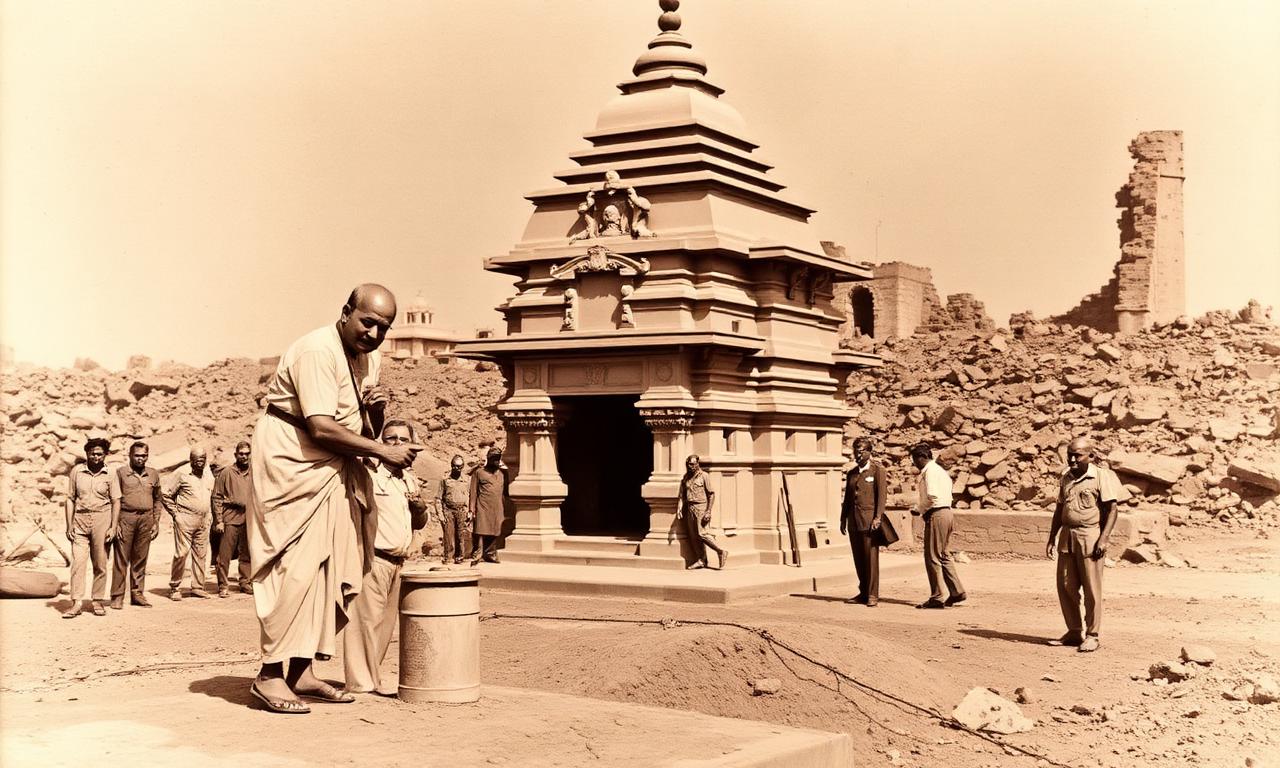
Days after Independence, Sardar Vallabhbhāī Paṭel stands among the ruins and takes the saṅkalpa to rebuild Somnath as a free nation's first act of memory.

1951 CE

The reconstructed temple in classical Cālukya–Māru-Gurjara style is consecrated by President Dr. Rājendra Prasād, the first prāṇa-pratiṣṭhā in a free Bhārata.

Sardar Vallabhbhai Patel taking the sankalpa to rebuild Somnath in 1947

Free Bhārata's First Memory

Sardar Paṭel — 1947

॥ सोमनाथ पुनरुत्थानम् ॥

On 13 November 1947, days after the integration of Junāgaḍh into the new Union, Sardar Vallabhbhāī Paṭel stood among the ruins of Somnath, scooped seawater into his palm, and took the saṅkalpa that this temple would rise again in free Bhārata. K. M. Munshi led the trust; ordinary citizens across the country sent stone, gold and donations. The reconstruction in classical Māru-Gurjara style was consecrated in May 1951 by Rāṣṭrapati Dr. Rājendra Prasād — the first prāṇa-pratiṣṭhā of a temple in independent Bhārata.

Dr. Rājendra Prasād declared that day: "The Somnath temple signifies that the power of creation is always greater than the power of destruction." The sentence has stood as the temple's living motto ever since.

Somnath temple silhouette at sunset over the Arabian Sea

Chapter III · The Bāṇa Stambha

Unbroken Ocean to the South Pole

In the temple courtyard rises a small pillar called the Bāṇa Stambha — the Arrow Pillar. A Sanskrit inscription declares that from this single point, drawn straight south along the meridian, there is no land at all — only the open ocean — until one reaches Antarctica. Centuries before modern cartography, the ancient priests of Somnath knew exactly where the temple stood on the body of the Earth. The sea that destroyed seventeen temples is the same sea that for thousands of years has whispered the same teaching at the Lord's feet: arise, again.

आसमुद्रान्त पर्यन्तं ज्योतिर्मार्गो विराजते ॥

"The path of light shines unbroken — all the way to the ocean's end."

Chapter IV

Daily Worship & Festivals

The unbroken rhythm of āratī, abhiṣeka and seva at the foremost Jyotirlinga.

Three Daily Āratīs

Maṅgalā (7 AM), Madhyāhna (noon) and Sandhyā (7 PM) — the Lord is awakened, fed and put to rest with the same love every single day.

Rudrābhiṣeka

The continuous bathing of the liṅga with water, milk, curd, honey and ghee while the Śrī Rudram is chanted — the very heart of Somnath worship.

Mahāśivarātri

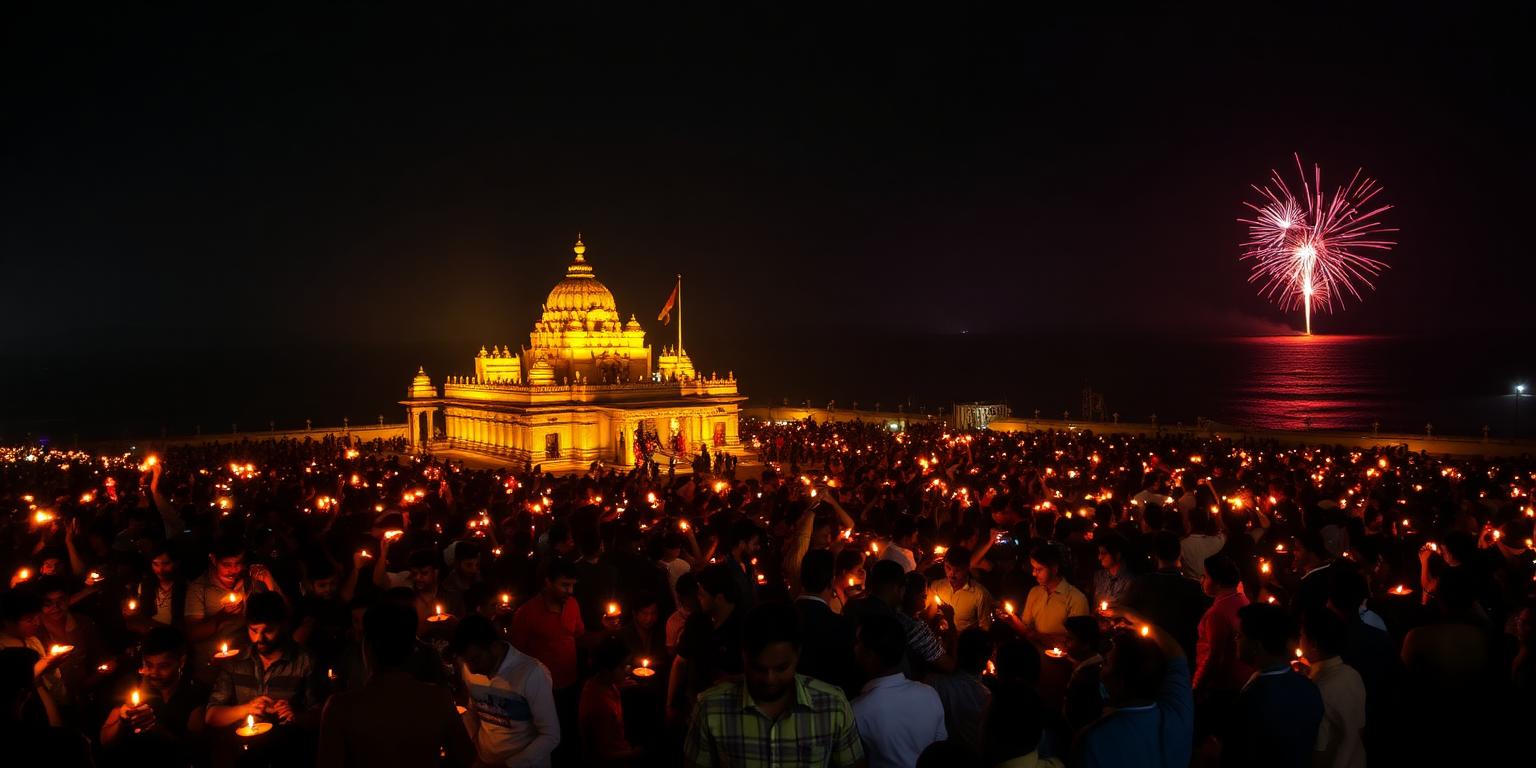
The great night of Shiva — the temple is illuminated against the dark Arabian Sea and lakhs of devotees keep vigil with diyās until the dawn āratī.

Śrāvaṇa Mās

The whole month of Śrāvaṇa (Jul–Aug) belongs to Shiva. Mondays at Somnath draw uncountable kāṅvariyās carrying water from the seven sacred rivers.

Kārttika Pūrṇimā

The full moon of Kārttika is especially dear to Chandra — devotees take snāna in the sea and offer water to the liṅga at moonrise.

Light & Sound Showcase

Each evening after sandhyā āratī, the temple narrates its own story of destruction and resurrection in the voice of Amitābh Bachchan beneath the night sky.

Chapter V · Yātrā

A Spiritual Circuit by the Sea

॥ सौराष्ट्र यात्रा ॥

Pilgrims rarely visit Somnath alone. The shore of Saurāṣṭra is dense with grace: Dwārakā — the city of Kṛṣṇa and one of the Char Dhām — lies a few hours north, and Nāgeśvara Jyotirliṅga stands between them. Many devotees complete the trio in a single yātrā, ending at Bhālkā Tīrtha where Śrī Kṛṣṇa is said to have left the earth.

Somnath → Bhālkā Tīrtha — where Śrī Kṛṣṇa's earthly līlā concluded.

Nāgeśvara Jyotirliṅga — the serpent-king's Lord, near Dwārakā.

Dwārakādhīśa — the western Char Dhām, the golden city of Kṛṣṇa.

Mahashivaratri at Somnath with thousands of devotees and lamps
Mahāśivarātri at Somnath — the night the sea itself keeps vigil
॥ ॐ नमः शिवाय ॥

From the night Chandra knelt on the shore until the morning Sardar Paṭel scooped the sea into his palm and vowed to rebuild — Somnath has remained what it has always been: the first light of the Jyotirlingas, the Lord who restores what the world has dimmed, the temple that cannot die. The sea breaks against its walls, and the lamp inside burns on.

हर हर महादेव ॥