Lord Hanuman

Devata · Bajrangbali

Lord Hanuman

॥ जय श्री राम · जय हनुमान ॥

The eternal servant of Rāma — son of the Wind, embodiment of strength, courage, humility and the highest devotion known to the soul.

॥ ॐ ॥

Vāyu Deva

Father

Añjanā

Mother

Cirañjīvī

Status

जय श्री राम

Mantra

Introduction

The Perfect Devotee
॥ ॐ ॥
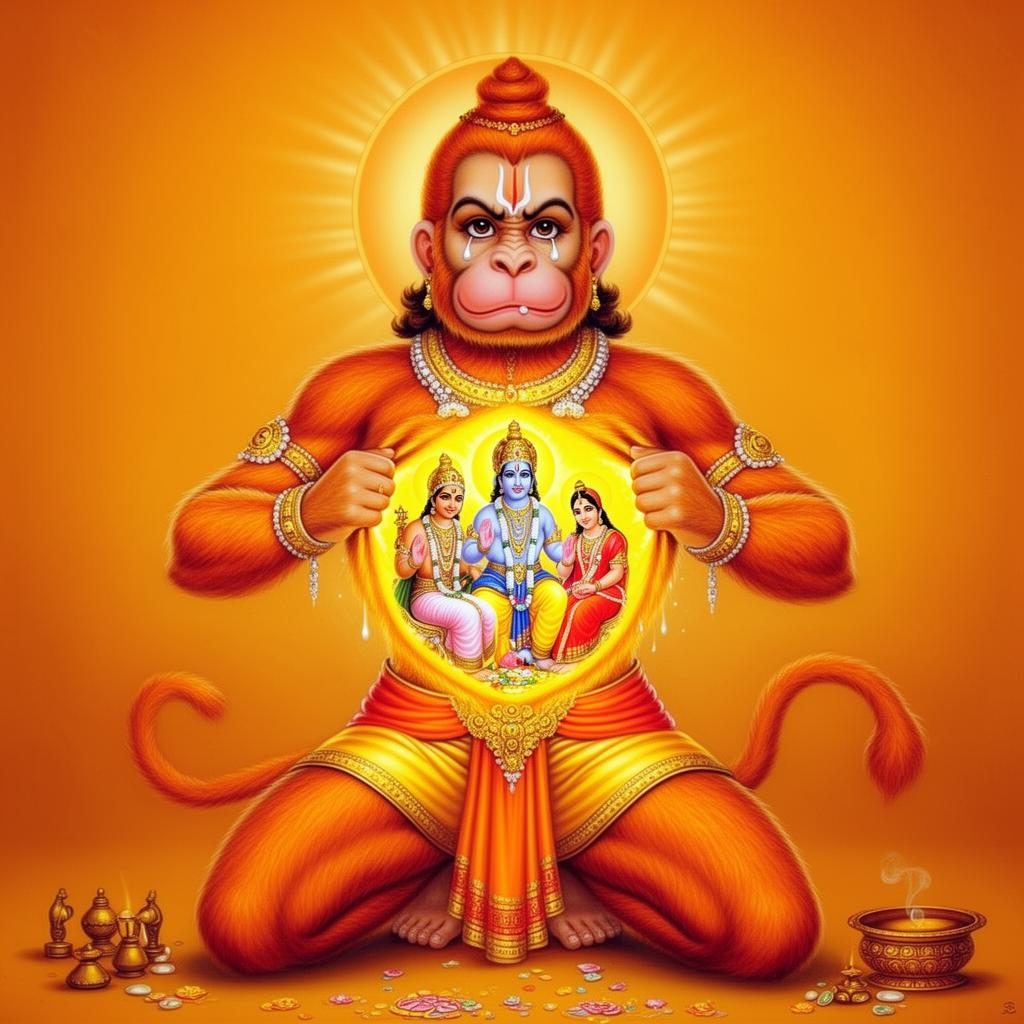
Hanuman opening his chest to reveal Rama and Sita within his heart
"Within my heart is Sītā-Rāma alone"

Hanumān (Sanskrit: हनुमान) is one of the most beloved, powerful and accessible deities of Sanatan Dharma. He is the devoted servant and greatest bhakta of Lord Rāma, and a central figure in the Rāmāyaṇa. He is worshipped as the embodiment of strength, courage, loyalty, selfless service and pure devotion.

He is known by many beloved names — Bajrangbali, Āñjaneya, Māruti, Kesarīnandana, and most tenderly as Sankaṭa Mocana, the remover of every trouble. He is a cirañjīvī — an immortal being still present on earth, still listening, still arriving wherever a devotee calls.

Where Rāma reveals the Divine as dharma and Kṛṣṇa reveals the Divine as love, Hanumān reveals the highest form of devotion — where the devotee completely dissolves his own identity into the Lord. When asked who he was, he answered: "In body I am Your servant; in mind I am Your part; in spirit, I am You."
Chapter I

The Many Names of Bajrangbali

Each name is a window into a different facet of his glory.

1

Bajrangbali

बजरंगबली

Of body firm as a thunderbolt — invincible strength

2

Āñjaneya

आञ्जनेय

Son of Mother Añjanā — the divine child of Vrishaba hill

3

Māruti

मारुति

Son of Māruta (Vāyu) — born of the Wind God

4

Kesarīnandana

केसरीनन्दन

Beloved son of Kesarī — pride of his earthly father

5

Sankaṭa Mocana

संकटमोचन

Remover of all troubles, dangers and obstacles

6

Mahāvīra

महावीर

The great hero — fearless in the face of any challenge

7

Pavanaputra

पवनपुत्र

Son of the wind — swift as thought, free as breath

8

Rāmadūta

रामदूत

The eternal messenger and servant of Lord Rāma

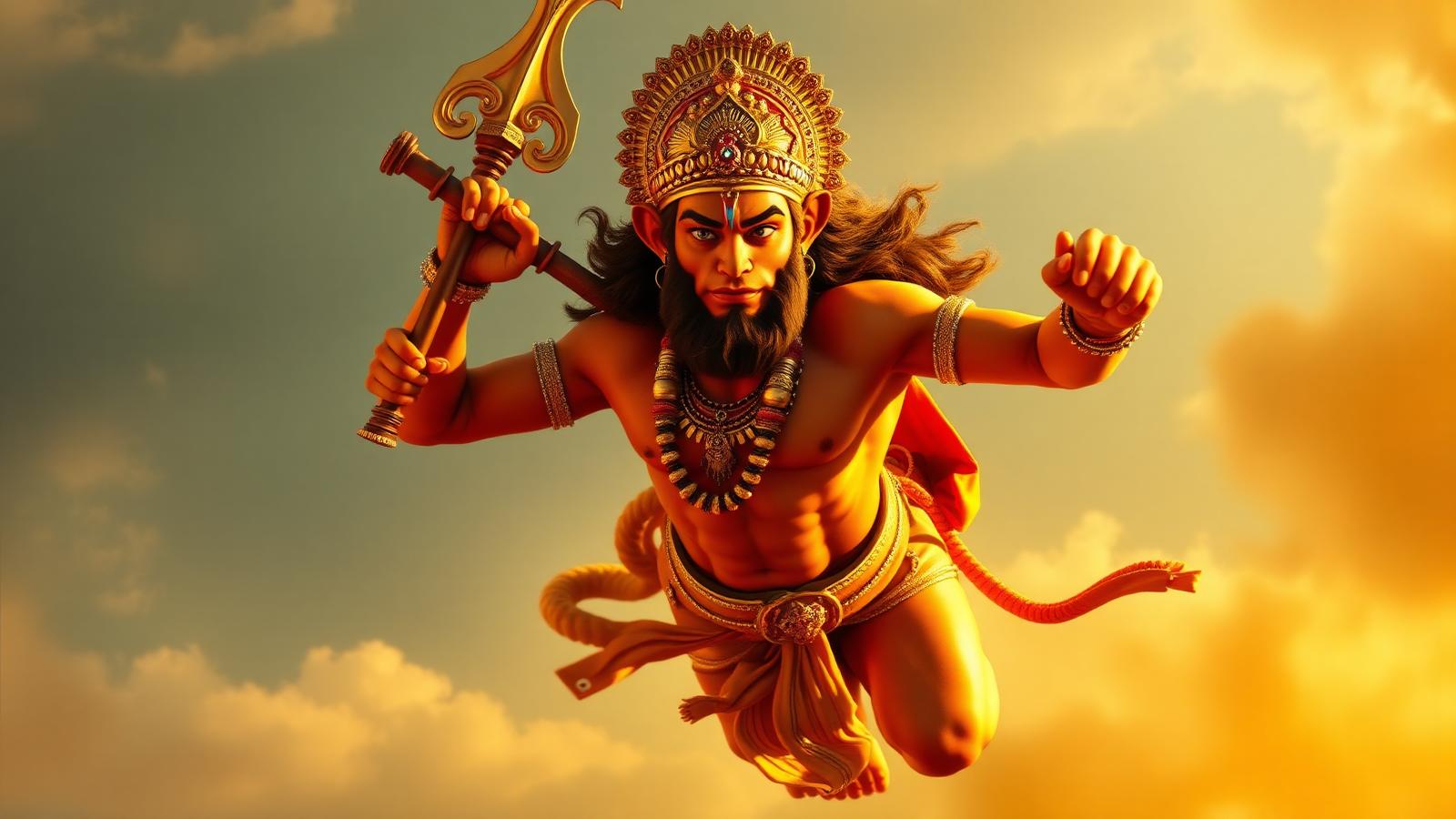
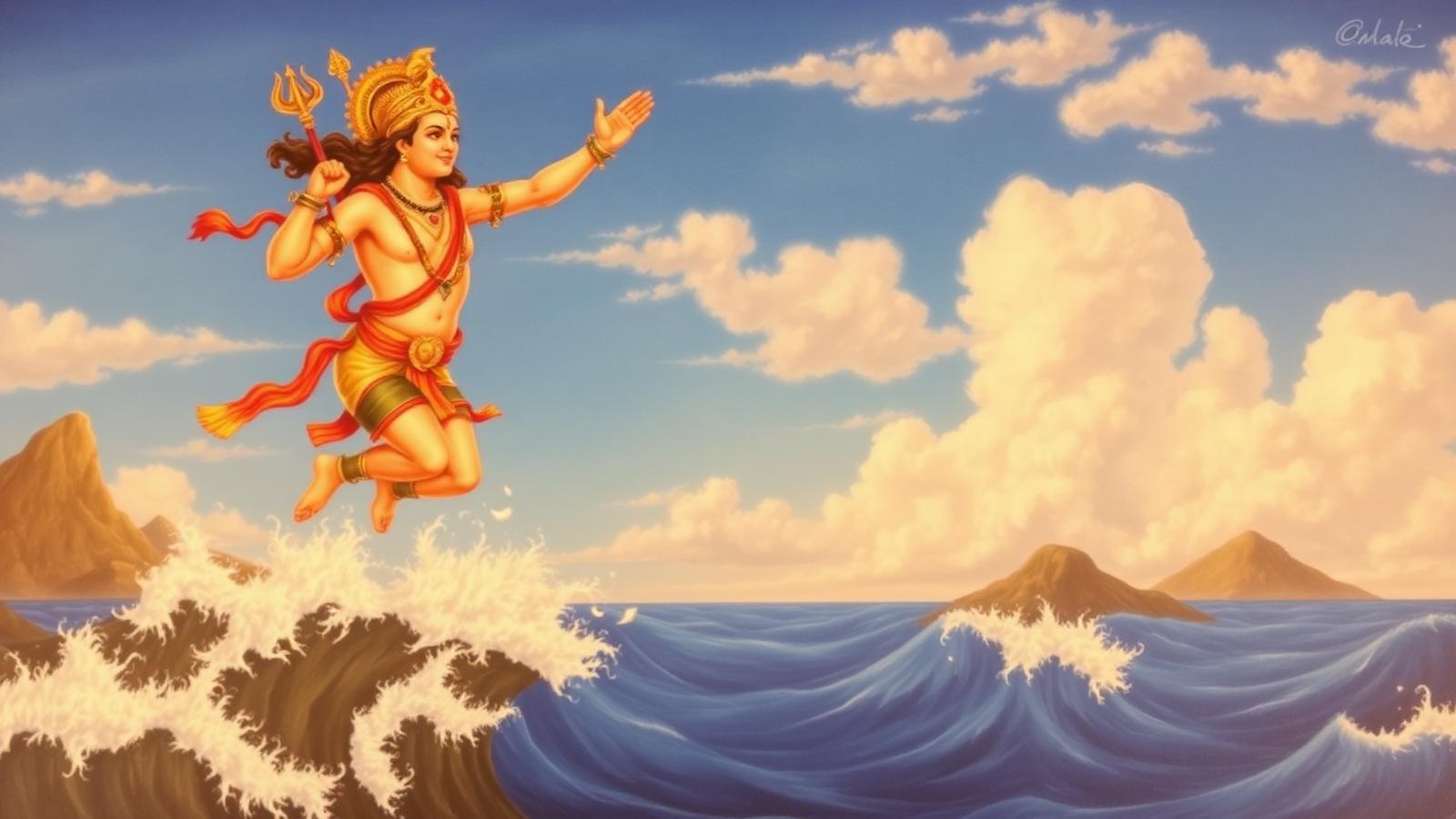
Hanuman leaping across the ocean to reach Lanka

The Power of Pure Devotion

The Leap to Laṅkā

When the vānara army stood despairing at the southern shore — a hundred yojanas of black ocean between them and Sītā — only one being remembered who he was. Hanumān had forgotten his own strength. The wise bear Jāmbavān reminded him: "You are the son of the Wind. There is no ocean you cannot cross." He grew vast as a mountain, gathered the wind into his lungs, and leapt. The story is for every age: when a devotee is shown his own power, no ocean of impossibility remains.

जय जय जय हनुमान गोसाईं ।
कृपा करहु गुरुदेव की नाईं ॥

"Victory, victory, victory to you, O Lord Hanumān — be gracious to me as a guru is to a disciple."

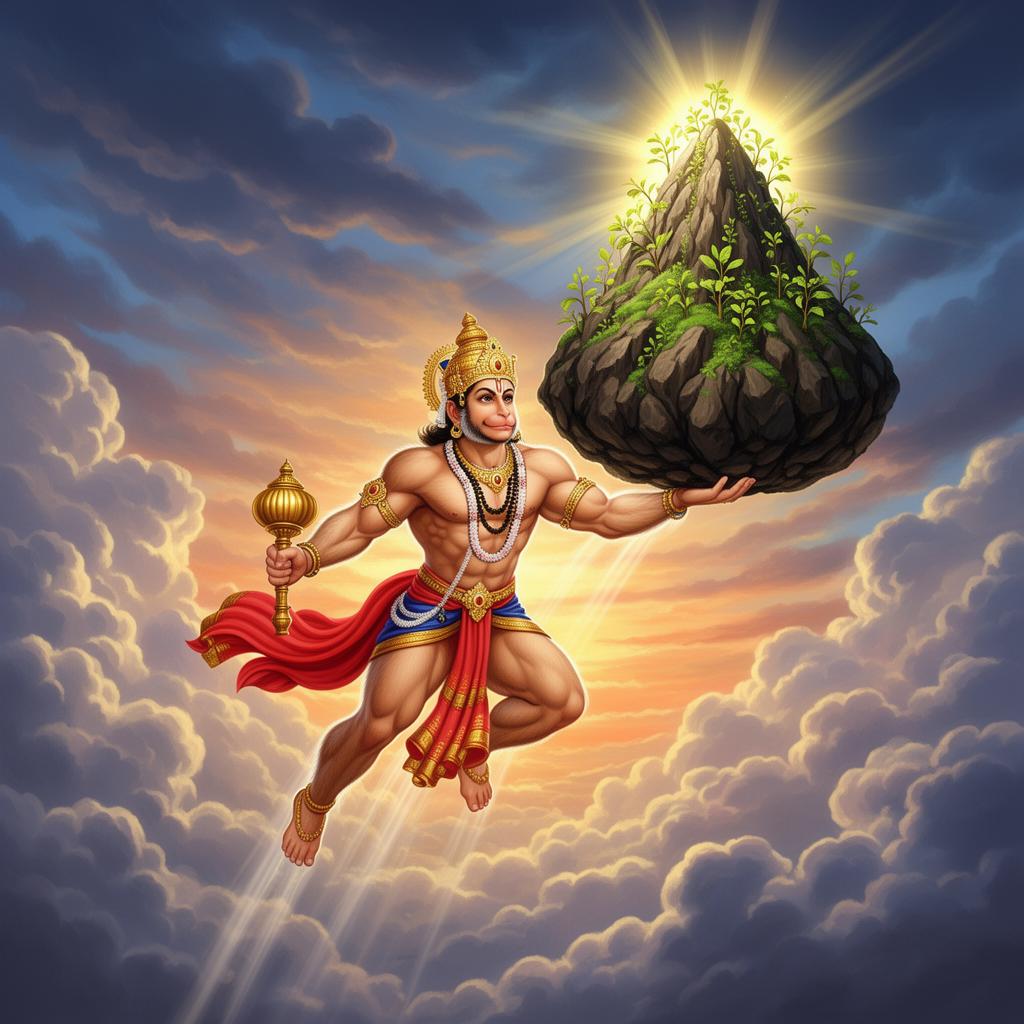
Hanuman flying with the entire Sanjeevani mountain
Sañjīvanī — when the herb cannot be found, bring the whole mountain

Chapter II · Sevā

The Whole Mountain on One Hand

On the battlefield, Lakṣmaṇa lay wounded — only the Sañjīvanī herb from the distant Himālayas could save him before dawn. Hanumān flew north faster than any wind. Reaching the great mountain, he could not tell one herb from another. So he simply lifted the entire mountain on one hand and carried it back to Laṅkā.

This is the heart of bhakti: when the devotee cannot reason, he simply offers everything. Where the mind hesitates, devotion lifts the mountain. Where the intellect calculates, love acts.

लाय सजीवन लखन जियाये । श्री रघुबीर हरषि उर लाये ॥

"You brought the Sañjīvanī and restored Lakṣmaṇa's life — and Śrī Raghuvīra embraced you with joy." — Hanumān Cālīsā

Chapter III · Dāsya Bhāva

The Eternal Servant of Rāma

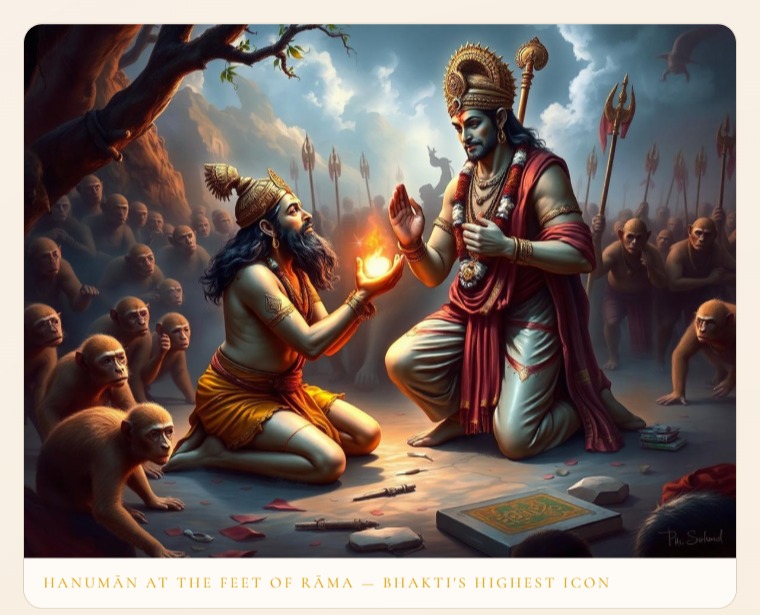
After Laṅkā fell, after Sītā was rescued, after the great return — Rāma turned to Hanumān and said: "Ask for anything. There is nothing I will not give." The mighty hero who had crossed oceans and lifted mountains folded his hands and asked for one boon alone: to remain at the feet of Rāma forever, chanting His name.

And so it is. Hanumān is the great cirañjīvī — the immortal one — still present wherever the Rāmāyaṇa is read, wherever the Cālīsā is chanted, wherever a heart turns to Rāma in love. You do not call on Hanumān; you simply remember Rāma — and he is there.

तुम्हरे भजन राम को भावै । जनम जनम के दुख बिसरावै ॥

"Your worship is dear to Rāma — and through it, the sorrows of countless births are forgotten."

Hanuman kneeling at the feet of Lord Rama and Sita
At the feet of Sītā-Rāma — the only reward he ever asked

Chapter IV

Glorious Deeds

From the rising sun of childhood to the burning of Laṅkā — each act is a teaching.

Reaching for the Sun

As a child, mistaking the rising sun for a ripe fruit, the little Hanumān leapt into the sky to seize it. Indra struck him with the thunderbolt — wounding his jaw (hanu), which gave him his immortal name.

Meeting Rāma

On the shores of Lake Pampā, Hanumān recognised Rāma at first sight as the Supreme Lord and surrendered completely. From that moment, his every breath belonged to Rāma.

The Leap to Laṅkā

To find Sītā, Hanumān grew vast, gathered the wind in his lungs, and leapt across the hundred-yojana ocean — a single bound powered by pure devotion.

Sītā in Aśoka Vana

Finding the grieving Devi in Laṅkā, he gave her Rāma's ring as proof, and then set Rāvaṇa's golden city ablaze with his burning tail — a warning, not a war.

The Sañjīvanī Mountain

When Lakṣmaṇa fell wounded on the battlefield, Hanumān flew to the Himālayas and — unable to identify the herb — lifted the entire mountain on one hand and carried it back to Laṅkā in time.

The Eternal Servant

After the war, when Rāma offered him any reward, Hanumān asked only to remain at His feet — to live wherever Rāma's name is sung, until the end of time.

Chapter V

The Symbolism of His Form

Every emblem of Hanumān is itself a teaching of devotion.

Gadā (Mace)

Pure strength wielded only in the service of dharma.

Tail

The mind and ego — when surrendered to the Lord, it becomes a weapon.

Mountain on His Shoulder

The willingness to carry any burden for the sake of the Beloved.

Heart Opened

Within is Sītā-Rāma alone — devotion as total self-offering.

Flying Posture

The power of bhakti that crosses every ocean and every obstacle.

Sindūra (Vermilion)

Smeared all over his body — for Sītā's red mark is the symbol of love itself.

Red Complexion

Energy, courage, fierce protection of the devotee.

Folded Hands

Infinite power held in infinite humility — strength's truest form.

Sacred Verses

Mantras of Bajrangbali

॥ ॐ ॥

Hanumān Cālīsā · Tulsīdās

बुद्धिहीन तनु जानिके सुमिरौं पवनकुमार । बल बुद्धि विद्या देहु मोहिं हरहु कलेस विकार ॥

"Knowing this body to be devoid of wisdom, I remember the Son of the Wind. Grant me strength, intellect, and knowledge; remove my afflictions and impurities."

Hanumān Cālīsā · The Heart

राम रसायन तुम्हरे पासा । सदा रहो रघुपति के दासा ॥

"The nectar of Rāma's name is yours alone — may I forever remain a servant of the Lord of the Raghus."

Where Rāma's Glory Is Sung

यत्र यत्र रघुनाथकीर्तनं तत्र तत्र कृतमस्तकाञ्जलिम् । भाष्पवारिपरिपूर्णलोचनं मारुतिं नमत राक्षसान्तकम् ॥

"Wherever the glories of Raghunātha are sung, there stands Hanumān with folded hands and tear-filled eyes. Bow to Māruti, the destroyer of demons."

Mūla Mantra

ॐ हं हनुमते नमः

"Salutations to Hanumān — strength, courage and devotion incarnate."

Chapter VI · Upāsanā

How Hanumān Is Worshipped

The worship of Hanumān is the simplest and the most powerful. He responds to the smallest sincere call. A single Cālīsā recited with feeling, a chant of "Jai Śrī Rām, Jai Hanumān" on a difficult morning, a smear of sindūra on a small murti at home — and the great cirañjīvī turns His face.

Hanumān Cālīsā

The forty verses of Tulsīdās — recited daily by millions, for strength, courage and removal of obstacles.

Sundara-Kāṇḍa Pārāyaṇa

Recitation of the fifth book of the Rāmāyaṇa — Hanumān's own chapter, especially on Saturdays.

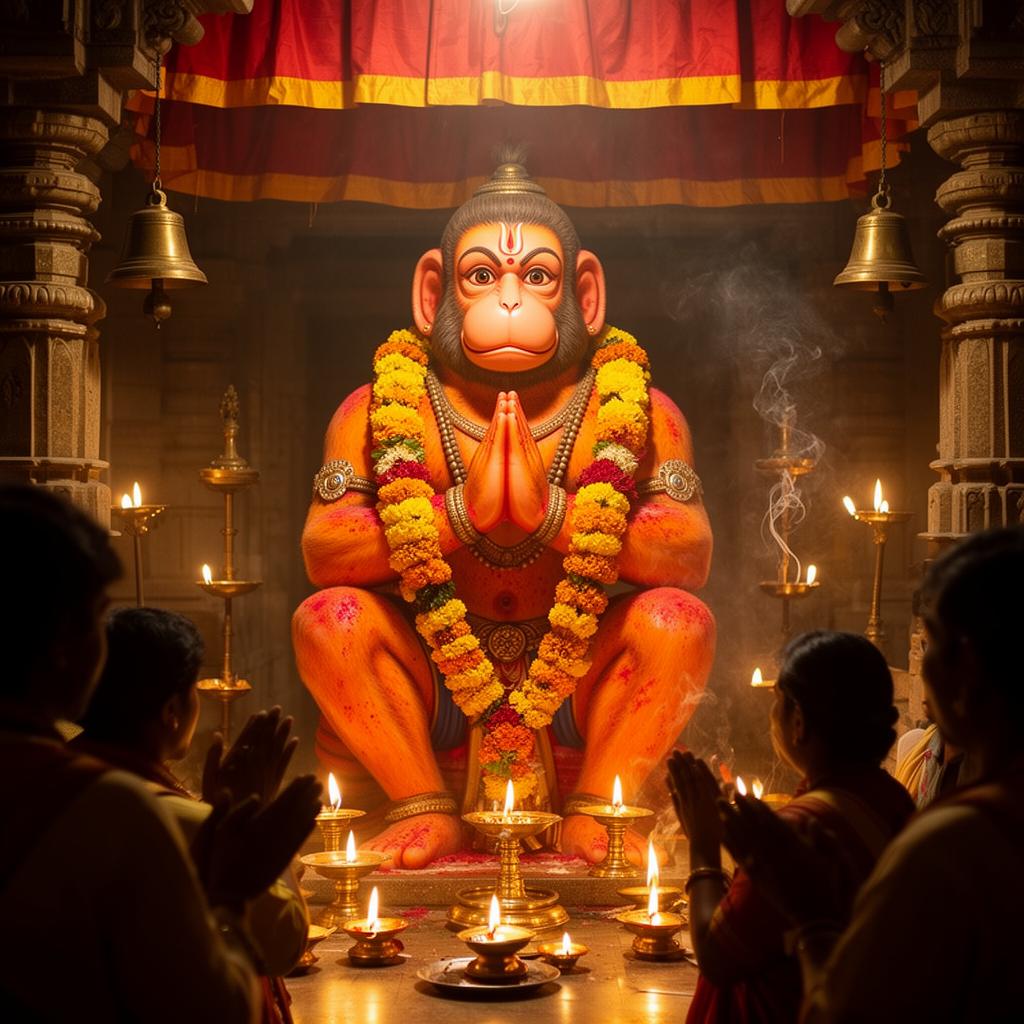
Sindūra & Oil Abhiṣeka

Offering vermilion mixed with mustard or sesame oil — the most beloved offering at Hanumān's feet.

Besan Laddu Prasāda

Sweet gram-flour laddus offered and shared — the simplest joy of every Hanumān temple.

Hanuman temple altar with sindoor, lamps and marigold garlands
A Hanumān shrine — sindūra, oil and lamplight

Chapter VII

Sacred Temples of Hanumān

Six among countless thousands — where Bajrangbali is most lovingly worshipped.

Vārāṇasī, UP

Sankat Mochan

Established by Tulsīdās — one of the most beloved Hanumān temples in Bhārata.

Rājasthān

Salasar Bālājī

The unique bearded form of Hanumān — millions of devotees visit every year.

Rājasthān

Mehandipur Bālājī

Renowned for the removal of negative forces and protection of devotees.

Śimlā, HP

Jakhū Mandir

Hanumān is said to have rested here while carrying the Sañjīvanī mountain.

Ayodhyā, UP

Hanumān Garhī

The fortified temple at the very heart of Rāma's city — Hanumān as its eternal guardian.

Hampi, Karnataka

Anjaneyādri

Believed to be the birthplace of Hanumān — atop the sacred Vrishaba hill.

Chapter VIII

Festivals & Sacred Days

Hanumān Jayantī

The appearance day of Bajrangbali — celebrated with day-long Cālīsā recitation, sindūra abhiṣeka, and laddu prasāda.

Maṅgalvāra (Tuesday)

The weekly day of Hanumān — devotees fast, offer sindūra and chant the Cālīsā in every Hanumān temple.

Śanivāra (Saturday)

Also sacred to Hanumān — recitation of the Sundara-Kāṇḍa is believed to remove the effects of Śani.

Sundara-Kāṇḍa Pārāyaṇa

Recitation of the fifth book of the Rāmāyaṇa — Hanumān's own chapter, read for protection and fulfilment of wishes.

॥ ॐ ॥

The Eternal Servant of Rāma

From leaping across the ocean to lifting the Sañjīvanī mountain, from burning Laṅkā to standing forever at the feet of Sītā-Rāma — Hanumān teaches us that true strength lies in humility, true courage lies in devotion, and true success lies in selfless service. He continues to live among us as an immortal being, ready to help anyone who calls upon him with faith.

जय श्री राम · जय हनुमान

Jai Shrī Rām · Jai Hanumān