Lord Rama

Devata · Maryādā Puruṣottama

Lord Rama

॥ श्री राम जय राम जय जय राम ॥

Dharma walking the earth — the seventh avatāra of Viṣṇu, the ideal son, husband, brother and king, the eternal model of righteousness.

॥ ॐ ॥

Saptama (7th)

Avatāra

Sītā

Consort

Ayodhyā

Abode

श्री राम जय राम

Mantra

Introduction

Dharma in Human Form
॥ ॐ ॥
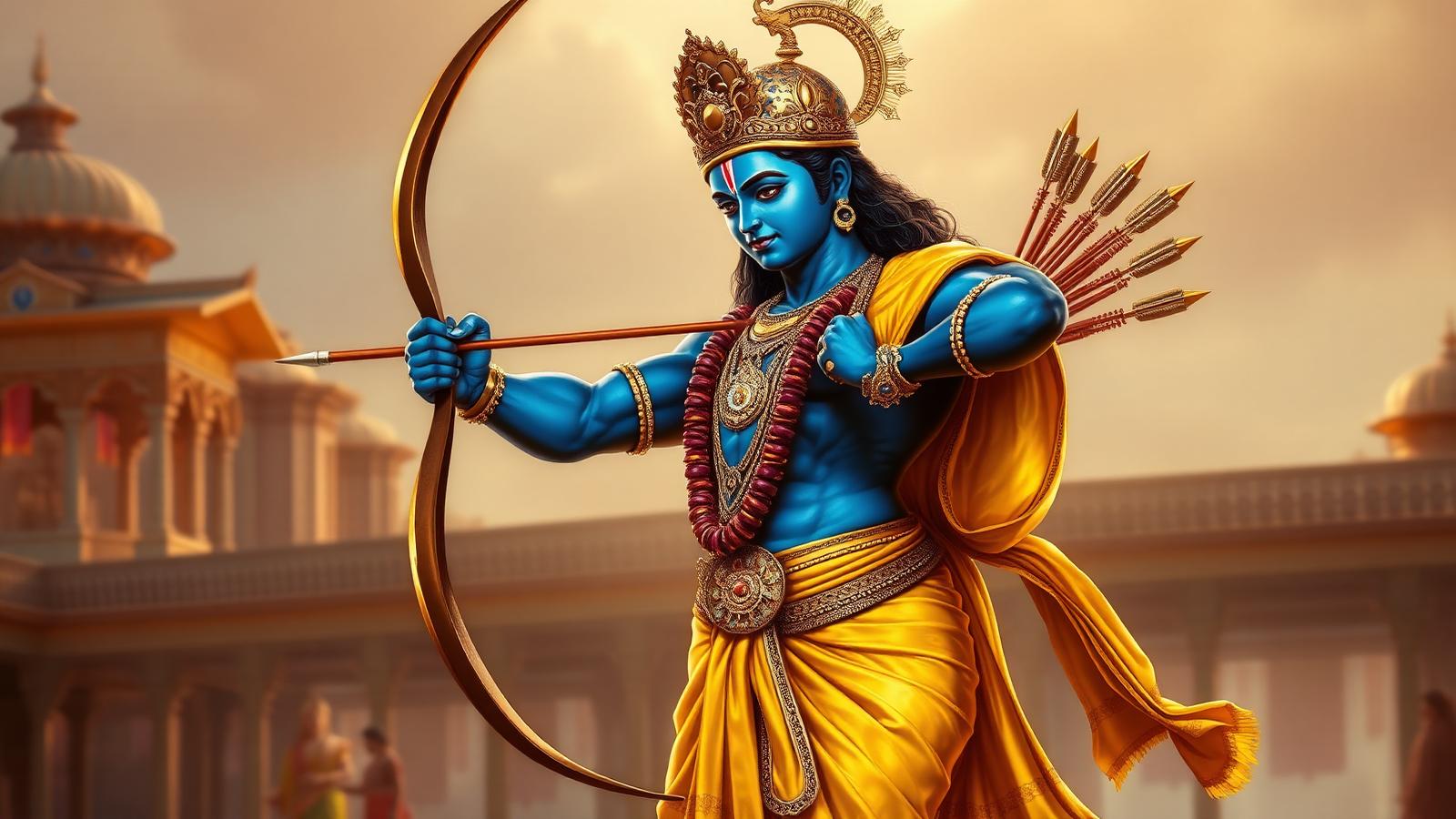
Rama winning Sita's hand by breaking the bow of Shiva
Sītā Svayaṃvara — the breaking of Śiva's bow

Rāma (Sanskrit: राम) is the seventh avatāra of Lord Viṣṇu and the central hero of the great epic Rāmāyaṇa. He is revered as Maryādā Puruṣottama — the supreme man who perfectly upholds dharma in every situation. He is the ideal son, ideal husband, ideal brother, and ideal king.

While Kṛṣṇa reveals the Divine as love, playfulness and the path of bhakti, Rāma reveals the Divine as dharma, duty, and righteous living. He shows that even in the most difficult circumstances, a human being can live with integrity, compassion and unwavering adherence to what is right.

Rāma appeared in the Tretā Yuga to destroy the demon king Rāvaṇa and restore dharma. Born in Ayodhyā as the eldest son of King Daśaratha and Queen Kauśalyā, his life is the moral compass of Bhārata — a life that demonstrates how even when facing immense suffering, one can remain steadfast in truth.
Chapter I

The Life of Rāma — Eight Movements

From a prince of Ayodhyā to the perfect king — each phase is a teaching.

1

Bālakāṇḍa

बालकाण्ड

Childhood and education in Ayodhyā under sage Vasiṣṭha

2

Vivāha

विवाह

Marriage to Sītā after breaking the divine bow of Śiva

3

Vanavāsa

वनवास

Fourteen years of exile — accepted without resentment

4

Sītā-Haraṇa

सीताहरण

The abduction of Sītā by the demon king Rāvaṇa

5

Sugrīva-Maitrī

सुग्रीवमैत्री

Friendship with Sugrīva and meeting Hanumān

6

Laṅkā-Yuddha

लङ्कायुद्ध

The great war against Rāvaṇa and the rescue of Sītā

7

Rājyābhiṣeka

राज्याभिषेक

The coronation of Rāma in Ayodhyā

8

Rāma Rājya

रामराज्य

The ideal rule — justice, prosperity and dharma for all

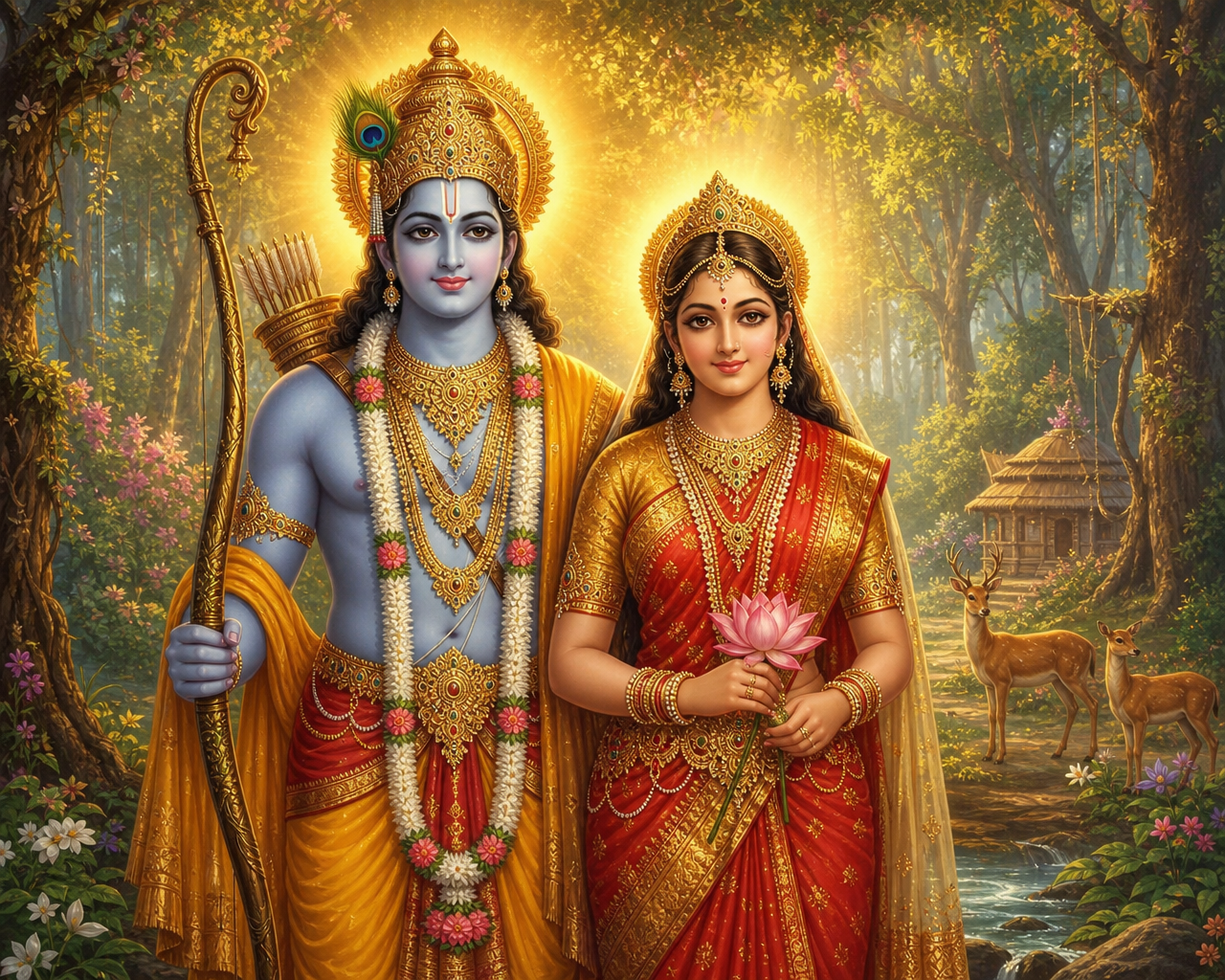
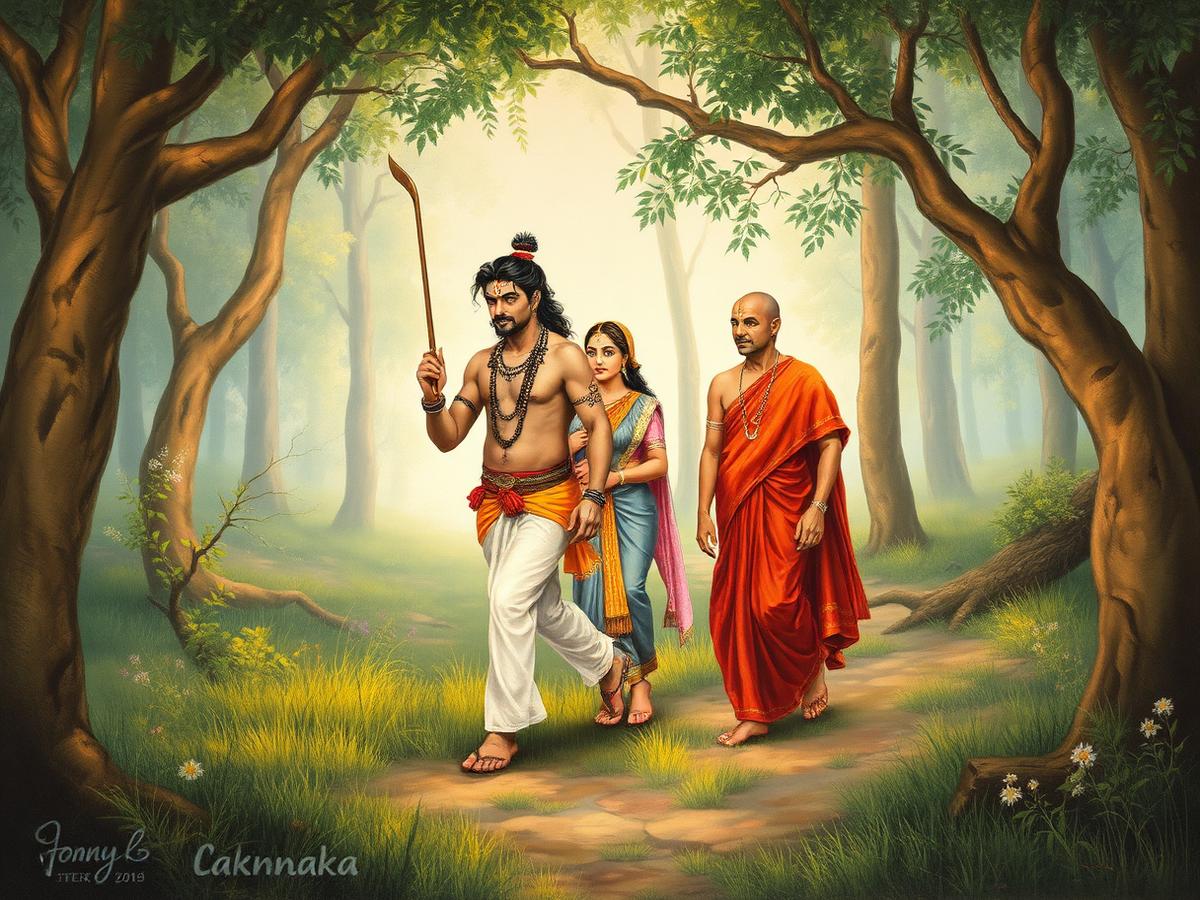
Rama, Sita and Lakshmana walking through the forest during exile

The Word of a Father

Vanavāsa — Fourteen Years in the Forest

On the morning of his coronation, the throne was taken from him. Because of a boon promised long ago to Queen Kaikeyī, King Daśaratha had to send his beloved son into exile for fourteen years. Rāma did not protest, did not grieve, did not waver. He simply obeyed — and walked into the forest with Sītā and Lakṣmaṇa, leaving the crown for his brother Bharata. This is the heart of dharma: to honour the word of one's father even when it costs one the kingdom.

रघुकुल रीति सदा चली आई ।
प्राण जाये पर वचन न जाई ॥

"The tradition of the Raghu dynasty is ancient — life may go, but the given word shall not be broken."

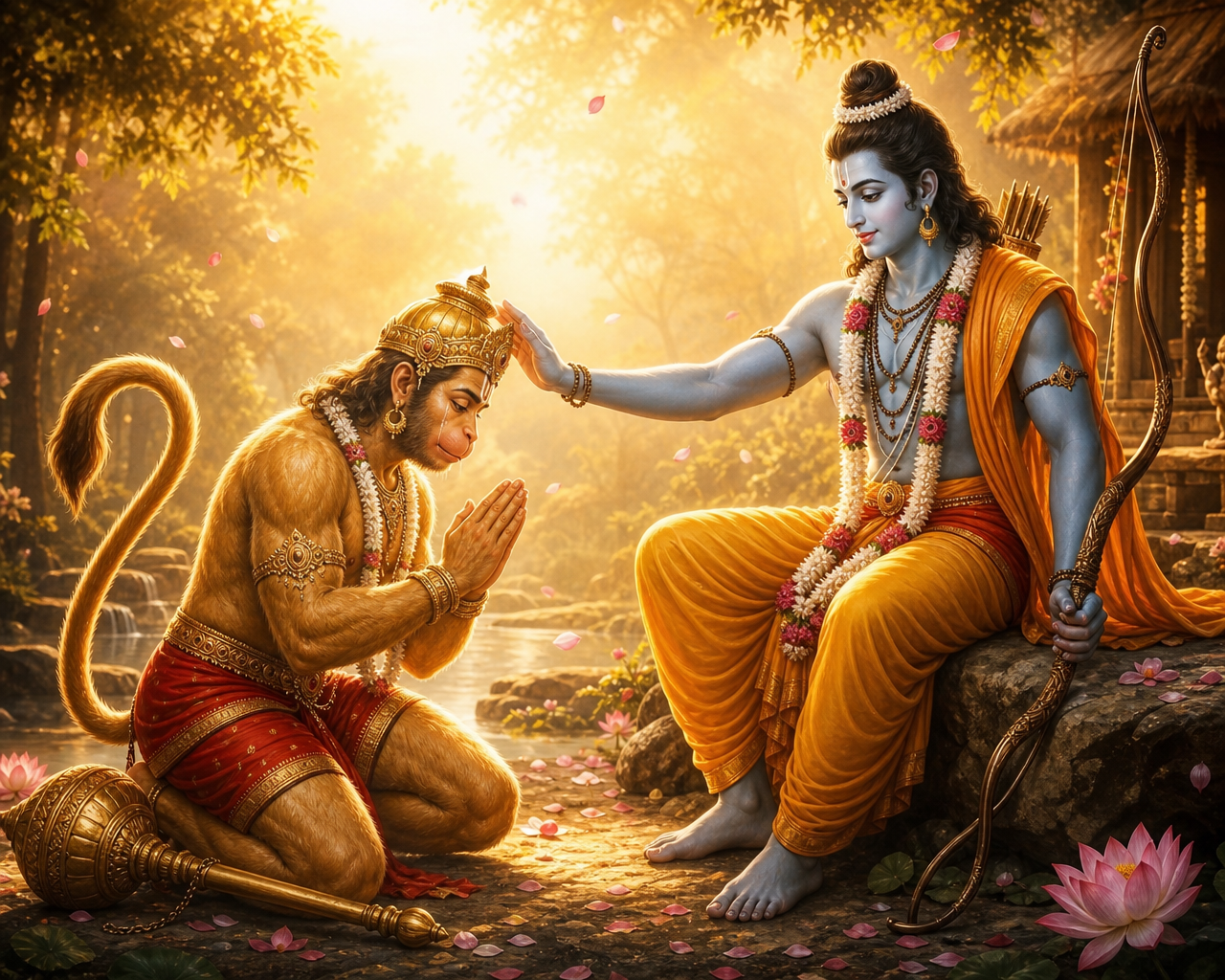
Hanuman kneeling before Lord Rama in devotion
Hanumān at the feet of Rāma — bhakti's highest icon

Chapter II · Bhakti

Hanumān — The Perfect Devotee

When Rāma met Hanumān on the shores of Lake Pampā, the Lord found in him the greatest devotee the world would ever know. Hanumān crossed the ocean for Rāma, set Laṅkā ablaze for Rāma, carried the Sañjīvanī mountain for Rāma — and asked nothing in return except to remain at His feet, chanting His name.

Hanumān shows that bhakti itself is the highest power. Where Rāma is the Lord of dharma, Hanumān is the Lord of devotion — and through Hanumān every soul finds the easiest, sweetest door to Rāma.

यत्र यत्र रघुनाथकीर्तनं तत्र तत्र कृतमस्तकाञ्जलिम् ॥

"Wherever the glories of Rāma are sung, Hanumān stands there, palms folded on his head."

Chapter III · Rāmarājya

Rāma Rājya — The Ideal Kingdom

After the great war, after the rescue of Sītā, after the long return — Rāma was crowned king of Ayodhyā. What followed has become the eternal Indian dream of just rule: Rāma Rājya. None went hungry. None lived in fear. Dharma flowed through every relationship, prosperity through every household, truth through every word spoken in the court.

For thousands of years, every Indian sage, poet and statesman who has imagined a better society has invoked the same two words. Rāma Rājya is not a memory of the past — it is the promise that an age governed by dharma is possible whenever a people are willing to live by it.

दैहिक दैविक भौतिक तापा । राम राज नहिं काहुहि ब्यापा ॥

"In the rule of Rāma, no being suffered from sorrows of body, mind or circumstance." — Rāmacaritamānasa

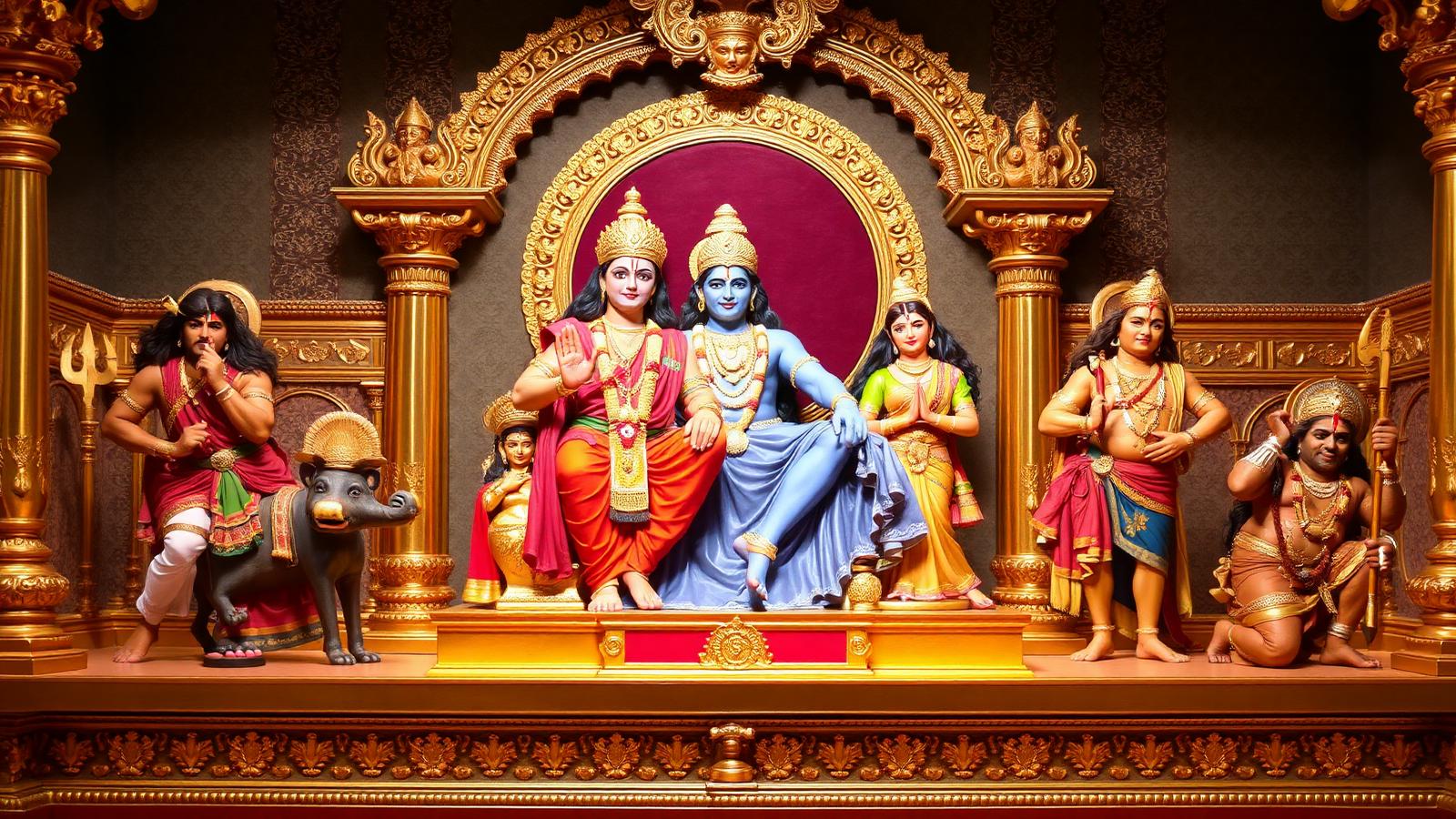
Rama Darbar — Rama enthroned in Ayodhya with Sita, brothers and Hanuman
Rāma Darbāra — the court of the perfect king

Chapter IV

Beloved Forms of Rāma

Maryādā Puruṣottama

The supreme man who perfectly upholds dharma in every situation.

Sītā-Rāma

Rāma with his eternal consort Sītā — the ideal of married love.

Rāghava

Descendant of Raghu — the valiant prince of the solar dynasty.

Rāma Lallā

The child form of Rāma worshipped especially at Ayodhyā.

Kodaṇḍa Rāma

Rāma wielding his great bow — protector of dharma.

Pattābhi Rāma

Rāma enthroned — the perfect king in the Rāma Darbāra.

Chapter V

The Symbolism of His Form

Every aspect of Rāma carries a teaching of dharma.

Dhanus (Bow)

Mastery over dharma and the unwavering will to protect righteousness.

Bāṇa (Arrow)

Single-pointed focus — every act aimed at truth.

Blue Complexion

The infinite sky — all-pervading consciousness in human form.

Sītā at His Side

The ideal of pure, devoted love and mutual respect.

Lakṣmaṇa

The ideal of brotherly love and selfless service.

Hanumān at His Feet

The power of pure devotion (bhakti) and absolute surrender.

Pīta Vastra

The yellow silk — the luminous Vedas wrapped around the Divine.

Rāma Rājya

The vision of an ideal society — dharma, justice and prosperity for all.

Sacred Verses

Mantras of Śrī Rāma

॥ ॐ ॥

Vālmīki Rāmāyaṇa · The Mark of Rāma

रामो विग्रहवान् धर्मः ॥

"Rāma is dharma walking in human form."

Tāraka Mantra · The Liberating Name

श्री राम जय राम जय जय राम ॥

"Victory to Lord Rāma — the name that ferries the soul across the ocean of saṃsāra."

Rāmacaritamānasa · Tulsīdās

मंगल भवन अमंगल हारी । द्रवहु सुदसरथ अजिर बिहारी ॥

"O abode of all auspiciousness, remover of all inauspiciousness, O playful child in Daśaratha's courtyard — be gracious to me."

Ṣaḍakṣara Mantra

ॐ रामाय नमः

"Salutations to Rāma — the indweller, the witness, the eternal upholder of dharma."

Chapter VI · Upāsanā

How Rāma Is Worshipped

The worship of Rāma is, above all, the worship of the Name. From the simple "Rām Rām" exchanged as greeting in the villages of Bhārata, to the all-night recitations of the Rāmacaritamānasa, to the dramatic spectacle of Rāmlīlā — every gesture invokes the same Name that, according to Tulsīdās, has become greater even than the Form.

Rāma Nāma Japa

Continuous chanting of 'Śrī Rāma Jaya Rāma' — the great liberating mantra of the Kali age.

Rāmāyaṇa Pārāyaṇa

Recitation of Vālmīki Rāmāyaṇa or Tulsīdās's Rāmacaritamānasa — daily or as a sacred sapta-pārāyaṇa.

Hanumān Cālīsā

The forty verses of Hanumān, recited every Tuesday and Saturday — Rāma reached through His greatest devotee.

Rāmlīlā

Dramatic enactments of the Rāmāyaṇa performed across India, especially during the nine nights of Navarātri.

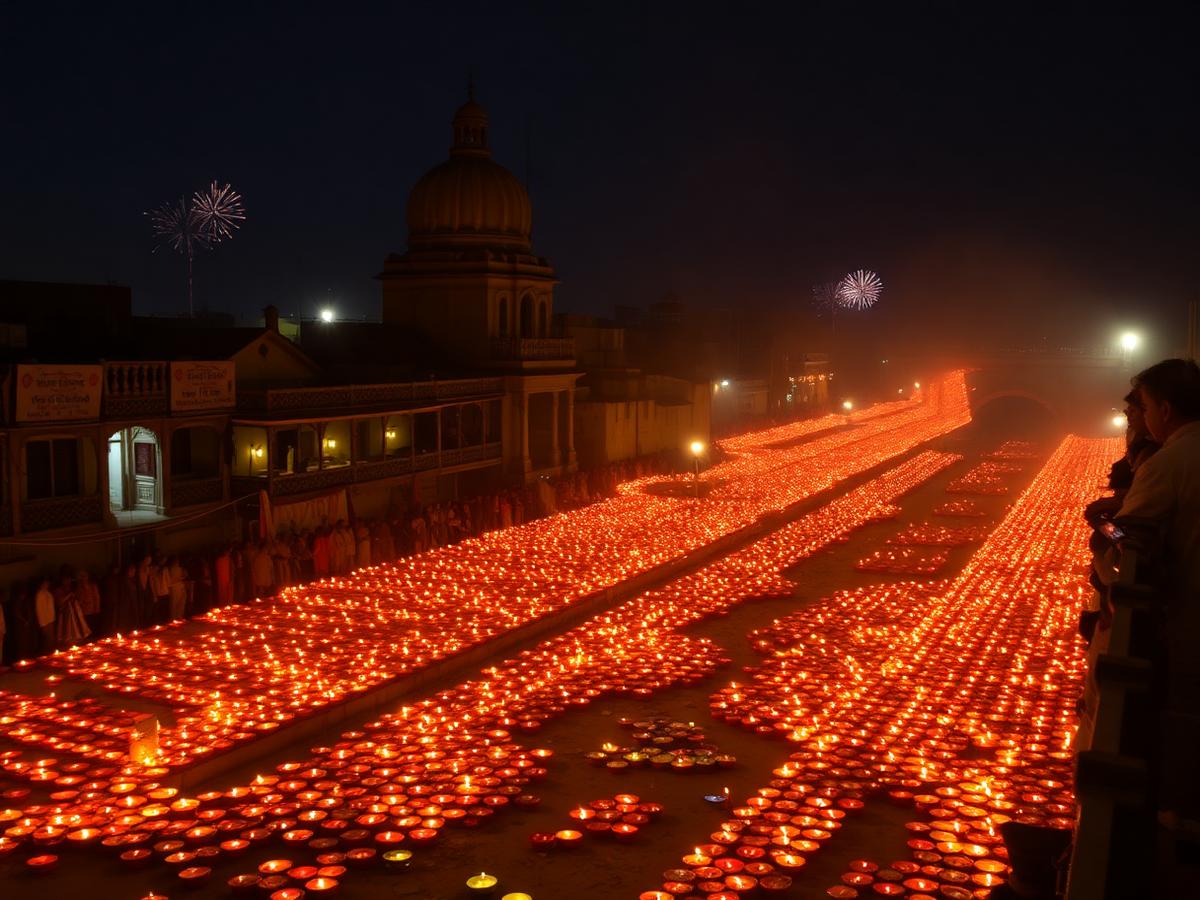
Diwali in Ayodhya — thousands of lamps welcoming Rama home
Dīpāvalī — the lamps of Ayodhyā welcome the Lord home

Chapter VII

The Great Traditions of Rāma Bhakti

One Lord — sung in countless tongues across Bhārata and beyond.

Svāmī Rāmānanda

Rāmānanda Sampradāya

North Indian devotion to Sītā-Rāma — the great bhakti tradition of the Gangetic plain.

Maharṣi Vālmīki

Vālmīki Tradition

The Ādi-Kāvya — the original Rāmāyaṇa, root of all Rāma-bhakti.

Gosvāmī Tulsīdās

Tulsīdās Paramparā

Rāmacaritamānasa — the beloved Avadhī retelling that lives in every North Indian heart.

Kambar

Kamba Rāmāyaṇam

The great Tamil Rāmāyaṇa — Rāma-bhakti in the language of the South.

Ascribed to Vyāsa

Adhyātma Rāmāyaṇa

The 'spiritual Rāmāyaṇa' — Rāma as the Supreme Brahman, Sītā as Māyā.

Living tradition

Hanumān Sampradāya

The path of devotion through Hanumān — the perfect bhakta as the door to Rāma.

Chapter VIII

Festivals of the Lord

Rāma Navamī

The birth of Rāma on the ninth day of Caitra — fasting, recitation of the Bālakāṇḍa, and joyous prayers.

Vijayadaśamī

The tenth day — Rāma's victory over Rāvaṇa, celebrated with Rāmlīlā and the burning of Rāvaṇa's effigies.

Dīpāvalī (Diwali)

The return of Rāma to Ayodhyā after fourteen years — every lamp on every doorstep welcomes Him home.

Hanumān Jayantī

The birth of Rāma's greatest devotee — recitation of the Hanumān Cālīsā in every Rāma temple.

॥ ॐ ॥

The Eternal Ideal of Dharma

Whether as the loving son who accepted exile without a murmur, the devoted husband who crossed the ocean to rescue his wife, the ideal brother who shared every burden, or the righteous king whose name has become the very word for justice — Rāma remains the eternal model of virtue and dharma. True greatness lies not in power or pleasure, but in living with integrity, love, and unwavering commitment to what is right.

श्री राम जय राम जय जय राम

Jai Shrī Rām