Lord Krishna

Devata · Govinda

Lord Krishna

॥ हरे कृष्ण हरे कृष्ण कृष्ण कृष्ण हरे हरे ॥

The All-Attractive One — the cowherd of Vrindavan, the divine charioteer of Arjuna, the eternal beloved who descends as love itself.

॥ ॐ ॥

Pūrṇa

Avatāra

Rādhā · Rukmiṇī

Consort

Goloka

Abode

हरे कृष्ण

Mantra

Introduction

The All-Attractive One
॥ ॐ ॥
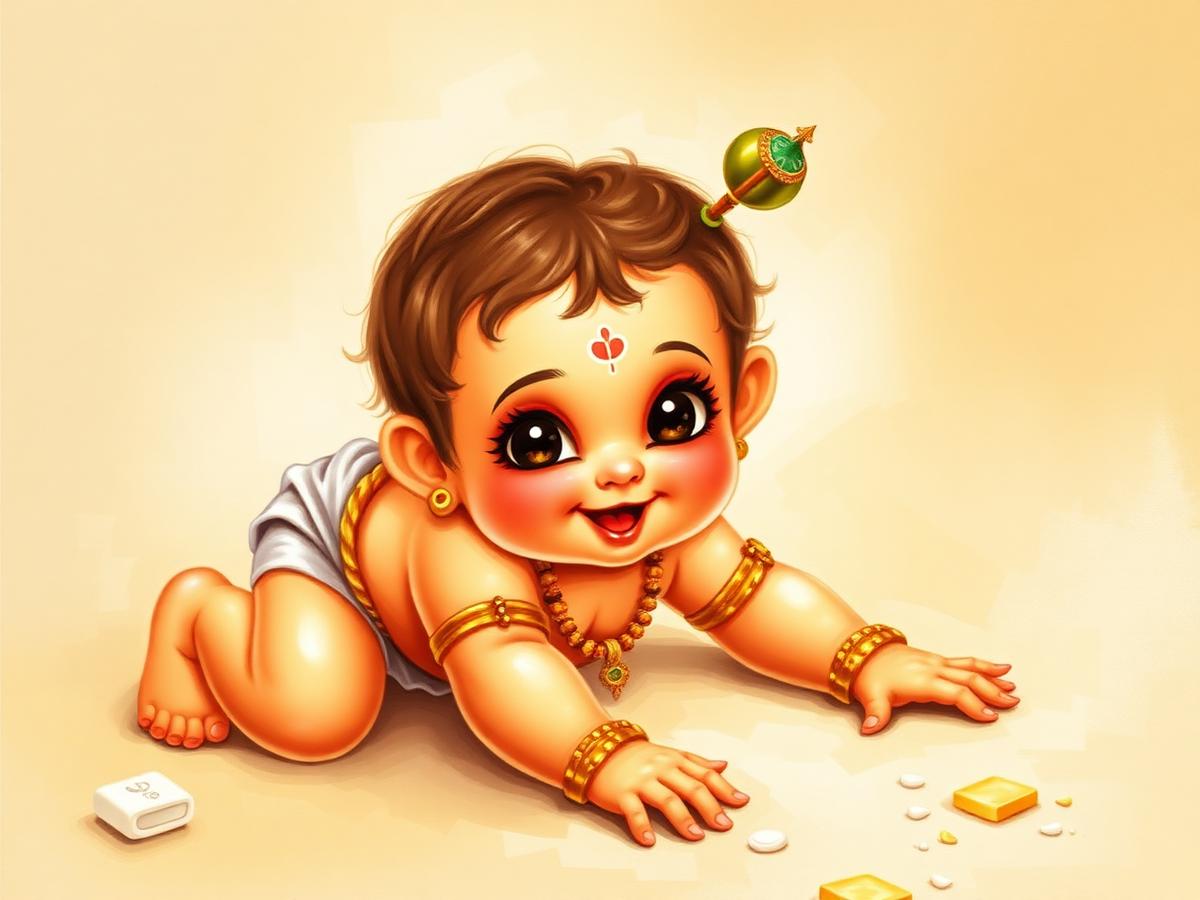
Bala Krishna — the divine child crawling with butter
Bāla Kṛṣṇa — the Lord as a divine child

Kṛṣṇa (Sanskrit: कृष्ण — "The All-Attractive One") is the pūrṇa avatāra of Lord Viṣṇu, considered by many traditions to be Bhagavān Himself — the source of all avatāras. He descended into the prison cell of Mathurā at midnight to lift the world out of the tyranny of Kaṃsa, and to reveal the deepest face of God: God as love.

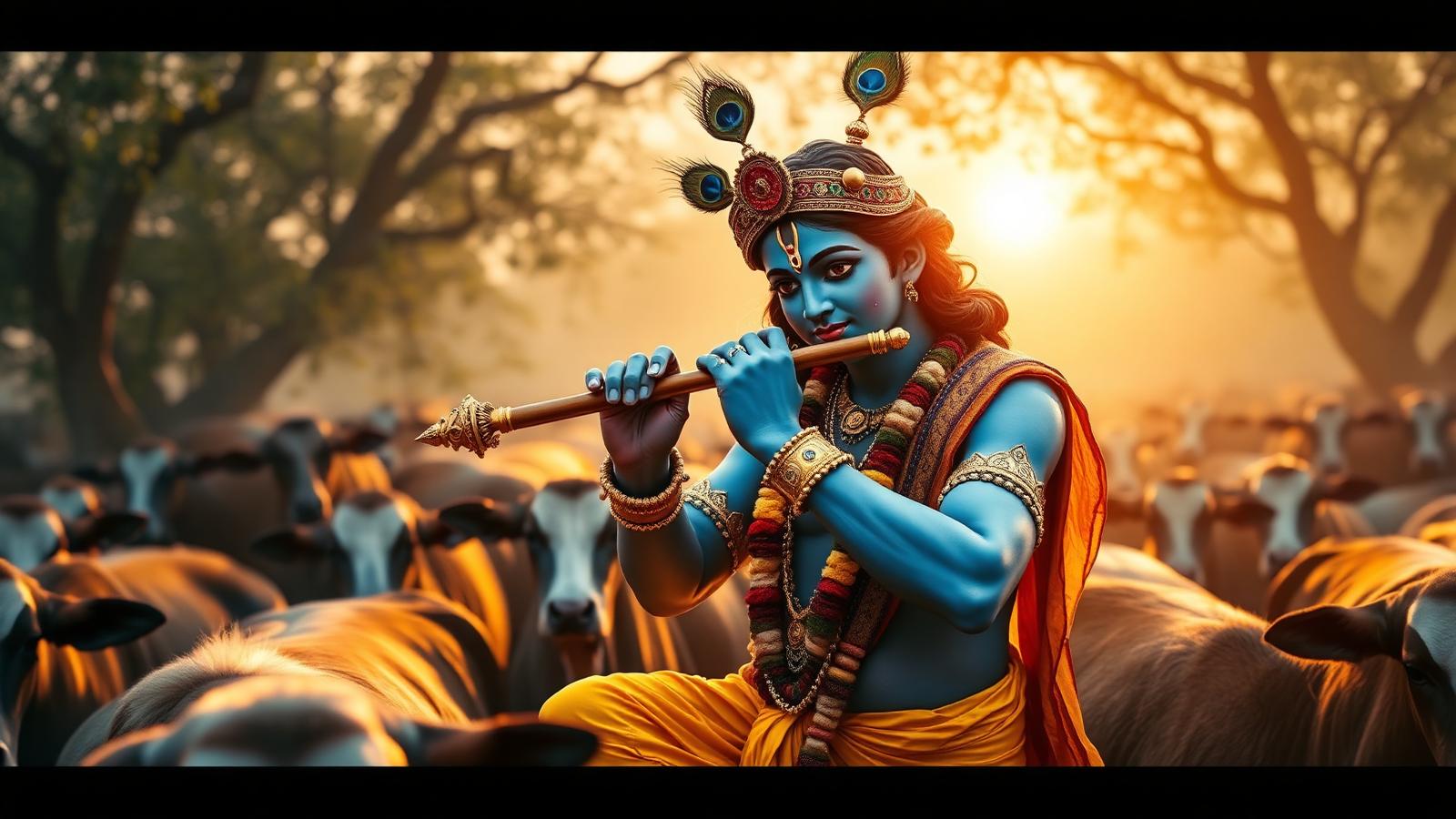
No other form of the Divine offers such a complete spectrum of relationship. Worship Him as a child, and He becomes Bāla Kṛṣṇa — stealing butter, dancing on the heads of serpents. Worship Him as friend, and He becomes Sakhā — herding cows with the boys of Vraja. Worship Him as beloved, and He becomes the flute player who calls the soul into the moonlit forest. Worship Him as guru, and He becomes the charioteer of Arjuna, speaking the eternal Bhagavad Gītā.

In Kṛṣṇa, Sanatan Dharma offers humanity its sweetest revelation: the Supreme is not only majestic and infinite — He is also mādhurya, sweetness itself, a Lord who can be loved, played with, scolded, embraced. He is at once the philosopher of Kurukṣetra and the flute player of Vṛndāvana — and both are one.
Chapter I

The Līlās — Divine Play

From the midnight birth in Mathurā to the song on Kurukṣetra — every līlā is a teaching.

1

Janma

जन्म

Born at midnight in Mathurā prison to save the world from Kaṃsa

2

Mākhana Cora

माखन चोर

The butter thief — stealing hearts along with butter in Gokul

3

Kāliya Mardana

कालिय मर्दन

Subduing the serpent Kāliya and purifying the Yamunā

4

Govardhana

गोवर्धन

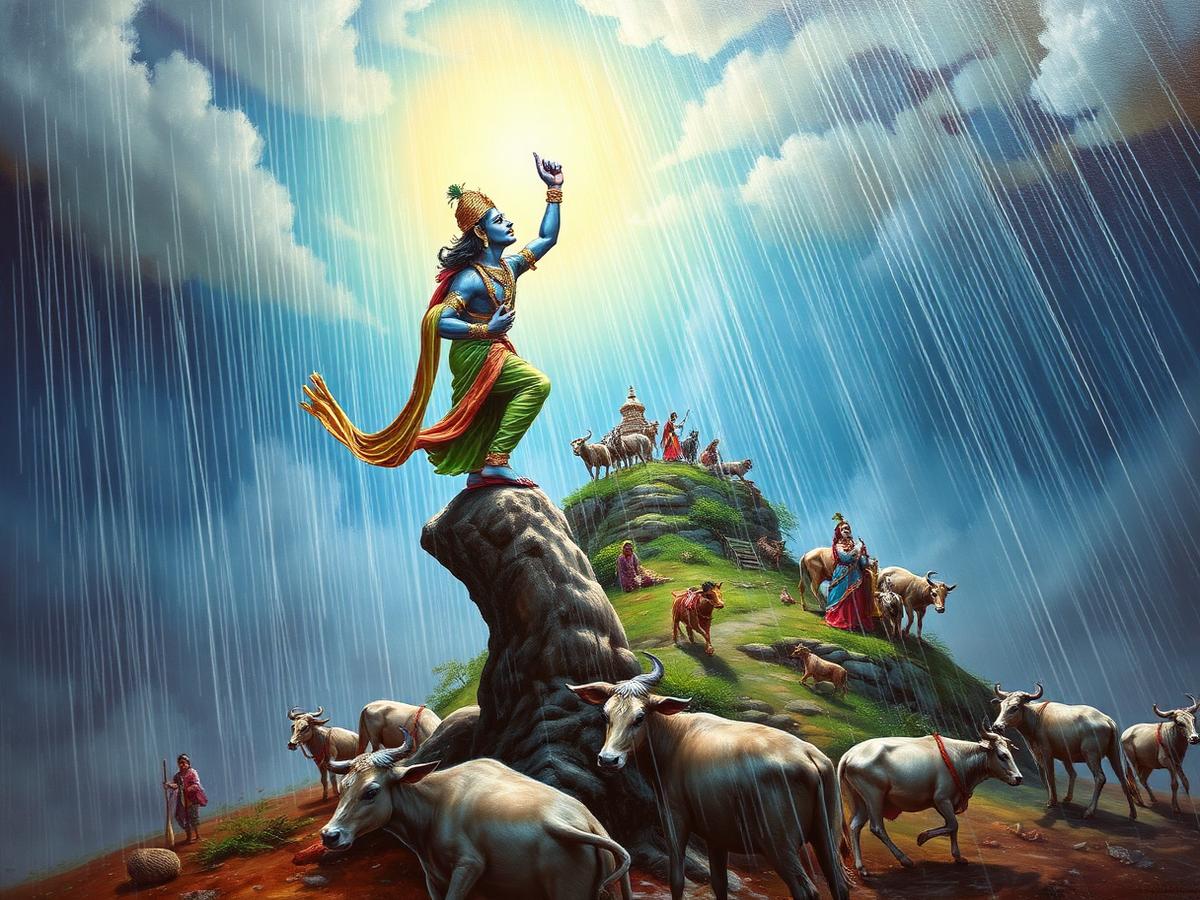
Lifting the hill on his little finger to shelter Vrindavan

5

Rāsa Līlā

रास लीला

The cosmic dance of love with the gopīs on the banks of the Yamunā

6

Mathurā

मथुरा

Slaying Kaṃsa and liberating his parents

7

Dvārakā

द्वारका

Establishing the golden city by the western sea

8

Gītopadeśa

गीतोपदेश

Speaking the eternal Bhagavad Gītā to Arjuna on Kurukṣetra

Krishna lifting Govardhan hill to shelter the people of Vrindavan

Giridhāra — He Who Lifts the Mountain

Govardhana — Refuge on a Little Finger

When Indra, lord of the rains, struck Vraja with a deluge of fury, the people of Vrindavan had nowhere to turn. The boy Kṛṣṇa lifted the entire Govardhana Hill on the tip of his little finger and held it aloft for seven days and seven nights — a vast umbrella for the cows, the children, the elders and the gopīs. The lesson is for every age: the smallest finger of the Lord is enough to hold up the world for the one who takes shelter in Him.

कृष्णाय वासुदेवाय हरये परमात्मने ।
प्रणतक्लेशनाशाय गोविन्दाय नमो नमः ॥

"Salutations again and again to Govinda — Kṛṣṇa, Vāsudeva, Hari, the Supreme Self, the destroyer of the suffering of those who bow."

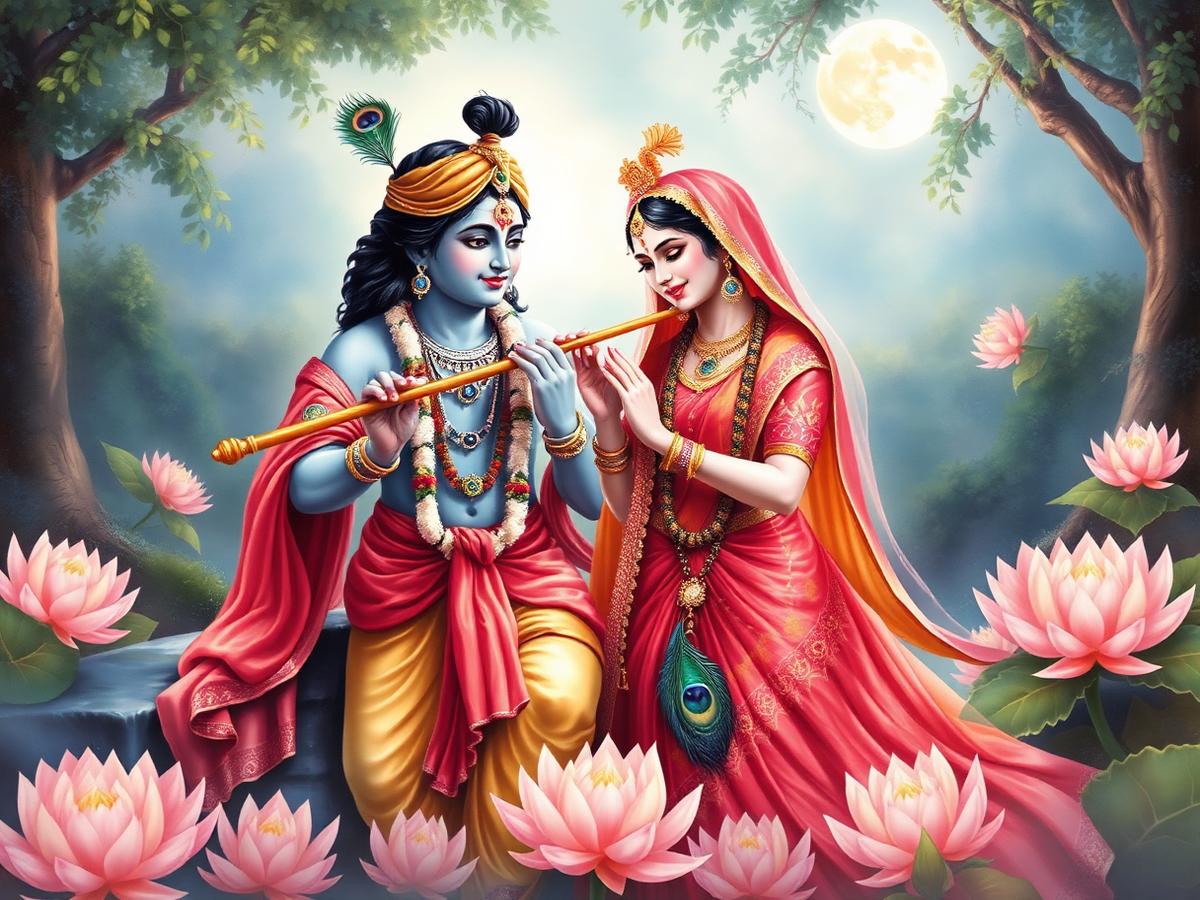
Radha and Krishna in Vrindavan — the divine couple
Rādhā-Kṛṣṇa — love as the highest path

Chapter II · Prema

Rādhā-Kṛṣṇa — Love as the Highest Truth

Rādhā is not merely a companion of Kṛṣṇa — she is the very hlādinī-śakti, His own bliss-power personified. In the eternal lovers of Vrindavan, the great Vaiṣṇava ācāryas have seen the highest revelation possible: the soul (Rādhā) and the Supreme (Kṛṣṇa) lost in each other.

When the flute is heard in the forest, the gopīs run — leaving milk on the fire, children at the door, husbands at the table — because the call of the Divine is more real than every duty. This is prema-bhakti: the love that has forgotten itself in the Beloved.

राधे राधे श्याम मिला दे ॥

"O Rādhā, O Rādhā — unite me with Śyāma." The simplest prayer of Vrindavan.

Chapter III · Pārtha-Sārathi

The Bhagavad Gītā — Song of the Lord

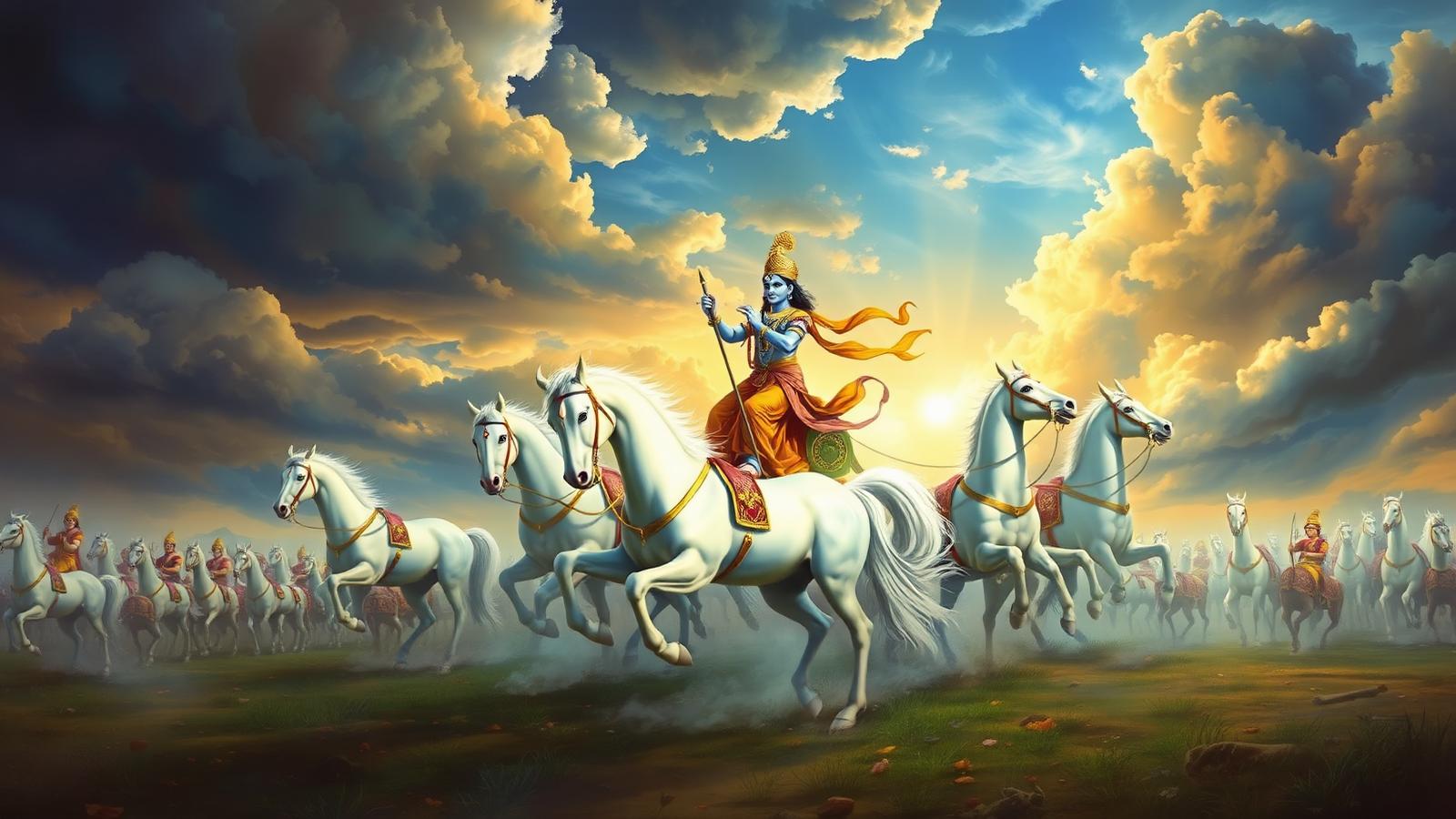
On the battlefield of Kurukṣetra, with armies arrayed and conches blown, Arjuna let his bow fall. Faced with kinsmen and gurus he must fight, the great warrior collapsed in his chariot. There — between the two armies — Kṛṣṇa spoke the Bhagavad Gītā: 700 verses that synthesise Karma, Jñāna and Bhakti into a single song of surrender.

The same Lord who plays the flute in Vrindavan now holds the reins of Arjuna's horses. The same lips that called the gopīs into the rāsa-līlā now speak the eternal philosophy of action without attachment, knowledge of the Self, and refuge in the Divine. The Gītā is Kṛṣṇa's gift to every age — a manual for the soul caught in the battle of life.

कर्मण्येवाधिकारस्ते मा फलेषु कदाचन ॥

"You have the right to action alone, never to its fruits." — Gītā 2.47

Krishna as the divine charioteer of Arjuna on Kurukshetra
Pārtha-Sārathi — the charioteer of Arjuna

Chapter IV

The Symbolism of His Form

Every emblem of Kṛṣṇa is itself a teaching of love.

Bāṃsurī (Flute)

The hollow reed — the surrendered soul through which divine sound flows.

Mayūra Piccha (Peacock Feather)

Beauty, joy, and the playful crown of the cowherd Lord.

Pītāmbara (Yellow Silk)

The luminous Vedas wrapped around the Divine form.

Vanamālā (Forest Garland)

Made of five forest flowers — the five elements offered back to the Lord.

Sudarśana Cakra

The flaming discus of time and dharma, ever-spinning on His finger.

Kaustubha Maṇi

The jewel on His chest — every jīva (soul) is held there.

Blue Complexion

The infinite sky — the all-pervading, all-attractive consciousness.

Tribhaṅga Pose

The threefold bend — neck, waist, knee — perfect grace in stillness.

Sacred Verses

Mantras of Govinda

॥ ॐ ॥

Bhagavad Gītā 18.66 · Carama Śloka

सर्वधर्मान्परित्यज्य मामेकं शरणं व्रज । अहं त्वा सर्वपापेभ्यो मोक्षयिष्यामि मा शुचः ॥

"Abandoning all duties, take refuge in Me alone. I shall liberate you from all sins; do not grieve."

Bhagavad Gītā 9.22 · The Promise of Yoga-Kṣema

अनन्याश्चिन्तयन्तो मां ये जनाः पर्युपासते । तेषां नित्याभियुक्तानां योगक्षेमं वहाम्यहम् ॥

"To those who worship Me alone with undivided thought — to them, ever-devoted, I carry what they need and protect what they have."

Mahāmantra · Kali-Santāraṇa Upaniṣad

हरे कृष्ण हरे कृष्ण कृष्ण कृष्ण हरे हरे । हरे राम हरे राम राम राम हरे हरे ॥

"O Lord, O divine energy of the Lord — please engage me in your service. The great mantra for the age of Kali."

Bhagavad Gītā 4.11

ये यथा मां प्रपद्यन्ते तांस्तथैव भजाम्यहम् ॥

"However men approach Me, even so do I welcome them — for the path that men take from every side is Mine."

Chapter V · Upāsanā

How Kṛṣṇa Is Worshipped

The worship of Kṛṣṇa is the worship of the heart — bhāva matters more than ritual. From the simple tulasī leaf at His feet, to the great processions of Jagannātha at Puri, to the all-night kīrtana of Vrindavan — every gesture is an attempt to say the one thing: I love You, I am Yours.

Nāma Saṅkīrtana

Singing the Hare Krishna mahāmantra — the easiest and highest path of the Kali age.

Bhagavad Gītā Pāṭha

Daily reading of the Lord's song — a chapter a day, a verse at the very least.

Tulasī Sevā

Watering and circumambulating the sacred tulasī plant — the dearest of Kṛṣṇa.

Śrīmad Bhāgavata Śravaṇa

Hearing the līlās of the Lord — the great nectar of the Bhāgavata Purāṇa.

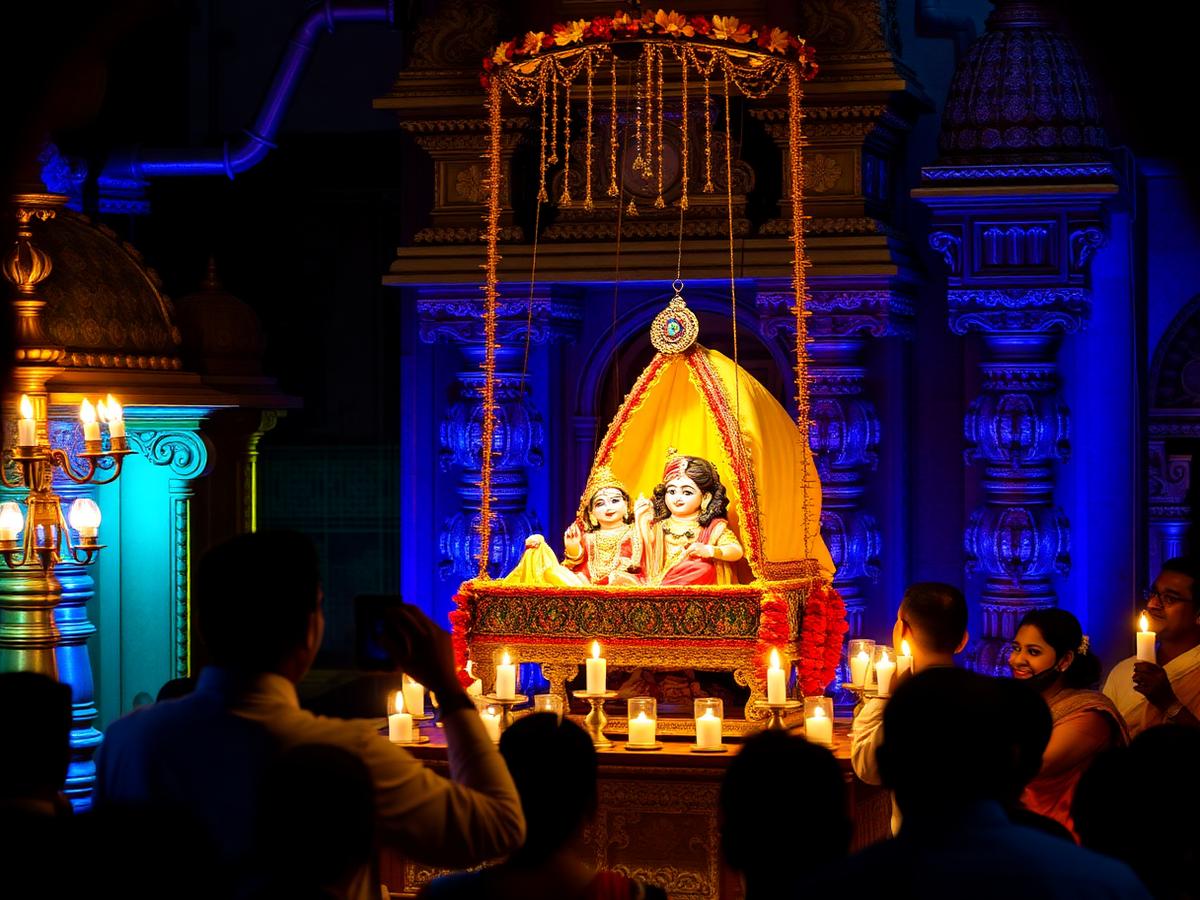
Janmashtami celebration with decorated cradle and lamps
Janmāṣṭamī — the midnight birth of the Lord

Chapter VI

The Great Traditions of Kṛṣṇa Bhakti

One Lord — approached through luminous paths of love.

Caitanya Mahāprabhu

Gauḍīya Vaiṣṇavism

Ecstatic prema-bhakti to Rādhā-Kṛṣṇa. The Holy Name (nāma-saṅkīrtana) as the heart of the path.

Vallabhācārya

Puṣṭimārga

The 'Path of Grace' — total dependence on Kṛṣṇa's nourishing love, sevā to Śrīnāthajī.

Nimbārkācārya

Nimbārka Sampradāya

Dvaitādvaita — oneness and difference. Eternal devotion to Rādhā-Kṛṣṇa.

Sant Jñāneśvar · Tukārām

Vārkarī Sampradāya

Marathi bhakti to Viṭṭhala of Paṇḍharpūr — a beloved cowherd form of Kṛṣṇa.

Madhvācārya

Mādhva Sampradāya

Dvaita — eternal worship of Kṛṣṇa as the Supreme Brahman through pure devotion.

A.C. Bhaktivedanta Swami

ISKCON

Modern global Gauḍīya movement — taking the Holy Name to every town and village.

Chapter VII

Festivals of the Lord

Janmāṣṭamī

The midnight birth of Kṛṣṇa in Mathurā — fasts, jhulā, abhiṣeka, and joyful kīrtana till dawn.

Rādhāṣṭamī

The appearance day of Śrī Rādhā — celebrated with great love in Barsana and Vrindavan.

Govardhana Pūjā

The day after Diwali — worship of Govardhana Hill and Anna-kūṭa (mountain of food) offered to the Lord.

Holī of Vrindavan

The festival of colors — Krishna's playful līlā remembered with gulāl, flowers, and song.

॥ ॐ ॥

The Eternal Friend and Beloved

Whether you see Him as the mischievous Bāla Kṛṣṇa stealing butter, the enchanting flute player of Vṛndāvana, or the divine charioteer of Arjuna — Kṛṣṇa remains the eternal friend, the eternal guide, and the eternal beloved of every soul who turns to Him with love.

हरे कृष्ण हरे कृष्ण कृष्ण कृष्ण हरे हरे

हरे राम हरे राम राम राम हरे हरे