Lord Vishnu

Devata · Nārāyaṇa

Lord Vishnu

॥ ॐ नमो नारायणाय ॥

The All-Pervading One — preserver of the universe, refuge of every being, and the supreme Lord who descends in countless avatars to protect dharma.

॥ ॐ ॥

Sthiti

Trimurti Role

Lakṣmī

Consort

Vaikuṇṭha

Abode

ॐ नमो नारायणाय

Mantra

Introduction

The All-Pervading One
॥ ॐ ॥
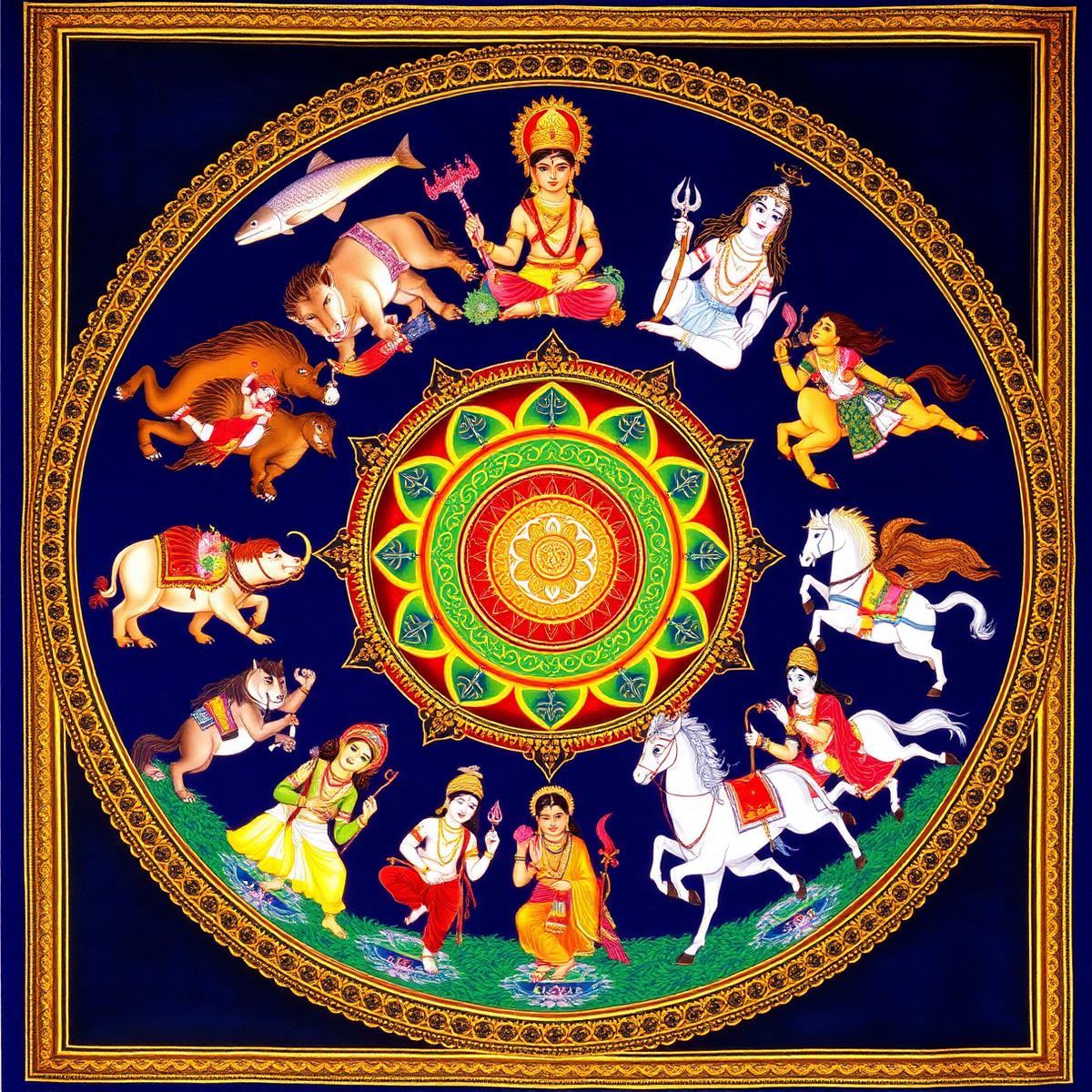
The Dashavatara — ten principal avatars of Vishnu
Daśāvatāra — the ten descents of the Lord

Viṣṇu (Sanskrit: विष्णु — "The All-Pervading One") forms the Trimūrti with Brahmā the creator and Śiva the transformer. While Brahmā creates and Śiva dissolves, Viṣṇu preserves — sustaining dharma and the harmony of the cosmos through every age.

He is the supreme protector who descends to earth whenever dharma declines, taking on avatāras — divine incarnations that move within history to restore balance. From the cosmic fish of the deluge to the cowherd of Vṛndāvana to the future Kalki — every avatāra is one Lord wearing one more face for the world.

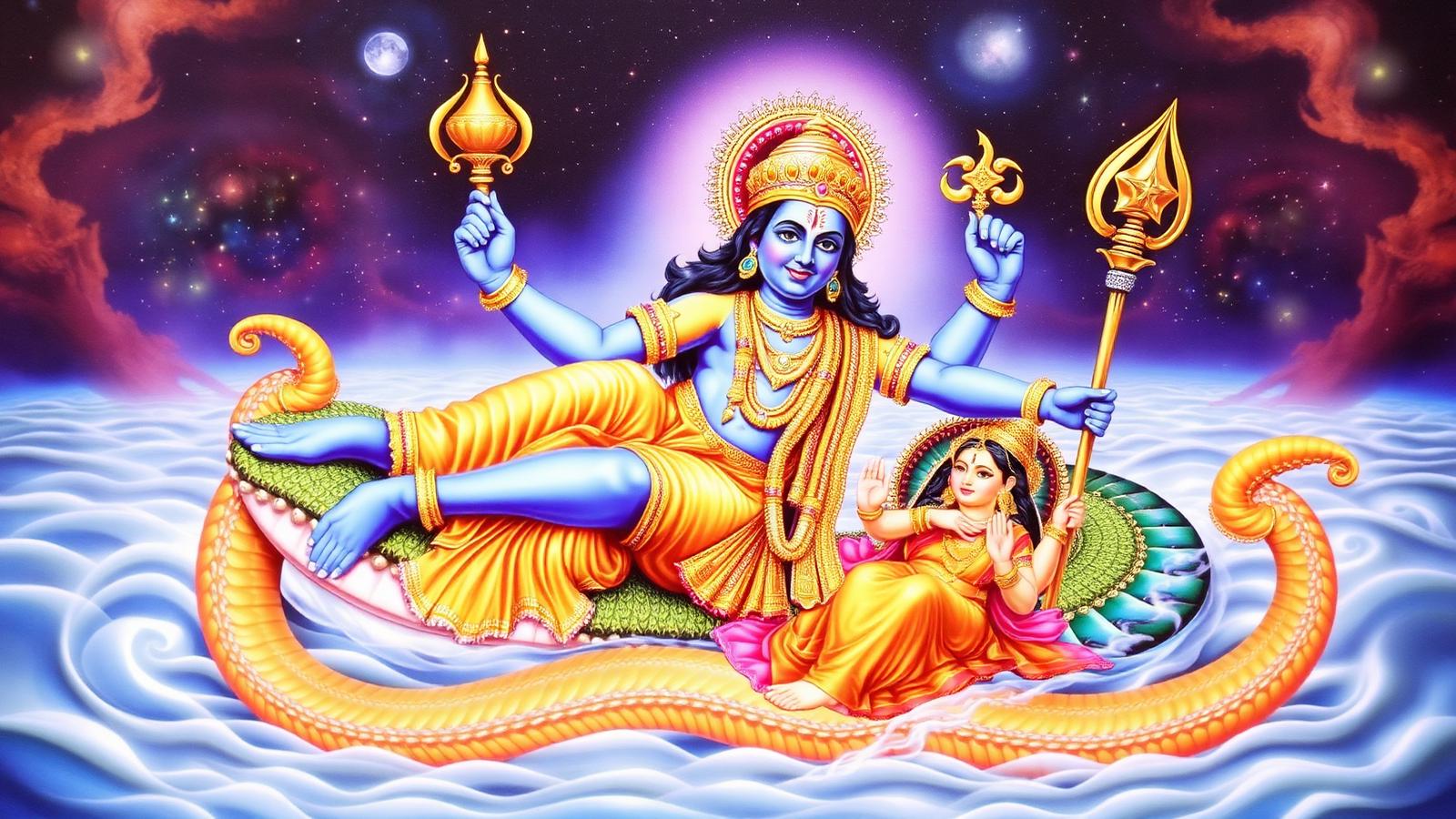
Iconographically, Viṣṇu reclines on the thousand-headed serpent Ādiśeṣa in the ocean of milk (Kṣīrasāgara), Goddess Lakṣmī seated at his feet — the perfect image of consciousness at rest, prosperity in attendance, the universe gently held. His four hands carry the conch, discus, mace and lotus; his complexion is the blue of an infinite sky.
Chapter I

The Daśāvatāra — Ten Descents

Ten faces of one Lord, walking through the yugas to keep dharma alive.

1

Matsya

मत्स्य

Fish — saved the Vedas in the great deluge

2

Kūrma

कूर्म

Tortoise — supported Mount Mandara in the churning

3

Varāha

वराह

Boar — lifted the earth from cosmic waters

4

Narasiṃha

नरसिंह

Man-Lion — protector of Prahlāda

5

Vāmana

वामन

Dwarf — humbled the great king Bali

6

Paraśurāma

परशुराम

Sage-warrior — restored dharma with his axe

7

Rāma

राम

Ideal king — established Rāma Rājya

8

Kṛṣṇa

कृष्ण

Divine cowherd — speaker of the Bhagavad Gītā

9

Buddha

बुद्ध

The Awakened — compassion and non-violence

10

Kalki

कल्कि

The future avatar — closer of Kali Yuga

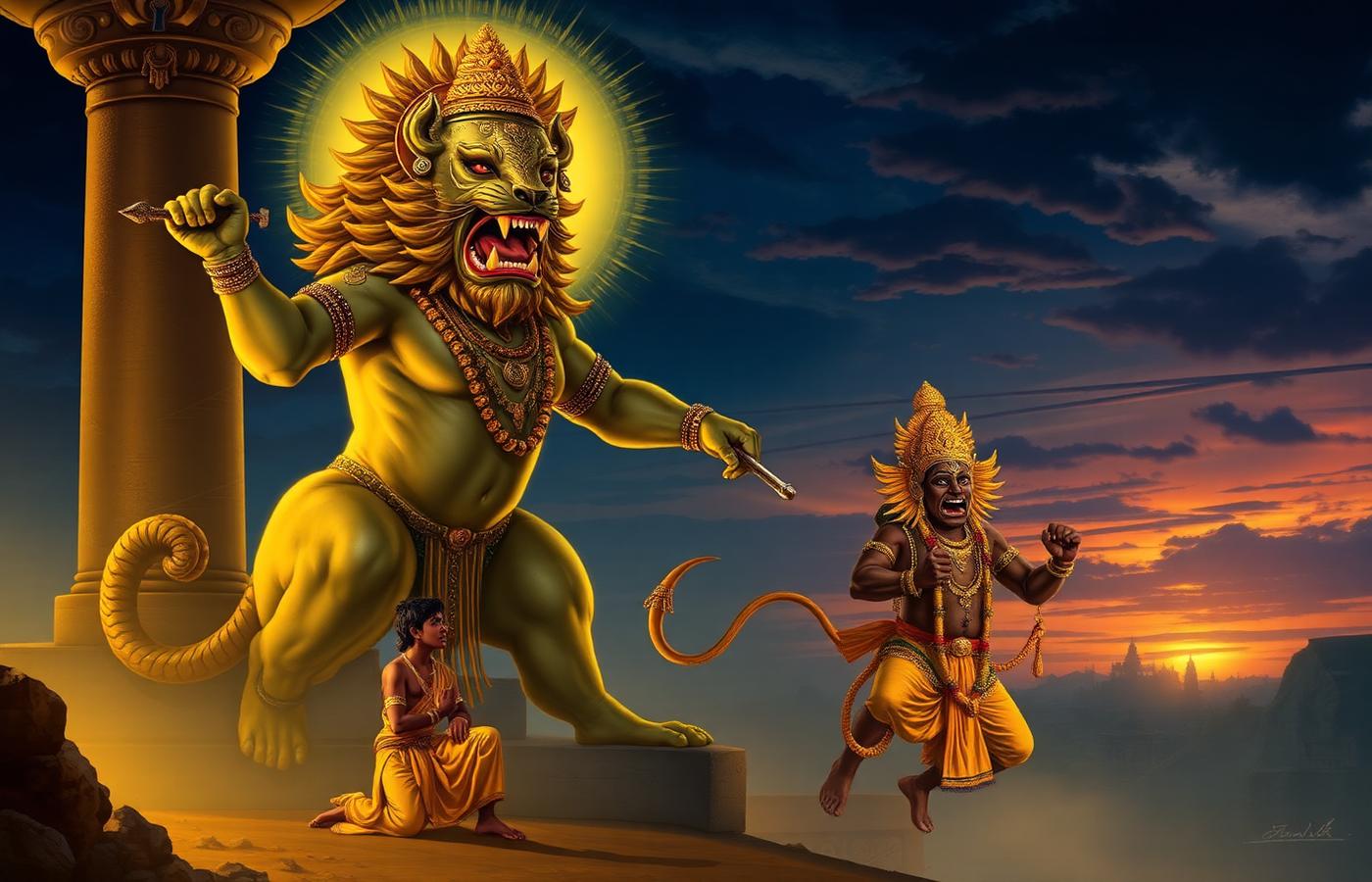
Narasimha emerging from the pillar to protect Prahlada

The Promise of the Avatāra

Narasiṃha — He Who Comes When Called

The boy Prahlāda was tortured by his father, the demon king Hiraṇyakaśipu, for one offence: he would not stop chanting Viṣṇu's name. "Where is your Viṣṇu?" the demon roared, striking a pillar in the hall. The pillar split open. From it stepped a form neither beast nor man, in neither day nor night, on neither earth nor sky — the Lord had honoured every boon of immunity, and yet had come. Viṣṇu's deepest promise is this: wherever a devotee calls with a sincere heart, the Lord is already on his way.

ॐ उग्रं वीरं महाविष्णुं ज्वलन्तं सर्वतोमुखम् ।
नृसिंहं भीषणं भद्रं मृत्योर्मृत्युं नमाम्यहम् ॥

"I bow to Narasiṃha — fierce, heroic, the great Viṣṇu, blazing, all-faced, terrible and auspicious — the very Death of Death."

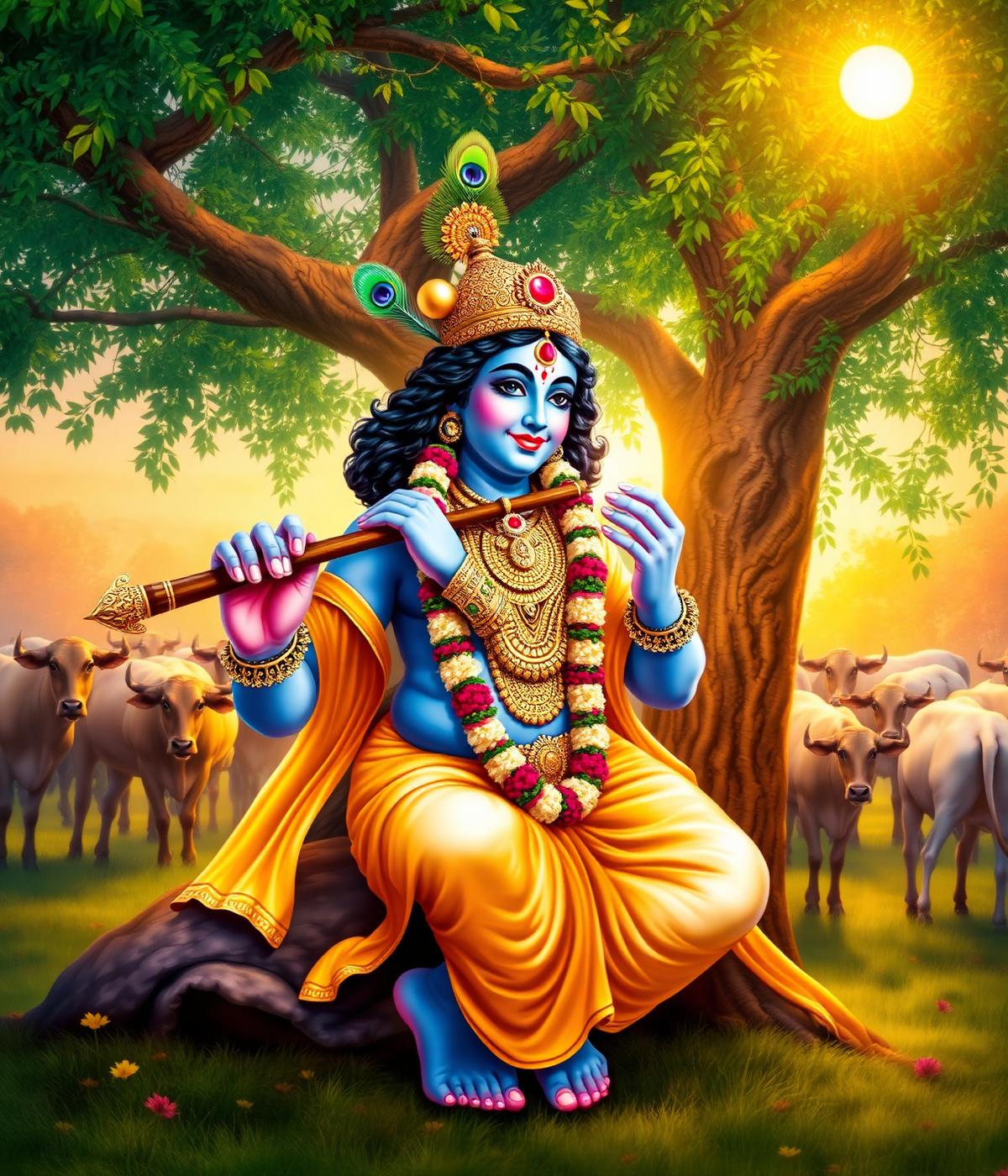
Krishna playing the flute under a kadamba tree
Kṛṣṇa — the flute of the world's heart

Chapter II · Pūrṇa Avatāra

Kṛṣṇa — The Lord as Love Itself

In Kṛṣṇa, Viṣṇu descends in his fullest sweetness. The child of Yaśodā, the cowherd of Vṛndāvana, the friend of Sudāmā, the charioteer of Arjuna, the philosopher of the Bhagavad Gītā — every relationship the soul can have with the Divine is offered through Him.

On the battlefield of Kurukṣetra, Kṛṣṇa speaks the Gītā — 700 verses that synthesise Karma, Jñāna and Bhakti into a single song of surrender. In Vṛndāvana, the same Lord plays the flute, and the universe forgets itself in love.

सर्वधर्मान्परित्यज्य मामेकं शरणं व्रज ॥

"Abandoning all duties, take refuge in Me alone. I shall liberate you from all sins; do not grieve." — Gītā 18.66

Chapter III · Maryādā Puruṣottama

Rāma — Dharma Walking the Earth

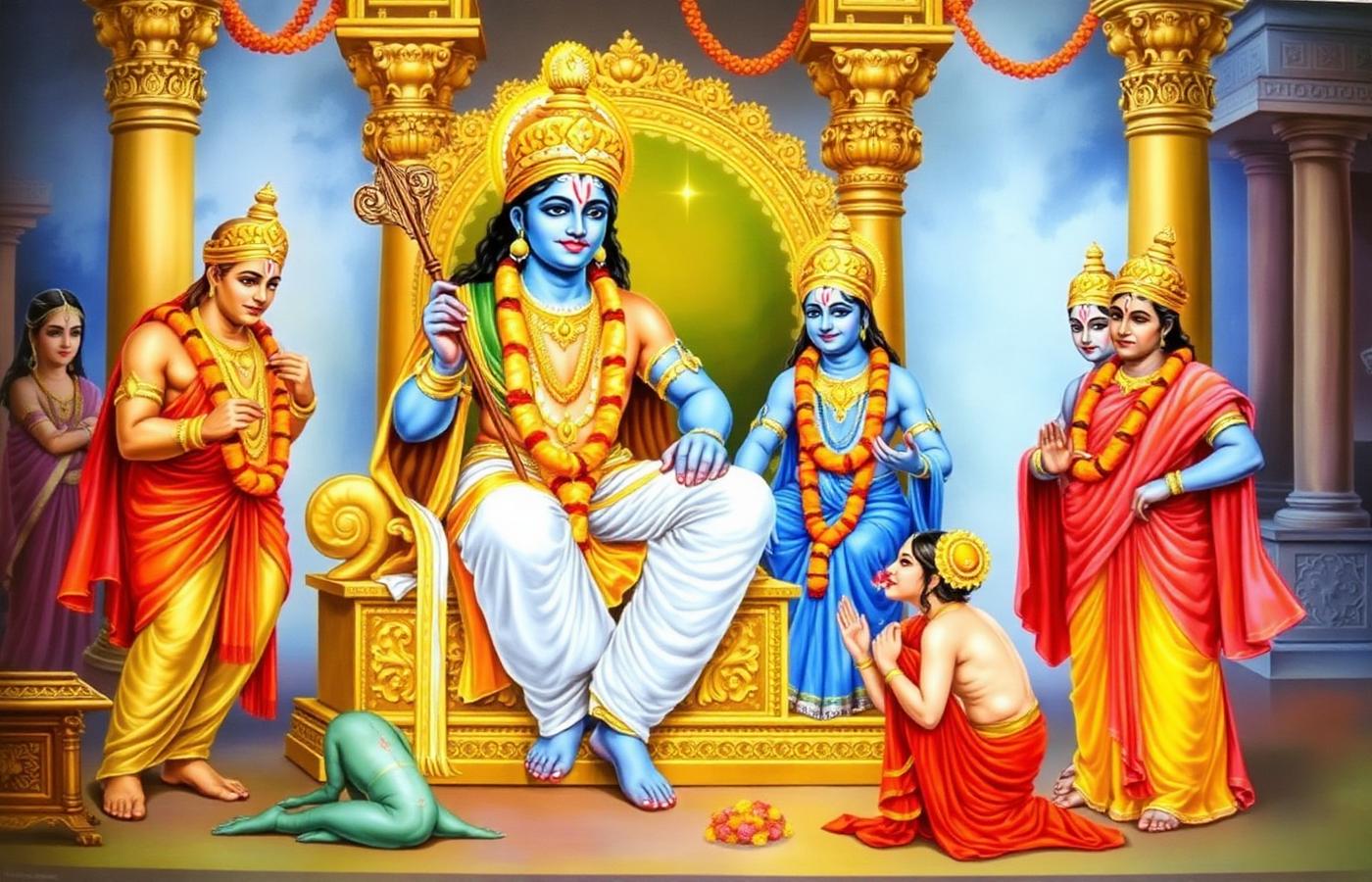
As Rāma, Viṣṇu descends not to dazzle but to live dharma — as son, brother, husband and king. Every choice He makes is bound by righteousness, even when it costs him the throne and the forest takes him for fourteen years. His exile, the meeting with Hanumān, the rescue of Sītā and the establishment of Rāma Rājya form the great moral compass of Bhārata.

Where Kṛṣṇa is the Lord of the heart, Rāma is the Lord of the will. To take refuge in His name — Rāma-nāma — is, in the words of Tulsīdās, to find that the Name has become greater than the Form itself.

रामो विग्रहवान् धर्मः ॥

"Rāma is dharma walking in human form."

Rama enthroned in Ayodhya with Sita, Hanuman and the brothers
Rāma Darbāra — the court of the perfect king

Chapter IV

The Symbolism of His Form

Every emblem of Viṣṇu is itself a teaching.

Śaṅkha (Conch)

The primordial sound of creation and the call to dharma.

Chakra (Discus)

The wheel of time and the power that cuts through ignorance.

Gadā (Mace)

The strength of intellect and victory over obstacles.

Padma (Lotus)

Purity, spiritual awakening and detachment in the world.

Śeṣa Nāga

The thousand-headed serpent — time and infinity itself.

Blue Complexion

The infinite sky — the all-pervading nature of consciousness.

Lakṣmī at His Feet

Prosperity and grace forever resting with the Lord.

Pītāmbara (Yellow Silk)

The Vedas — luminous wisdom wrapped around the Divine.

Sacred Verses

Mantras of Nārāyaṇa

॥ ॐ ॥

Bhagavad Gītā 4.7–8 · The Promise of the Avatāra

यदा यदा हि धर्मस्य ग्लानिर्भवति भारत । अभ्युत्थानमधर्मस्य तदात्मानं सृजाम्यहम् ॥

"Whenever there is a decline of dharma and a rise of adharma, O Bhārata, I manifest Myself — to protect the good, to destroy the wicked, and to re-establish righteousness, age after age."

Aṣṭākṣara · The Eight Syllables

ॐ नमो नारायणाय

"Salutations to Nārāyaṇa — the resting place of all beings, the supreme refuge."

Dvādaśākṣara · The Twelve Syllables

ॐ नमो भगवते वासुदेवाय

"I bow to Bhagavān Vāsudeva — the indweller of every heart, the Lord of all that is."

Viṣṇu Sahasranāma · Phalaśruti

वासुदेवः सर्वम् इति स महात्मा सुदुर्लभः ॥

"Rare indeed is the great soul who realises — 'Vāsudeva is all.' He has found the ultimate truth."

Chapter V · Upāsanā

How Viṣṇu Is Worshipped

The worship of Viṣṇu is the worship of refugeprapatti, complete surrender. From the recitation of the Viṣṇu Sahasranāma at dawn, to the offering of a single tulasī leaf, to the great rituals of the 108 Divya Deśams — every act is the same gesture: I am yours; do with me as you will.

Viṣṇu Sahasranāma

Chanting the thousand names — the great tradition kept alive in every Vaiṣṇava household.

Tulasī Pūjā

The sacred basil leaf is the dearest offering at Viṣṇu's feet — no offering is complete without it.

Bhagavad Gītā Pāṭha

Daily reading of the Lord's song — a chapter a day, a verse at the very least.

Nāma Saṅkīrtana

Singing the holy names of Rāma and Kṛṣṇa — the easiest path of the Kali age.

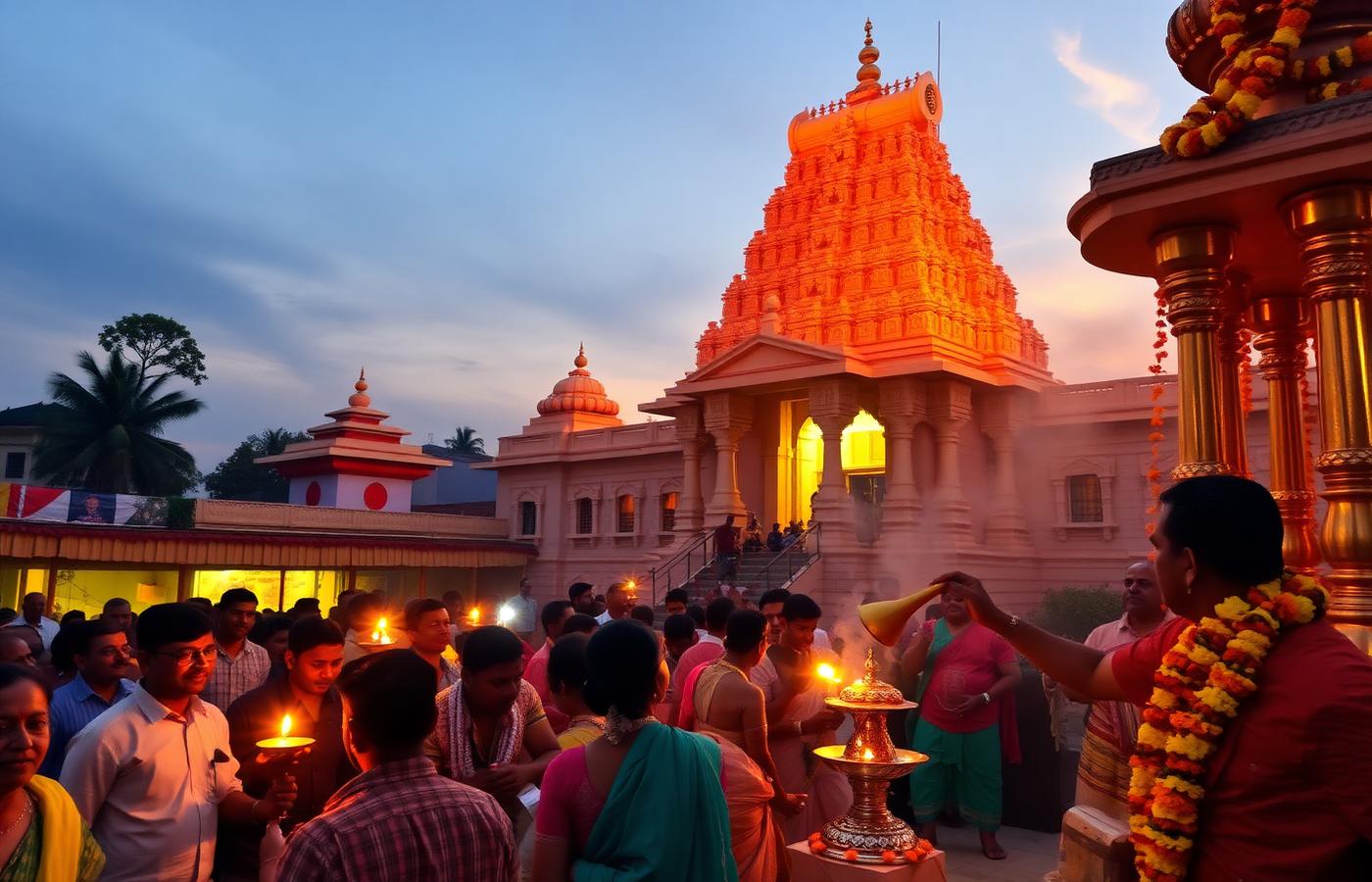
Vaishnava temple at dusk — devotees with lamps and tulsi
A Vaiṣṇava sandhyā — the lamp lit for the Lord

Chapter VI

The Great Schools of Vaiṣṇavism

One Lord — approached through six luminous traditions of bhakti.

Rāmānujācārya

Śrī Vaiṣṇavism

Viśiṣṭādvaita — qualified non-dualism. Loving devotion to a personal Lord with Lakṣmī as the divine mediatrix.

Madhvācārya

Dvaita Vedānta

Eternal distinction between Jīva and the Supreme. Pure devotion to Viṣṇu as the only path.

Caitanya Mahāprabhu

Gauḍīya Vaiṣṇavism

Ecstatic prema-bhakti to Rādhā-Kṛṣṇa. The Holy Name as the heart of the path.

Vallabhācārya

Puṣṭimārga

The 'Path of Grace' — total dependence on Kṛṣṇa's nourishing love (puṣṭi).

Nimbārkācārya

Nimbārka Sampradāya

Dvaitādvaita — simultaneous oneness and difference. Devotion to Rādhā-Kṛṣṇa.

Sant Jñāneśvar · Tukārām

Vārkarī Tradition

Marathi bhakti to Viṭṭhala of Paṇḍharpūr — a regional form of Viṣṇu.

Chapter VII

Festivals of the Lord

Janmāṣṭamī

The midnight birth of Lord Kṛṣṇa in Mathurā — fasts, jhulā, and joyful kīrtana till dawn.

Rāma Navamī

The auspicious birth of Lord Rāma in Ayodhyā — recitation of the Bālakāṇḍa and Rāma-nāma.

Vaikuṇṭha Ekādaśī

The day the gates of Vaikuṇṭha open — fasting, vigil and the famed darśana at Śrīraṅgam.

Narasiṃha Jayantī

The fierce twilight appearance of Narasiṃha to save the devotee Prahlāda.

॥ ॐ ॥

The Eternal Protector and Guide

Whether worshipped as Nārāyaṇa resting on the cosmic ocean, as Rāma upholding dharma, or as Kṛṣṇa guiding Arjuna on the battlefield — Viṣṇu remains the eternal protector and the supreme refuge. His promise stands across every yuga: whenever dharma falters, He will descend; whenever a devotee calls, He has already arrived.

ॐ नमो भगवते वासुदेवाय