हरे कृष्ण हरे कृष्ण कृष्ण कृष्ण हरे हरे । हरे राम हरे राम राम राम हरे हरे ॥
Hare Kṛṣṇa Hare Kṛṣṇa Kṛṣṇa Kṛṣṇa Hare Hare Hare Rāma Hare Rāma Rāma Rāma Hare Hare
"O Lord Krishna, O energy of the Lord (Rādhā), please engage me in Your loving service."
Chapter I
Meaning of the Holy Names
A purely devotional prayer — no material wish, only loving surrender.
Sanskrit
Meaning
Spiritual Significance
हरे (Hare)
O Hari / Divine energy of the Lord
Refers to Rādhā — the Hlādinī Śakti, the pleasure-potency of Krishna
कृष्ण (Kṛṣṇa)
The all-attractive One
Lord Krishna, the Supreme Personality of Godhead
राम (Rāma)
The source of all pleasure
Refers to Lord Rāma — and the all-pleasing nature of Krishna
The mahā-mantra of the saṅkīrtana tradition
Chapter II
Origin & Chaitanya Mahāprabhu
The Mahā-mantra is preserved in the Kali-Santaraṇa Upaniṣad, part of the Atharvaveda. The Upaniṣad declares this mantra to be the easiest and most effective means of liberation in Kali Yuga.
It was revealed and spread across the world by Śrī Chaitanya Mahāprabhu (1486–1534) — revered in the Gauḍīya tradition as the combined incarnation of Rādhā and Krishna. He taught that in this difficult age there is no higher way to attain God than the chanting of His holy names.
"In this age of Kali, there is no other way, no other way, no other way than chanting the holy name of the Lord." — Chaitanya Mahāprabhu
Chapter III
Symbolism of the Mantra
Hare — The Divine Feminine
The loving energy of the Lord — Rādhā, the eternal beloved, the call to the Divine Mother.
Krishna — The All-Attractive
The Supreme Lord whose beauty, love and pastimes attract every soul to Himself.
Rama — The All-Pleasing
Another name of Krishna meaning 'one who gives pleasure to all', and also Lord Rāma Himself.
The Repetition
The cyclic chanting of these names creates a powerful vibration that cleanses the mind and awakens the soul.
Chapter IV
Significance & Benefits
॥ ॐ ॥
Easiest Practice
Anyone may chant — regardless of age, caste, gender or qualification.
Purifies the Heart
Cleanses the mind of material desires and lower tendencies.
Awakens Prema-Bhakti
Kindles pure, selfless love for God — the highest spiritual treasure.
Inner Peace
Brings joy, freedom from anxiety and protection from the influences of Kali.
Self-Realisation
Leads steadily toward Self-realisation and pure love of the Divine.
Open to All
Chanted in homes, streets and temples across more than 100 countries today.
Chapter V
How to Chant — Japa & Kīrtan
Two paths, one holy name — the silence of japa and the joy of kīrtan.
Japa
Personal chanting — silent or soft, one name at a time on a Tulsi mala. The path of inward absorption.
Kīrtan
Congregational chanting with mṛdaṅga and kartāls — joyful, loud, contagious. The path of shared bliss.
Harināma
Public chanting through streets and gatherings — sharing the holy name with the whole world.
Step 1
Tulsi Mala
Chant on a 108-bead Tulsi mala — one round equals 108 names.
Step 2
Daily Rounds
Initiated devotees traditionally chant 16 rounds (1,728 names) every day.
Step 3
Best Time
Early morning in a clean, quiet place — Brahma Muhurta is ideal.
Step 4
Pronunciation
Chant each holy name distinctly, with attention and love.
Step 5
Posture
Sit comfortably, spine upright; face East or toward the deity.
Step 6
Mood
Approach as a humble servant — without expectation, only with devotion.
One name at a time — 108 beads, 16 rounds
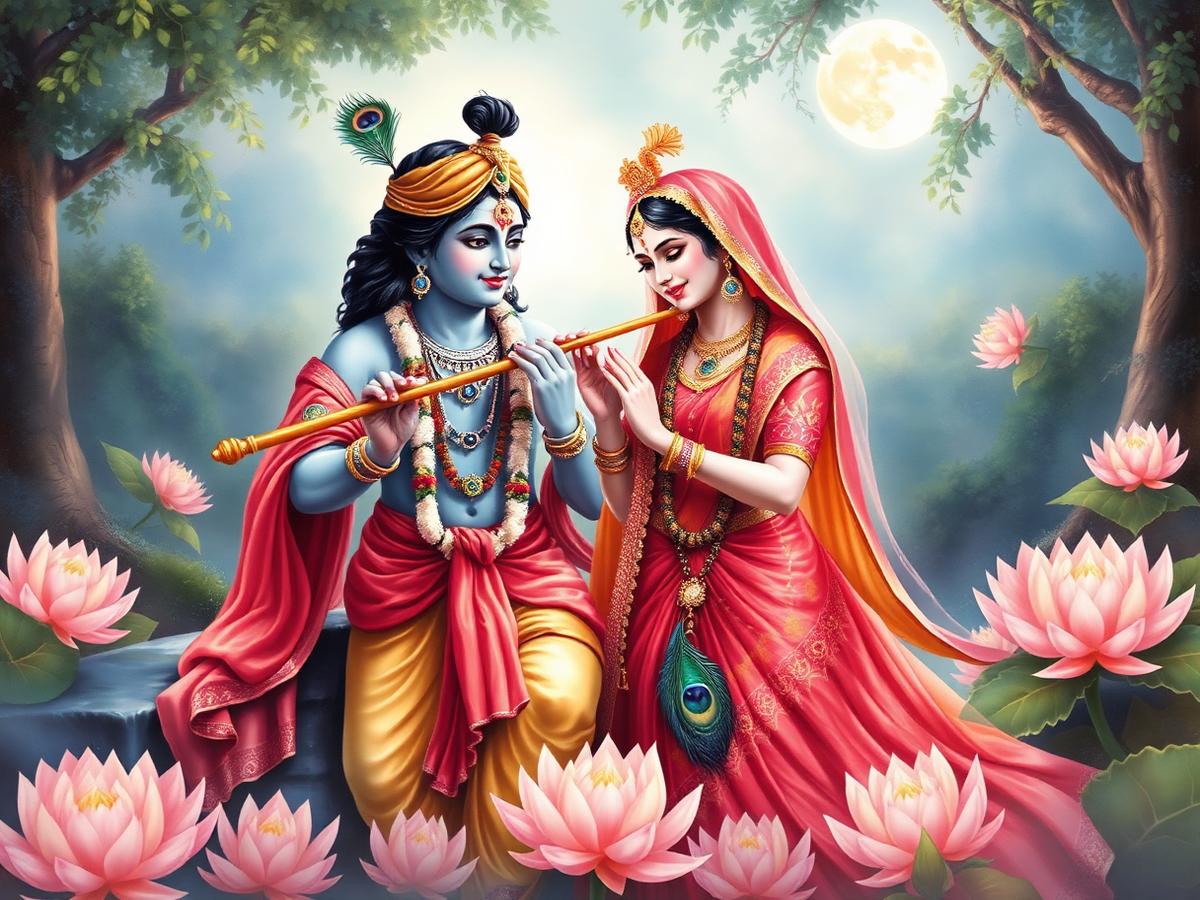
Rādhā-Krishna — the eternal divine couple
Chapter VI
Rādhā, Krishna & Bhakti Yoga
The Mahā-mantra is the song of divine love. Hare calls upon Rādhā — the pleasure-potency of Krishna. Krishna and Rāma call upon the Lord Himself. To chant is to stand between the Beloved and the Lover, asking only to be of service.
Rooted in Bhakti Yoga, the mantra teaches that loving devotion is higher than ritual and beyond intellectual speculation — that in Kali Yuga, the holy name is the path.
Chapter VII
Global Resonance
Around the World
Carried globally by A.C. Bhaktivedanta Swami Prabhupāda, founder of ISKCON in 1966.
Streets & Temples
Today the mahā-mantra is heard in temples, harināma processions and homes across 100+ countries.
A Common Song
People of every background have found peace, purpose and divine love through these holy names.
॥ ॐ ॥
The Sweetest Path to God
The Hare Krishna Mahā-mantra is a divine gift for the difficult age of Kali — simple, powerful and accessible to every soul. Through these holy names the heart is purified, divine love awakens, and the highest perfection of all — prema-bhakti, pure love of God — comes within reach. Chanted alone in meditation or joyfully in a kīrtan, the mantra connects the soul directly with the Divine.
हरे कृष्ण हरे कृष्ण कृष्ण कृष्ण हरे हरे । हरे राम हरे राम राम राम हरे हरे ॥