Meditation & Peace

Mantra · Dhyāna

Meditation & Peace

॥ ध्यान ॥

Om Shāntiḥ Shāntiḥ Shāntiḥ — the path of inner stillness, the direct way home.

॥ ॐ ॥

Dhyāna

Sanskrit

Yoga Sūtra

Source

Seventh

Limb of Yoga

Shānti

Fruit

Introduction

Dhyāna — Continuous Awareness

॥ ॐ ॥
A seeker in meditation
Dhyāna — the unbroken flow of awareness

In Sanatan Dharma, meditation (dhyāna) is the supreme practice — the direct doorway to inner peace, self-knowledge and union with the Divine. The word comes from dhyai, "to contemplate."

Patañjali defines it in a single line — "tatra pratyayaikatānatā dhyānam" — meditation is the unbroken flow of one awareness toward a single object. It is the seventh limb of Aṣṭāṅga Yoga, preceding samādhi itself.

ॐ शान्तिः शान्तिः शान्तिः ॥

"Peace, peace, peace" — at the physical, cosmic and innermost levels.
Chapter I

Three Levels of Shānti

Ādhibhautika

External / physical peace

Freedom from outer disturbance from people and nature.

Ādhidaivika

Cosmic / divine peace

Freedom from disturbance of unseen, subtle forces.

Ādhyātmika

Inner / spiritual peace

The deepest peace — that of the realised Self.

Chapter II

Types of Meditation

TypePractice
Mantra DhyānaContinuous repetition of a mantra mentally or aloud.
TrāṭakaSteady gazing at a candle flame, symbol or point.
Cakra DhyānaFocused awareness on the energy centres along the spine.
Yoga NidrāYogic 'sleep' — deep conscious relaxation.
Vipassanā / MindfulnessObserving thought and sensation without attachment.
Bhakti DhyānaMeditation on Rāma, Kṛṣṇa, Shiva or one's iṣṭa devatā.
Jñāna DhyānaSelf-inquiry — 'Who am I?' as taught by Ramaṇa Maharṣi.
NididhyāsanaContinuous contemplation on Vedāntic truths.

Chapter III

How to Begin — Six Simple Steps

Best practised in Brahma Muhūrta (the 96 minutes before sunrise) or at dusk.

Step 1

Choose a Quiet Place

Sit comfortably on the floor or a chair; spine straight.

Step 2

Soften the Body

Relax the shoulders, jaw and hands; close the eyes gently.

Step 3

Watch the Breath

Observe inhalation and exhalation naturally, without forcing.

Step 4

Hold a Focal Point

A mantra (Om / So'ham), a deity, or the breath at the heart.

Step 5

Return Gently

When the mind wanders, bring it back without judgement.

Step 6

Sit 10-15 Minutes

Start small, grow daily. End with gratitude and Shānti.

Chapter IV

Prāṇāyāma — Preparing the Mind

Before deep meditation, a few rounds of breath-work settle the prāṇa and quiet the chatter. Even a short prāṇāyāma session transforms the next sitting.

Anulom Vilom

Alternate nostril breathing — balances the two hemispheres.

Bhrāmarī

Humming bee breath — calms the nervous system.

Ujjāyī

Ocean breath — steadies the mind, builds prāṇa.

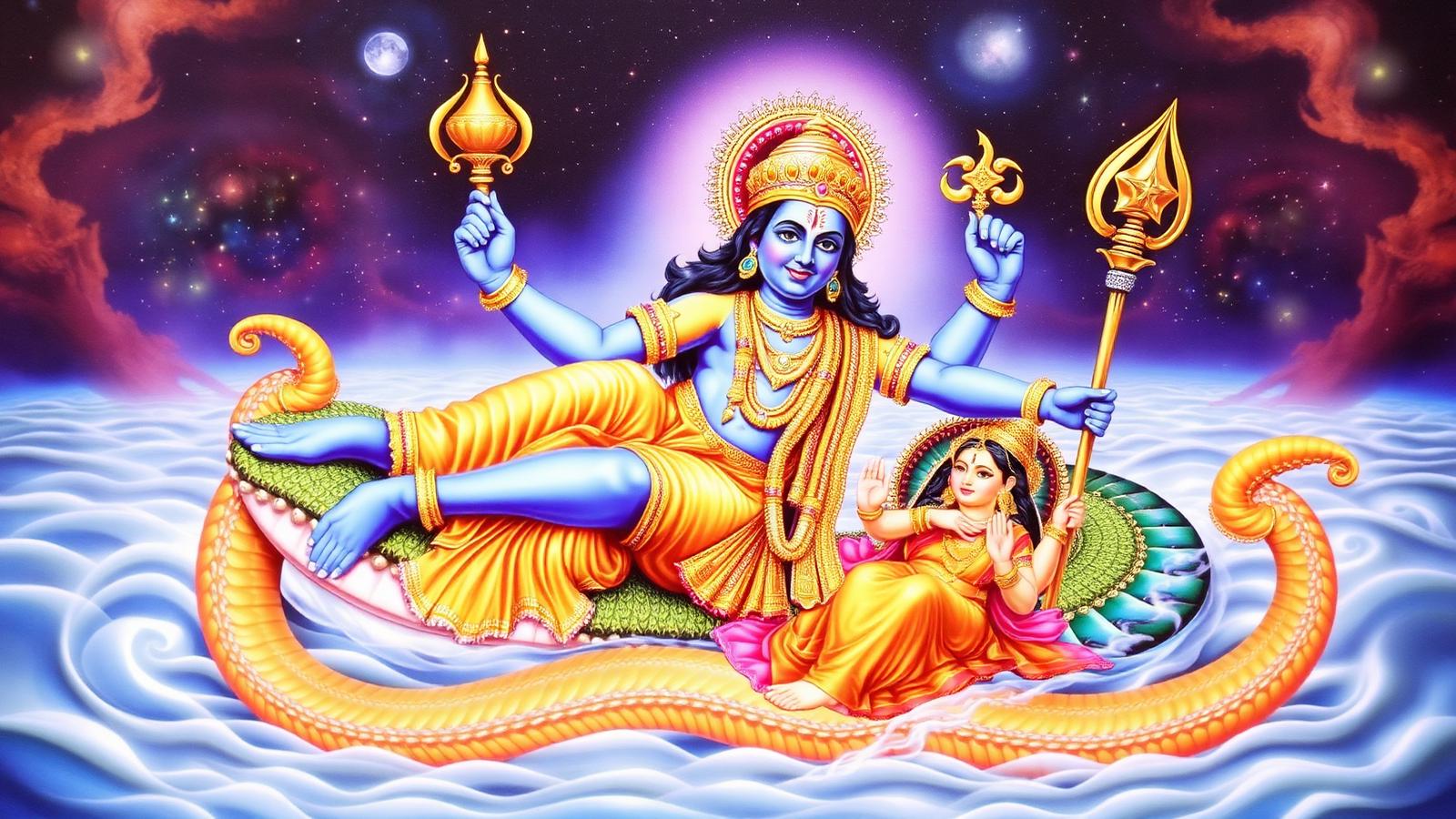
Lord Viṣṇu — vision of the meditator
Dhruva's vision — fruit of one-pointed dhyāna

Chapter V

Mantras for Peace

॥ ॐ ॥

Om · The Primordial Sound

ॐ ॥

The seed of every mantra — vibration of the universe itself.

Shānti Mantra

ॐ सर्वे भवन्तु सुखिनः सर्वे सन्तु निरामयाः । सर्वे भद्राणि पश्यन्तु मा कश्चिद्दुःखभाग्भवेत् ॥ ॐ शान्तिः शान्तिः शान्तिः ॥

Universal prayer for peace and the welfare of all beings.

So'ham · I Am That

सोऽहम् ॥

The natural mantra of the breath — Sah on inhale, Aham on exhale.

Mahāmṛtyuñjaya · Deep Peace

ॐ त्र्यम्बकं यजामहे सुगन्धिं पुष्टिवर्धनम् । उर्वारुकमिव बन्धनान् मृत्योर्मुक्षीय मामृतात् ॥

Brings deep healing peace, freedom from fear of death.

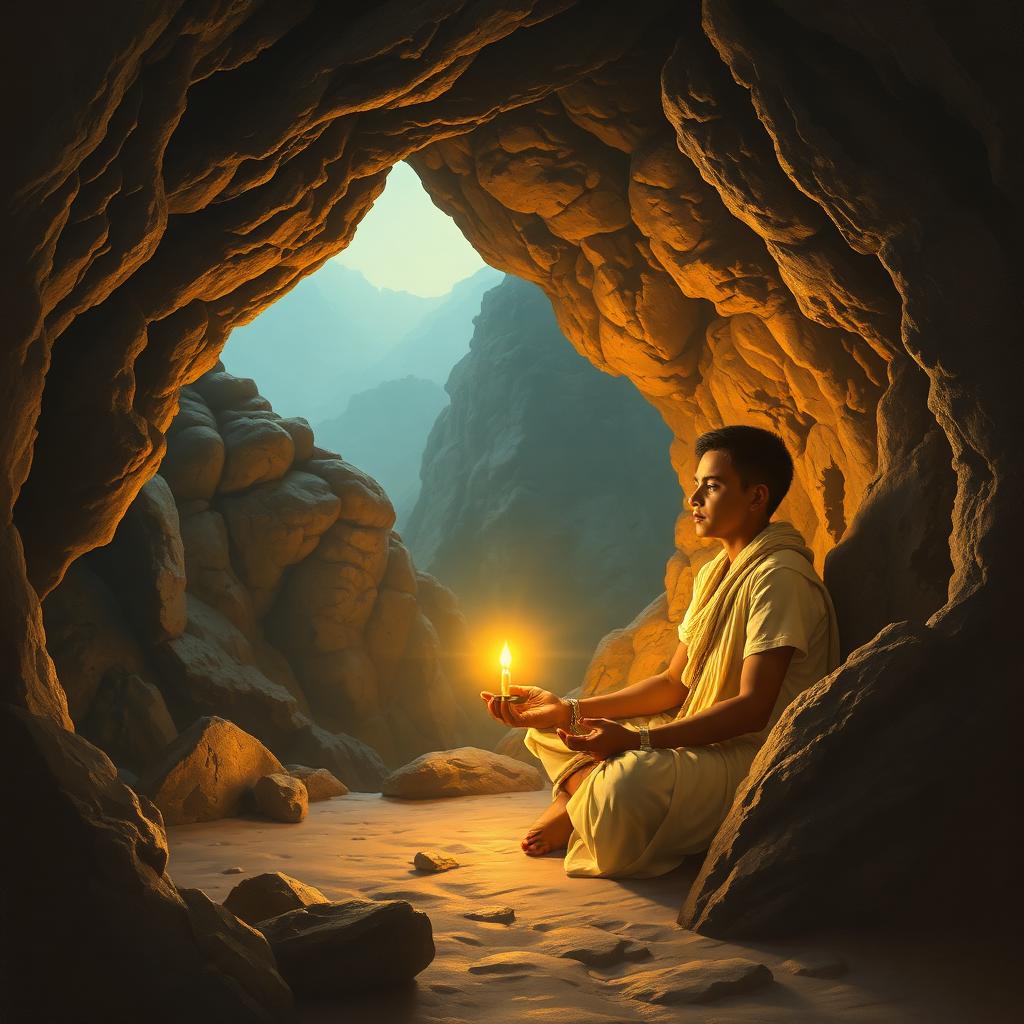
The cave of Ramaṇa Maharṣi on Aruṇācala
Aruṇācala — silence as the highest teaching

Chapter VI

Teachers of Stillness

Arjuna & Kṛṣṇa

On the battlefield, Kṛṣṇa teaches Arjuna the science of meditation — how to still the mind through abhyāsa (practice) and vairāgya (detachment).

Dhruva's Tapas

A boy of five sat in deep meditation in the forest. Such was Dhruva's one-pointed dhyāna that Lord Viṣṇu Himself appeared and granted him the pole-star place.

Ramaṇa Maharṣi

Through the silent inquiry 'Who am I?', Ramaṇa Maharṣi awakened to the Self at sixteen — and taught seekers the most direct meditation: turning attention back to its own source.

Chapter VII

Fruits of Practice

Reduces Stress

Lowers cortisol, blood pressure and anxiety.

Sharpens Focus

Improves concentration, memory and clarity.

Calms Emotions

Dissolves anger, fear and restlessness over time.

Awakens Awareness

Reveals the silent witness behind every thought.

Inner Joy

A quiet, causeless happiness arises naturally.

Self-Realisation

The ultimate fruit — recognition of one's true Self.

The Direct Path to Peace

ॐ शान्तिः शान्तिः शान्तिः ॥

"May there be peace within, peace around, peace beyond. May you abide as the very source of peace."