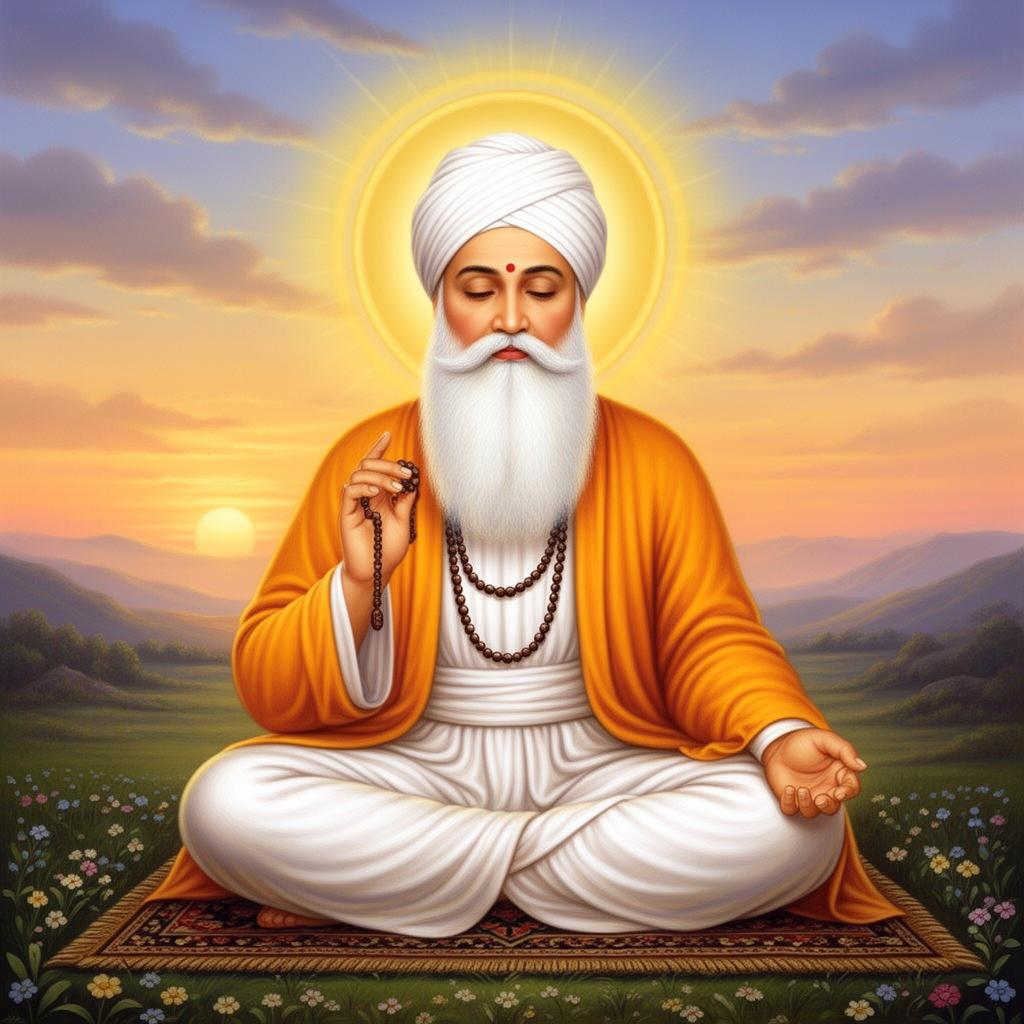
Guru Nanak Dev Ji

Saint · First Sikh Guru

Guru Nanak Dev Ji

॥ ੴ ਸਤਿ ਨਾਮੁ ॥

The 15th-century light of Punjab who walked across continents to remind humanity of one God, one truth, and the dignity of every soul — founder of Sikhism, friend of all.

॥ ॐ ॥

1469–1539

Era

Nankana Sahib

Birthplace

70 yrs

Lifespan

Sikh Dharma

Tradition

Introduction

The Light Who United Humanity

॥ ॐ ॥

Guru Nanak Dev Ji (Gurmukhi: ਗੁਰੂ ਨਾਨਕ) — born 15 April 1469 in Talwandi (now Nankana Sahib) — is the founder of Sikhism and the first of the ten Sikh Gurus. He is revered as one of the greatest spiritual masters, social reformers and poets in the history of Bhārata.

Into an age of religious conflict and rigid hierarchy he brought a clear, revolutionary message: God is OneIk Onkar — beyond every name and form, present in every heart. True religion is not ritual or label but honest living, sharing with others and remembering the Divine Name.

Guru Nanak is honoured not only by Sikhs but by Hindus and Muslims alike as a saint who transcended every boundary the world had drawn.
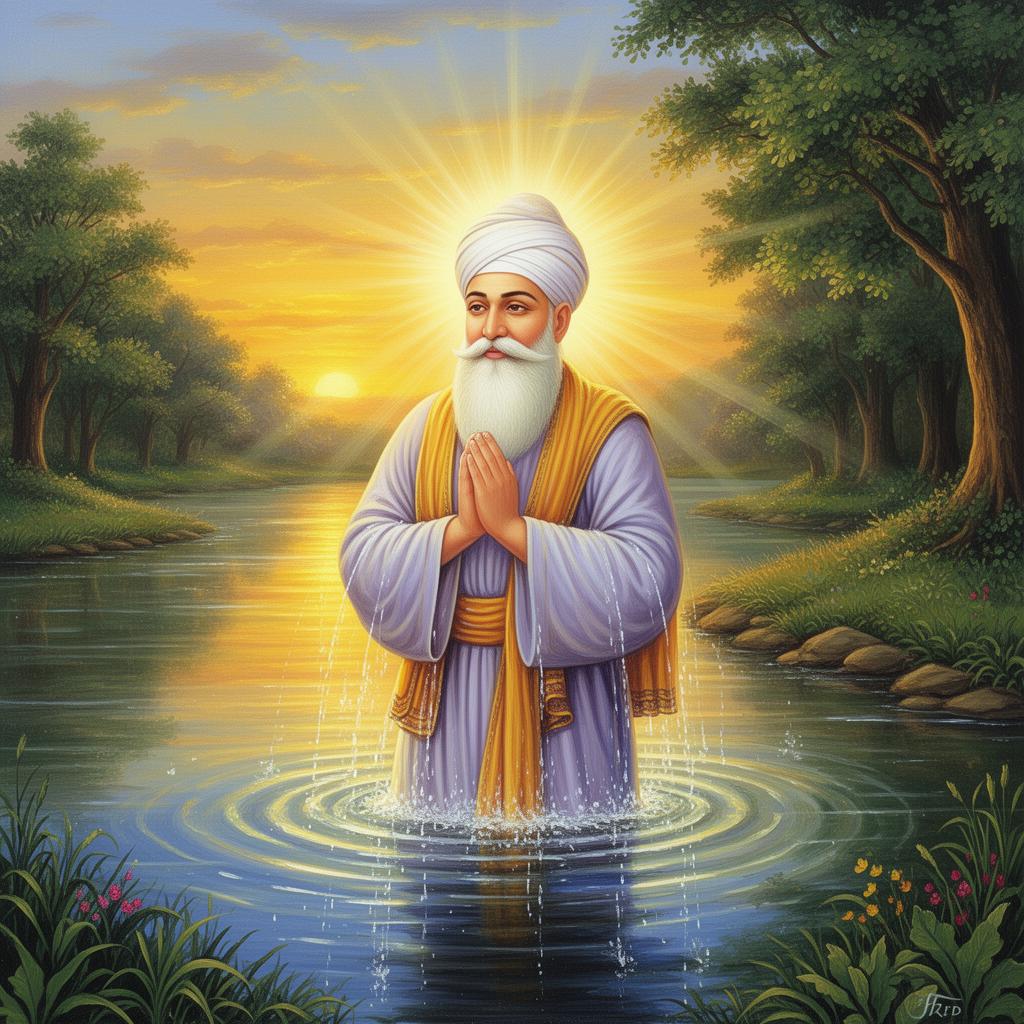
Guru Nanak emerging from the Bein river after his three-day spiritual awakening
The river Bein — the moment of awakening

Chapter I

Birth, Childhood & the River Bein

From childhood, Nanak questioned every empty form. He refused the janeu, saying true purity is of conduct, not thread. Given money to trade, he fed wandering sadhus and called it Sachā Saudā — the only true bargain.

At thirty, while bathing in the Bein river near Sultanpur, he vanished for three days. When he returned, his first words were: "Na koī Hindū, na koī Musalmān." From that moment, his mission unfolded — to point every seeker, of every name, to the One God within.

Chapter II · The Heart of His Teaching

Three Pillars of the Sikh Way

Simple, practical, universal — the whole of life as worship of the One.

ਨਾਮ ਜਪਣਾ

Naam Japnā

Remember the One Divine Name in every breath — meditation as the heartbeat of life.

ਕਿਰਤ ਕਰਨੀ

Kirat Karnī

Earn your living by honest labour — work itself as worship.

ਵੰਡ ਛਕਣਾ

Vaṇḍ Chaknā

Share what you earn with those in need — the table of God is open to all.

For Guru Nanak, the highest worship was a life lived in truth: "Truth is high, but higher still is truthful living."

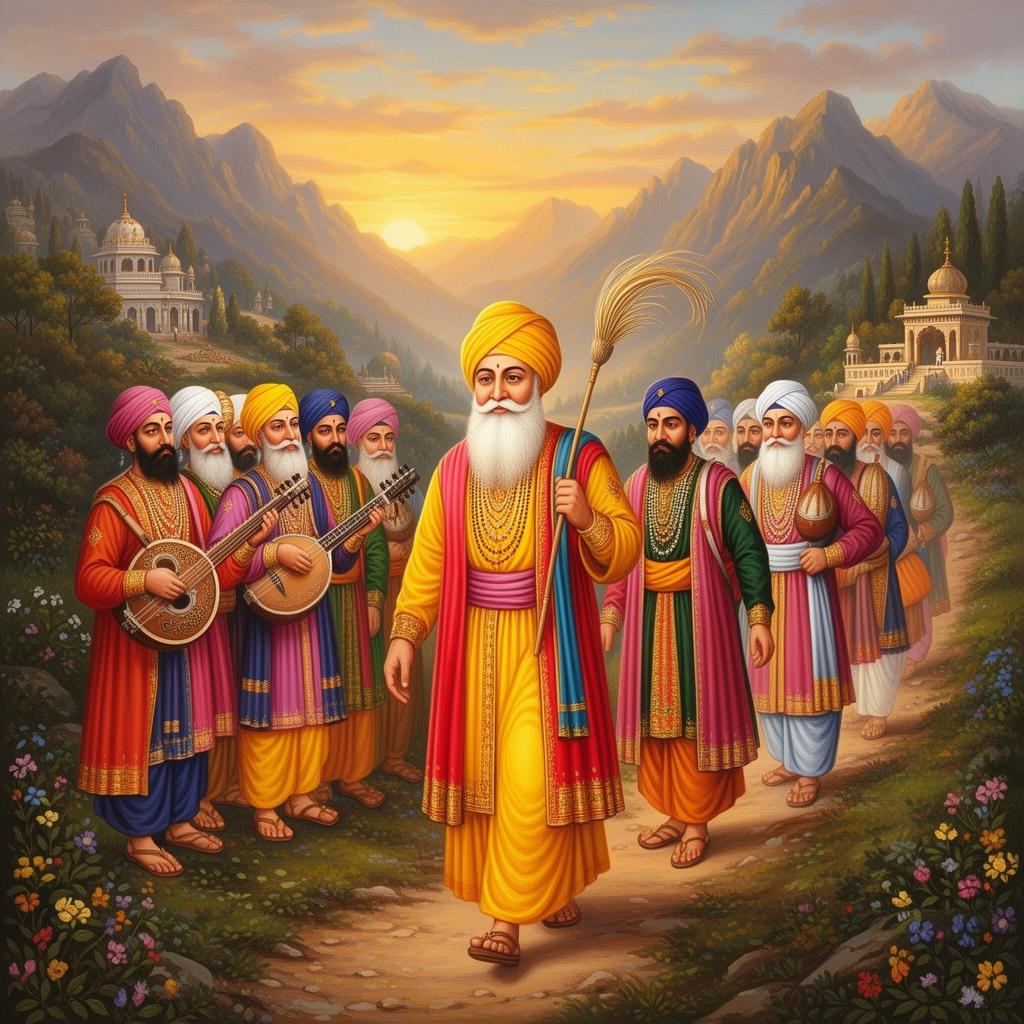
Guru Nanak on udasi with Bhai Mardana playing the rabab

Chapter III · The Four Udāsīs

Twenty-Four Years on the Road

With his lifelong companion Bhāī Mardānā playing the rabab, Guru Nanak walked across India, Tibet, Sri Lanka, Arabia and Persia. At Haridwar he gently corrected ritual bathing; at Mecca he taught that God is in every direction; at Sumer he reasoned with the Sidhas; everywhere he founded saṅgats — circles of seekers — in his wake.

ੴ ਸਤਿ ਨਾਮੁ ॥

Chapter IV · Sākhīs

Three Episodes from a Luminous Life

Episode 1

Sachā Saudā

Given money for trade, the young Nanak feeds hungry sadhus instead — declaring that this is the only 'true bargain'.

Episode 2

Feet Toward the Kaaba

At Mecca, the priests rebuke him; he asks them to turn his feet where God is not — and the Kaaba itself is said to follow.

Episode 3

Debate with the Sidhas

On Mount Sumer, he tells the yogis that true sannyāsa is to live in the world with the Naam — work, share and remember.

Chapter V · Bāṇī

The Sacred Compositions

Hymns of indescribable beauty — preserved in the Guru Granth Sahib, sung every morning and evening across the Sikh world.

Japji Sahib

  • Opening composition of the Guru Granth Sahib
  • Mool Mantra & 38 pauris — the essence of his teaching
  • Recited at dawn by Sikhs across the world

Āsā dī Vār

  • Devotional ballad sung in the morning
  • Verses on truth, humility and grace
  • A foundational text of Sikh worship

Sodar & Sohilā

  • Sodar — recited at sunset
  • Sohilā — the bedtime prayer of surrender
  • Together with Japji, the daily Nitnem of Sikhs

Chapter VI · The Living Tradition

Langar & the Equality of All

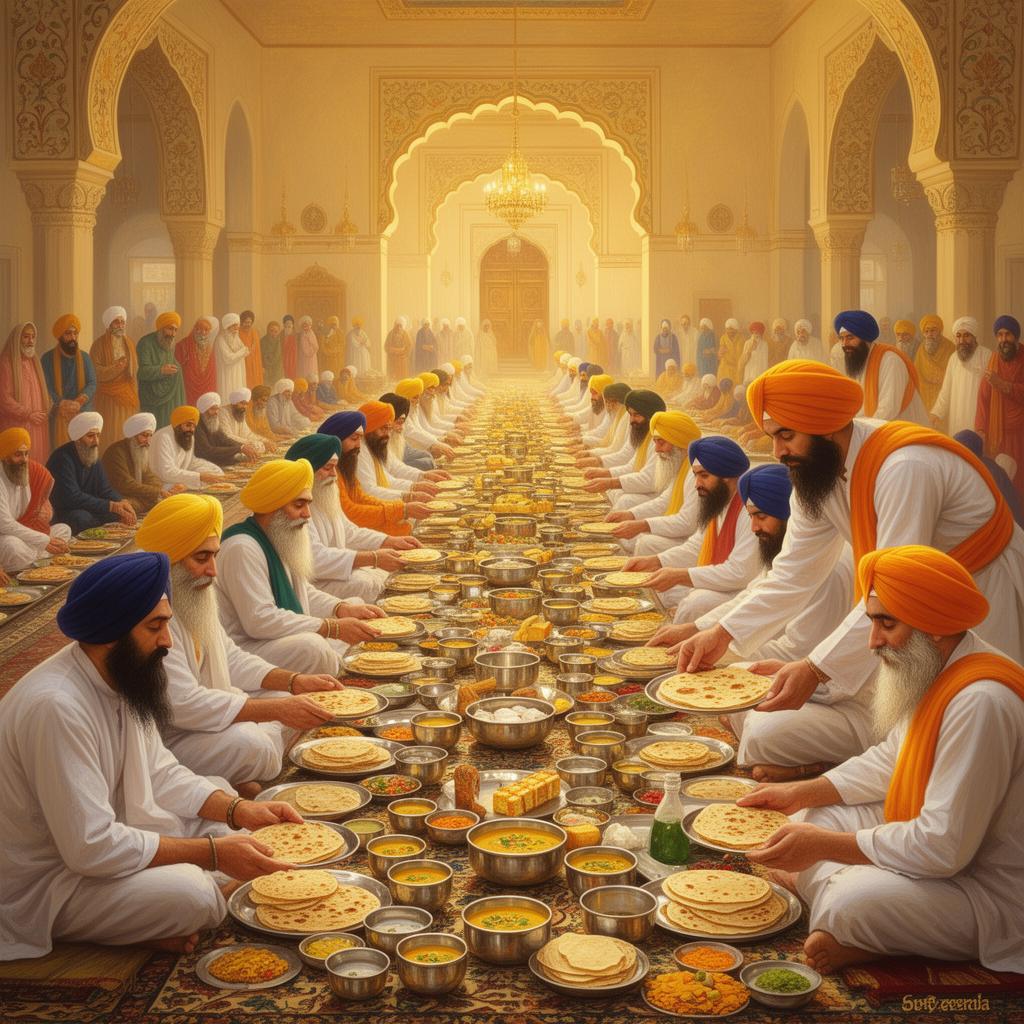
At Kartarpur, Guru Nanak instituted the langar — the community kitchen where every person, of every caste and creed, sits in one row (paṅgat) on the floor and eats a meal cooked and served by the saṅgat.

Five centuries later, in every Gurdwara on earth, that table is still open — feeding millions every day, without question of identity or means. Nowhere is his message of equality more lived than in this simple shared meal.

Devotees sharing langar in a Gurdwara — the Sikh community kitchen
Langar — equality served on every plate

Gurbāṇī

Words of the Guru

॥ ॐ ॥

Mūl Mantra · Japji Sahib

ੴ ਸਤਿ ਨਾਮੁ ਕਰਤਾ ਪੁਰਖੁ ਨਿਰਭਉ ਨਿਰਵੈਰੁ ਅਕਾਲ ਮੂਰਤਿ ਅਜੂਨੀ ਸੈਭੰ ਗੁਰ ਪ੍ਰਸਾਦਿ ॥

"There is One God. Truth is His Name. Creator of all. Without fear, without hatred. Timeless in form. Beyond birth, self-existent — known by the grace of the Guru."

Guru Nanak · Japji Sahib

ਨਾਨਕ ਨਾਮ ਚੜ੍ਹਦੀ ਕਲਾ, ਤੇਰੇ ਭਾਣੇ ਸਰਬੱਤ ਦਾ ਭਲਾ ॥

"Says Nanak: with the Naam, the spirit rises ever upward — and by Your Will, may there be welfare of all beings."

Life Journey

A Life of Seventy Years

  1. 1469 CE

    Born in Talwandi (now Nankana Sahib) to Mehta Kālū and Mātā Tripta.

  2. Childhood

    Refuses the janeu thread, gives away money to feed hungry sadhus — the Sachā Saudā.

  3. 1499 CE

    Disappears for three days in the Bein river and returns proclaiming: 'There is no Hindu, there is no Muslim.'

  4. Four Udāsīs

    Travels across India, Tibet, Sri Lanka, Mecca and Baghdad spreading the message of Ik Onkar.

  5. Kartarpur

    Settles in Kartarpur; founds the practices of saṅgat, paṅgat and langar — community, equality, shared meal.

  6. 1539 CE

    Merges with the Divine Light at Kartarpur, naming Bhāī Lehnā (Guru Angad) as his successor.

The Founder of Sikhism, Friend of All

From Guru Nanak's saṅgat at Kartarpur grew a living tradition of ten Gurus, the eternal Guru Granth Sahib, the Khalsā, and a worldwide community of over twenty-five million Sikhs. Wherever a langar is laid, a Gurdwara opens its doors, or a sevadar bows in service, his light still walks among us.

ੴ ਸਤਿ ਨਾਮੁ ॥

"One God — Truth is His Name."

॥ ਧੰਨ ਗੁਰੂ ਨਾਨਕ ਦੇਵ ਜੀ ॥