Sant Kabir

Saint · Bhakta-Kavi

Sant Kabir

॥ सन्त कबीर साहेब ॥

The fearless 15th-century weaver-mystic of Kashi who sang of the formless God within — beyond caste, beyond creed, beyond every wall the world had built.

॥ ॐ ॥

15th CE

Era

Kashi (Varanasi)

Birthplace

Julāhā · Weaver

Trade

Maghar

Mahāsamādhi

Introduction

The Weaver-Saint Who Wove the Name of God

॥ ॐ ॥

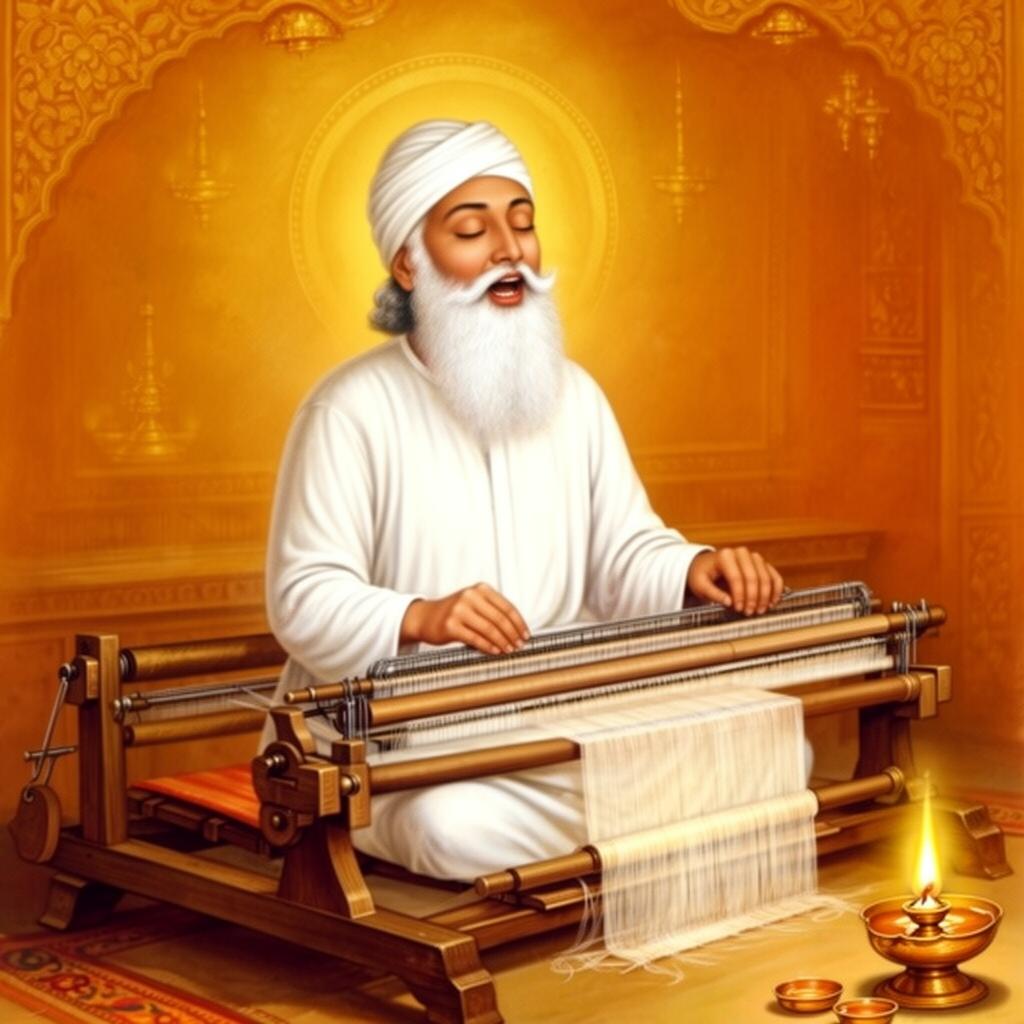
Sant Kabir (Hindi: सन्त कबीर) — born around 1440 CE in Varanasi — is one of the greatest mystics and social reformers of the Bhakti Movement. A simple weaver by trade, he became one of the most luminous voices of medieval India, revered alike by Hindus, Muslims and Sikhs.

Kabir sang in the everyday tongue of the people — a mingled music of Hindi, Awadhi and Braj — and his sharp, tender dohas still echo across villages and cities. He refused every wall: between Hindu and Muslim, high caste and low, scholar and unlettered. For him, God was nirguṇa — beyond form, beyond name, and entirely present within the heart of every being.

Equally at home calling the Divine Rām, Hari, Allāh or Sāheb, Kabir's life and verse stand as a living testament that truth has no religion.
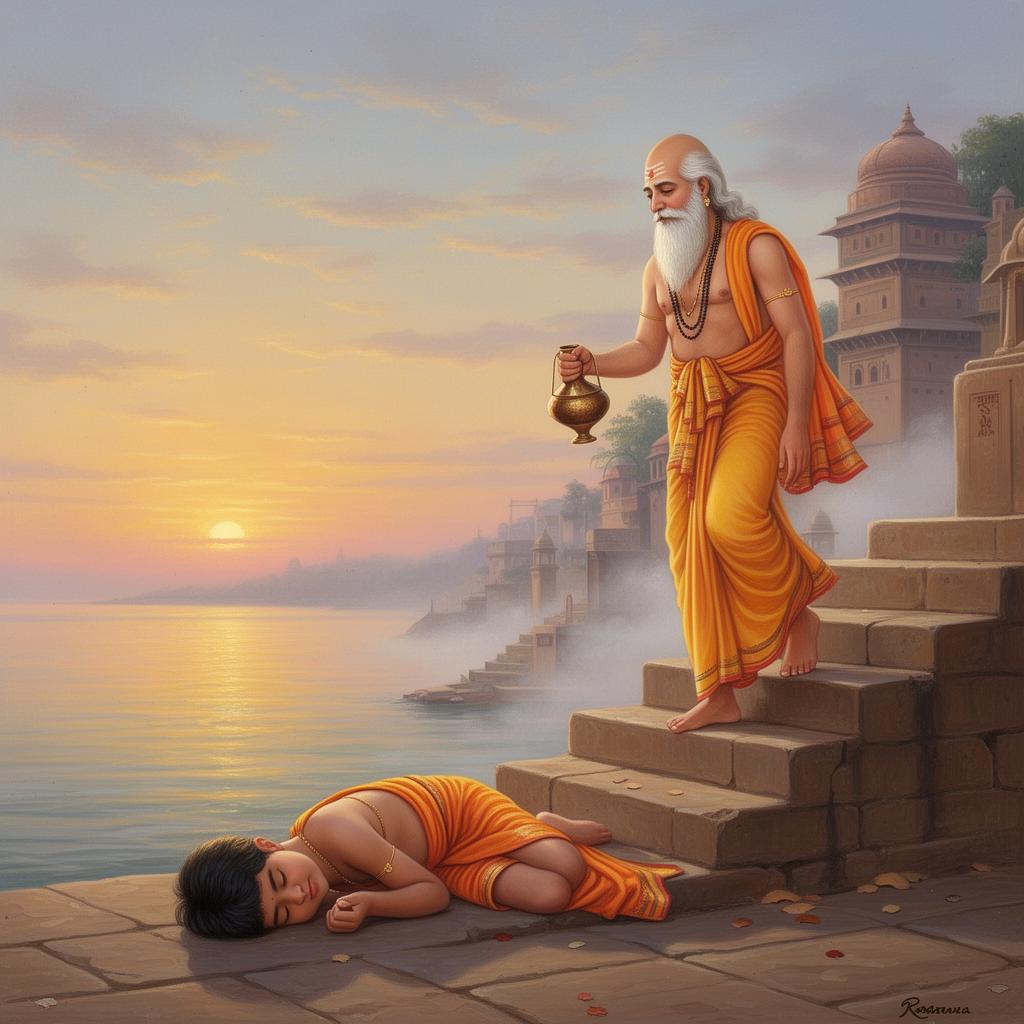
Young Kabir receiving initiation from Sant Ramananda at a Varanasi ghat
"Rām Rām!" — the accidental dīkṣā at the ghat

Chapter I

Birth, Guru & the Loom of Devotion

Tradition tells that Kabir was found as an infant floating on a lotus leaf in Lahartara pond by the weaver couple Nīru and Nīmā, who raised him as their own. He grew up learning the loom — and from his earliest years, the spirit of inquiry burned within him.

Longing for a Guru, he lay one dawn upon the steps of a Ganga ghat where the great Vaishnava saint Rāmānanda descended for his morning bath. Startled by stepping on the boy, Rāmānanda uttered "Rām Rām!" — and Kabir embraced it as his initiation. From that day, Kabir became a disciple in the lineage of Rāma — but his Rāma was the formless, all-pervading Lord of the heart.

Chapter II · The Heart of His Teaching

Three Pillars of Kabir's Path

A path stripped of every external prop — bare, direct and open to all.

निर्गुण भक्ति

Nirguṇa Bhakti

Devotion to the formless, attributeless Divine — beyond name, image and ritual.

अन्तर साधना

Antar Sādhanā

The Lord lives within — search inside the heart, not in temples, mosques or pilgrimages.

सत्य ओ समता

Satya & Samatā

Truth, equality and humility — God sees no caste, no creed, no high or low.

Kabir cut through priest, prayer-book and pilgrimage. "The Lord is within you — why search outside?" A pure heart, a sincere Name and a courageous inner gaze were, for him, the whole of religion.

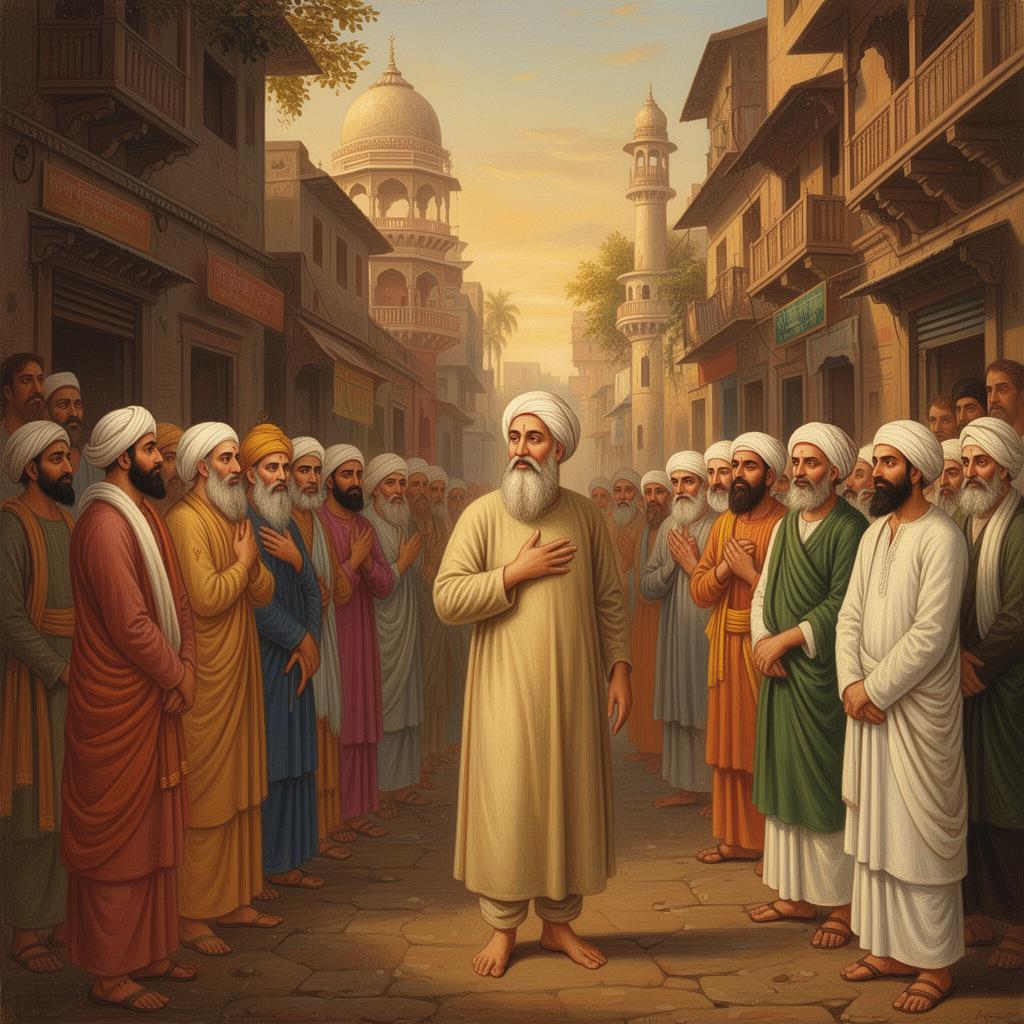
Sant Kabir fearlessly addressing Hindu pandits and Muslim mullahs in Varanasi

Chapter III · The Fearless Voice

One Truth · One God · One Humanity

In the lanes of Kashi, Kabir stood before paṇḍit and mullah alike and pointed not to scripture but to the heart. He condemned empty ritual, caste pride and religious quarrels with a clarity that pierced like a needle. "If by bathing one attains God, then the fish of the river would be liberated first." His verse made the powerful uneasy — and the poor feel seen.

साहेब बंदगी बंदगी ॥

Chapter IV · Līlās

Three Episodes from a Luminous Life

Episode 1

The Steps of the Ghat

The young Kabir lay in Rāmānanda's path; the startled saint cried 'Rām Rām!' — and Kabir embraced it as his diksha mantra.

Episode 2

Flowers Beneath the Shroud

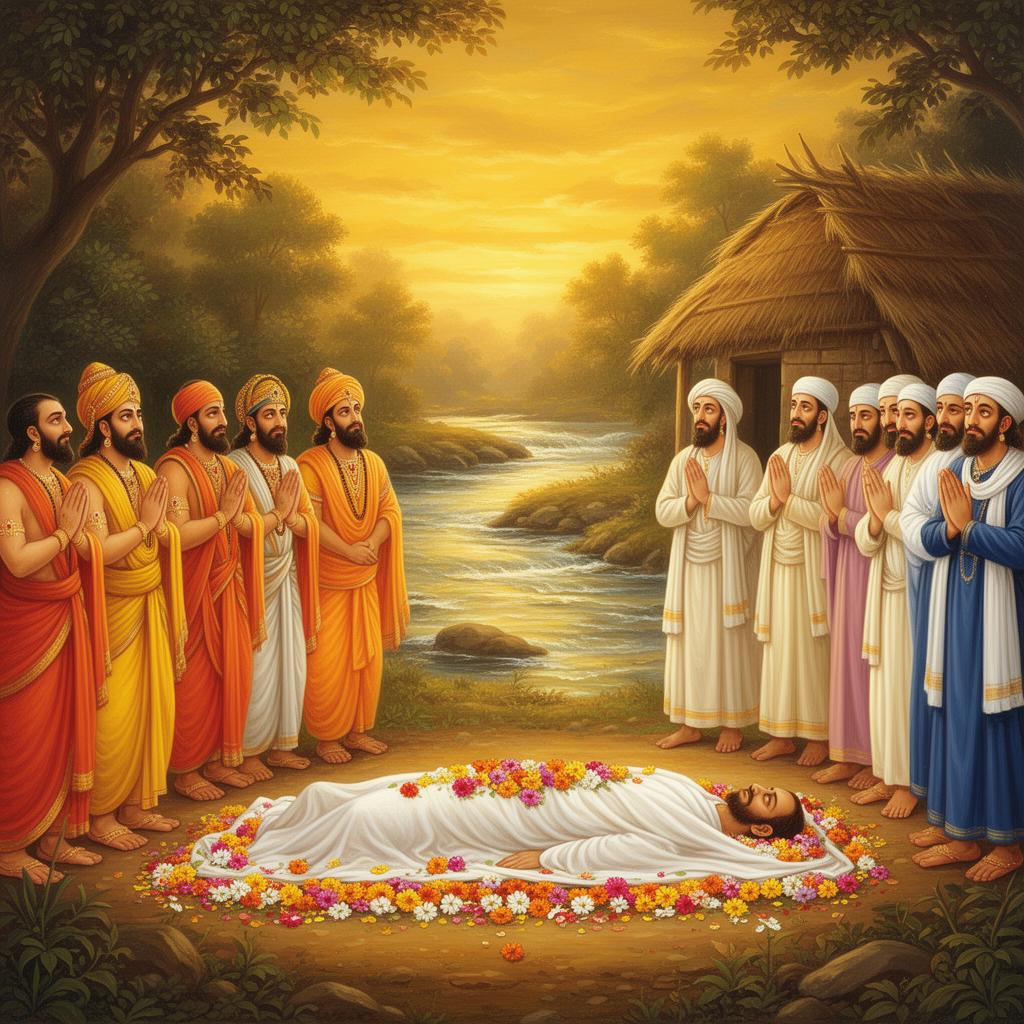
At Maghar, his Hindu and Muslim disciples quarrelled over his last rites — only to find flowers, not a body, which they divided in peace.

Episode 3

Maghar over Kashi

He left holy Kashi for 'inauspicious' Maghar to prove that liberation comes from the Name within, not the place without.

Chapter V · Granthāḥ

The Words of the Weaver

Composed not in Sanskrit but in the living speech of the people — dohās, padas and sākhīs that still rise from village squares and city stages alike.

Bījak

  • The most authoritative collection of Kabir's verses
  • Sākhī (couplets), Śabda (songs) and Ramaiṇī
  • Foundational scripture of the Kabir Panth

Kabir Granthāvalī

  • Vast compilation of dohās and pads
  • Preserved in many regional recensions
  • Sung across Bhārata for five centuries

In the Guru Granth Sahib

  • Over 500 verses of Kabir included
  • Honoured as Bhagat Kabir Ji by the Sikh tradition
  • A universal saint embraced across faiths

Chapter VI · The Final Teaching

Maghar & the Flowers Beneath the Shroud

When his end drew near, Kabir left the holy city of Kashi for Maghar — a place said to deny liberation. He went there to teach, with his last breath, that no place grants moksha — only the Name within does.

After he left his body, his Hindu disciples wished to cremate him and his Muslim disciples to bury him. When they lifted the shroud, only a heap of flowers remained. They divided the flowers between them — and the saint who refused every division was at last understood.

Hindu and Muslim disciples beholding flowers in place of Sant Kabir's body at Maghar
Maghar — flowers in place of a body

Dohā & Pada

Words of the Saint

॥ ॐ ॥

Kabir · Dohā

बुरा जो देखन मैं चला, बुरा न मिलिया कोय। जो दिल खोजा आपना, मुझसे बुरा न कोय॥

"I went searching for evil and found none anywhere. When I searched my own heart, I found none worse than me."

Kabir · Dohā

मोको कहाँ ढूँढ़े बन्दे, मैं तो तेरे पास में। ना मैं देवल ना मैं मसजिद, ना काबे कैलास में॥

"Where do you seek Me, O seeker? I am right beside you. Not in temple, not in mosque, not in Kaaba or Kailash am I to be found."

Life Journey

A Life Across Two Worlds

  1. c. 1440 CE

    Born in Varanasi; raised by the weaver couple Nīru and Nīmā.

  2. Youth

    Receives initiation from the great Vaishnava saint Rāmānanda on the steps of a ghat.

  3. Householder

    Lives as a humble weaver — weaving cloth by day, singing the Name by night.

  4. Public mission

    Travels and openly criticises ritualism, caste and hypocrisy in both Hindu and Muslim communities.

  5. Maghar

    Leaves Kashi for Maghar to shatter the superstition that place determines liberation.

  6. c. 1518 CE

    Leaves his body; his disciples find only flowers under the shroud — divided peacefully between Hindus and Muslims.

The Saint Who Spoke the Truth

Kabir's dohās became part of the folk-wisdom of Bhārata — sung in bhajans and qawwalis, woven into the Guru Granth Sahib, kept alive by the Kabir Panth, and carried in the breath of every seeker who refuses to mistake the form for the formless. His message remains as clean as the cloth he wove: God is one, the heart is His temple, and truth is the only worship.

॥ साहेब बंदगी ॥

"Salutations to the One Master — within all and beyond all."

॥ सन्त कबीर साहेब की जय ॥