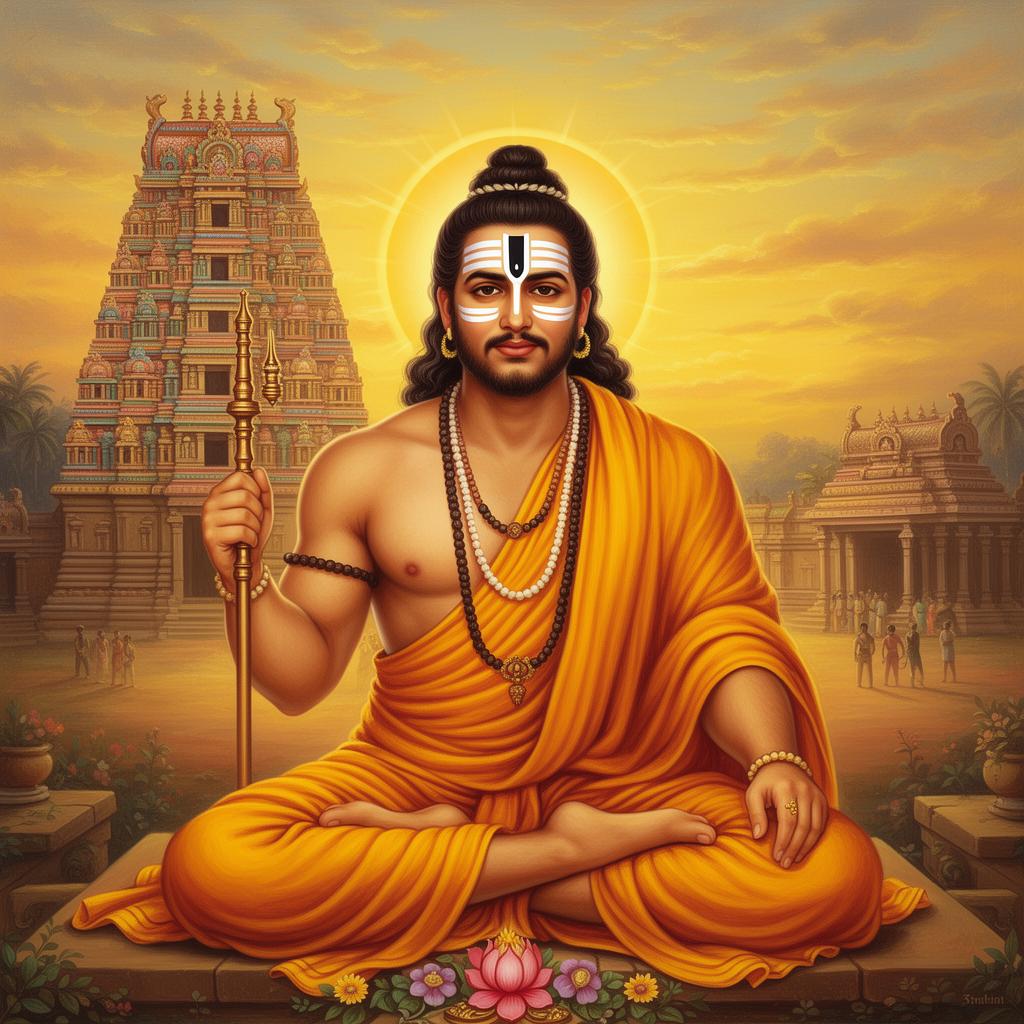
Sri Madhvacharya

Saint · Ācārya

Sri Madhvacharya

॥ श्री मध्वाचार्य ॥

The 13th-century acharya who founded Dvaita Vedanta, installed the beloved Udupi Krishna, and showed that God, soul and world are eternally real — the soul finding fulfilment in loving service to Lord Vishnu.

॥ ॐ ॥

13th CE

Era

Pajaka, Udupi

Birthplace

79 yrs

Lifespan

Udupi

Headquarters

Introduction

The Acharya of Eternal Distinction

॥ ॐ ॥

Sri Madhvacharya (Sanskrit: श्री मध्वाचार्य) — also known as Madhva or Ānandatīrtha — was one of the greatest philosophers and theologians of Sanatan Dharma. Born in 1238 CE, he is the founder and principal exponent of Dvaita Vedanta — pure dualism.

Where Ādi Śaṅkarācārya taught absolute non-dualism and Ramanujacharya taught qualified non-dualism, Madhvacharya gave a clear, uncompromising vision: God (Vishnu), the souls (jīvas) and the world are eternally distinct realities. His followers honour him as an incarnation of Vāyu, the Wind God.

He stood for the supremacy of Lord Vishnu, the centrality of bhakti, and complete surrender to divine grace — and the institutions he founded continue to nourish living devotion to this day.
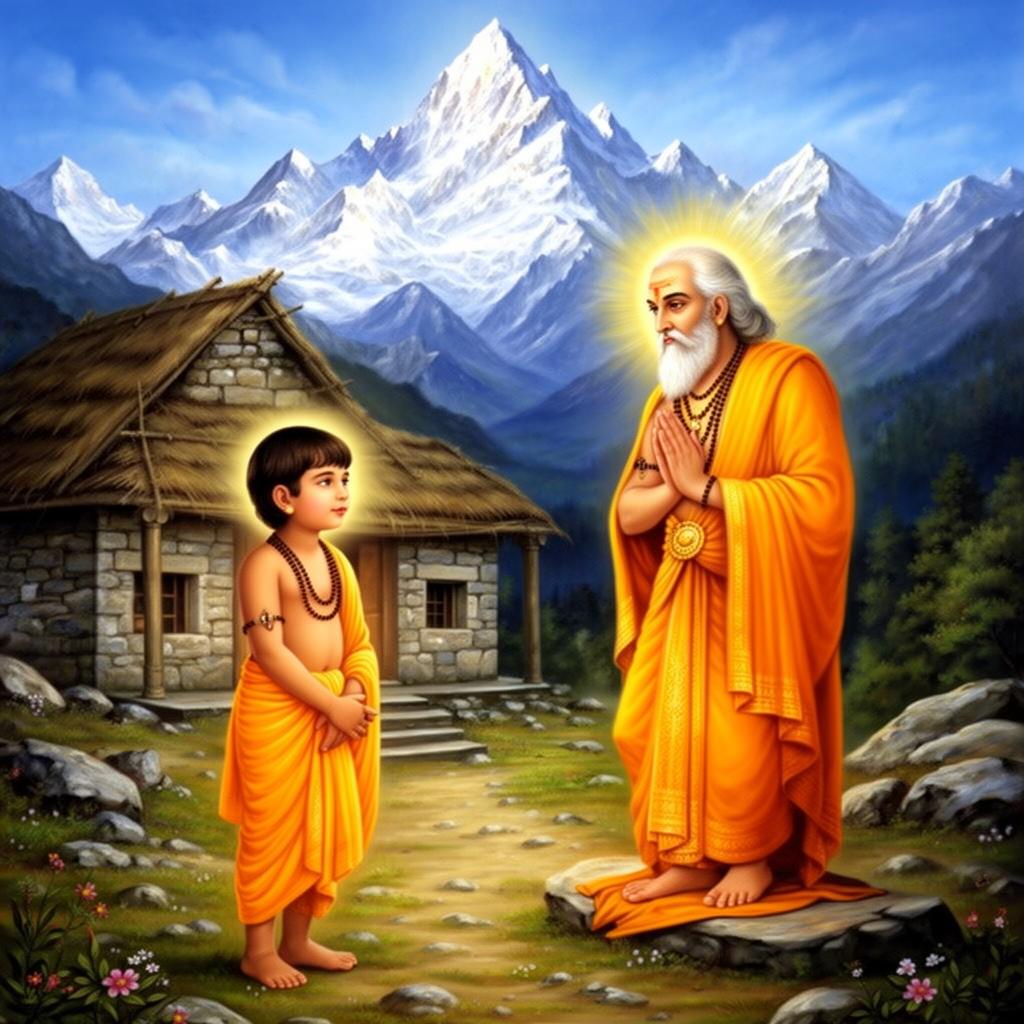
Young Madhvacharya receiving blessings from Sage Vedavyasa at Badarikashrama
At Badari — meeting Sage Vedavyāsa face to face

Chapter I

Birth, Sannyāsa & Pilgrimage

Madhvacharya was born in the village of Pajaka, near Udupi in present-day Karnataka, to Madhyageha Bhatta and Vedavati. From childhood he displayed extraordinary intelligence, an almost unworldly physical strength, and a heart already absorbed in Lord Vishnu.

At the age of eight he took formal sannyāsa from Achyutaprekṣa, receiving the names Pūrṇaprajña and later Ānandatīrtha. He travelled the length of Bhārata, debating scholars and visiting sacred shrines, and made three pilgrimages to Badarikāśrama — where, tradition records, he received direct instruction from Vedavyāsa himself.

Chapter II · The Heart of Dvaita

Three Pillars of His Vision

Reality is real — and the soul's journey home is real, loving service to the one independent Lord.

द्वैत

Dvaita

Pure dualism — God, souls and the world are eternally real and eternally distinct.

भक्ति

Bhakti

Loving devotion to Lord Vishnu — the only path to His saving grace.

प्रसाद

Prasāda

Liberation comes solely through the grace of the Supreme Lord Hari.

Liberation, Madhva taught, is not absorption or dissolution. The liberated soul remains itself — eternally enjoying loving service and bliss in the presence of Lord Vishnu in Vaikuṇṭha.

Chapter III · Pañca-Bheda

The Five Eternal Differences

For Madhvacharya, the universe is woven of real distinctions. These five differences are not appearances to be transcended — they are the very fabric of reality.

Bheda 1

God ↔ Soul

The Supreme Lord is forever distinct from the individual soul.

Bheda 2

God ↔ Matter

Vishnu transcends the material world, though He pervades it.

Bheda 3

Soul ↔ Matter

The conscious soul is never identical with insentient matter.

Bheda 4

Soul ↔ Soul

Each individual soul is unique and eternally different from another.

Bheda 5

Matter ↔ Matter

Every material thing is distinct from every other.

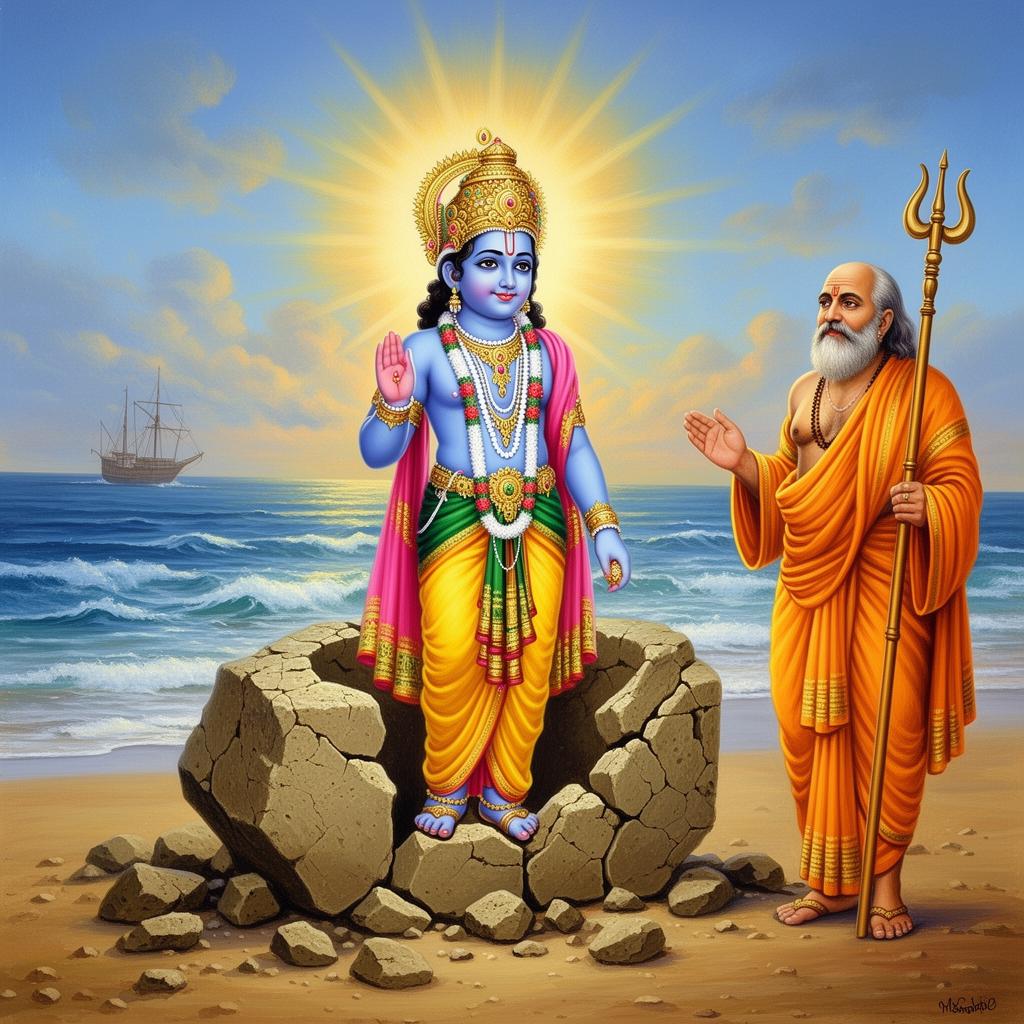
The idol of Udupi Krishna emerging from gopi-chandana clay

Chapter IV · Udupi

The Coming of Bāla Krishna

A ship was sinking off the Western shore. Madhvacharya, watching from the coast, calmed the waves and saved it. In gratitude the grateful sailors offered him a great block of gopi-chandana — sacred clay from Dvārakā. When the block fell open, there shone within it a beautiful idol of Bāla Krishna, holding a churning rod. Madhva himself installed Him in Udupi — where He is still worshipped today.

ॐ नमो भगवते वासुदेवाय ॥

Chapter V · The Living Institutions

Udupi Matha & the Haridāsa Movement

At Udupi, Madhvacharya founded the Sri Krishna Matha and the system of Aṣṭa Maṭhas — eight monasteries whose pontiffs serve the Lord by rotation. The pūjā schedule he laid down continues unbroken to this day.

His emphasis on bhakti gave birth, in the centuries that followed, to the Haridāsa movement of Karnataka — the saint-poets Purandara Dāsa, Kanaka Dāsa and others whose Kannada songs (Dāsa Sāhitya) carried Vishnu's name into every village home.

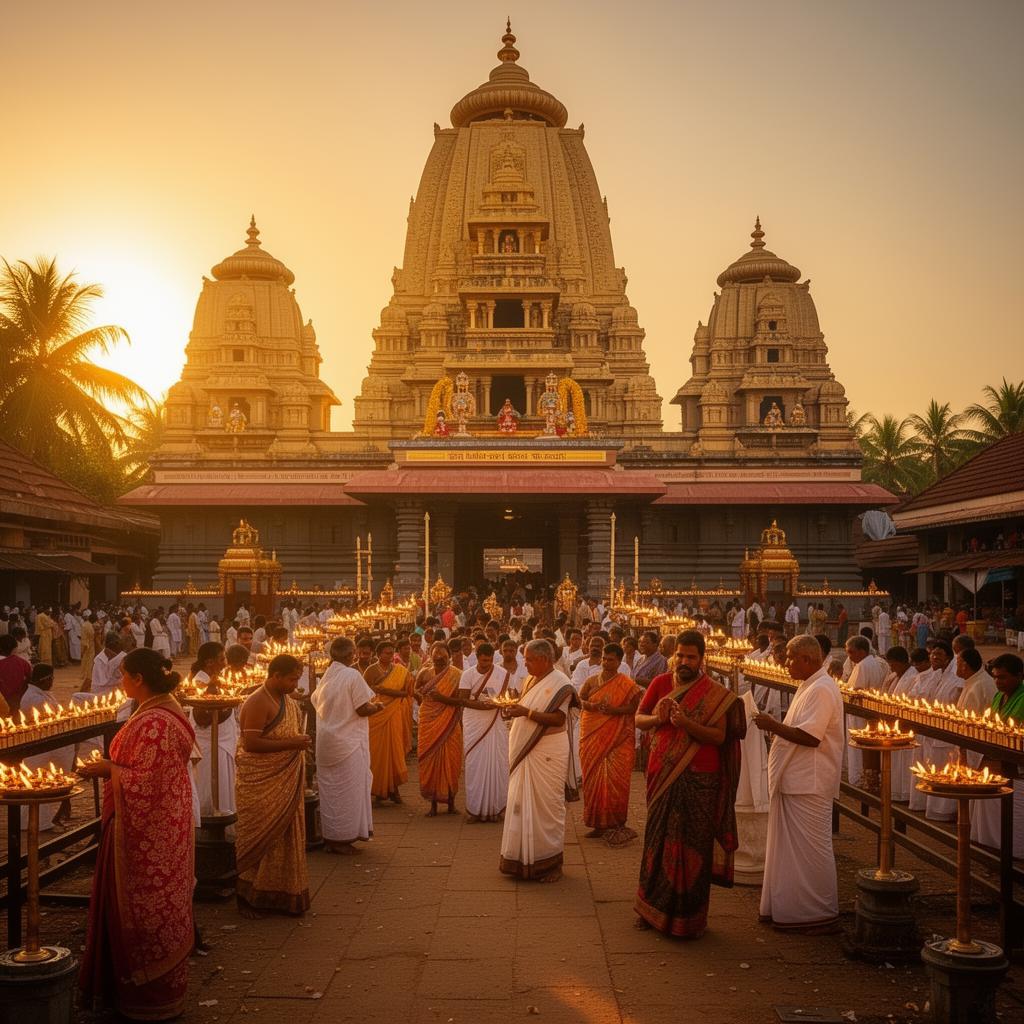
The Udupi Sri Krishna Matha temple at golden hour
Udupi Sri Krishna Matha — the heart of Dvaita devotion

Chapter VI · Līlās

Three Episodes from a Luminous Life

Episode 1

Three Visits to Badari

Direct darśana of Sage Vedavyāsa, who blessed him with the deepest insights of Vedānta.

Episode 2

The Udupi Krishna

A great block of gopi-chandana from a saved ship broke open to reveal a beautiful idol of Bāla Krishna — now worshipped daily at Udupi.

Episode 3

Conqueror in Debate

Defeated leading scholars across India and firmly established Dvaita as a great Vedāntic tradition.

Chapter VII · Granthāḥ

Sarva-Mūla Granthas

Thirty-seven works in all — commentaries, treatises and devotional hymns that form the foundation of Dvaita Vedanta.

Prasthāna-Trayī Bhāṣyas

  • Brahma Sūtra Bhāṣya
  • Commentaries on the Principal Upanishads
  • Bhagavad Gītā Bhāṣya

Tatparya Nirṇayas

  • Mahābhārata Tātparya Nirṇaya
  • Bhāgavata Tātparya Nirṇaya
  • Anu Vyākhyāna — detailed explanation of the Sūtra Bhāṣya

Polemical Works

  • Upādhi Khaṇḍana
  • Māyāvāda Khaṇḍana
  • Tattvodyota and other treatises refuting Advaita

Stotra

Words of the Acharya

॥ ॐ ॥

Dvādaśa Stotra · Praise of Hari

वन्दे वन्द्यं सदानन्दं वासुदेवं निरञ्जनम् ।

"I bow to the ever-blissful, the all-worshipful, the spotless Vāsudeva — the one Supreme Lord."

The mantra of refuge

ॐ नमो भगवते वासुदेवाय ॥

"Om, salutations to the Blessed Lord Vāsudeva — the independent Supreme Reality, the refuge of every soul."

Life Journey

A Life of Seventy-Nine Years

  1. 1238 CE

    Born in Pajaka, near Udupi, to Madhyageha Bhatta and Vedavati.

  2. Age 8

    Takes sannyāsa from Achyutaprekṣa; receives the names Pūrṇaprajña and Ānandatīrtha.

  3. Youth

    Displays prodigious strength and intelligence; subdues a demon possessing a bull.

  4. Pilgrimages

    Makes three journeys to Badarikāśrama and receives direct instruction from Vedavyāsa.

  5. Udupi

    Installs the sacred Udupi Krishna idol; establishes the Aṣṭa Maṭhas.

  6. 1317 CE

    Departs this world — tradition says he disappeared into the Himalayas to remain with Vyāsa.

The Champion of Devotional Dualism

Madhvacharya gave the world a clear, logical and deeply devotional vision of Vedanta. Through Dvaita he showed that God, the soul and the world are eternally real — and that the soul's destiny is endless loving service to Lord Vishnu. Through Udupi, the Aṣṭa Maṭhas and the Haridāsa tradition, his living legacy continues to inspire millions.

ॐ नमो भगवते वासुदेवाय ॥

"Om, salutations to the Blessed Lord Vāsudeva."

॥ श्री मध्वाचार्य की जय ॥