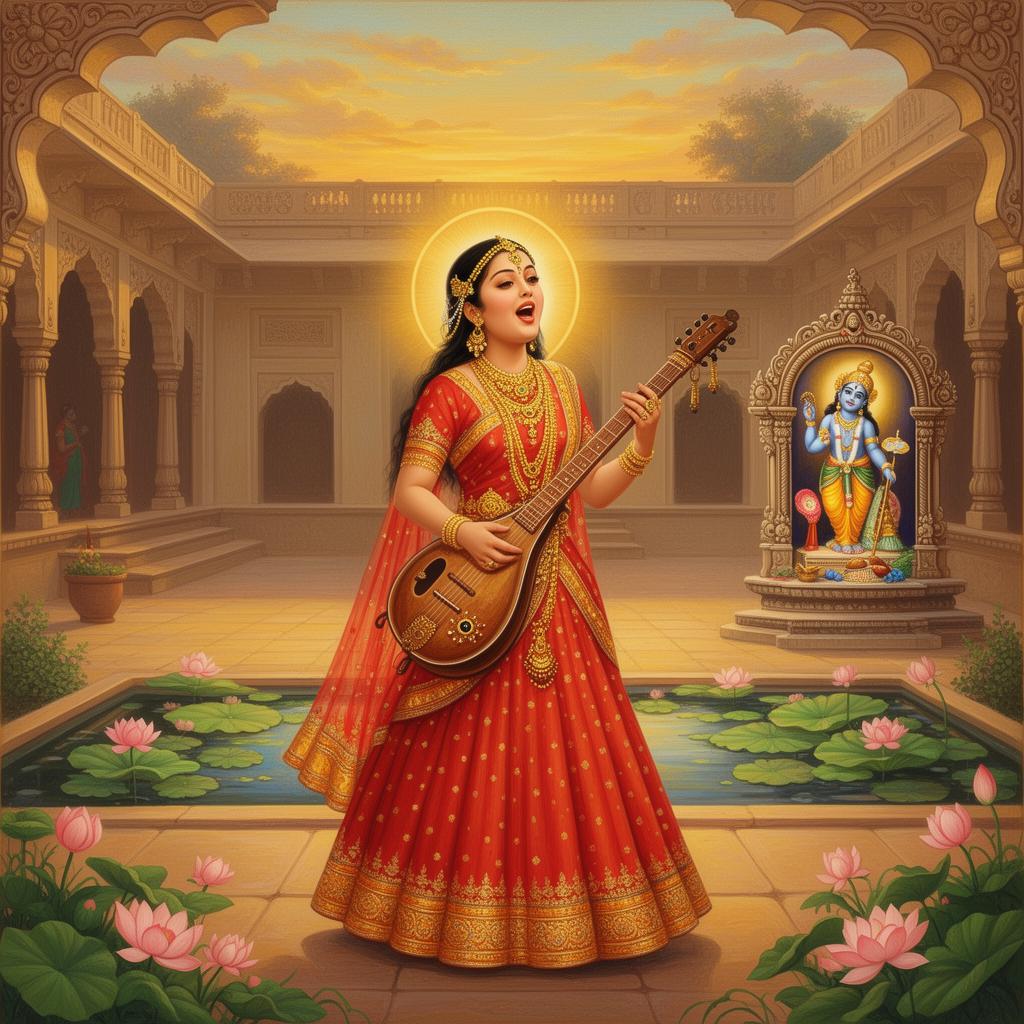
Mirabai

Saint · Bhakta-Kavayitrī

Mirabai

॥ मीराबाई ॥

The 16th-century Rajput princess who renounced a kingdom for the love of Lord Krishna — and whose bhajans of longing, courage and surrender still rise from every devotional gathering in Bhārata.

॥ ॐ ॥

16th CE

Era

Kudki, Rajasthan

Birthplace

~49 yrs

Lifespan

Dwarka

Final Abode

Introduction

The Princess Who Belonged Only to Krishna

॥ ॐ ॥

Mīrābāī (Hindi / Rajasthani: मीराबाई) — born in 1498 CE — is one of the most beloved saints of the Bhakti movement. A Rajput princess of the Rathore clan, she became renowned for her intense, passionate and unwavering devotion to Lord Krishna, whom she considered her one and only beloved.

She rejected the conventions of royal life, the expectations of her in-laws and even the boundaries of her own marriage in pursuit of divine love. Through her bhajans — sung in Rajasthani and Braj Bhāṣā — she gave voice to the highest emotional and ecstatic devotion, becoming one of the greatest female saints in the history of Sanatan Dharma.

Her message is timeless and fearless: when the heart truly belongs to God, no power on earth can claim it.
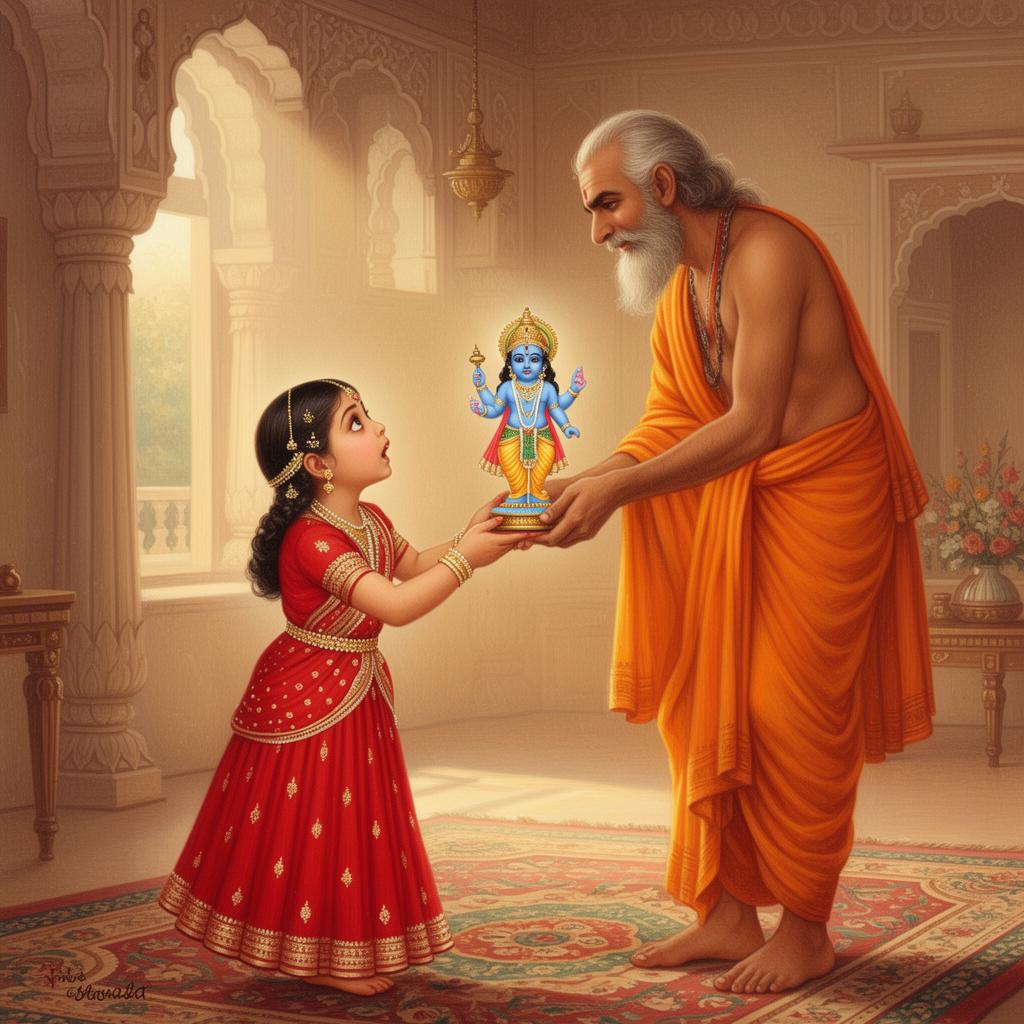
Young Mirabai receiving a Krishna idol from a wandering sadhu
The Krishna idol that became her lifelong companion

Chapter I

Birth, Childhood & the Gift of Krishna

Mīrā was born in Kudki, near Merta in Rajasthan, to Ratan Singh Rathore and Veer Bai. Tradition records that her mother passed away when she was very young; she was raised in the loving care of her grandfather Rao Dudaji, a devout Vaishnava.

As a small girl she received a small idol of Krishna from a wandering sādhu. From that day, the idol was her companion — she sang to it, danced before it and considered it her true beloved. Even as a child she would tell her family, "He is the one I am married to."

Chapter II · The Heart of Her Path

Three Moods of Divine Love

The bride's longing, the ache of separation, the joy of complete surrender.

प्रेम

Prema

Pure, ego-less love for Krishna — the highest form of bhakti.

विरह

Viraha

The sweet ache of separation — as precious as the bliss of union.

शरणागति

Śaraṇāgati

Total surrender — fearlessness born of belonging only to the Lord.

For Mīrā, devotion was not ritual — it was the unguarded outpouring of a heart in love. Social rank, gender and convention dissolved before that single flame.

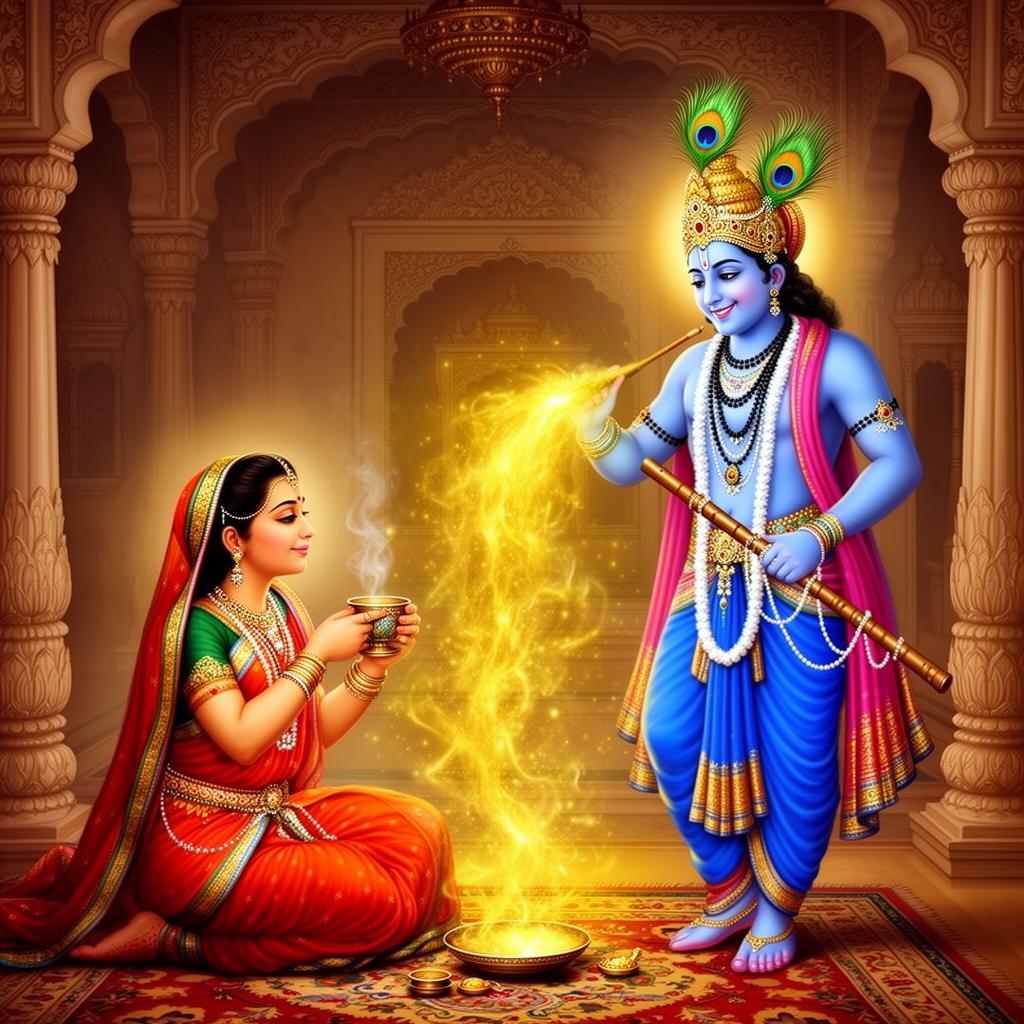
The cup of poison turning to nectar at Krishna's grace

Chapter III · Mewar

The Cup of Poison

After her marriage to Bhoj Rāj of Mewar, the royal household disapproved of her public devotion, her singing in temples and her association with wandering saints. A cup of poison was sent to silence her forever. Mīrā placed it before her Krishna, smiled, and drank it singing His name. By His grace, the poison turned to nectar — and her devotion grew only brighter.

मेरे तो गिरिधर गोपाल ॥

Chapter IV · Līlās

Three Episodes of Divine Grace

Episode 1

The Cup of Poison

Sent by her in-laws, she drank it chanting Krishna's name — and it turned to nectar by His grace.

Episode 2

The Snake in the Basket

A basket sent to her concealing a deadly serpent opened to reveal a fragrant garland of flowers.

Episode 3

Merging with the Lord

At Dwarka, with her final song, she stepped behind the temple curtain — and was never seen again, only her saree remained around the idol.

Chapter V · Padāvalī

The Bhajans of Mīrā

Songs born of love — simple in language, infinite in feeling.

Meera Padāvali

  • Hundreds of bhajans in Rajasthani & Braj Bhāṣā
  • Songs of longing, union and surrender
  • Sung in temples and homes across Bhārata

Immortal Bhajans

  • Mere to Giridhar Gopāl, dusro na koī
  • Pāyo jī maine Rām ratan dhan pāyo
  • Hari tum haro jan kī bhīr

Mood & Voice

  • The bride addressing her beloved Śyām
  • Simple, raw, emotionally direct
  • Free from caste, ritual and convention

Chapter VI · The Wandering Years

Vrindavan, Dwarka & the Final Merging

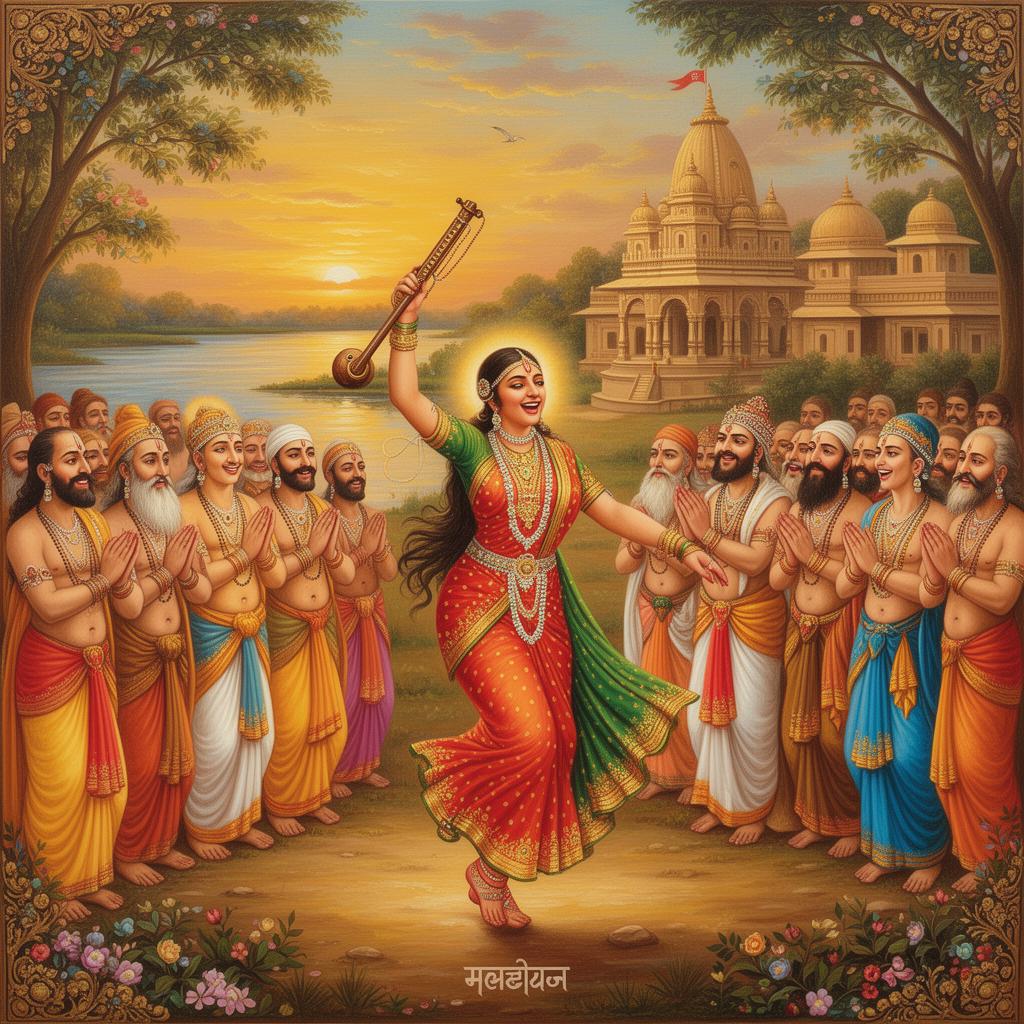
Eventually Mīrā left the palace altogether. Among the saints and sādhus of Vrindavan — the land of Krishna's līlās — she danced and sang freely for the first time, ektārā in hand. Her bhajans drew crowds from every walk of life.

Her final years were spent in Dwarka, at the temple of Dwarkadhish. Tradition records that, with one last song, she stepped behind the sanctum curtain — and merged into the idol itself. Only her ornaments remained.

Mirabai dancing with ektara among saints at Vrindavan
Vrindavan — singing freely at last

Padas of the Saint

Words of Mīrā

॥ ॐ ॥

Mirabai · The vow of her life

मेरे तो गिरिधर गोपाल, दूसरो न कोई ।

"Mine is only Giridhar Gopāl — Krishna alone is mine; there is no other."

Mirabai · The jewel of the Name

पायो जी मैंने राम रतन धन पायो ।

"I have found, O I have found, the priceless jewel-treasure of the Name of Rām — my true wealth."

Life Journey

From the Palace to the Sanctum

  1. 1498 CE

    Born in Kudki near Merta to Ratan Singh Rathore and Veer Bai of the Rajput Rathore clan.

  2. Childhood

    Raised by her grandfather Rao Dudaji; receives a Krishna idol from a wandering sadhu — her lifelong companion.

  3. 1516 CE

    Married to Bhoj Rāj, crown prince of Mewar — but her heart is already wholly Krishna's.

  4. Persecution

    Faces opposition from the royal family; survives the cup of poison and the snake in the basket.

  5. Pilgrimage

    Leaves the palace, takes refuge in Vrindavan with saints and sādhus, then journeys to Dwarka.

  6. ~1547 CE

    Tradition holds that she merged into the idol of Krishna at the Dwarkadhish temple.

The Eternal Lover of Krishna

Mīrābāī gave up royal comforts, faced persecution and chose the path of devotion over every worldly security. Through her fearless surrender and her songs of love, she showed that the highest relationship with God is pure, selfless and beyond every boundary. She remains a guiding light for every soul who dares to belong wholly to the Divine.

॥ जय श्री कृष्ण ॥

"Victory to Lord Krishna — the eternal Beloved of every devoted heart."

॥ मीराबाई की जय ॥