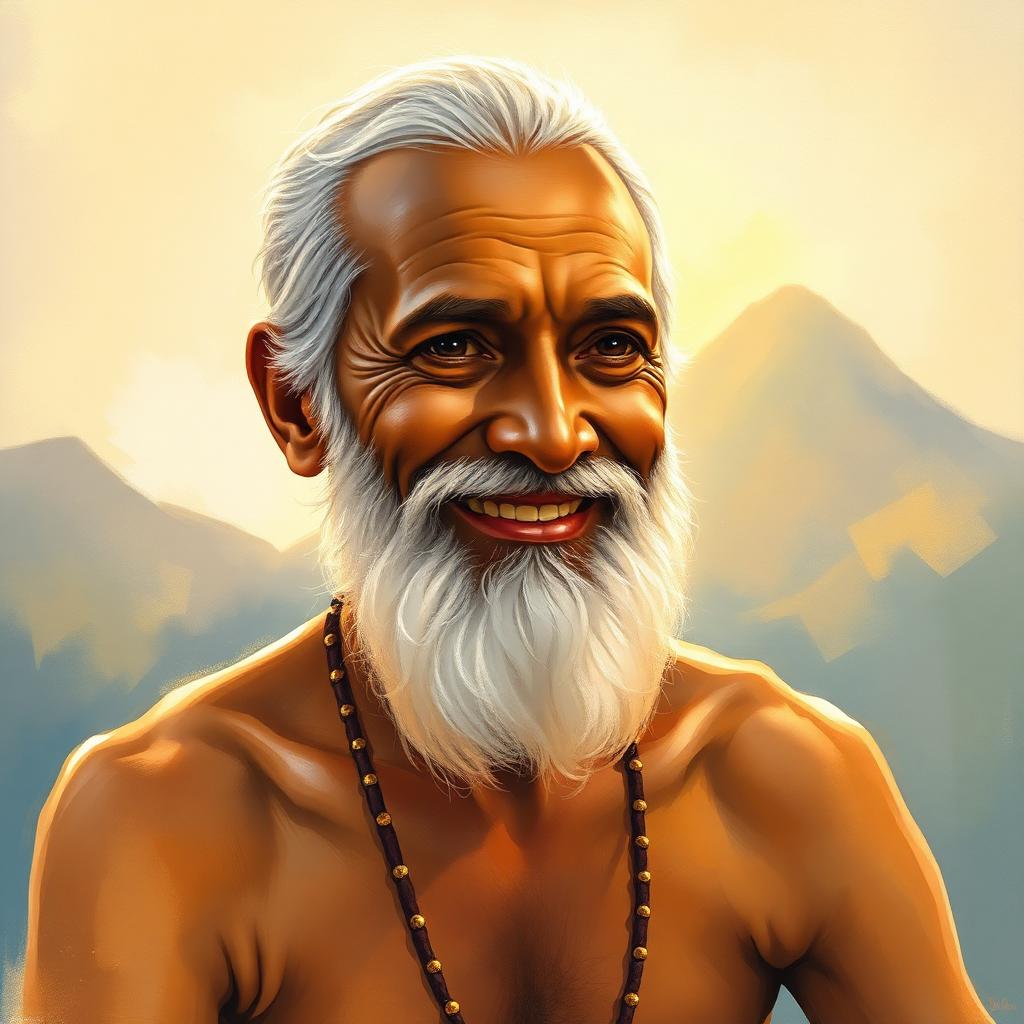
Ramana Maharshi

Saint · Sage of Aruṇācala

Ramana Maharshi

॥ श्री रमण महर्षि ॥

The silent sage at the foot of Aruṇācala — whose one question, 'Who am I?', is the most direct path Vedānta has ever known.

॥ ॐ ॥

1879–1950

Era

Tiruchuzhi

Birthplace

Aruṇācala

Abode

Ātma Vichāra

Path

Introduction

The Silent Sage of the Red Hill

॥ ॐ ॥

Ramana Maharshi — born Venkataraman Iyer on 30 December 1879 in Tiruchuzhi — is one of the greatest sages of the modern age. He wrote no systems, founded no order, sought no following. From the foot of Aruṇācala in Tiruvannamalai, his silent presence and a single question — "Who am I?" — drew seekers from every corner of the earth.

He is regarded as the purest 20th-century exponent of Advaita Vedānta — a living embodiment of the Upaniṣadic word: Tat Tvam Asi, "That Thou Art".

His teaching is not a doctrine but a turning of the gaze inward — to the Heart, where the Self has always been shining as I AM.
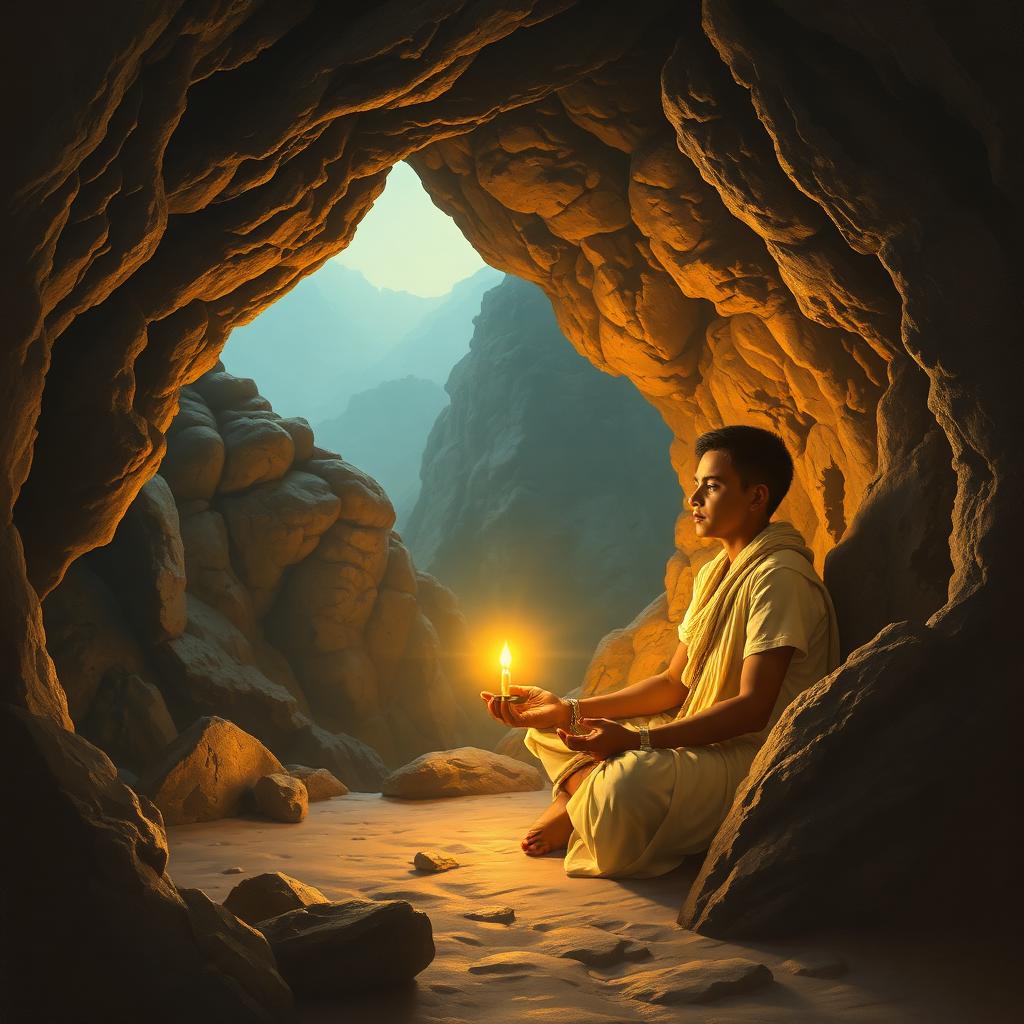
Young Ramana absorbed in silent meditation inside Virupaksha Cave on Arunachala
Virūpākṣa Cave — years of silent absorption

Chapter I

An Awakening at Sixteen

In July 1896, alone in his uncle's house in Madurai, a sudden fear of death overcame the boy Venkataraman. Instead of fleeing it, he lay down and entered it — "Who is it that is going to die? The body — but not the I that knows it."

In that single inquiry the body's claim dissolved, and what remained was pure, deathless Awareness — the Self. The schoolboy never returned. Soon after, he walked away from home with a one-way ticket toward the holy hill Aruṇācala.

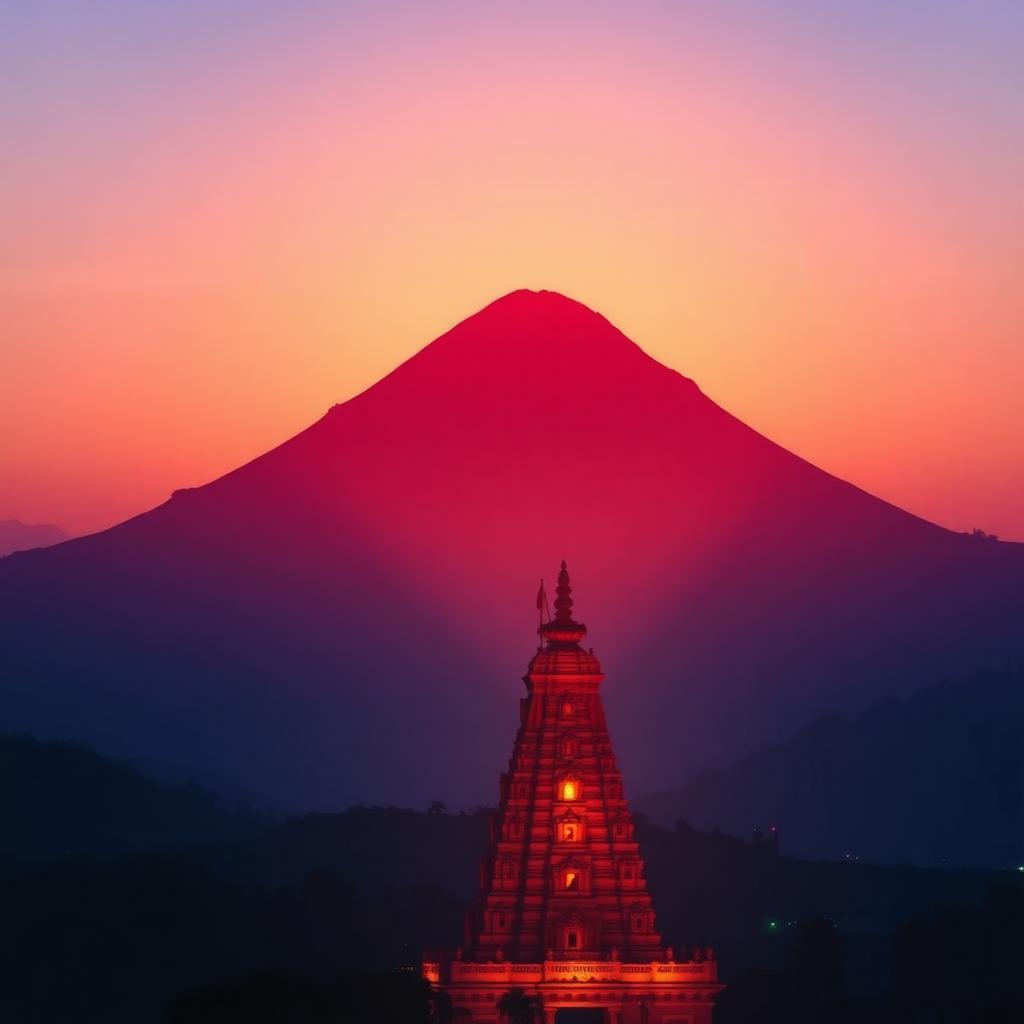
The sacred Arunachala hill glowing red at sunrise above the temple of Tiruvannamalai

Chapter II · The Holy Hill

Aruṇācala — Śiva as a Mountain

For Bhagavān Ramana, the red hill of Aruṇācala was no mere mountain but the living form of Śiva Himself — the very Self made visible. "Aruṇācala — even the thought of you grants liberation." From the day he set foot on it in 1896 until his last breath in 1950, he never once left its presence.

अरुणाचलं तं स्मरणादेव मुक्तिः ॥

"Mere remembrance of Aruṇācala bestows liberation."

Chapter III · The Heart of His Teaching

Three Pillars of His Message

No new doctrine — only the most direct return to the Self that has always been here.

कोऽहम्

Ko'ham — Who am I?

The one direct inquiry that traces every thought back to the Self that thinks it.

मौनम्

Maunam — Silence

The highest teaching — Bhagavān's living silence transmitted Reality without a word.

अद्वैतम्

Advaitam — Non-duality

The Self alone is real; the world a play of the mind; liberation is recognition, not attainment.

"Your own Self is the real Guru. Turn inward and realise it."

Chapter IV · The Direct Path

Inquiry, Surrender & the Written Word

One method, two complementary movements, and a handful of slim books that hold the whole teaching.

Self-Inquiry

  • Ask 'To whom does this thought arise?'
  • Trace the 'I'-thought back to its source
  • Abide as the pure 'I am' — the Heart

Aids on the Path

  • Surrender to the Self / Iṣṭa
  • Sat-saṅga in the presence of the Sage
  • Repetition (japa) and devotion to Aruṇācala

Major Works

  • Nan Yar? — Who Am I?
  • Uḷḷadu Nāṟpadu — Forty Verses on Reality
  • Upadeśa Sāram & Akṣaramaṇamālai

Chapter V · Episodes of Grace

Three Stories from a Silent Life

Episode 1

The Death Experience

Seized by sudden fear of death at sixteen, he lay down and asked, 'Who is it that dies?' The body fell away, the I remained — and remained forever.

Episode 2

The Silent Teaching

Many seekers found that a single glance from Bhagavān answered the question they had not yet asked. Silence itself was his upadeśa.

Episode 3

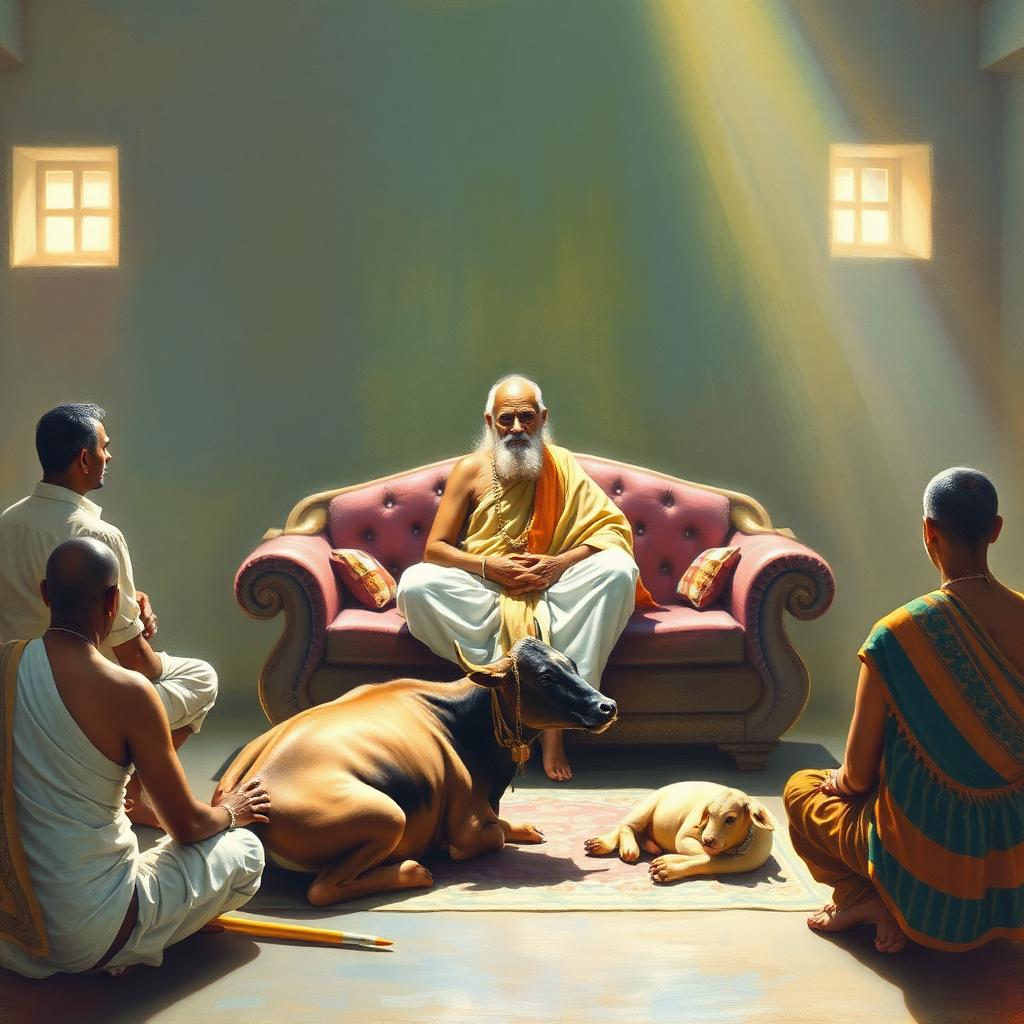
Lakṣmī the Cow

The cow Lakṣmī walked daily to his hall, rested her head on his lap, and at her last hour received from him conscious liberation.

Chapter VI · Sri Ramanasramam

An Ashram That Grew Around Silence

Bhagavān never built an institution; the Sri Ramanasramam simply grew around him at the foot of Aruṇācala. From its open hall, the silence radiated to seekers worldwide — Paul Brunton, Arthur Osborne, Robert Adams and countless others took the question back with them: Who am I?

Even when cancer claimed his body, he watched the operations as if they were happening to another. "They say I am leaving — but where could I go? I am always here."

Bhagavan Ramana seated in the Ashram hall with devotees and the cow Lakshmi
The hall of silence — devotees and Lakṣmī

Words of Bhagavān

From Nan Yar & Uḷḷadu Nāṟpadu

॥ ॐ ॥

Bhagavān Ramana · Uḷḷadu Nāṟpadu

உள்ளது நாற்பது — அறிவே நாம் ॥

"What exists is one alone — that very Awareness is our true Self."

Bhagavān Ramana · Nan Yar?

நான் யார்? — அது அறிவே ॥

"Who am I? — I am pure Awareness. Inquire steadily, and the false 'I' dissolves into the real."

Life Journey

A Life at the Foot of the Hill

  1. 1879

    Born Venkataraman Iyer on 30 December in Tiruchuzhi, Tamil Nadu.

  2. 1896

    At sixteen, the death-experience in Madurai — sudden, irreversible awakening to the Self.

  3. 1896

    Leaves home and arrives at Aruṇācala, Tiruvannamalai — never to leave again.

  4. 1899–1916

    Years of silent absorption in Virūpākṣa Cave on the holy hill.

  5. 1916–22

    Moves up to Skandāśrama with his mother and a small circle of devotees.

  6. 1922

    Settles at the foot of Aruṇācala; Sri Ramanasramam slowly grows around his silence.

  7. 1930s–40s

    Seekers from across the world arrive — Talks, Day by Day and other records are compiled.

  8. 1950

    Enters mahā-samādhi on 14 April; a great comet crosses the sky over Aruṇācala.

The Eternal Silence of the Self

Bhagavān Ramana did not give the world a new religion. He gave it back its own Self. Nan Yar?, Talks with Sri Ramana Maharshi and the living silence of Sri Ramanasramam continue to point every sincere seeker to the Heart — where the question dissolves into the One who was asking.

॥ ॐ नमो भगवते श्रीरमणाय ॥

"Om — salutations to Bhagavān Sri Ramana, the embodiment of the Self."

॥ अरुणाचलशिवाय नमः ॥