The Atharvaveda

Shastra · Atharvaveda

The Atharvaveda

॥ अथर्ववेदः ॥

The Veda of the householder and healer — charms, herbs, protection and the cosmic philosophy of Skambha. Where ritual meets the lived reality of human life.

॥ ॐ ॥

20

Books (Kāṇḍas)

730

Hymns (Sūktas)

~5,977

Mantras

1200–900 BCE

Composed

Introduction

The Knowledge of Everyday Life

॥ ॐ ॥

The Atharvaveda (Sanskrit: अथर्ववेद — from atharvan, the fire priest, and veda, knowledge) is the fourth and final Veda. Where the Rigveda sings, the Yajurveda choreographs and the Samaveda chants, the Atharvaveda heals, protects and provides for the practical needs of daily life.

It contains hymns, spells, charms and incantations for healing disease, warding off evil, securing prosperity, love, harmony and longevity. Alongside these practical concerns are profound philosophical hymns on the cosmos, time and the ultimate reality.

Often called the Brahmaveda or Atharvāṅgirasaḥ, it bridges elite Vedic ritual with folk traditions, medicine and protective magic — making the Veda relevant to every household, not just the grand sacrificial arena.
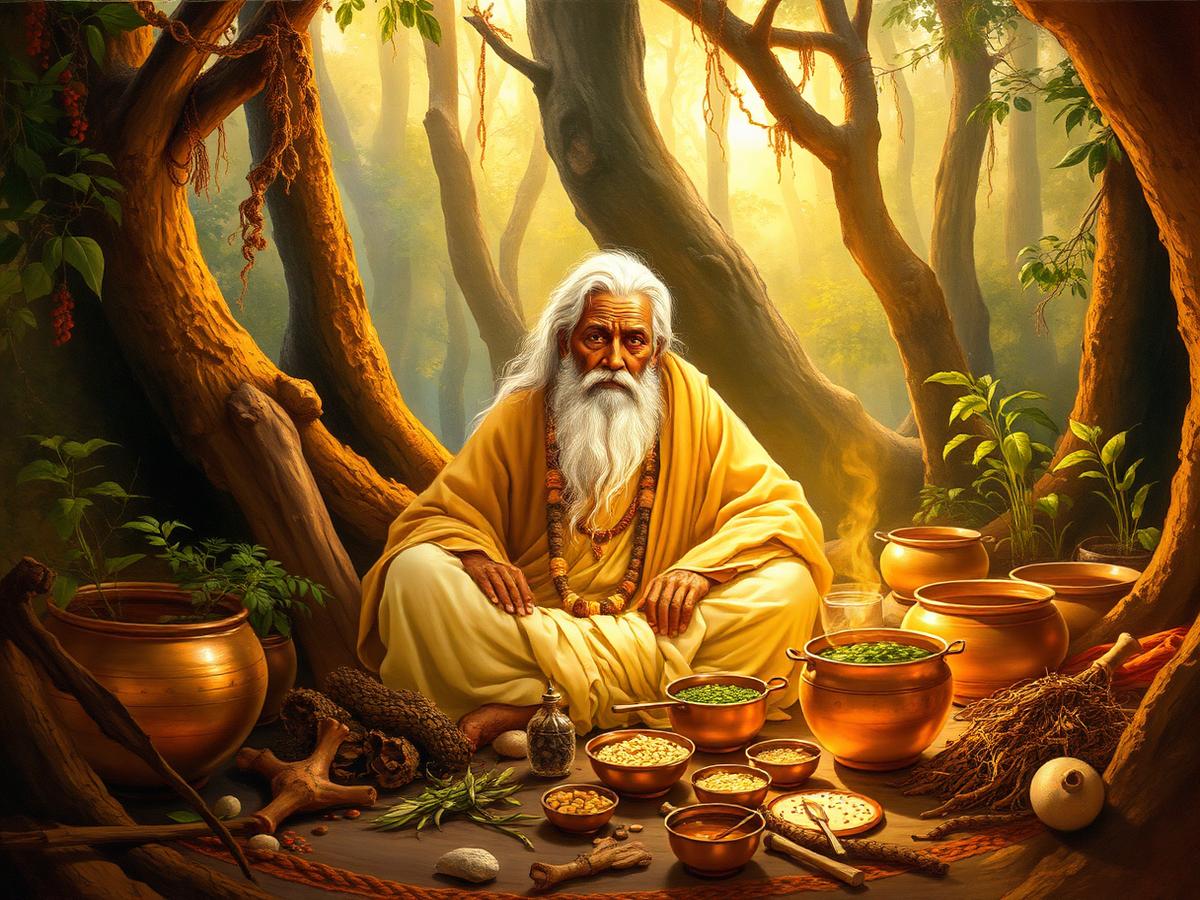
Vedic sage preparing healing herbs
The Atharvan as healer — herbs, mantra and intention

Chapter I

History & Cultural Background

The Atharvaveda belongs to the later Mantra period, with its core compilation dated to roughly 1200–900 BCE — the early Indian Iron Age. It even mentions kṛṣṇa ayas ("black metal" — iron), placing it firmly in that era.

It incorporates material from both Indo-Aryan and indigenous sources, which gives it a distinctive character — more concerned with demons, diseases, herbs and everyday anxieties than the grand cosmic hymns of the Rigveda. Ancient tradition was at first reluctant to accept it as a full Veda; for a long time only three Vedas were recognised. Its formal acceptance as the fourth Veda came gradually in the later first millennium BCE.

Geographically the text shows connection with the Kuru and Pancala regions. It reflects a settled society concerned with health, protection from malevolent forces, agricultural success, family harmony and royal power — the lived experience of ordinary people.

Chapter II

The Two Surviving Shakhas

Of nine recensions mentioned in antiquity, two survive in substantial form.

North & Central India

Śaunakīya

The most widely studied recension today — 20 kāṇḍas, 730 sūktas, ~6,000 mantras arranged by increasing hymn length.

Odisha (rediscovered)

Paippalāda

Considered older in some layers. Rediscovered in Odisha palm-leaf manuscripts in the 20th century — preserves unique content.

Chapter III

Eight Streams of Knowledge

From healing and prosperity to royal rites and the philosophy of Brahman.

Bhaiṣajya

Healing — diseases, cures, herbs. Roots of Ayurveda.

Āyuṣya

Prayers for long life, vitality and good health.

Pauṣṭika

Welfare, prosperity, abundance of cattle and crops.

Abhicārika

Protection — warding off evil and hostile forces.

Prāyaścitta

Expiatory and corrective rites for transgressions.

Rājakarma

Royal rites — consecration, victory and statecraft.

Brahmanya

Speculation on Brahman and the ultimate nature of reality.

Gṛhya Rites

Domestic life — initiation, marriage and funeral rites.

Atharvaveda 4.12 · Healing Charm

The Bone-Knitting Hymn

"Let marrow be put together with marrow, and joint together with joint; together let what of the flesh has fallen apart, together sinew and together your bone grow."

Invoking the herb Rohiṇī

Sacred Pharmacopoeia

Herbs of the Atharvan

Rohiṇī

Ficus infectoria — invoked to mend fractures.

Kuṣṭha

Saussurea — antidote for fevers and possession.

Apāmārga

Achyranthes aspera — wards off demons and disease.

Arundhatī

Climbing herb — heals wounds, knits flesh.

Pippalī

Long pepper — vitality and immunity.

Darbha

Sacred kuśa grass — purification of body and mind.

Mother Earth — Prithvi

Atharvaveda 12.1 · Pṛthvī Sūkta

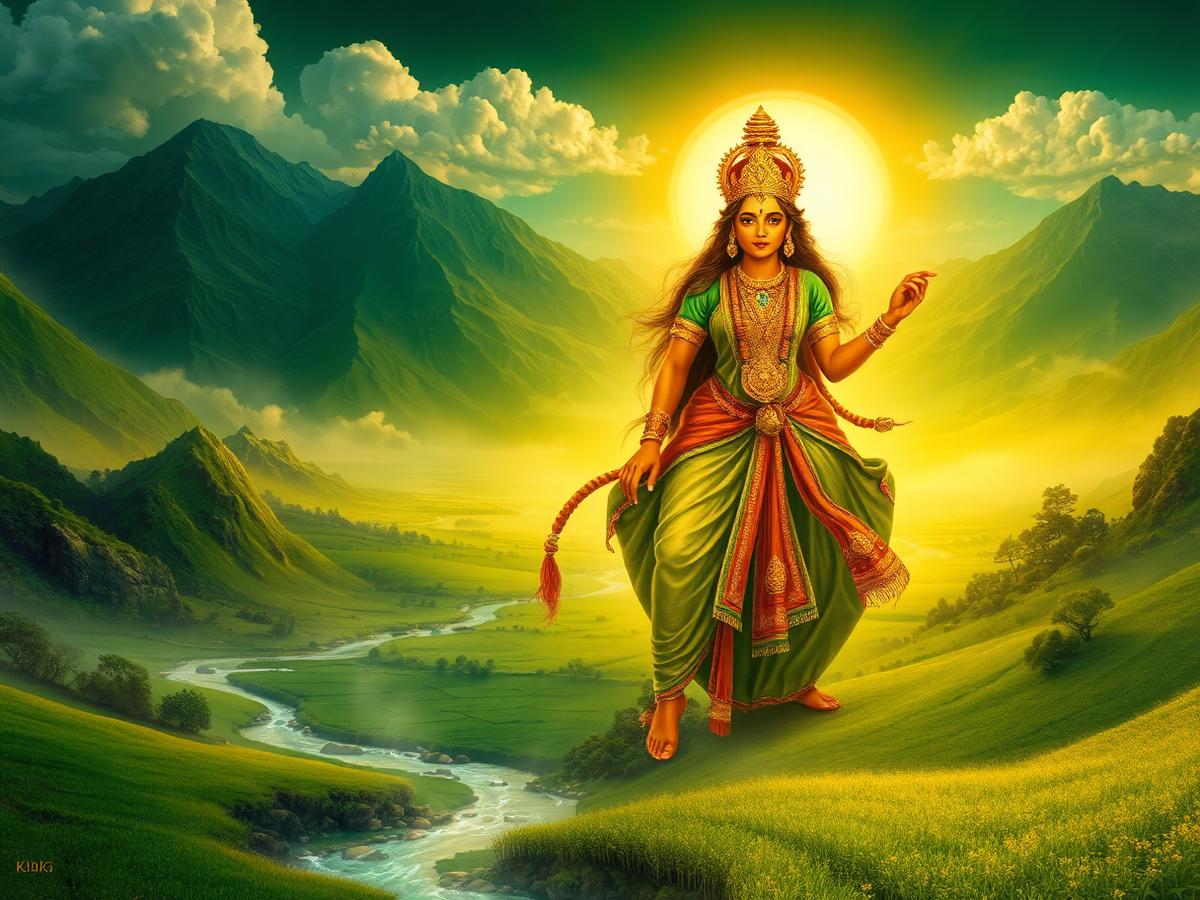
Hymn to Mother Earth

One of the most majestic ecological hymns of antiquity — 63 verses honouring the Earth as mother, sustainer of all life. It prays for her stability, fragrance, fertility and forbearance, vowing to live in harmony with her.

माता भूमिः पुत्रोऽहं पृथिव्याः ॥

"The Earth is my mother, and I am her son."

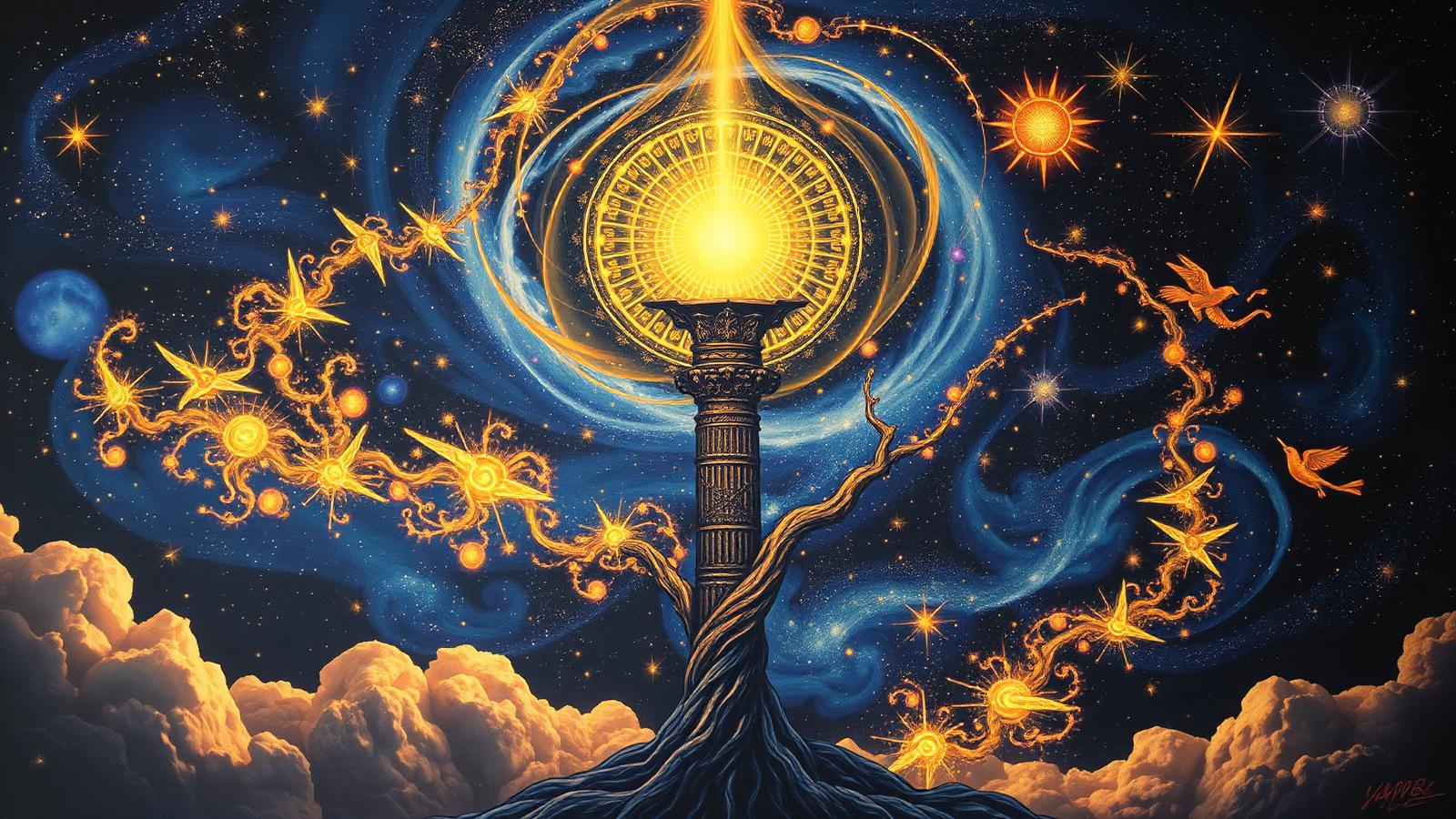
Skambha — the cosmic pillar supporting the universe
Skambha — the cosmic pillar that supports all being

Atharvaveda 10.7 · Cosmology

Skambha — The Cosmic Pillar

One of the most philosophically daring hymns of the Veda. It asks: what supports the universe? What stands beneath being and non-being, the gods and the worlds? The answer is Skambha — the cosmic pillar, an early intuition of the one principle (eka tat) beyond duality.

Alongside hymns to Kāla (Time as creator and destroyer) and to the unity of all gods, Skambha shows the Atharvaveda's monistic vision — laying the ground for the Upanishads to come.

Māṇḍūkya Upaniṣad 1

Om & the Four States

The shortest of the principal Upanishads — yet its 12 verses analyse the syllable Om (A-U-M-silence) as the map of all consciousness: waking, dreaming, deep sleep and turīya — the transcendent fourth.

ॐ इत्येतदक्षरमिदं सर्वम् ।
तस्योपव्याख्यानं भूतं भवद्भविष्यदिति सर्वमोङ्कार एव ॥

"Om — this syllable is all this. All that is past, present and future is the syllable Om."

Om and the four states of consciousness
Om — A · U · M · silence (turīya)

Chapter IV

Attached Literature

From practical charm to the highest Vedantic inquiry.

Brahmana

Gopatha Brāhmaṇa

The only surviving Brahmana of the Atharvaveda — ritual exegesis, myths and an embedded Aranyaka.

Upanishad

Muṇḍaka Upaniṣad

Distinguishes higher knowledge (parā vidyā) from lower (aparā vidyā). Famous metaphor of two birds on a tree.

Upanishad

Māṇḍūkya Upaniṣad

Analyses the syllable Om and the four states of consciousness — waking, dreaming, deep sleep, and turīya.

Upanishad

Praśna Upaniṣad

Six questions to the sage Pippalāda on creation, prāṇa (vital force) and the nature of Brahman.

Muṇḍaka Upaniṣad 3.1.1

द्वा सुपर्णा सयुजा सखाया समानं वृक्षं परिषस्वजाते ।
तयोरन्यः पिप्पलं स्वाद्वत्त्यनश्नन्नन्यो अभिचाकशीति ॥

"Two birds, companions and friends, cling to the same tree. One eats the sweet fruit; the other looks on without eating."

The individual soul and the Supreme Self — the metaphor at the heart of Vedanta.

Oral Preservation

Carried by Atharvan priestly families with the Kauśika Sūtra detailing every ritual procedure.

Living Commentaries

Sayana's classical commentary; Whitney & Lanman for Shaunakiya; Bhattacharya and Griffiths for Paippalāda.

Continuing Practice

Healing and protective charms still echo in Ayurvedic, folk and household ritual traditions across India.

Chapter V

Significance & Legacy

Foundation of Ayurveda

Oldest literary source of Indian medicine — herbs, diagnostics and therapies that seeded Caraka and Suśruta.

Folk & Tantric Roots

Amulets, mantras and exorcism that flowed into later tantra, folk Hinduism and regional healing traditions.

Vedantic Depth

The Mundaka and Mandukya remain foundational scriptures of Advaita Vedanta and the meditation on Om.

Atharvaveda 7.52 · Hymn of Unity

संज्ञानं नः स्वेभिः संज्ञानमरणेभिः ॥

"Give us agreement with our own; with strangers give us unity."

॥ ॐ ॥

The Veda of Healing & Human Flourishing

If the Rigveda sings of the gods, the Yajurveda directs the ritual action, and the Samaveda elevates through melody, the Atharvaveda grounds everything in the lived reality of human beings — offering protection, health and the practical means to flourish while pointing toward the transcendent.