The Samaveda

Shastra · Samaveda

The Samaveda

॥ सामवेदः ॥

The Veda of melodies — where sacred sound itself becomes the bridge to the divine. The fountainhead of Indian classical music and the philosophy of nāda-brahman.

॥ ॐ ॥

1,875

Total Verses

1,549

Unique Verses

3

Surviving Recensions

1200–1000 BCE

Composed

Introduction

The Knowledge of Sacred Song

॥ ॐ ॥

The Samaveda (Sanskrit: सामवेद — from sāman "melody, song, chant" and veda "knowledge") is the third of the four Vedas — the Veda of Melodies. While the Rigveda offers poetic hymns and the Yajurveda the prose formulas of ritual, the Samaveda transforms selected Rigvedic verses into sāmans — melodic chants sung during the Soma sacrifice by the Udgātri priest.

It is not merely a text to be read but a living musical score — meant to be heard, sung and experienced. Its purpose is liturgical: to invoke divine presence, elevate the ritual atmosphere, and harness the spiritual power of sacred sound (nāda).

The Samaveda stands as the ancient root of Indian classical music, dance and the entire philosophy of sound — a tradition where the vibration of a syllable carries the seed of cosmic truth.
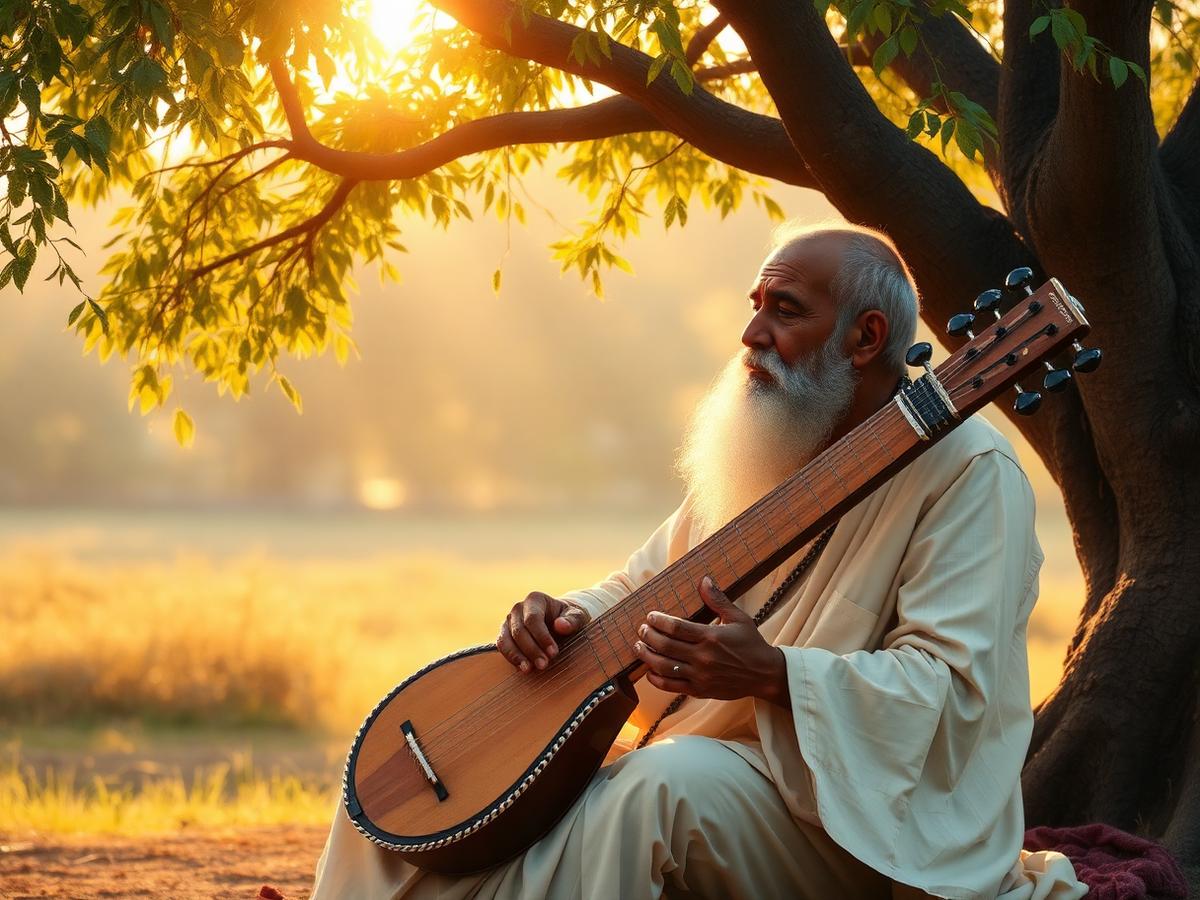
Sage with veena chanting Samavedic melodies
The chanter with the veena — sound as offering

Chapter I

History & Musical Evolution

The Samaveda Samhita belongs to the post-Rigvedic Mantra period, composed roughly between 1200 and 1000 BCE. Its attached Brahmanas and Upanishads emerged in the centuries that followed, with the Chandogya Upanishad placed around the 8th–6th centuries BCE.

It represents a creative evolution: hymns from the Rigveda — especially from Mandalas 8 and 9 rich in Soma themes — were selected, rearranged and set to pre-existing or newly composed melodies. This shift reflects a growing emphasis on the sonic and performative dimensions of ritual.

The text preserves some of the world's oldest surviving musical notations and demonstrates how sound itself was understood as a sacred, transformative force capable of bridging the human and divine realms.

Chapter II

The Three Living Shakhas

Surviving recensions — each preserving subtle variations of melody and notation.

Śākhā

Kauthuma

Gujarat, UP, Odisha, Bengal

The most widespread recension today. Best-published melodic tradition with detailed notation.

Śākhā

Rāṇāyanīya

Maharashtra, Karnataka, AP

Closely related to Kauthuma with subtle variations in melodies and arrangement.

Śākhā

Jaiminiya

Karnataka, Tamil Nadu, Kerala

Preserves the most archaic chanting style — considered the oldest living musical tradition.

Chapter III

Text & Melody — The Dual Architecture

A musical score: the Ārcika provides the words, the Gāna provides the melody.

Ārcika · Verse

Pūrvārcika

585 single-stanza verses, arranged by deity — beginning with Agni and Indra.

Ārcika · Verse

Uttarārcika

Verses arranged in ritual sequence for use in the Soma yajna.

Gāna · Melody

Grāmagēya

Public 'village songs' — melodies for performance in communal sacrifices.

Gāna · Melody

Āraṇyagēya

Private 'forest songs' — meditative chants for solitary contemplation.

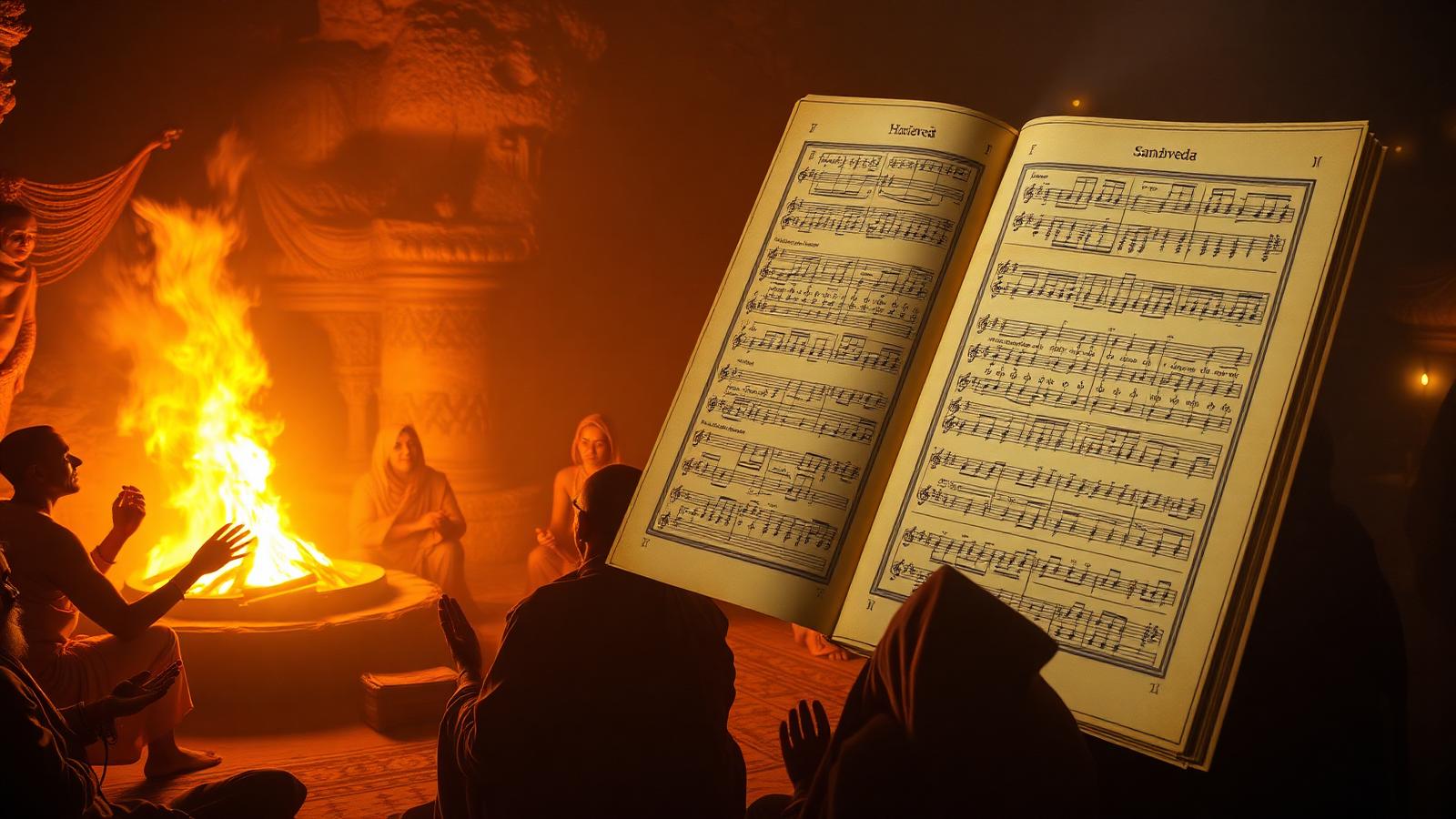
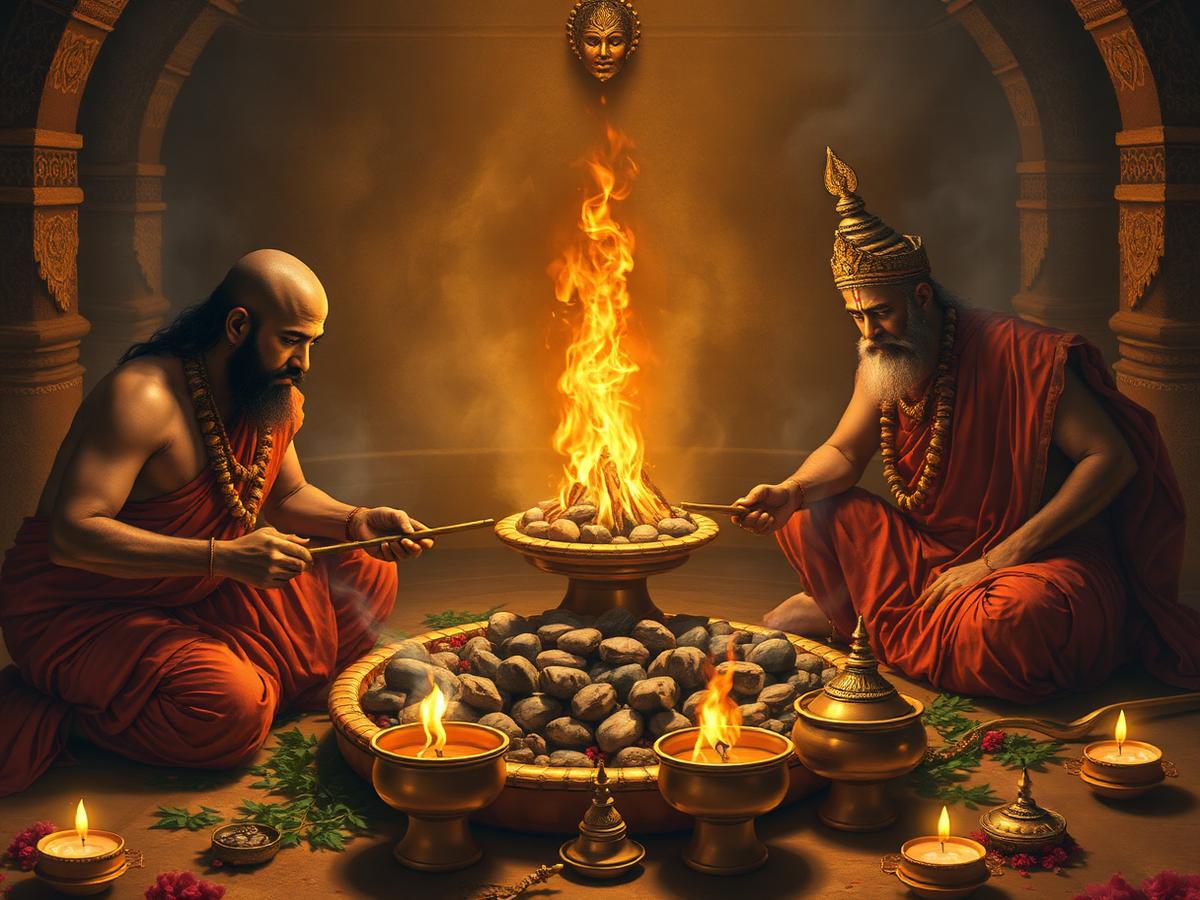
Soma yajna ritual with priests and sacred fire
The Soma sacrifice — the heart of Samavedic chanting

The Soma Yajna

Songs for the Sacred Drink

The Samaveda is fundamentally liturgical, centred on the elaborate Soma sacrifice. Its chants accompany the pressing, offering and consumption of Soma — the sacred plant/ritual drink believed to grant inspiration, strength and a glimpse of immortality.

The Udgātri sings these melodies at key moments to invoke the gods and sanctify the ritual space — alongside the Hotri (Rigveda) and Adhvaryu (Yajurveda) priests. Together they form the complete sonic framework of the yajña.

Sacred Sound

Stobha — The Mystic Syllables

Special syllables inserted into chants to fit melody and create rhythmic flow. Their power lies in vibration rather than literal meaning — echoing the later traditions of bīja (seed) mantras.

o gnā i

Elongated invocation flourish

vā i

Rhythmic punctuation syllable

tā yā i

Sustained melodic embellishment

hāu

Resonant breath of praise

huvā

Sacred call to the deities

auhovā

Climactic chant cadence

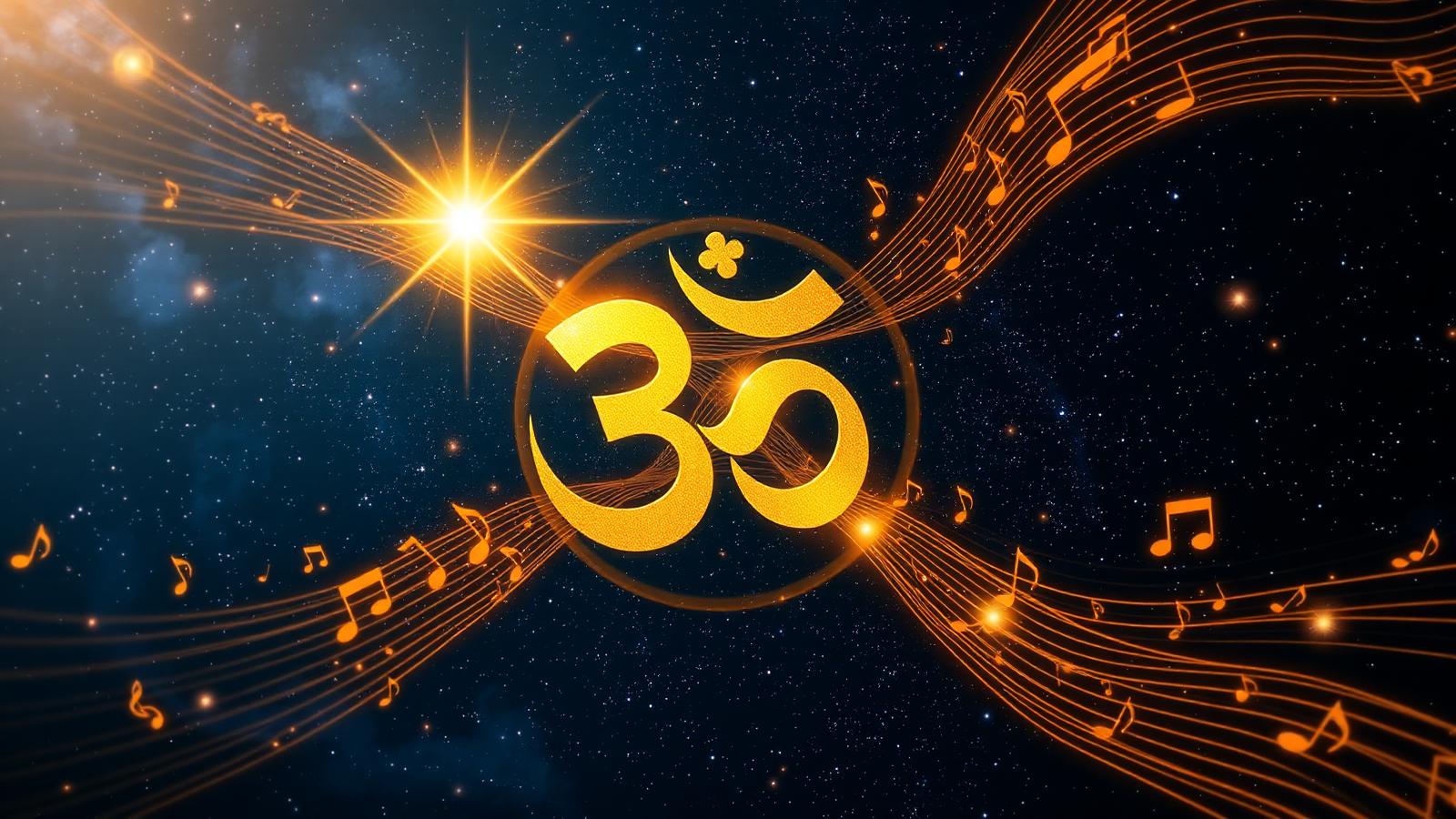
Cosmic Om with sound waves

Chāndogya Upanishad 1.1

Om — The Udgītha

The primary Samavedic chant is the udgītha — identified with the syllable Om. To meditate upon Om as the essence of every chant, every breath, every being, is — the Chandogya teaches — a direct path to spiritual elevation.

ॐ इत्येतदक्षरमुद्गीथमुपासीत ॥

"Meditate upon this syllable Om — the udgītha."

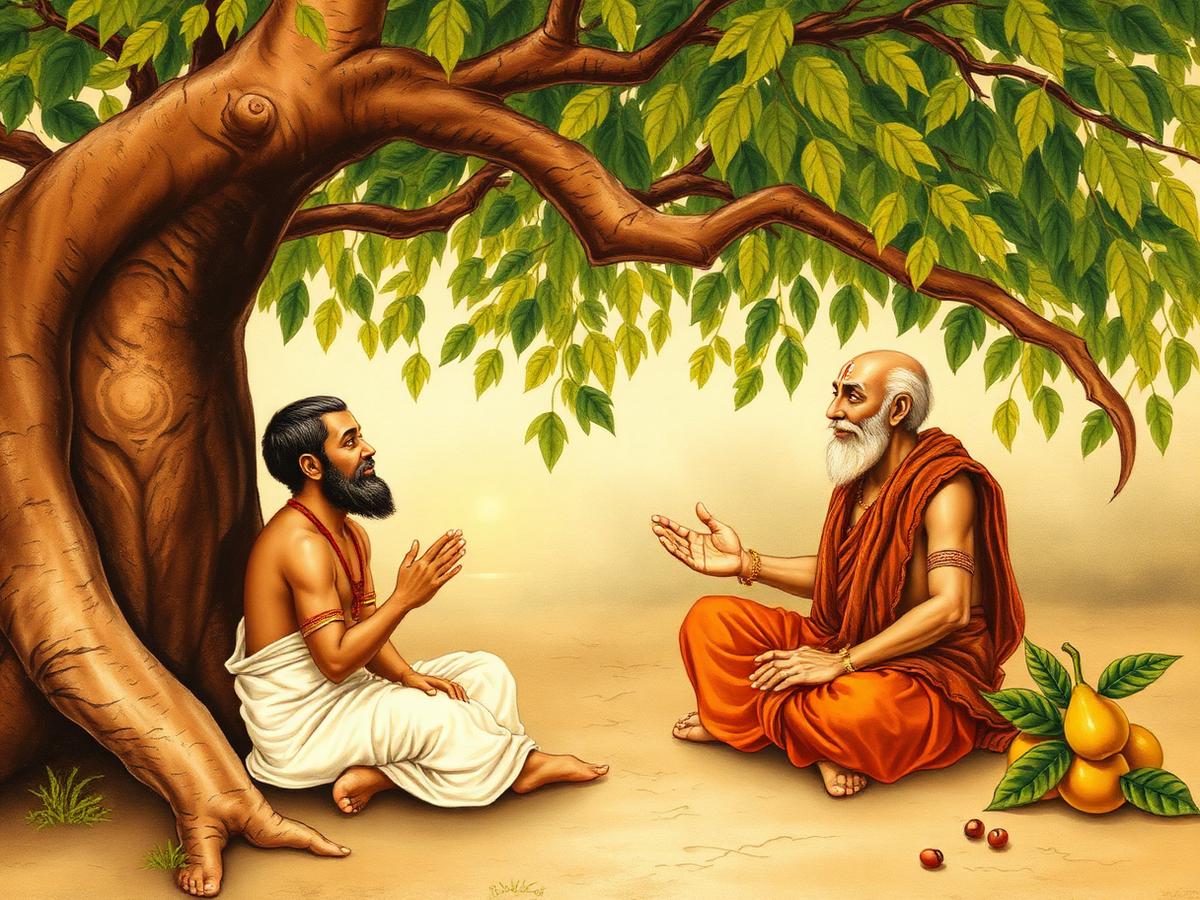
Uddalaka Aruni teaching Shvetaketu — Tat Tvam Asi
Uddalaka Aruni instructs Śvetaketu — the great mahāvākya

Chāndogya 6.8.7

Tat Tvam Asi

"Thou Art That" — the supreme identification of Atman with Brahman, taught by Uddalaka Aruni to his son Śvetaketu. One of the four mahāvākyas at the heart of Advaita Vedanta.

स आत्मा । तत्त्वमसि श्वेतकेतो ॥

"That is the Self. That thou art, O Śvetaketu."

Chapter IV

Attached Literature

From melody to meaning to liberating knowledge — the arc of Samavedic thought.

Brahmana

Pañcaviṃśa (Tāṇḍya) Brāhmaṇa

The major Brahmana of the Kauthuma school — vast ritual exegesis and symbolic interpretation of Samavedic chants.

Brahmana

Jaiminiya Brāhmaṇa

Attached to the Jaiminiya recension — narratives, myths and early philosophical reflection.

Upanishad

Chāndogya Upanishad

One of the oldest and longest principal Upanishads. Source of 'Tat Tvam Asi' and the supreme meditation on Om as udgītha.

Upanishad

Kena Upanishad

Embedded in the Talavakara Brahmana — explores Brahman as the unseen power behind every perception and action.

Oral Transmission

Preserved by specialised priestly lineages with precise intonation, rhythm and in some traditions, hand gestures.

Earliest Notation

The Samaveda preserves the world's oldest surviving system of musical notation — syllabic and numerical symbols above the text.

Living Commentaries

Sayana's classical commentary; W. Caland and modern scholarship; Shankara's bhāṣya on the Chandogya Upanishad.

Chapter V

Significance & Legacy

Fountainhead of Music

The seven svaras, raga, tala and the aesthetic of rasa all trace their origin to Samavedic chanting.

Nāda Brahman

Sound as ultimate reality — the foundation of nāda yoga, mantra, tantra and bhakti traditions.

Living Tradition

Still chanted in Vedic yajnas and temple rituals across India — UNESCO recognised intangible heritage.

Bhagavad Gītā 10.22

वेदानां सामवेदोऽस्मि ॥

"Of the Vedas I am the Sāmaveda." — Krishna proclaims its supreme status among scriptures.

॥ ॐ ॥

The Transformative Power of Sacred Sound

If the Rigveda is the inspired poetry of praise and the Yajurveda the precise choreography of action, the Samaveda is the sublime melody that carries the soul upward — reminding us that the ultimate reality can be approached not only through thought or deed, but through the pure, transformative power of sacred song.