The Bhagavad Gita

Shastra · Bhagavad Gītā

The Bhagavad Gita

॥ श्रीमद्भगवद्गीता ॥

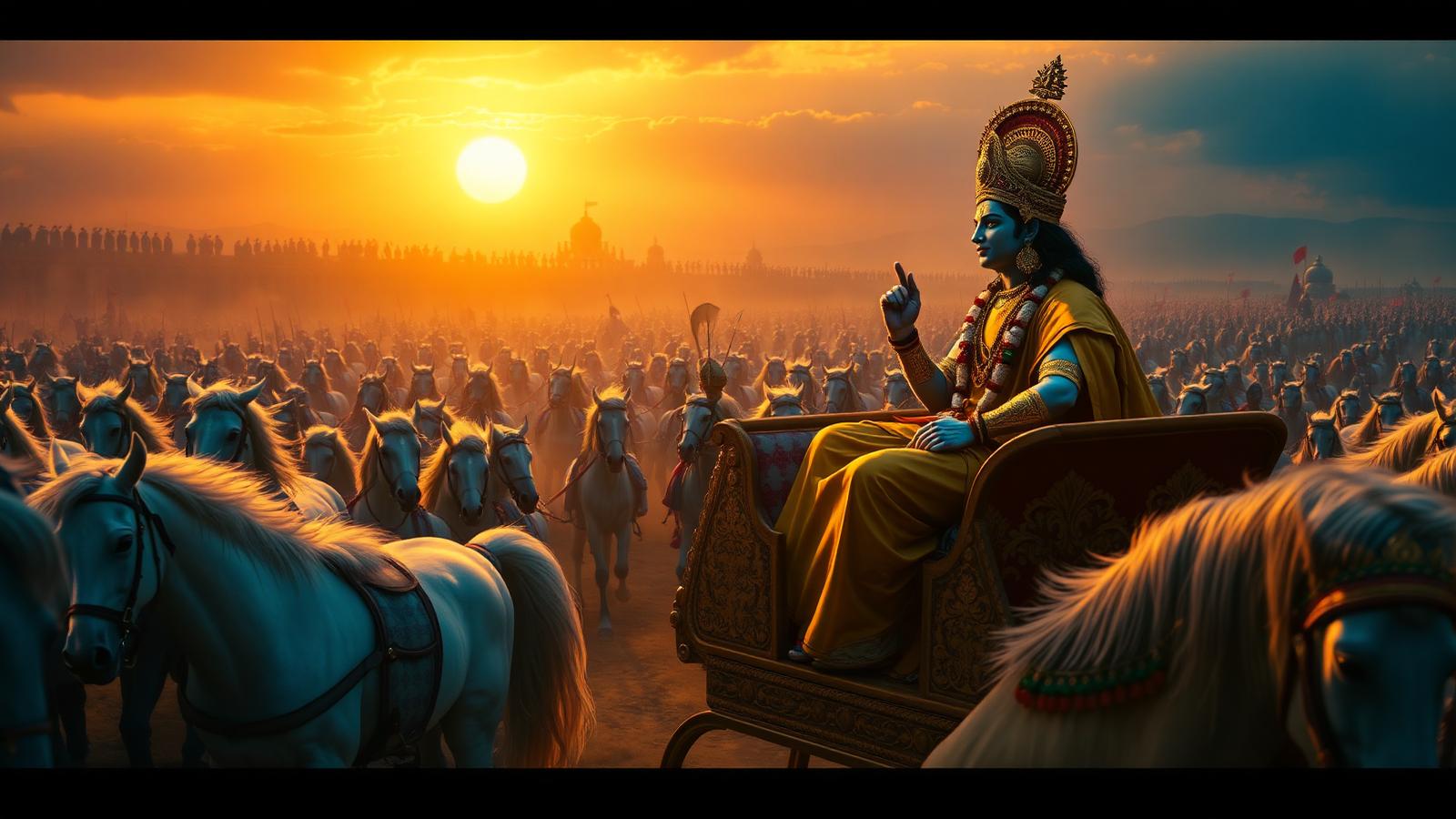
The Song of the Lord — Krishna's eternal dialogue with Arjuna on the battlefield of Kurukshetra. 700 verses that have illuminated humanity for over two millennia.

॥ ॐ ॥

18

Chapters

700

Verses

Anuṣṭubh

Meter

200 BCE – 200 CE

Composed

Introduction

The Song That Transformed Despair
॥ ॐ ॥
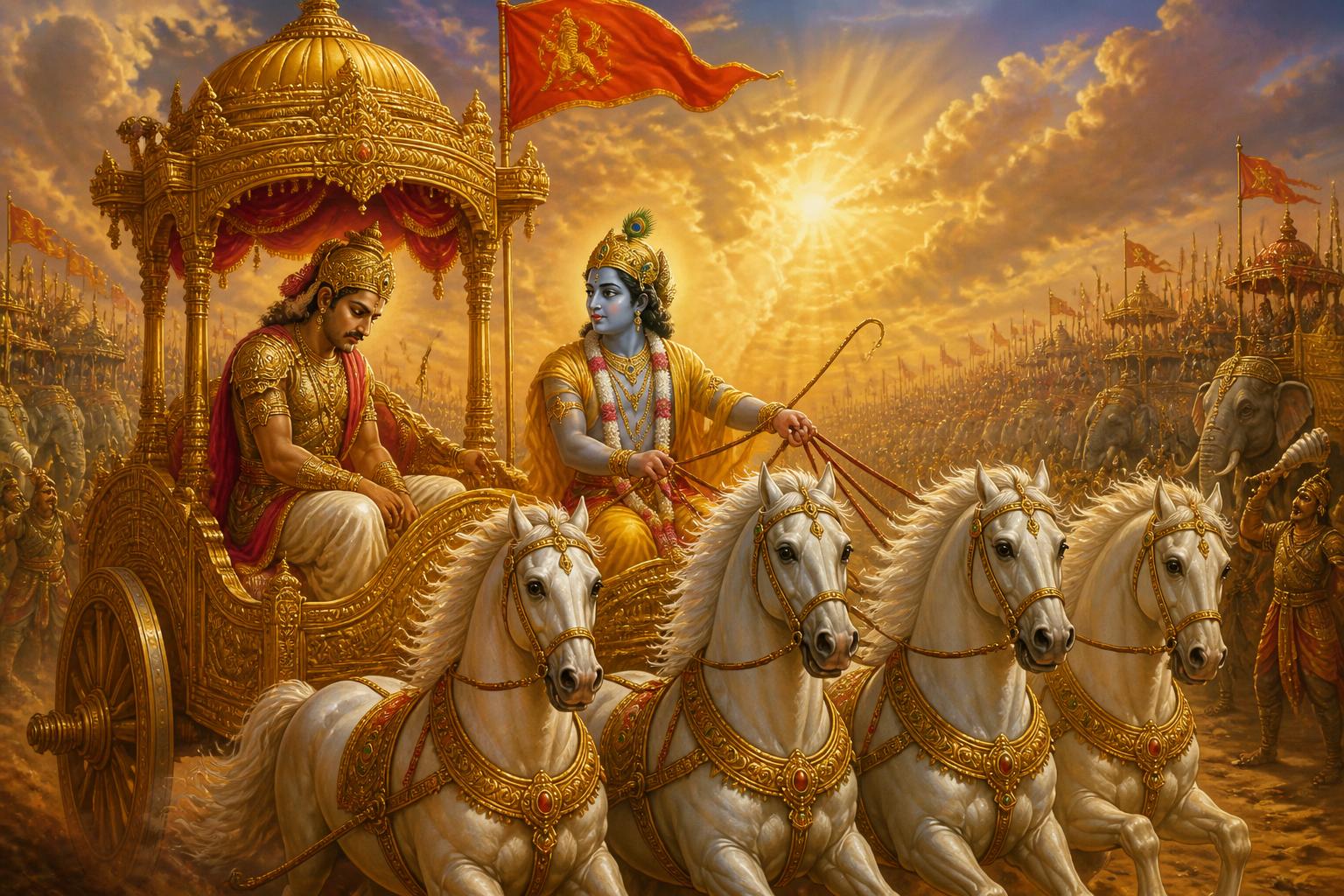
Arjuna in despair, Krishna consoles him on the chariot
Arjuna's despondency — the moment the Song begins

The Bhagavad Gītā (Sanskrit: भगवद्गीता — "Song of the Lord") is a 700-verse dialogue embedded in the Bhīṣma Parva of the Mahābhārata. It unfolds at the most charged moment of the epic: Prince Arjuna, seeing his own kin arrayed against him on the battlefield of Kurukṣetra, casts down his bow in despair.

His charioteer — Lord Krishna — responds with a teaching that spans duty, the Self, the three yogas, the nature of the Divine, and the final mystery of surrender. Often called the "essence of the Vedas" and the "Upanishad of the Upanishads", the Gītā synthesises Vedic ritual, Upanishadic wisdom and devotional love into one luminous song.

It is at once a personal counsel and a universal scripture — answering the timeless human question: how to act rightly in the world while seeking spiritual freedom.

Chapter I

The Three Paths of Yoga

Three roads — one summit. The Gītā honours every temperament.

कर्म योग

Karma Yoga

The path of selfless action — work performed without attachment to its fruits. 'You have the right to action alone, never to its fruits.' (2.47)

ज्ञान योग

Jñāna Yoga

The path of knowledge — discriminating the eternal Self (ātman) from the transient body and mind. The Self is birthless, deathless, unchanging.

भक्ति योग

Bhakti Yoga

The path of loving devotion — surrender to the Divine. The easiest and most direct path: love, faith and complete reliance on the Lord.

Chapter II

The Eighteen Adhyāyas

Each chapter is itself a "yoga" — a step from crisis to surrender.

1

Arjuna Viṣāda Yoga

Arjuna's Despondency

2

Sāṅkhya Yoga

Knowledge of the Self

3

Karma Yoga

Selfless Action

4

Jñāna-Karma Sannyāsa Yoga

Knowledge & Renunciation

5

Karma Sannyāsa Yoga

Renunciation of Action

6

Dhyāna Yoga

Meditation

7

Jñāna Vijñāna Yoga

Knowledge & Realisation

8

Akṣara Brahma Yoga

The Imperishable Brahman

9

Rāja Vidyā Yoga

Royal Knowledge & Secret

10

Vibhūti Yoga

Divine Manifestations

11

Viśvarūpa Darśana Yoga

Vision of the Cosmic Form

12

Bhakti Yoga

Path of Devotion

13

Kṣetra-Kṣetrajña Yoga

Field & Knower of the Field

14

Guṇa Traya Vibhāga Yoga

Three Qualities of Nature

15

Puruṣottama Yoga

The Supreme Person

16

Daivāsura Sampad Yoga

Divine & Demonic Qualities

17

Śraddhā Traya Yoga

Threefold Faith

18

Mokṣa Sannyāsa Yoga

Liberation through Surrender

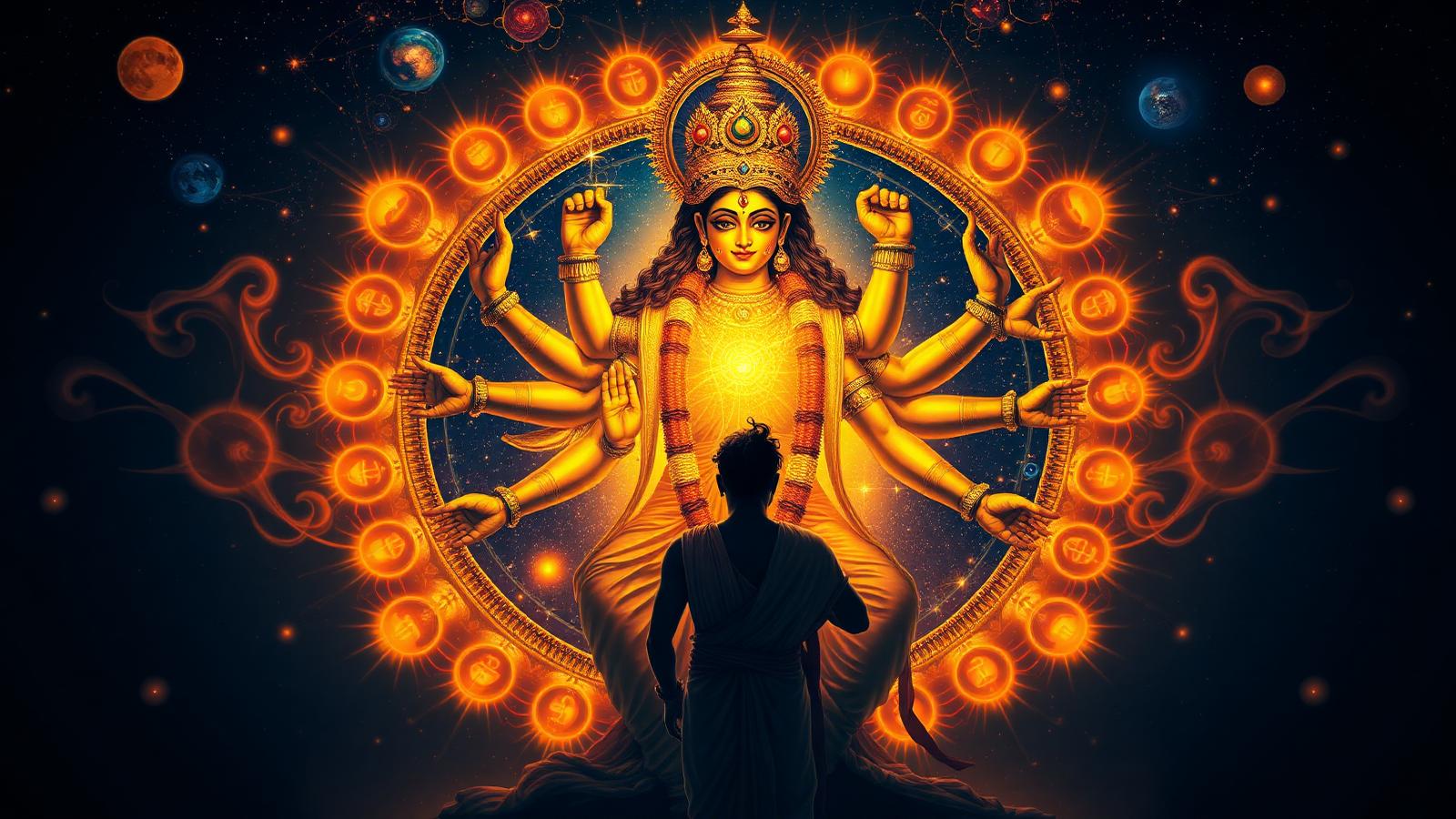
Krishna's universal cosmic form

Adhyāya 11 · Viśvarūpa Darśana

The Cosmic Vision

Granted divine sight, Arjuna beholds Krishna's Viśvarūpa — the universal form containing every world, every being, every age. Suns, deities, sages and the whole tapestry of time blaze within a single radiant body. It is one of the most overwhelming visions in all of world literature.

दिवि सूर्यसहस्रस्य भवेद्युगपदुत्थिता ।
यदि भाः सदृशी सा स्याद्भासस्तस्य महात्मनः ॥

"If the splendour of a thousand suns were to blaze forth at once in the sky, that might resemble the radiance of that mighty Being." (11.12)

Eternal Verses

Words That Have Outlasted Empires

॥ ॐ ॥

Gītā 2.47 · Karma Yoga

कर्मण्येवाधिकारस्ते मा फलेषु कदाचन । मा कर्मफलहेतुर्भूर्मा ते सङ्गोऽस्त्वकर्मणि ॥

"You have the right to action alone, never to its fruits. Let not the fruits of action be your motive, nor let your attachment be to inaction."

Gītā 4.7 · The Avatāra

यदा यदा हि धर्मस्य ग्लानिर्भवति भारत । अभ्युत्थानमधर्मस्य तदात्मानं सृजाम्यहम् ॥

"Whenever there is a decline of dharma and a rise of adharma, O Bhārata, I manifest Myself."

Gītā 2.23 · The Eternal Self

नैनं छिन्दन्ति शस्त्राणि नैनं दहति पावकः । न चैनं क्लेदयन्त्यापो न शोषयति मारुतः ॥

"Weapons cannot cleave the Self, nor can fire burn it; waters cannot wet it, nor wind dry it."

Gītā 18.66 · The Final Surrender

सर्वधर्मान्परित्यज्य मामेकं शरणं व्रज । अहं त्वा सर्वपापेभ्यो मोक्षयिष्यामि मा शुचः ॥

"Abandoning all duties, take refuge in Me alone. I shall liberate you from all sins; do not grieve."

Adhyāya 14 · Guṇa-Traya

The Three Guṇas of Nature

All of creation, the Gītā teaches, is woven from three primordial qualities — guṇas. They are the threads of Prakṛti herself, and every being, mood and action is some braid of the three. Liberation is the transcendence of all three.

Sattva

Purity · Harmony · Light

Rajas

Activity · Passion · Motion

Tamas

Inertia · Darkness · Stillness

Meditation — transcending the three gunas
The yogi steady in the Self — beyond the play of guṇas
The eternal ashvattha tree
The inverted Aśvattha — roots above, branches below

Adhyāya 15 · Puruṣottama Yoga

The Eternal Aśvattha

Krishna describes the universe as an inverted sacred fig tree — its roots in the Eternal, its branches reaching down into the worlds. To cut this ancient tree with the axe of non-attachment is to discover the Supreme Person (Puruṣottama) beyond all that perishes and all that does not perish.

ऊर्ध्वमूलमधःशाखमश्वत्थं प्राहुरव्ययम् ॥

"They speak of the imperishable Aśvattha — its roots above, its branches below." (15.1)

Chapter III

A Universe of Commentary

From Shankara to Gandhi — the Gītā has been read in countless lights.

Advaita8th CE

Ādi Śaṅkarācārya

The classic non-dual reading — emphasis on knowledge (jñāna) of the Self.

Viśiṣṭādvaita11th CE

Rāmānujācārya

Qualified non-dualism — devotion (bhakti) to a personal Lord at the centre.

Dvaita13th CE

Madhvācārya

Dualistic emphasis — eternal distinction between soul and the Supreme.

Practical Vedanta19th CE

Swami Vivekananda

Karma yoga as the strength of character and selfless service to humanity.

Anāsakti Yoga20th CE

Mahatma Gandhi

The Gita as the spiritual reference of non-violence (ahiṃsā) and selfless action.

Integral Yoga20th CE

Sri Aurobindo

The Gita as the evolution of consciousness toward the Divine Life on Earth.

Chapter IV

Global Resonance

Indian Freedom Movement

Niṣkāma karma — selfless action — became the spiritual fuel of India's struggle for freedom.

Western Thinkers

Emerson, Thoreau, Aldous Huxley and Oppenheimer all drew from the Gītā's vision of duty and the cosmic Self.

Living Counsel Today

Studied for ethical leadership, stress management and the integration of spirituality with daily life across the world.

॥ ॐ ॥

The Eternal Song of Guidance

The Bhagavad Gītā transforms despair into purpose, confusion into wisdom, and fear into surrender. Whether read as a manual for ethical living, a map of consciousness, or a song of divine love, its message is timeless: rise above the transient, perform your duty with equanimity, know your true Self, and take refuge in the Divine.