The Ramayana

Itihāsa · Rāmāyaṇam

The Ramayana

॥ श्रीमद्रामायणम् ॥

Valmiki's eternal epic of dharma — the journey of Rama, Sita, Lakshmana and Hanuman through exile, war, and the triumph of righteousness.

॥ ॐ ॥

24,000

Verses (Ślokas)

7

Kāṇḍas (Books)

Anuṣṭubh

Meter

Valmiki

Ādi Kavi

Introduction

The Ādi Kāvya — The First Poem
॥ ॐ ॥
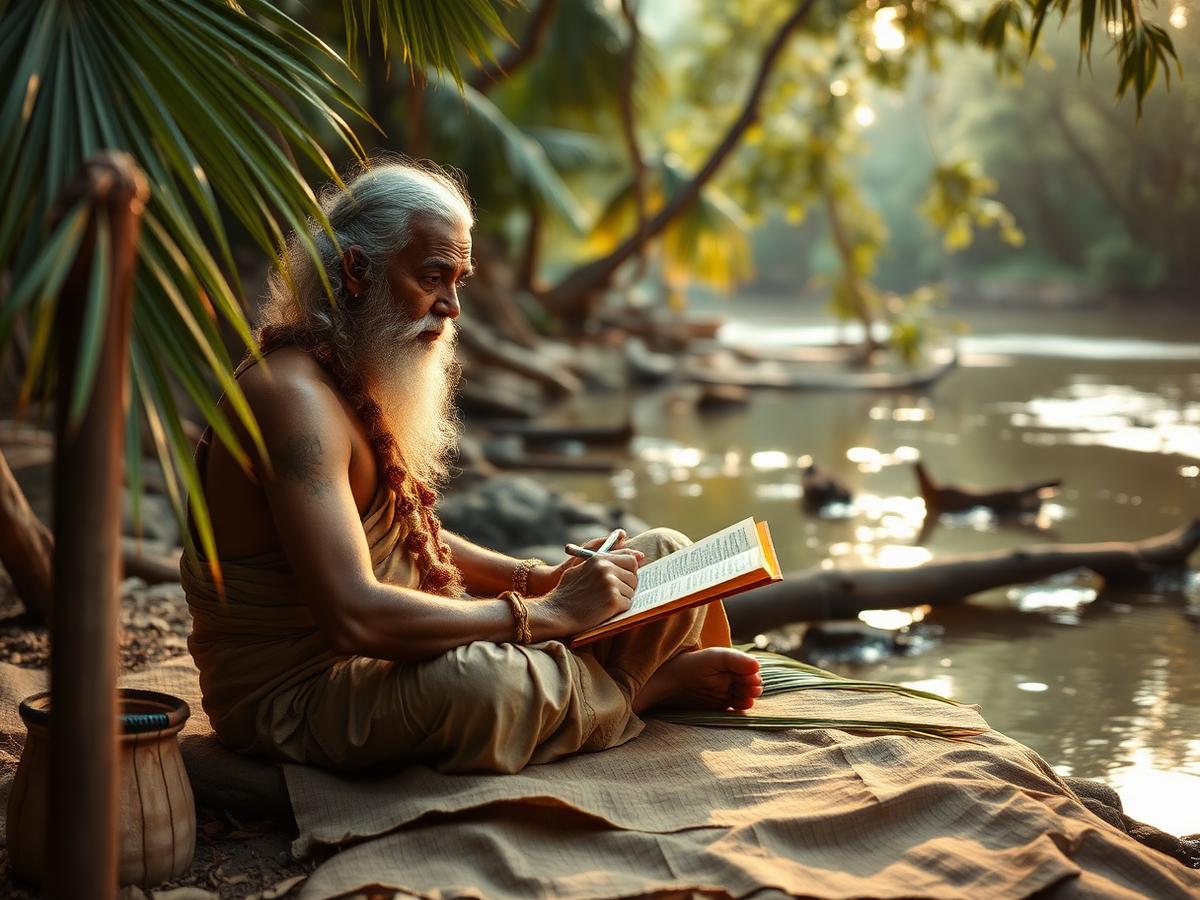
Sage Valmiki composing the Ramayana by the river
Maharṣi Vālmīki — the first poet of mankind

The Rāmāyaṇa (Sanskrit: रामायण — "The Journey of Rama") is one of the two great Sanskrit epics of ancient India. Traditionally attributed to the sage Vālmīki, it is the original poem (ādi-kāvya) — born, the tradition says, from the grief of a hunter who killed a mating krauñca bird, transformed by Valmiki into the world's first śloka.

In 24,000 verses across seven Kāṇḍas, the epic narrates the life of Prince Rama — the seventh avatar of Vishnu — his beloved wife Sītā, his devoted brother Lakṣmaṇa, and the perfect bhakta Hanumān. Through trials of exile, abduction, war and return, it explores the deepest meaning of dharma.

It is itihāsa — "thus it was" — both literature and scripture, both adventure and meditation. For over two millennia it has shaped the conscience of India and Asia, teaching that true greatness lies not in conquest but in unwavering adherence to righteousness.
Chapter I

The Seven Kāṇḍas

Seven books — a single radiant arc from birth to apotheosis.

1

Bāla Kāṇḍa

Book of Childhood

Birth of Rama, his education, marriage to Sita and the breaking of Shiva's bow.

2

Ayodhyā Kāṇḍa

Book of Ayodhya

Kaikeyi's boon, Rama's exile and the sorrow of separation from his beloved city.

3

Araṇya Kāṇḍa

Book of the Forest

Life among the sages, the golden deer illusion and the abduction of Sita by Ravana.

4

Kiṣkindhā Kāṇḍa

Book of Kishkindha

Alliance with Sugriva and the vanara kingdom; the great search for Sita begins.

5

Sundara Kāṇḍa

Book of Beauty

Hanuman's heroic leap to Lanka, meeting with Sita and the burning of the golden city.

6

Yuddha Kāṇḍa

Book of War

The bridge to Lanka, the great war and the final victory of dharma over Ravana.

7

Uttara Kāṇḍa

Book of the Aftermath

Rama Rajya, Sita's later exile, the birth of Lava and Kusha, and the end of the lila.

Chapter II

The Eternal Cast

Each character embodies a dimension of the human soul.

श्री राम

Rāma

Maryādā Puruṣottama

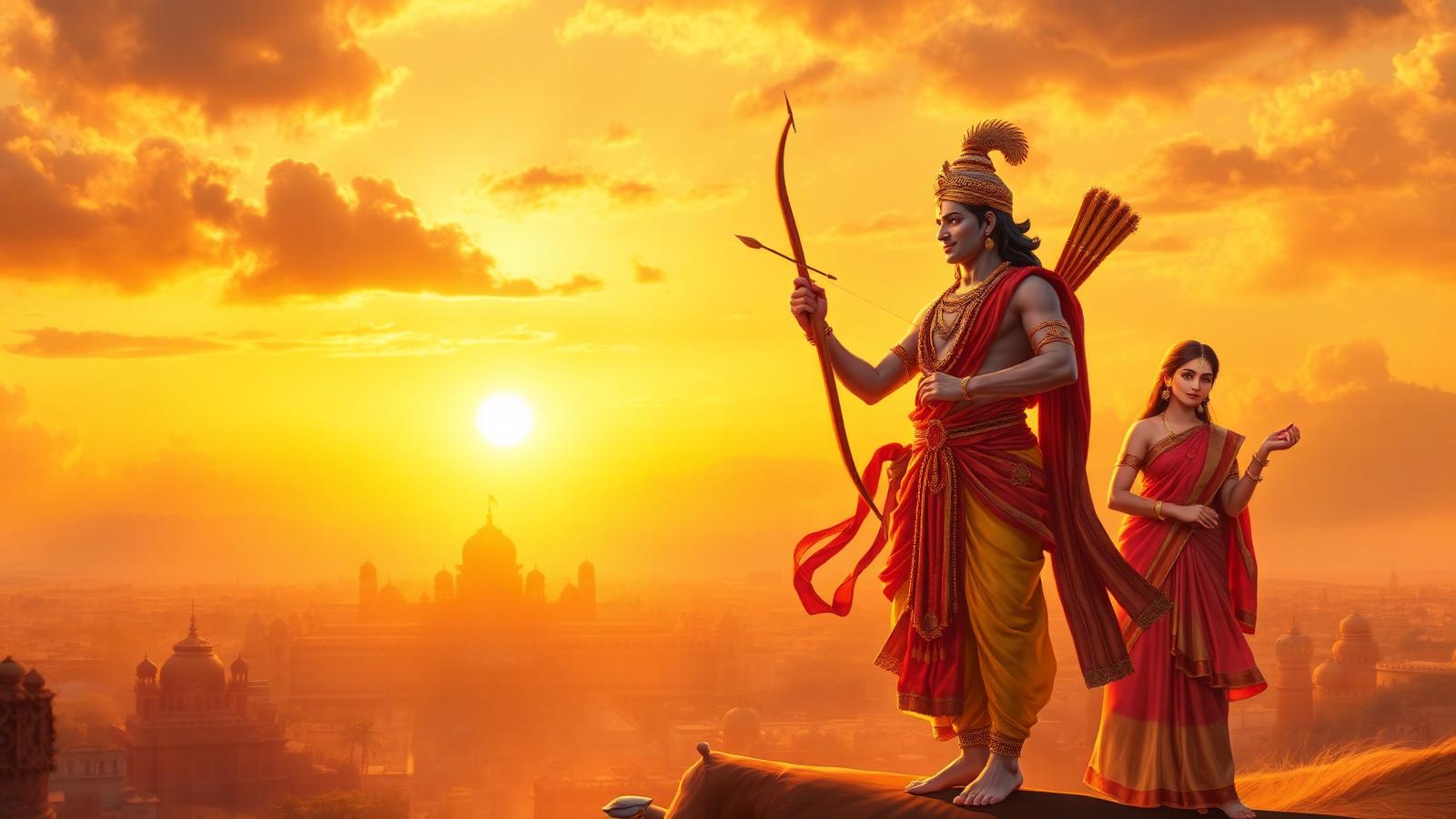
Seventh avatar of Vishnu; the supreme man of righteous conduct — son, husband, brother and king.

सीता

Sītā

Devi of Purity & Strength

Daughter of the earth, ideal of devotion and inner strength who endures every trial without losing her grace.

लक्ष्मण

Lakṣmaṇa

The Devoted Brother

Younger brother who renounces the palace to serve Rama in exile — embodiment of fraternal love and loyalty.

हनुमान्

Hanumān

Parama Bhakta

The perfect devotee — boundless strength, humility and unconditional love for Rama.

भरत

Bharata

The Renunciate King

Refuses the throne, rules Ayodhya in Rama's name with his sandals placed on the throne.

रावण

Rāvaṇa

The Tragic Adversary

Ten-headed king of Lanka — a great scholar and devotee of Shiva, undone by ego, lust and adharma.

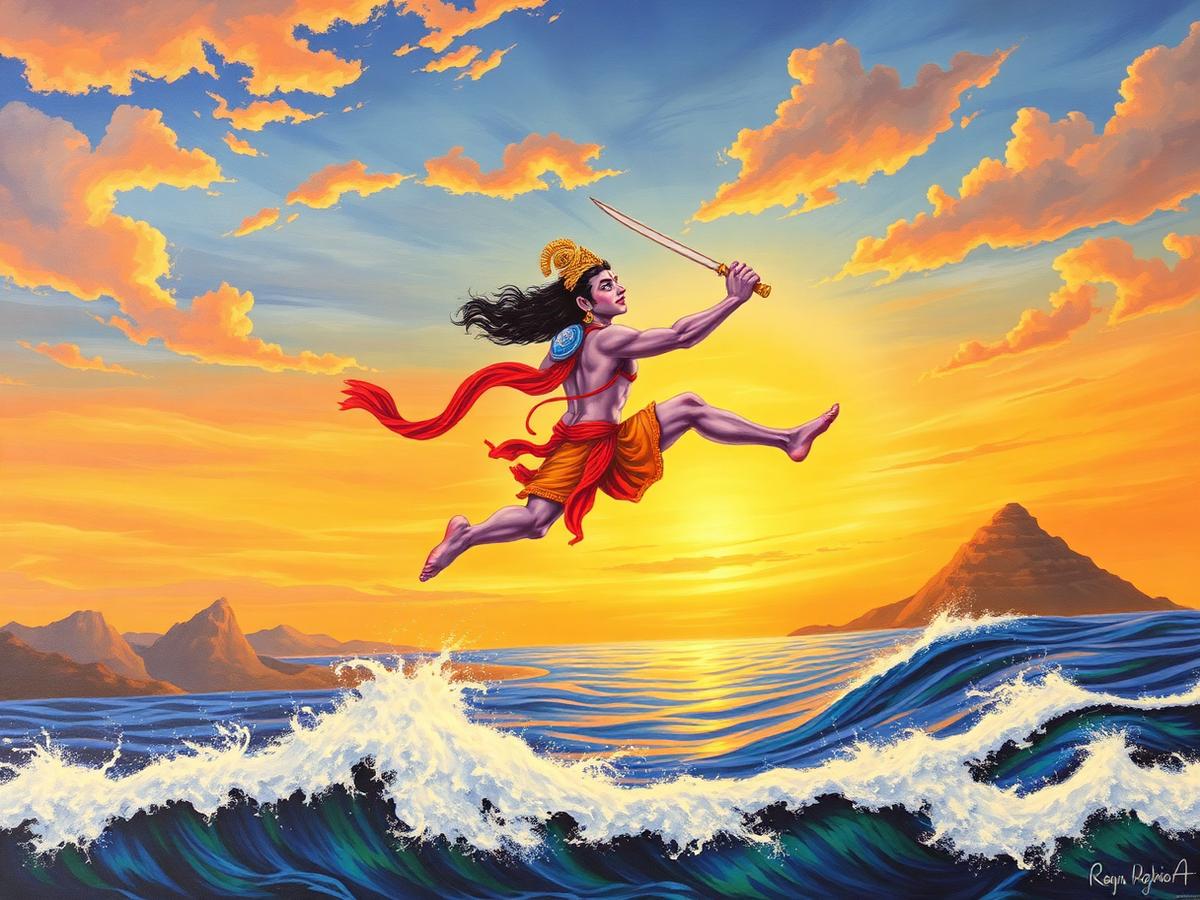
Hanuman leaps across the ocean to Lanka

Sundara Kāṇḍa · The Beautiful Book

Hanuman's Mighty Leap

With Rama's name as his strength, Hanuman expands to colossal form and bounds across the hundred-yojana ocean to Lanka. He discovers Sita in Ashoka Vatika, gives her Rama's ring, and sets the golden city ablaze with his burning tail — returning with the news that ignites the great war.

मनोजवं मारुततुल्यवेगं
जितेन्द्रियं बुद्धिमतां वरिष्ठम् ।

"Swift as thought, equal to the wind in speed, master of the senses, foremost among the wise…"

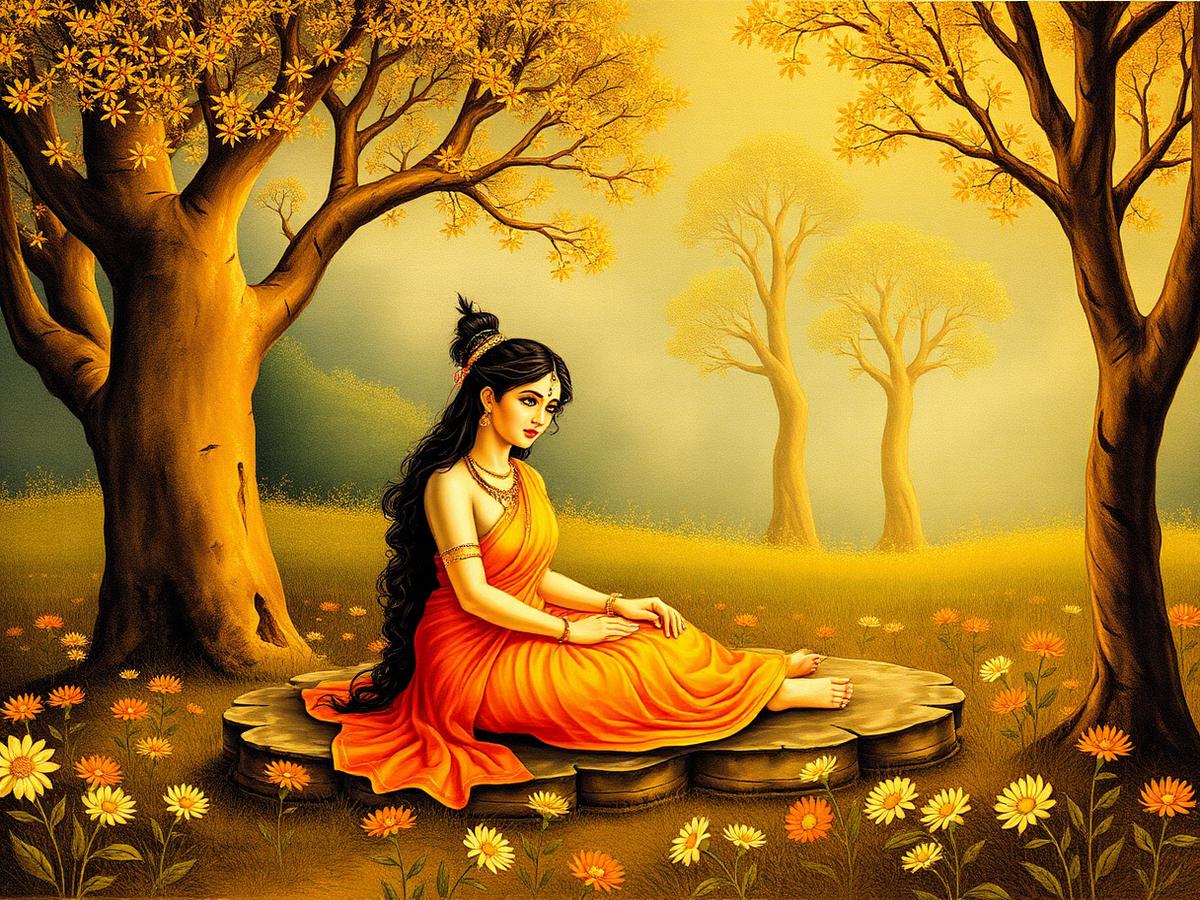
Sita in Ashoka Vatika
Sītā in Aśoka Vāṭikā — unwavering in faith

Devī Sītā

The Strength of Purity

Born from the furrow of the earth, Sita is no passive heroine. Through abduction, captivity and the fire of trial, she remains untouched in soul — refusing every offer of Ravana, sustained only by remembrance of Rama. She is Lakṣmī herself, walking the earth.

Modern readers find in Sita not only an ideal of devotion but also of quiet, immovable strength — a woman whose dignity no captor can diminish.

Chapter III

The Living Themes

A dharma-śāstra in narrative form — wisdom dressed as story.

Dharma in Action

Righteousness is not abstract — it is lived through every choice, even when painful. Rama shows that duty is the highest beauty.

Bhakti (Devotion)

Hanuman's surrender at Rama's feet is the spiritual heart of the epic — the easiest and purest path to the Divine.

Ideal Relationships

Father-son, husband-wife, brother-brother, master-servant — the Ramayana paints the highest form of every human bond.

Triumph of Good

Adharma may seem powerful, but it carries within it the seeds of its own destruction. Truth always prevails.

Rāma Rājya

An ideal kingdom of justice, compassion and prosperity — the political and ethical vision that has inspired India for millennia.

Avatāra of Vishnu

The Lord himself descends in human form to walk among us, suffer with us, and show the path home.

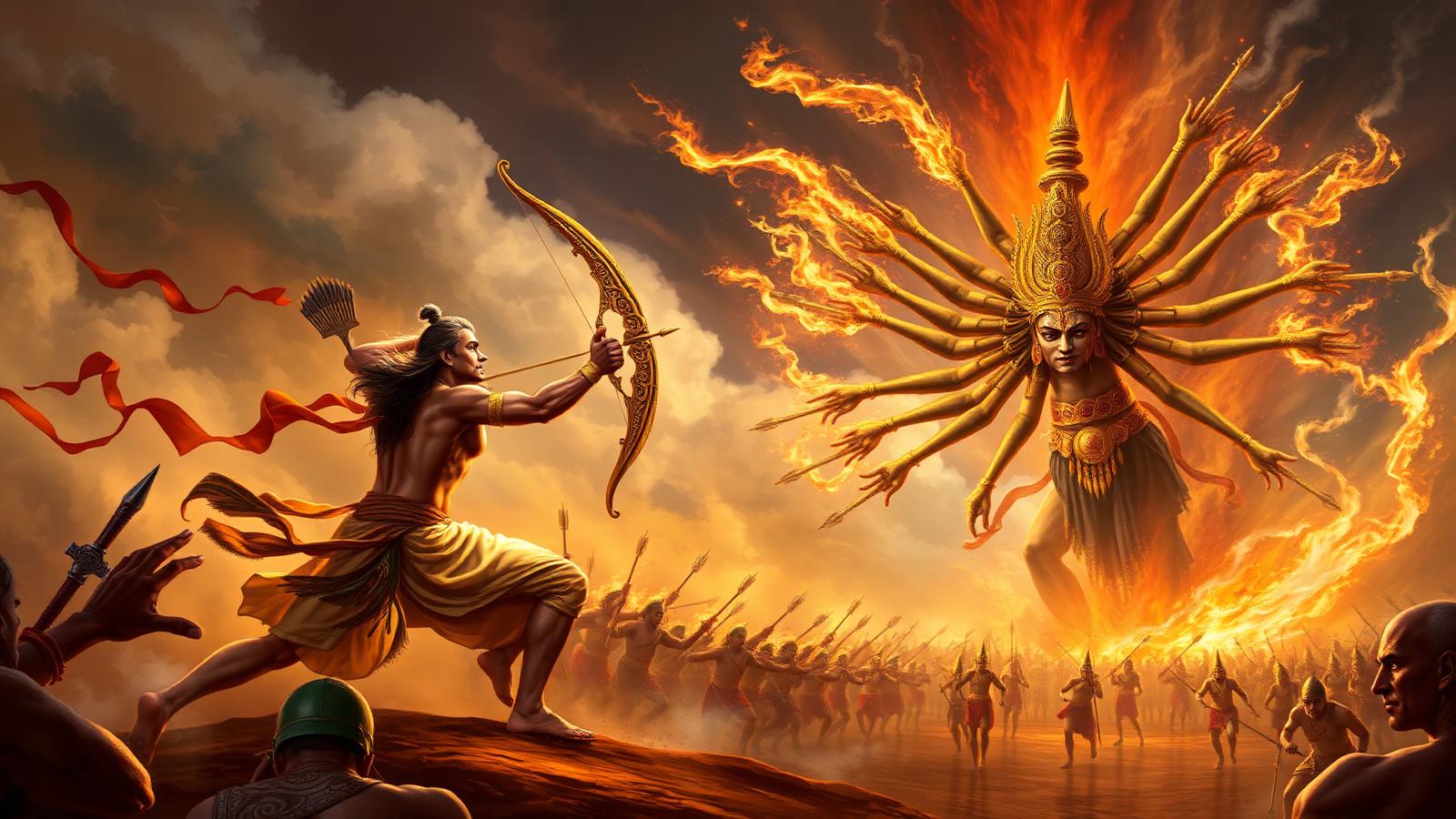
The battle of Rama and Ravana

Iconic Episodes

Moments That Became Memory

Bāla Kāṇḍa

Breaking of Shiva's Bow

At Mithila, only Rama can lift and string the colossal bow of Shiva — winning the hand of Sita and revealing his divine nature.

Ayodhyā Kāṇḍa

The Exile of Rama

On the eve of his coronation, Kaikeyi's boon sends Rama to the forest for fourteen years. He accepts with calm — and Ayodhya weeps.

Araṇya Kāṇḍa

The Golden Deer

A magical golden deer lures Rama away. In his absence Ravana, disguised as a sage, abducts Sita — and ancient Jatayu falls fighting to save her.

Sundara Kāṇḍa

Hanuman's Leap to Lanka

With Rama's name on his lips, Hanuman bounds across the ocean, finds Sita in Ashoka Vatika and sets Lanka ablaze with his burning tail.

Yuddha Kāṇḍa

Rāma Setu — The Bridge

The vanara army builds a bridge of stones inscribed with Rama's name across the sea — a miracle of devotion and engineering.

Yuddha Kāṇḍa

Fall of Ravana

After days of fierce battle, Rama's arrow strikes Ravana's navel — the nectar of his immortality — and the king of Lanka falls. Dharma prevails.

Eternal Verses

Words Carved in the Heart

॥ ॐ ॥

Vālmīki Rāmāyaṇa · 1.1

रामो विग्रहवान् धर्मः साधुः सत्यपराक्रमः । राजा सर्वस्य लोकस्य देवानामिव वासवः ॥

"Rama is dharma incarnate — gentle and truthful in valour — a king to all the worlds, even as Indra is to the gods."

Hanuman's Vow · Sundara Kāṇḍa

बुद्धिर्बलं यशो धैर्यं निर्भयत्वमरोगता । अजाड्यं वाक्पटुत्वं च हनुमत्स्मरणाद्भवेत् ॥

"Intelligence, strength, fame, courage, fearlessness, health, ease and eloquence — all arise from remembering Hanuman."

Yuddha Kāṇḍa · The Promise

सकृदेव प्रपन्नाय तवास्मीति च याचते । अभयं सर्वभूतेभ्यो ददाम्येतद्व्रतं मम ॥

"To one who surrenders even once, saying 'I am Yours' — I grant fearlessness from all beings. This is My vow."

Mahāmantra · Tradition

श्रीराम जय राम जय जय राम ॥

"Glory to Rama, victory to Rama, victory victory to Rama — the simplest chant, the easiest path in Kali Yuga."

Uttara Kāṇḍa

Rāma Rājya — The Ideal Kingdom

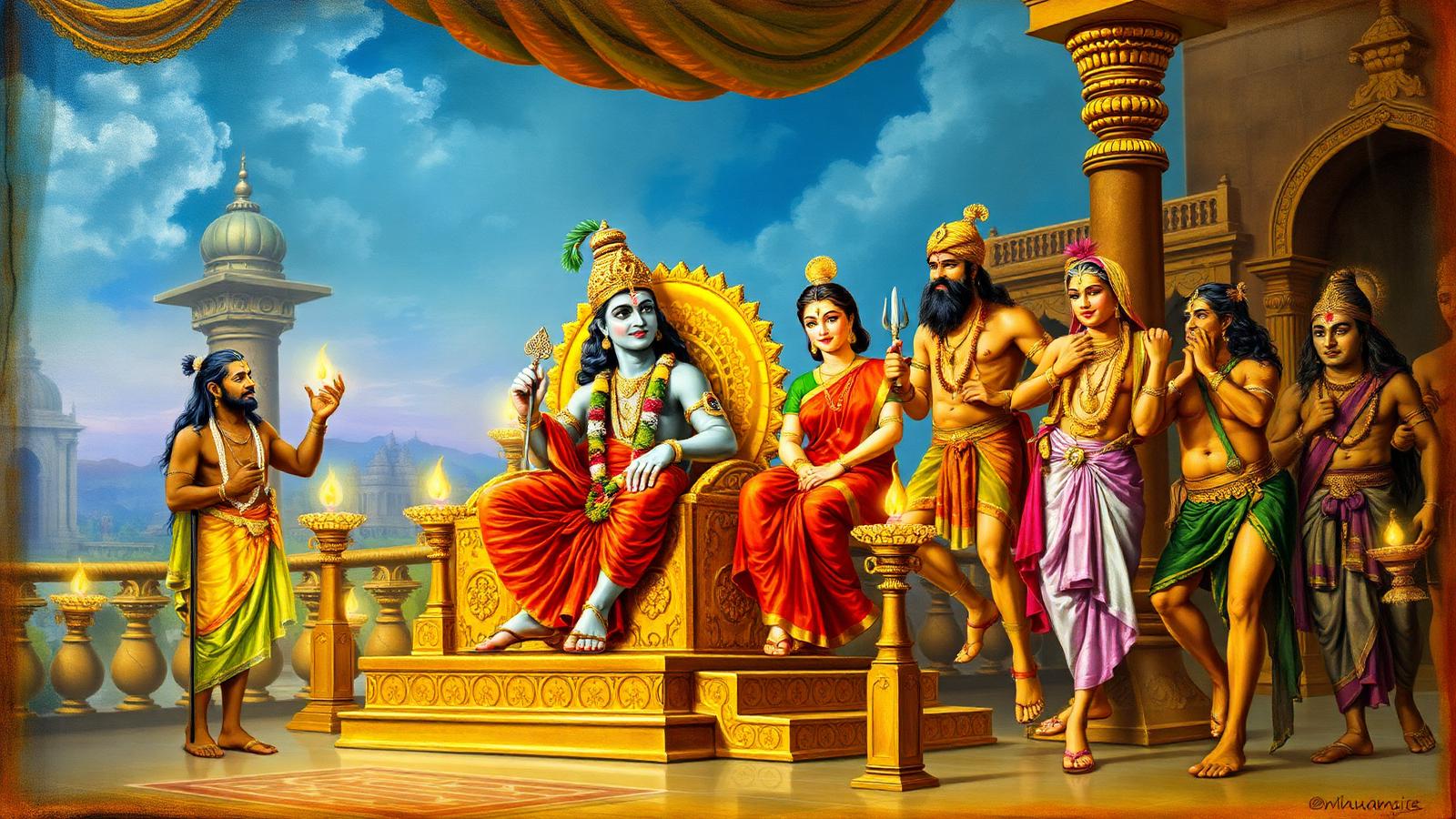
After the war, Rama returns to Ayodhya — the night of his return is celebrated forever as Dīpāvalī, when every home lit a lamp. His rule becomes the archetype of perfect governance: truth, justice, prosperity and the absence of suffering for any creature.

From Mahatma Gandhi to modern political thought, the dream of Rāma Rājya — a society where dharma is the foundation of public life — has continued to inspire visions of a just and compassionate world.

रामो विग्रहवान् धर्मः

"Rama is dharma in living form."

Coronation of Rama — the dawn of Rama Rajya
The coronation in Ayodhya — Dīpāvalī born

Chapter IV

A Hundred Ramayanas

From Sanskrit to Thai, Bali to Bengal — one story, countless songs.

SanskritOriginal

Vālmīki Rāmāyaṇa

The Ādi Kāvya — the first poem, source of every retelling.

AwadhiNorth India

Rāmcaritmānas

Tulsidas (16th c.) — the great devotional retelling chanted in homes across the Hindi belt.

TamilSouth India

Kamba Rāmāyaṇam

Kambar (12th c.) — a poetic masterpiece of philosophical depth and Tamil grandeur.

BengaliBengal

Kṛittivāsī Rāmāyaṇ

Krittibas Ojha (15th c.) — the beloved Bengali version recited in households for centuries.

ThaiThailand

Ramakien

The national epic of Thailand — Rama's story enshrined in royal art and dance.

Old JavaneseIndonesia

Kakawin Rāmāyaṇa

Carved into the walls of Prambanan — a living tradition in Bali and Java.

Chapter V

Living Legacy

Festivals

Rāma Navamī (his birth), Vijayadaśamī (victory over Ravana), and Dīpāvalī (his return) — the year glows with his story.

Performing Arts

Rāmlīlā enactments, Kathakali, Bharatanatyam and folk theatre — the epic is danced, sung and lived across India.

Global Resonance

From Thailand's Ramakien to Indonesia's Kakawin, from Cambodia's Reamker to Burma's Yama Zatdaw — Rama's journey belongs to all Asia.

॥ ॐ ॥

The Eternal Path of Righteousness

The Ramayana is more than an ancient tale — it is a moral compass for every age. Through Rama's exemplary life, Sita's steadfast purity, Lakshmana's loyalty and Hanuman's boundless devotion, it shows that dharma can be lived even in the face of immense adversity. Uphold righteousness, love selflessly, master the ego, and trust in the ultimate victory of truth.