The Yajurveda

Shastra · Yajurveda

The Yajurveda

॥ यजुर्वेदः ॥

The sacred science of yajña — precise formulas of action that align human life with cosmic order. Where the Rigveda sings, the Yajurveda choreographs the dance of the sacrifice.

॥ ॐ ॥

2

Major Recensions

6

Surviving Schools

40

Adhyayas (Shukla)

1200–800 BCE

Composed

Introduction

The Knowledge of Sacred Action

॥ ॐ ॥

The Yajurveda (Sanskrit: यजुर्वेद — from yajus "sacrificial formula" and veda "knowledge") is the second of the four Vedas and the primary scripture dedicated to the practical performance of Vedic rituals (yajña). Where the Rigveda sings hymns of praise, the Yajurveda gives the priest the precise prose formulas to recite while pouring oblations into the sacred fire, arranging altars and invoking the gods at every step.

It is the operational manual of the elaborate Vedic ritual tradition — the backbone of karma-kāṇḍa. It survives in two great branches: the Shukla (White / clear) Yajurveda, with mantras separated from explanations, and the Krishna (Black / dark) Yajurveda, where mantra and prose are richly interwoven.
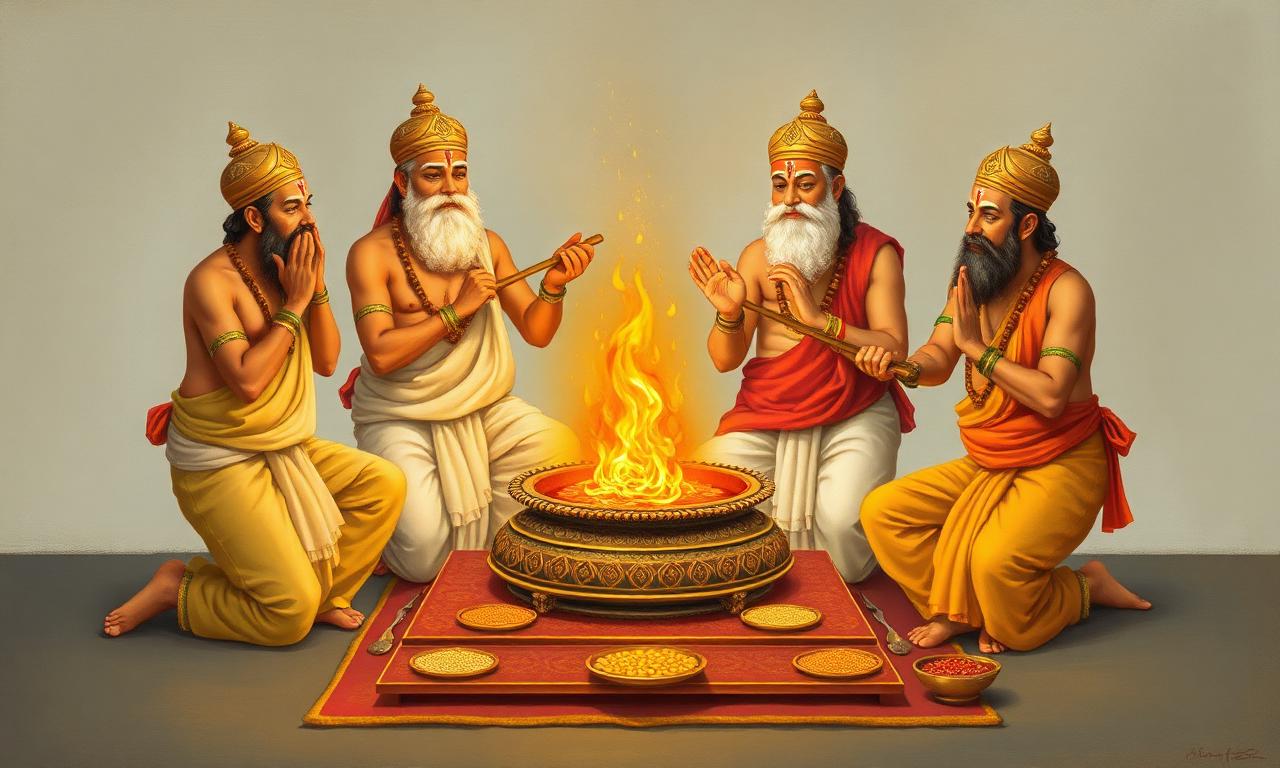
Four Vedic priests performing yajna
Four priests performing a yajña — the Adhvaryu leads with Yajurveda formulas

Chapter I

History & Development

The Yajurveda belongs to the Mantra period of Vedic Sanskrit — composed after the core Rigveda but before or alongside the early Brahmanas. Consensus places its composition between roughly 1200 and 800 BCE, during the early Indian Iron Age.

It draws heavily from the Rigveda, adapting many ṛcas into ritual formulas for specific sacrificial actions — a shift from poetic praise to precise liturgical performance. Society was becoming more settled, with expanding kingdoms, complex social hierarchies and increasingly elaborate public rituals that reinforced royal authority (e.g. the Ashvamedha).

Geographically the text shows continuity with the late Rigvedic northwest, with references suggesting eastward expansion into the Gangetic plains. Its altar geometries and ritual measurements later influenced Indian mathematics — most famously in the Shatapatha Brahmana.

Chapter II

Shukla & Krishna — Two Streams

Shukla — The White / Clear

Vajasaneyi Samhita

Mantras collected separately from explanatory prose. Tradition attributes this clear arrangement to the sage Yajnavalkya, who received it directly from the Sun god in horse form (vaji) — hence the name Vajasaneyi. Its final adhyaya is the famous Isha Upanishad.

Krishna — The Black / Mixed

Taittiriya & Others

Mantras and Brahmana prose interwoven — a "motley" but integrated text, often more archaic. Legend tells of the disciple Tittiri swallowing the Yajurveda in the form of a partridge — giving rise to the Taittiriya school still dominant in South India.

ShuklaNorth India

Vajasaneyi Madhyandina

40 adhyayas · 303 anuvakas · 1,975 mantras. Mantras cleanly separated from prose.

ShuklaSouth & West India

Vajasaneyi Kanva

40 adhyayas · 328 anuvakas · 2,086 mantras. Ends with the Isha Upanishad.

KrishnaSouth India

Taittiriya Samhita

7 kandas · 42 prapathakas. Most widespread Krishna recension today.

KrishnaWestern India

Maitrayani Samhita

4 kandas. Older layers; detailed ritual discussions.

KrishnaKashmir / North

Kathaka (Caraka)

5 kandas. Associated with the Katha school; source of the Katha Upanishad.

KrishnaFragmentary

Kapishthala Samhita

Largely fragmentary — only portions survive.

Chapter III

The Great Sacrifices

From the daily Agnihotra to the imperial Ashvamedha — the spectrum of Vedic yajña.

Agnihotra

Daily fire offering of milk into the sacred fire at sunrise and sunset.

Daily

Darshapurnamasa

New and full moon sacrifices — milk, ghee and grain offerings.

Monthly

Chaturmasya

Seasonal four-monthly sacrifices marking the turning of the year.

Seasonal

Soma Yajna

Elaborate multi-day rituals pressing and offering the sacred Soma.

Soma

Ashvamedha

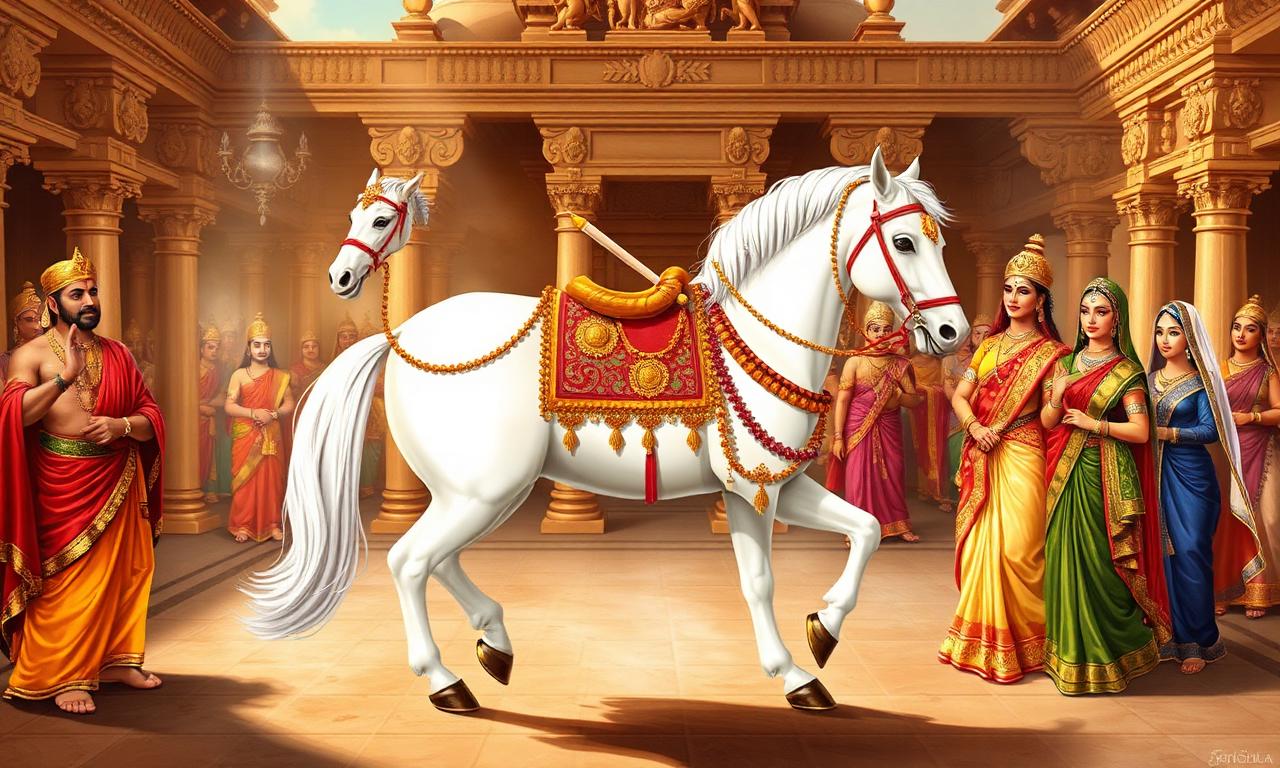
Grand royal horse sacrifice asserting imperial sovereignty.

Royal

Vajapeya

'Drink of strength' — chariot races and Soma offerings for royal vigour.

Royal

Sautramani

Healing rite restoring strength after exertion or Soma rituals.

Restorative

Sarvamedha

The 'universal sacrifice' — culmination of the great public rites.

Grand

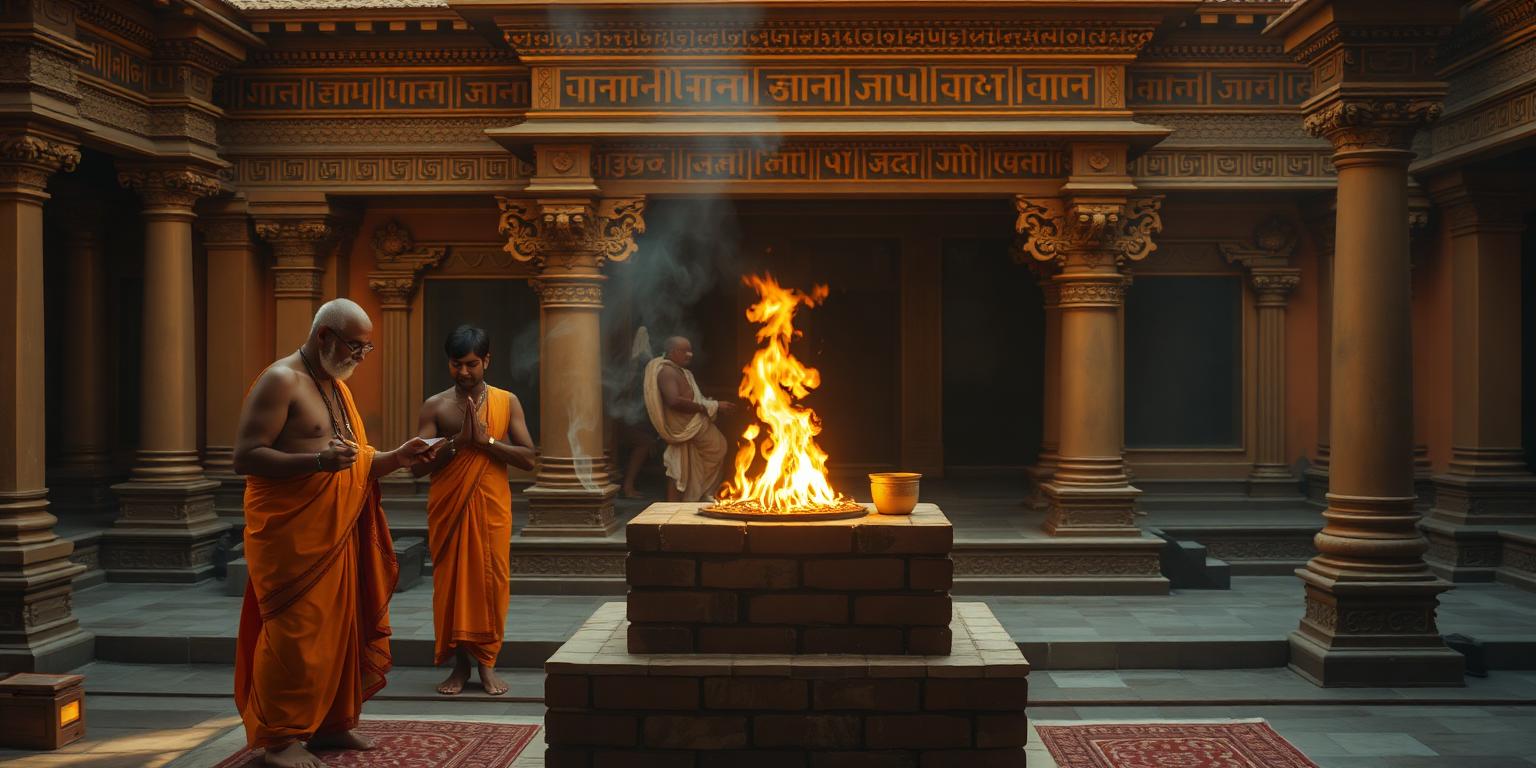
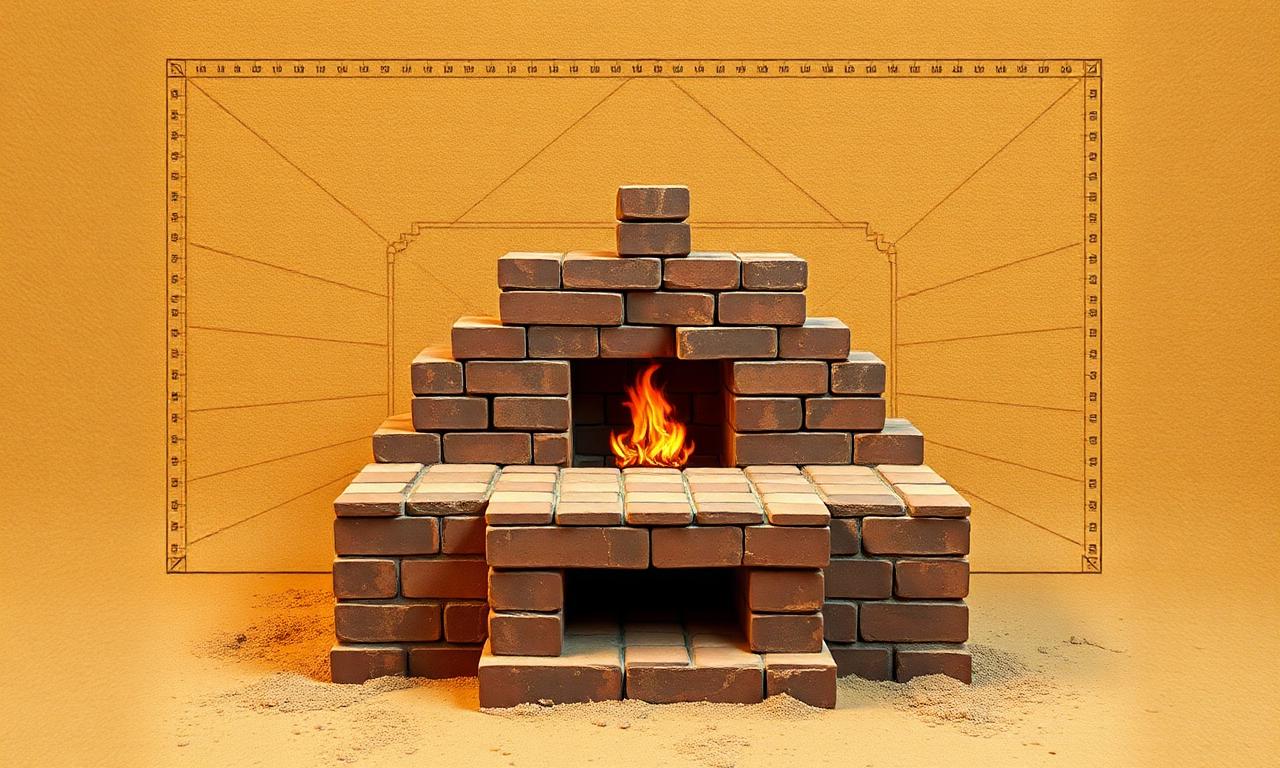
Geometric fire altar (vedi)
The sacred brick altar — Vedic geometry that seeded Indian mathematics
Ashvamedha — the royal horse sacrifice
Ashvamedha — the grand royal yajña of sovereignty
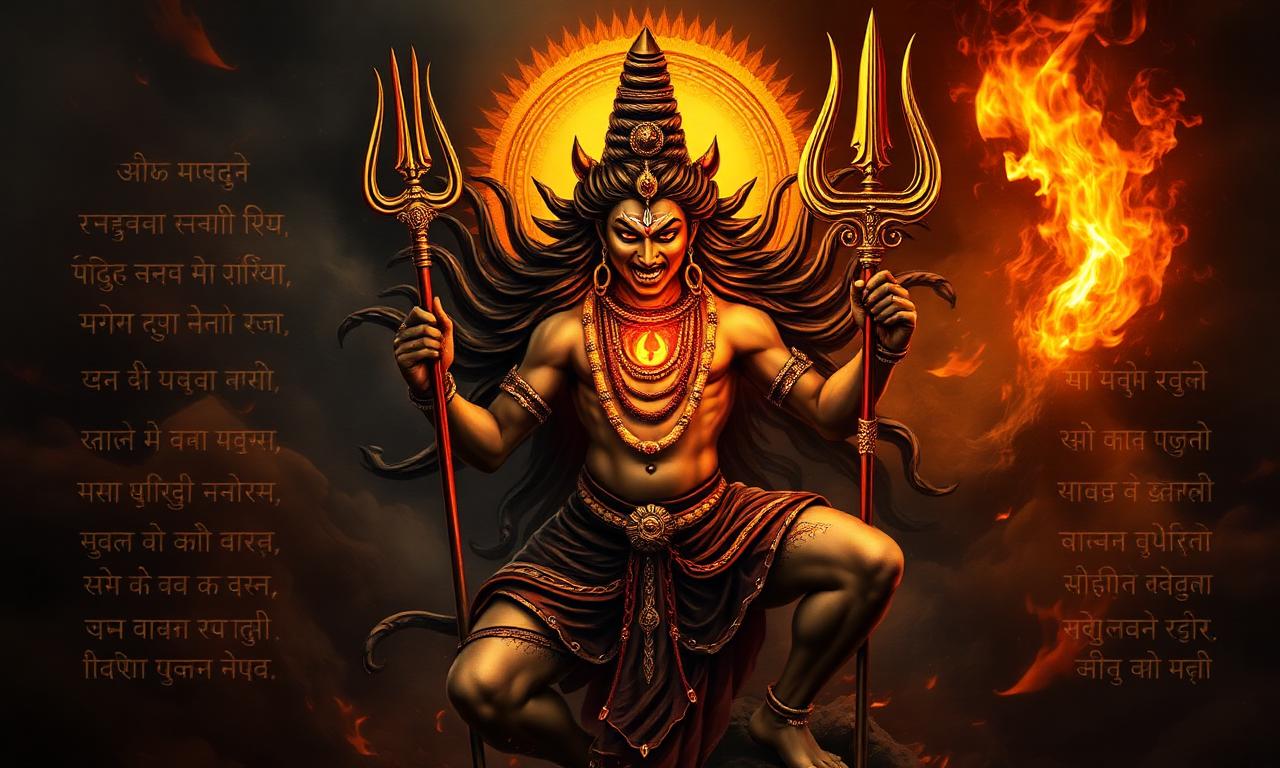
Lord Rudra — Shatarudriya

Taittiriya Samhita 4.5 · Rudra

Shatarudriya

A magnificent, lengthy invocation to Rudra — an early form of Shiva. It lists his hundred names and forms: "the fierce one," "the auspicious," "the lord of animals." Chanted to this day in Shiva temples and during Rudrabhisheka — one of the most emotionally charged hymns of the Yajurveda.

ॐ नमः शिवाय च शिवतराय च ॥

Shukla Yajurveda · Adhyaya 40

Īśā Upaniṣad

A complete principal Upanishad embedded as the final chapter — among the shortest yet most profound of all Upanishads. It teaches the unity of Atman with Brahman, and renunciation combined with action.

ईशावास्यमिदं सर्वं यत्किञ्च जगत्यां जगत् ।
तेन त्यक्तेन भुञ्जीथा मा गृधः कस्यस्विद्धनम् ॥

"All this — whatever exists in this changing universe — should be covered by the Lord. Enjoy through renunciation; do not covet anyone's wealth."

Chapter IV

Attached Literature

From ritual action to ritual meaning to liberating knowledge — the Vedic arc.

Brahmana

Shatapatha Brahmana

Attached to Shukla Yajurveda — vast ritual exegesis, myth and early philosophy. Contains the Brihadaranyaka.

Brahmana

Taittiriya Brahmana

Companion to the Taittiriya Samhita with ritual and cosmological commentary.

Aranyaka

Taittiriya Aranyaka

'Forest book' — esoteric interpretations for seekers in later stages of life.

Upanishad

Isha Upanishad

Final adhyaya of Shukla Yajurveda — unity of Atman with Brahman; renunciation in action.

Upanishad

Brihadaranyaka Upanishad

One of the oldest and longest Upanishads — the great dialogues of Yajnavalkya.

Upanishad

Taittiriya Upanishad

Source of 'Satyam, Shivam, Sundaram' and the celebrated educational teachings.

Upanishad

Katha Upanishad

The dialogue of Nachiketa and Yama on the immortal Self and the path beyond death.

Oral Preservation

Preserved through priestly shakhas with precise intonation, mudras and integration with ritual action.

Living Commentaries

Sayana's classical commentary; Griffith and Keith's translations; modern editions detailing every ritual step.

Temple Legacy

Modern puja, abhisheka and homa derive directly from Yajurvedic formulas — the Vedic fire still burns.

Chapter V

Significance & Legacy

Royal & Public Rites

Standardised the great public sacrifices and consecration of kings across regions.

Science of Geometry

Altar construction seeded Indian geometry, measurement and astronomical observation.

Inner Sacrifice

Symbolism evolved into antaryāga — the inner offering — that shapes Hindu spirituality today.

॥ ॐ ॥

The Living Science of Sacred Action

If the Rigveda is the melody of praise, the Yajurveda is the precise rhythm and choreography of the sacrifice itself — essential, powerful and enduring. Three thousand years after its composition, its formulas still ignite the sacred fire in temples and homes across the world.