The Mahabharata

Itihāsa · Mahābhāratam

The Mahabharata

॥ श्रीमन्महाभारतम् ॥

Vyāsa's vast epic of the Bhāratas — 100,000 verses on war and peace, dharma and its shadows, and the song sung on the battlefield of Kurukṣetra.

॥ ॐ ॥

~100,000

Verses (Ślokas)

18

Parvas (Books)

18

Days of War

Vyāsa

Composed by

Introduction

The Encyclopedia of Dharma
॥ ॐ ॥
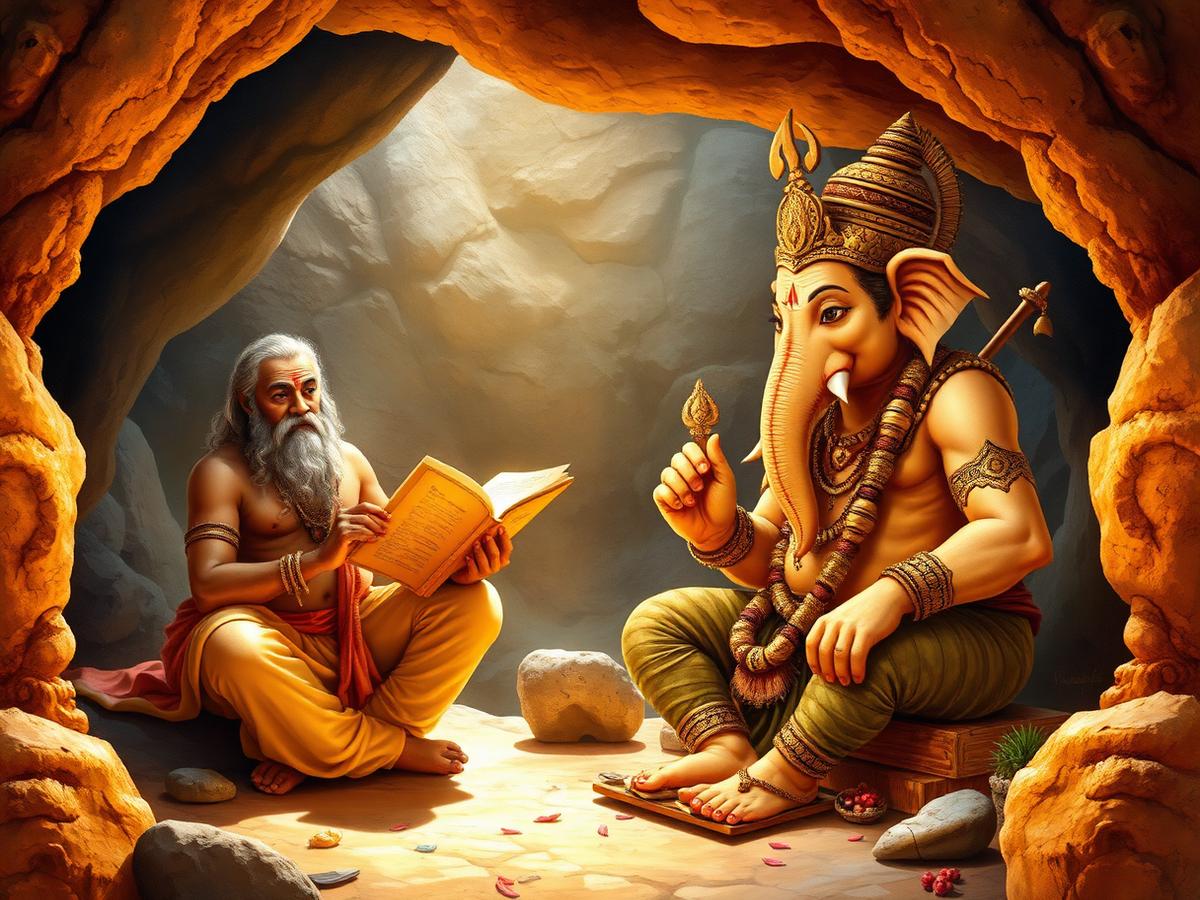
Vyasa dictating the Mahabharata to Ganesha
Vyāsa dictating to Gaṇeśa — the great composition begins

The Mahābhārata (Sanskrit: महाभारत — "the great story of the Bhāratas") is the longest epic poem ever composed — roughly 100,000 verses, four times the combined length of the Iliad and Odyssey. Tradition holds that Vyāsa composed it and Gaṇeśa wrote it down with his broken tusk.

On the surface it is the story of a war — the cataclysmic conflict between the Pāṇḍavas and the Kauravas at Kurukṣetra. Beneath that, it is an inquiry into every dimension of life: kingship, friendship, exile, betrayal, devotion, grief, governance, and the soul.

It is called the "encyclopedia of dharma" because every situation a human being can face is somewhere in its pages. As the epic itself declares: "what is here may be found elsewhere; what is not here is nowhere."
Chapter I

The Eighteen Parvas

Eighteen books, eighteen days of war, eighteen chapters of the Gītā — the sacred number repeats.

1

Ādi Parva

The Beginning

Genealogies, the births of the Pandavas and Kauravas, and the seeds of conflict.

2

Sabhā Parva

The Assembly Hall

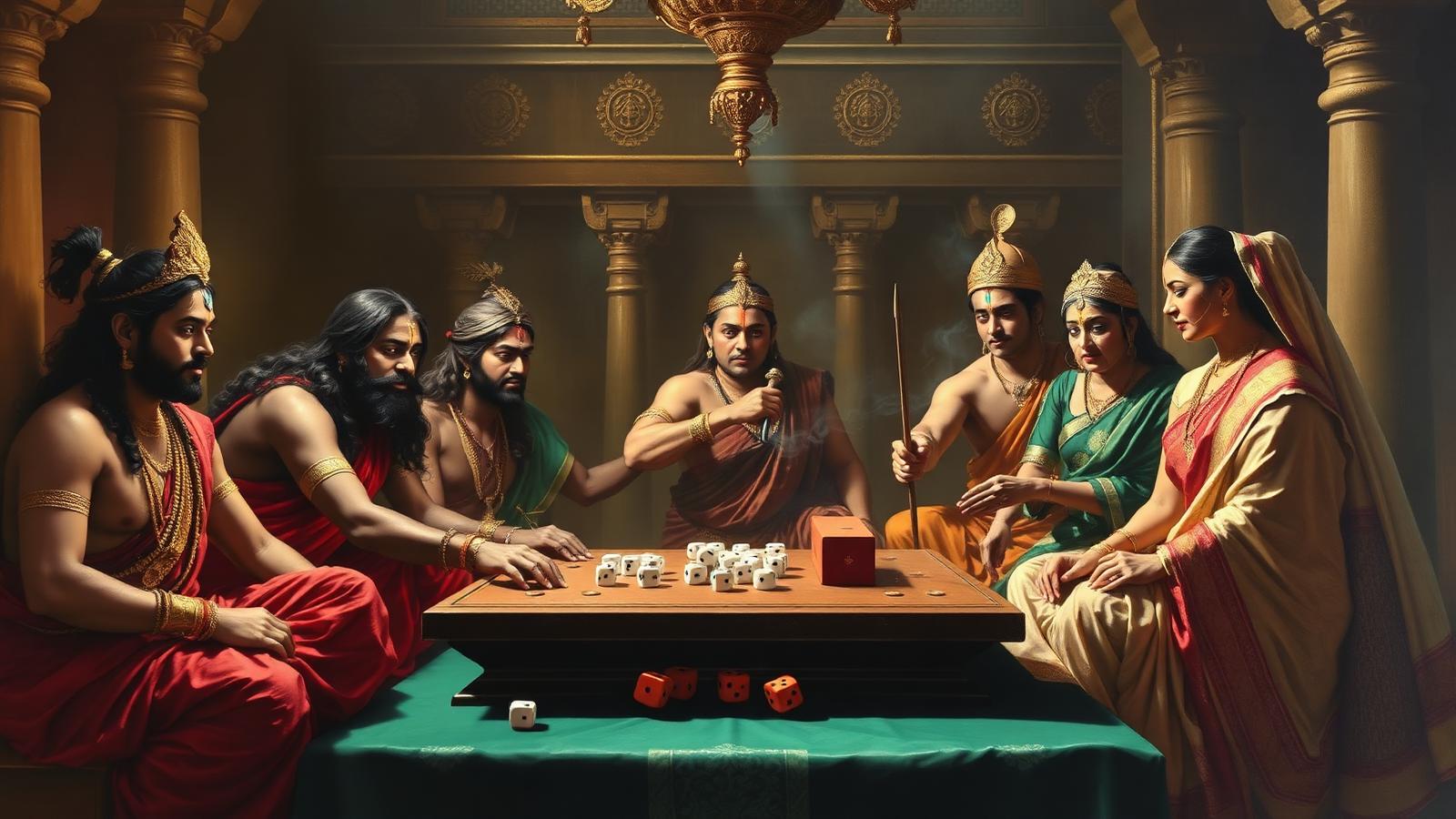
The fateful game of dice, the disrobing of Draupadi, and the loss of the kingdom.

3

Vana (Āraṇya) Parva

The Forest

Twelve years of exile, rich with sub-stories — Nala-Damayanti, Savitri, Yaksha-praśna.

4

Virāṭa Parva

The Year in Disguise

The Pandavas live incognito at King Virata's court; Arjuna as Brihannala.

5

Udyoga Parva

Preparations

Diplomacy, alliances, and Krishna's failed peace embassy. War becomes inevitable.

6

Bhīṣma Parva

Bhishma's Command

The first ten days of war — and the eternal song of the Bhagavad Gītā.

7

Droṇa Parva

Drona's Command

The terrible deaths of Abhimanyu and Drona; the war turns darker.

8

Karṇa Parva

Karna's Command

The tragic hero leads, and falls at Arjuna's arrow.

9

Śalya Parva

Shalya's Command

The final day; Bhima's duel with Duryodhana ends the Kuru line.

10

Sauptika Parva

The Night Raid

Ashvatthama's vengeful slaughter of the sleeping Pandava camp — the war's darkest hour.

11

Strī Parva

The Women

Gandhari, Kunti and Draupadi walk the battlefield amid the slain — the cost of victory.

12

Śānti Parva

Peace

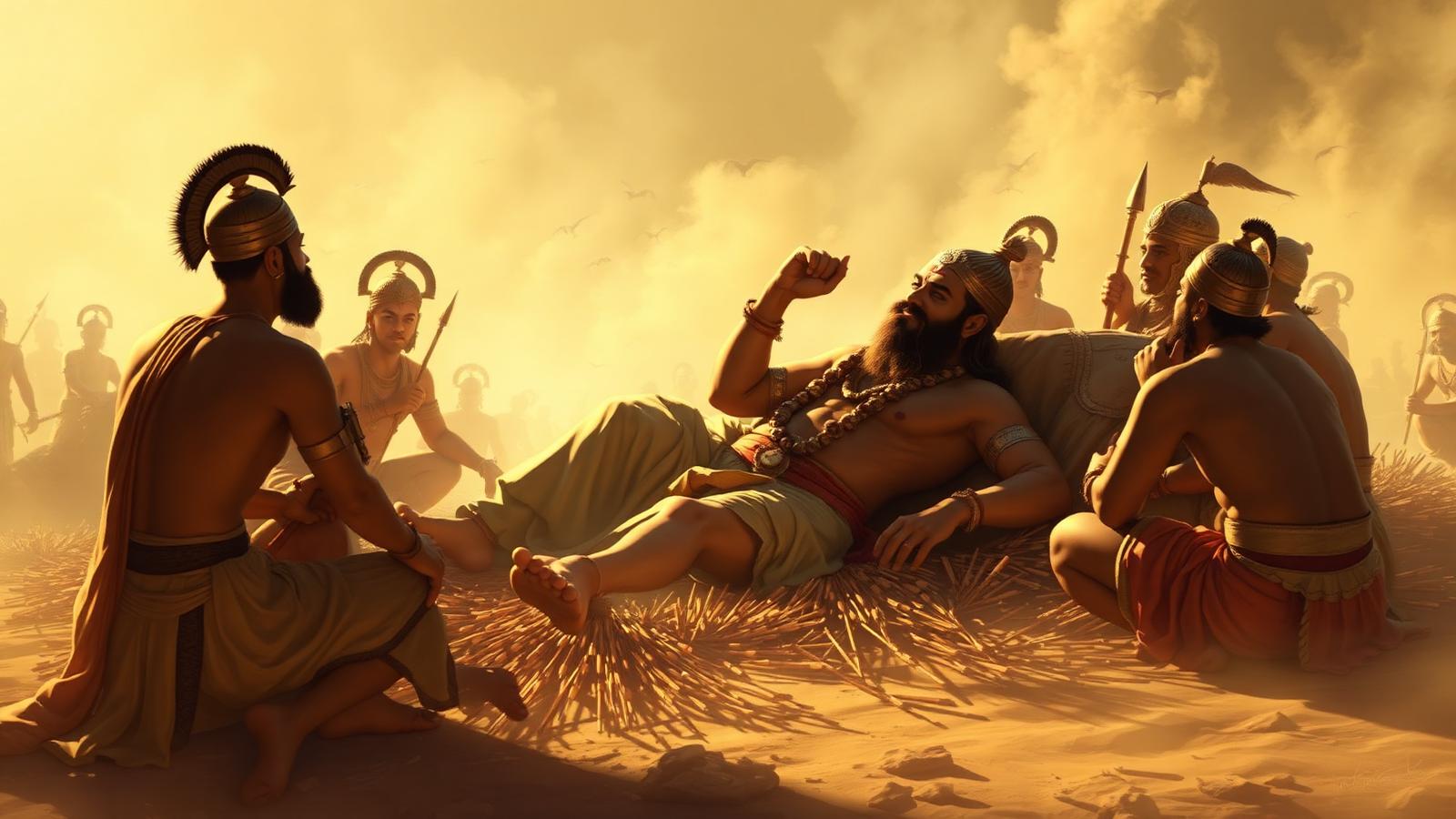
Bhishma, from his bed of arrows, teaches Yudhishthira on dharma, governance and moksha.

13

Anuśāsana Parva

Further Instruction

Bhishma's deeper teachings on ethics, gifts, ancestors, and right conduct.

14

Āśvamedhika Parva

The Horse Sacrifice

Yudhishthira's Ashvamedha and Krishna's Anu-Gītā to Arjuna.

15

Āśramavāsika Parva

The Hermitage

Dhritarashtra, Gandhari and Kunti retire to the forest and pass on.

16

Mausala Parva

The Iron Club

Destruction of the Yadava clan; Krishna's departure from the world.

17

Mahāprasthānika Parva

The Great Journey

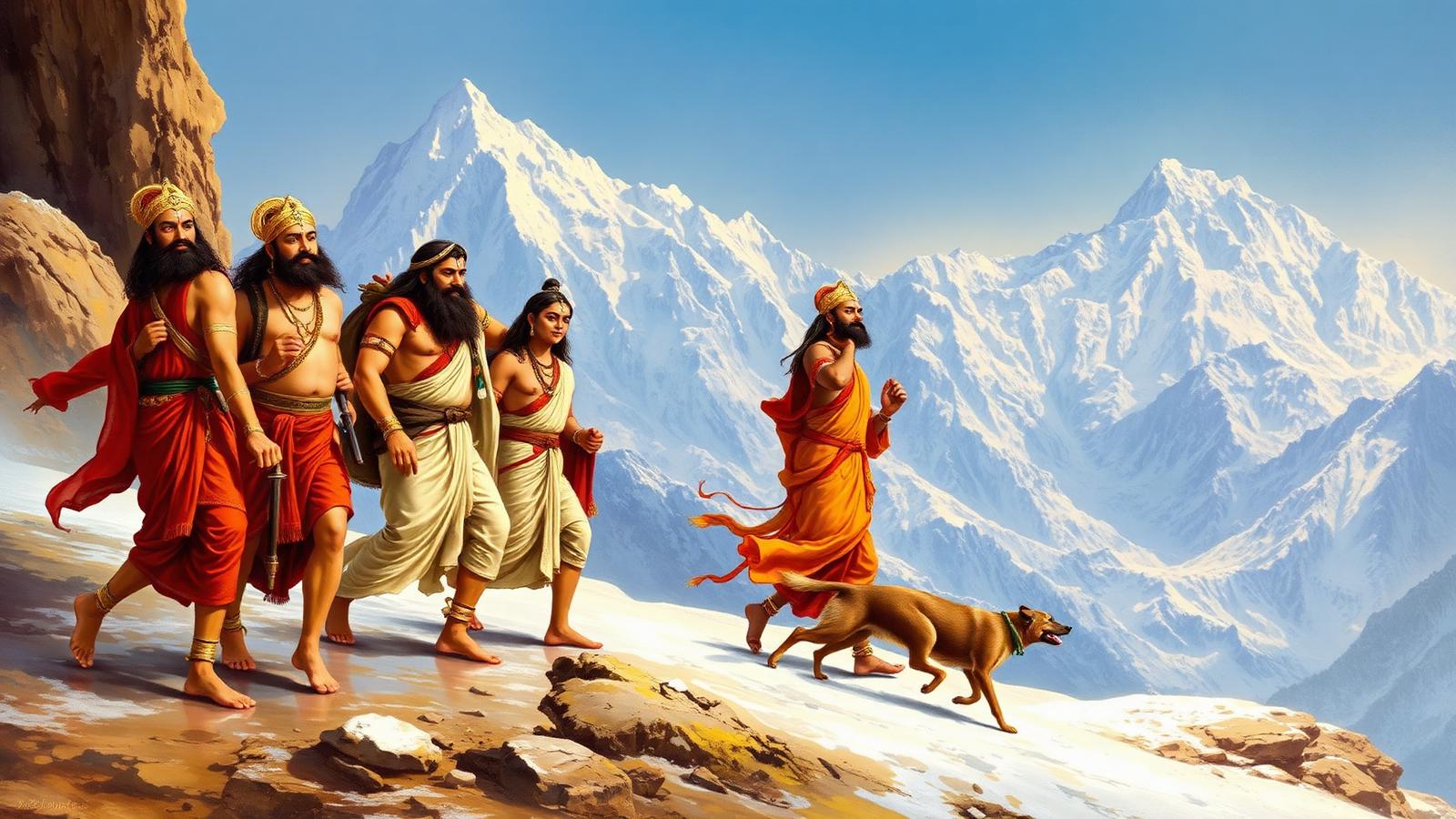
The Pandavas and Draupadi walk toward the Himalayas — one by one they fall.

18

Svargārohaṇa Parva

Ascent to Heaven

Yudhishthira's final test, the vision of heaven and hell, and the resolution of all karma.

Chapter II

A World of Heroes & Shadows

No one is wholly good, no one wholly evil — every soul is a battlefield.

युधिष्ठिर

Yudhiṣṭhira

Dharma-rāja

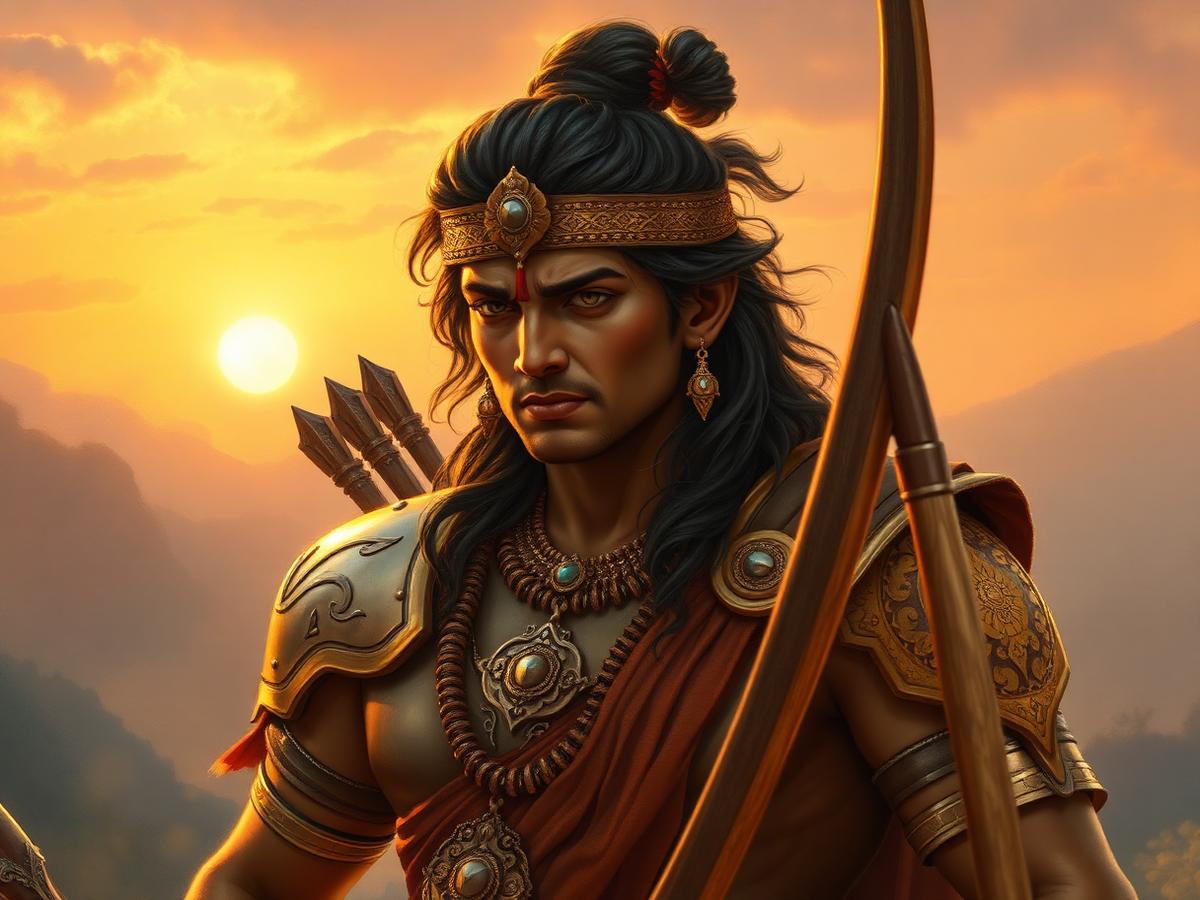
The eldest Pandava — son of Dharma himself. His unwavering truth is also his fatal weakness.

अर्जुन

Arjuna

The Peerless Archer

Son of Indra, beloved of Krishna, the warrior to whom the Bhagavad Gītā was sung.

भीम

Bhīma

Son of the Wind

Mighty and fierce — keeper of the terrible vows against the Kauravas.

द्रौपदी

Draupadī

Pāñcālī · Yajñasenī

Born of fire, queen of the five, voice of righteous fury whose dishonour ignites the war.

श्रीकृष्ण

Kṛṣṇa

Pūrṇāvatāra

The complete avatar of Vishnu — charioteer, statesman, teacher, friend and the soul of the epic.

कर्ण

Karṇa

The Tragic Hero

Son of Sūrya, abandoned at birth, friend of Duryodhana — generosity, talent and a wounded fate.

भीष्म

Bhīṣma

The Terrible Vow

Grandsire of both armies; chose celibacy and silent loyalty above all — and paid the price.

व्यास

Vyāsa

Author & Witness

The composer of the epic — and himself a character, the silent grandfather of the entire lineage.

दुर्योधन

Duryodhana

Adharma Embodied

Eldest Kaurava — proud, jealous, refusing even "a needle's point" of land. The shadow that called forth the storm.

The fateful game of dice in the Sabha

Sabhā Parva · The Turning Point

The Game of Dice

In a single afternoon, Yudhiṣṭhira loses his kingdom, his brothers, himself, and finally Draupadī. When she is dragged into the assembly, her question silences the elders: "When you had already lost yourself, what right had you to wager me?" No one answers. Bhīṣma stays silent. Karṇa speaks cruelly. Krishna's unseen grace becomes her only refuge.

कस्य पूर्वं पराजैषीः — आत्मानं माम् उत ॥

"Whom did you lose first — yourself, or me?" — Draupadī's question. The war is born in this moment.

Chapter III

The Living Themes

A mirror in which every age has recognised itself.

Dharma in Grey

Unlike the Ramayana's clear light, the Mahabharata shows dharma as complex, contextual and tragic. Every right choice has a cost.

Karma & Consequence

Every action ripens. The war is the harvest of countless seeds — vows kept too long, insults left unanswered, silences that became thunder.

Family & Betrayal

Cousins killing cousins, gurus fighting students, fathers losing sons — the epic's deepest grief is that the enemy is always kin.

The Horror of War

Eighteen days, eighteen akshauhinis destroyed. The Mahabharata refuses to glorify war — it shows the women weeping over the slain.

Rāja-Dharma

The Śānti Parva is the ancient world's greatest treatise on governance — justice, taxation, statecraft, and the loneliness of the king.

The Inner Battle

Kurukṣetra is also dharmakṣetra — the field within. The real war is between dharma and adharma in every human heart.

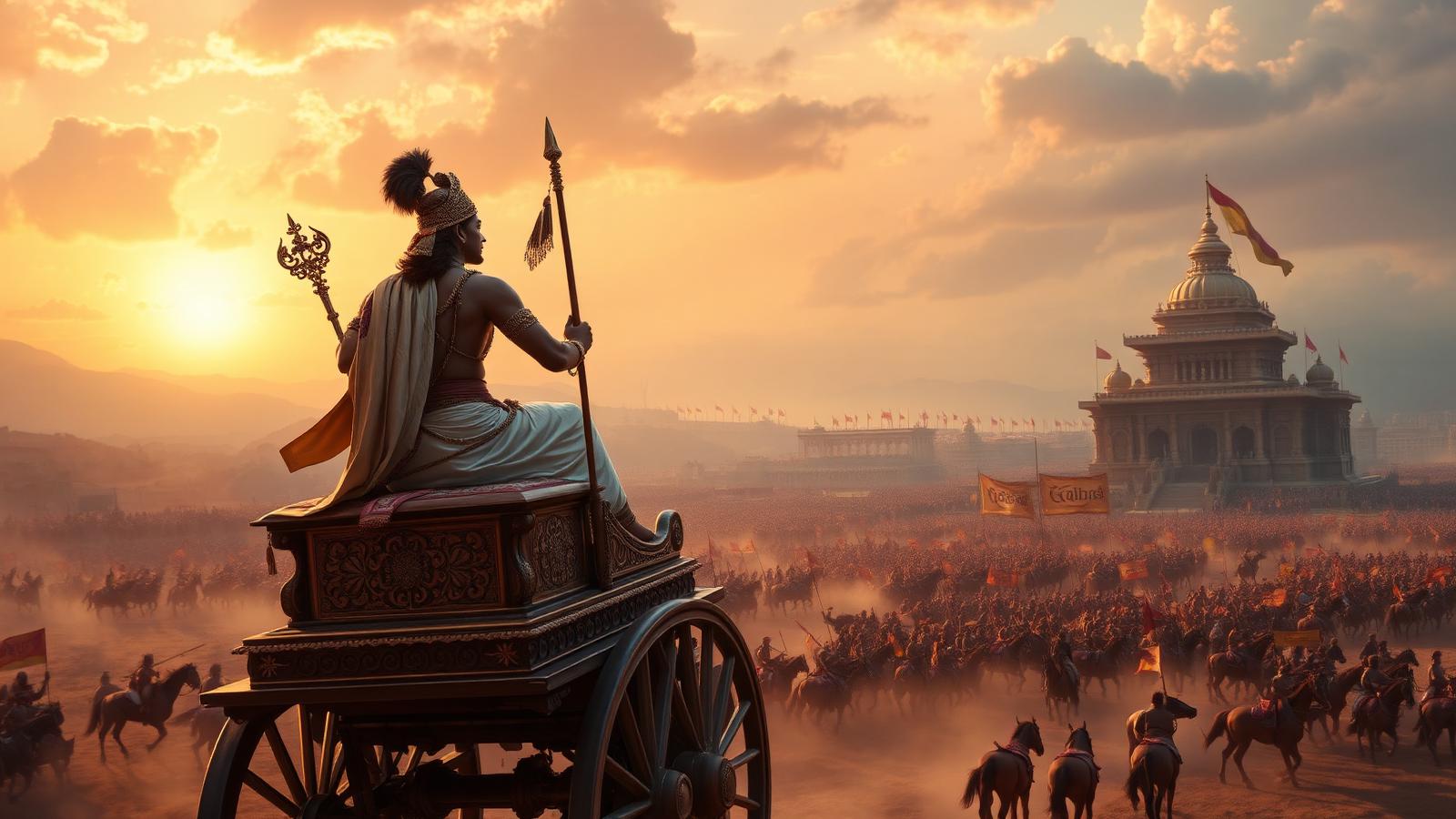
Karna — the tragic hero
Karṇa — son of the Sun, abandoned at birth

Karṇa Parva · The Tragic Hero

The Man Born for Sorrow

Karṇa is perhaps the most beloved tragic figure in all literature. Son of Sūrya and Kunti, set afloat as an infant, raised by a charioteer, cursed by his guru, denied by his birth-mother — and yet generous to the last, never breaking a promise, never refusing a request.

His loyalty to Duryodhana, his only friend in the world, places him on the side of adharma — and seals his fate. When his chariot wheel sinks into the earth and Arjuna's arrow finds him, even Krishna acknowledges the nobility of his fall.

Iconic Episodes

Moments That Shaped Civilization

॥ ॐ ॥

Sabhā Parva

The Game of Dice

Loaded dice in the hand of Shakuni; Yudhishthira loses everything — kingdom, brothers, wife. Draupadi's question echoes through the ages: 'Whom did you lose first — yourself or me?'

Vana Parva

The Yakṣa-praśna

By a forbidden lake, a Yaksha tests Yudhishthira with the great riddles. 'What is the greatest wonder?' — 'Day after day men die, yet the living believe they will live forever.'

Bhīṣma Parva

The Bhagavad Gītā

On the first day, Arjuna casts down his bow. Krishna lifts him with the Song of the Lord — the eternal teaching at the heart of the epic.

Droṇa Parva

Abhimanyu in the Chakravyūha

The sixteen-year-old son of Arjuna enters the wheel-formation he could enter but never leave — and falls fighting seven maharathis alone. War loses its innocence.

Karṇa Parva

The Wheel of Karṇa

His chariot wheel sinks into the earth — every curse arriving at once. Arjuna's arrow falls. Even Krishna weeps for the tragic hero of the Sun.

Sauptika Parva

The Night Raid

Ashvatthama, blessed by Shiva, butchers the sleeping camp. Even victory is poisoned. The Pandavas wake to find every son and student slain.

Bhishma on the bed of arrows

Śānti & Anuśāsana Parvas

From the Bed of Arrows

After the war, Bhīṣma lies dying on a bed of arrows, awaiting the auspicious hour. To Yudhiṣṭhira, kneeling before him, he speaks one of the longest discourses in world literature — on kingship, justice, taxation, war, women, ancestors, the nature of the Self and the path to liberation. The Mahābhārata's heart is not the battle — it is this quiet teaching after it.

Eternal Verses

Words from the Great Story

॥ ॐ ॥

Mahābhārata · 1.56 (Ādi Parva)

धर्मे चार्थे च कामे च मोक्षे च भरतर्षभ । यदिहास्ति तदन्यत्र यन्नेहास्ति न तत्क्वचित् ॥

"On dharma, artha, kāma and mokṣa — what is found here is found elsewhere; what is not here, is nowhere."

Yakṣa-praśna · Vana Parva

अहन्यहनि भूतानि गच्छन्ति यममन्दिरम् । शेषाः स्थावरमिच्छन्ति किमाश्चर्यमतः परम् ॥

"Day after day, beings depart to the abode of death. Yet those who remain wish to live forever. What greater wonder is there?"

Bhīṣma's Teaching · Śānti Parva

अहिंसा परमो धर्मः धर्म हिंसा तथैव च ।

"Non-violence is the highest dharma — and so is righteous protection. Wisdom is knowing which moment asks which."

Bhagavad Gītā 4.7 · Bhīṣma Parva

यदा यदा हि धर्मस्य ग्लानिर्भवति भारत । अभ्युत्थानमधर्मस्य तदात्मानं सृजाम्यहम् ॥

"Whenever dharma declines and adharma rises, O Bhārata, I manifest Myself."

Mahāprasthānika & Svargārohaṇa

The Great Journey Home

After ruling for many years, the Pāṇḍavas and Draupadī set out on foot toward the Himalayas. One by one — Draupadī, Sahadeva, Nakula, Arjuna, Bhīma — they fall and depart, each for some subtle imperfection. Only Yudhiṣṭhira walks on, accompanied by a stray dog who refuses to leave him.

At the gates of heaven Indra invites him in — but not the dog. Yudhiṣṭhira refuses heaven itself rather than abandon a companion. The dog is revealed as Dharma himself. It is the final, perfect lesson of the epic: righteousness is loyalty to the smallest soul, not to your own salvation.

The Pandavas walking to the Himalayas
The final ascent — and the loyal dog who was Dharma

Chapter IV

A Universe of Retellings

From medieval bards to modern novelists — every generation has rewritten the Mahābhārata.

Modern Retelling20th CE

C. Rājagopālācārī

His one-volume English prose retelling brought the epic to millions of modern readers.

Critical Translation21st CE

Bibek Debroy

Complete unabridged English translation of the Critical Edition — a contemporary milestone.

Mr̥tyuñjaya — Karna's Voice20th CE

Shivājī Sāwant

Marathi novel from Karna's perspective — re-humanising the tragic hero.

Transcreation20th CE

P. Lāl

Verse-by-verse English transcreation of all 18 Parvas — a labour of decades.

Yuganta20th CE

Iravati Karve

A landmark anthropological reading of the epic's characters as real, fallible human beings.

Global Stage20th CE

Peter Brook

His nine-hour stage and film 'The Mahābhārata' carried the epic to a global audience.

Chapter V

Living Legacy

Performing Arts

Kathakali, Yakṣagāna, Kūṭiyāṭṭam and folk theatres across India keep the Mahābhārata alive on stage every night.

Popular Culture

B. R. Chopra's TV series stopped trains in India in 1988. Today, Amar Chitra Katha, films and graphic novels keep retelling the saga.

Ethics & Leadership

Business schools, law and ethics courses around the world now study the Mahābhārata for its unrivalled depth on moral decision-making.

॥ ॐ ॥

The Eternal Mirror of Human Dharma

The Mahābhārata is not a story of war but an inquiry into what it means to live rightly in a flawed world. It shows that dharma is not simple — it demands courage, wisdom, sacrifice and the acceptance of imperfect outcomes. Even gods and heroes struggle; victory itself can bring sorrow; and the true battle is always within.