The 18 Mahapuranas

Smṛti · Aṣṭādaśa Mahāpurāṇāni

The 18 Mahapuranas

॥ अष्टादश महापुराणानि ॥

Vyāsa's great storehouse of cosmologies, avatars and divine play — the vivid, living heart of popular Sanātana Dharma.

॥ ॐ ॥

18

Mahāpurāṇas

~400,000

Total Verses

Vyāsa

Composed by

300 BCE–1000 CE

Period

Introduction

The Great Narratives

॥ ॐ ॥
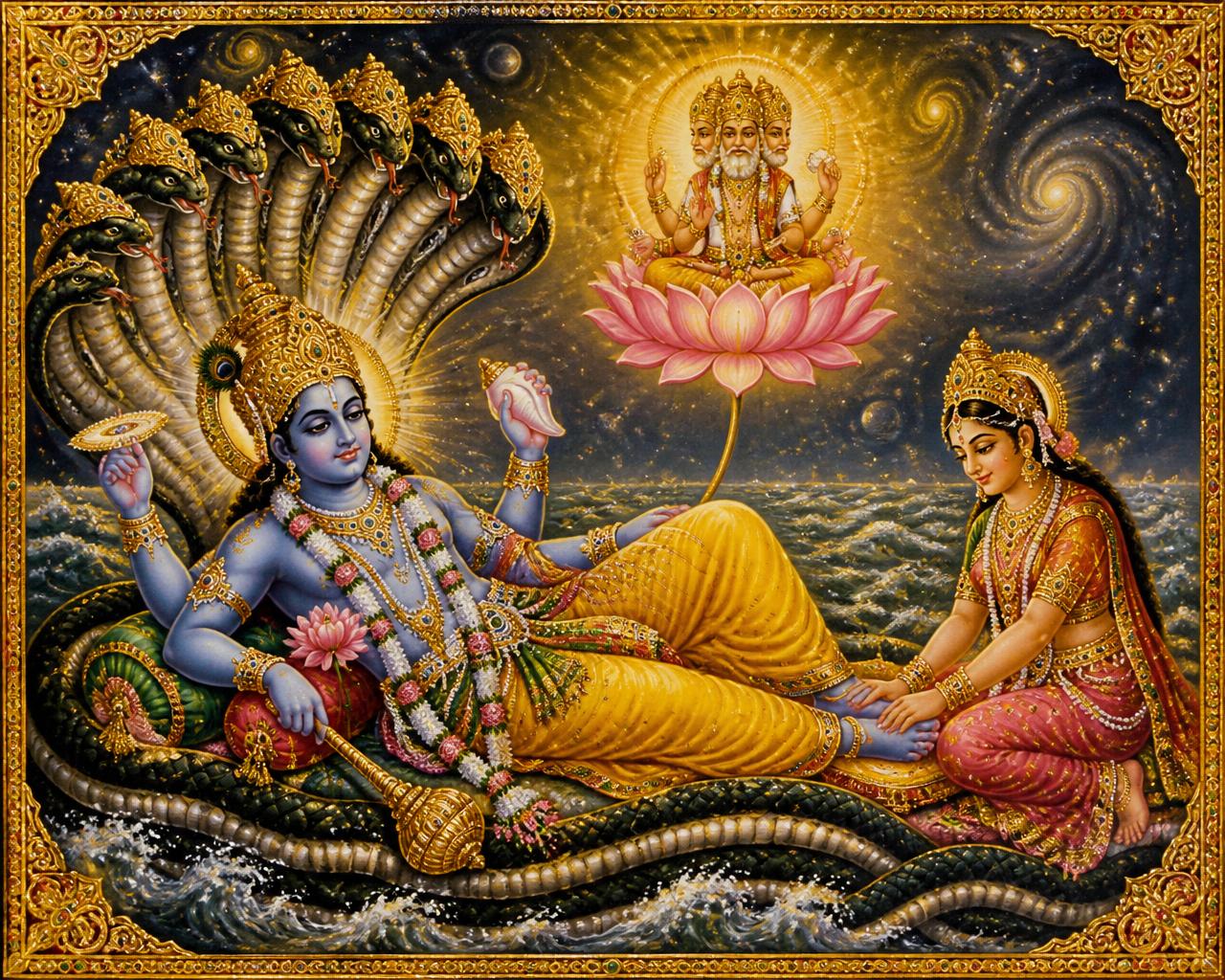
Vishnu reclining on Shesha
Viṣṇu Anantaśāyī — the dreamer from whom the cosmos is born

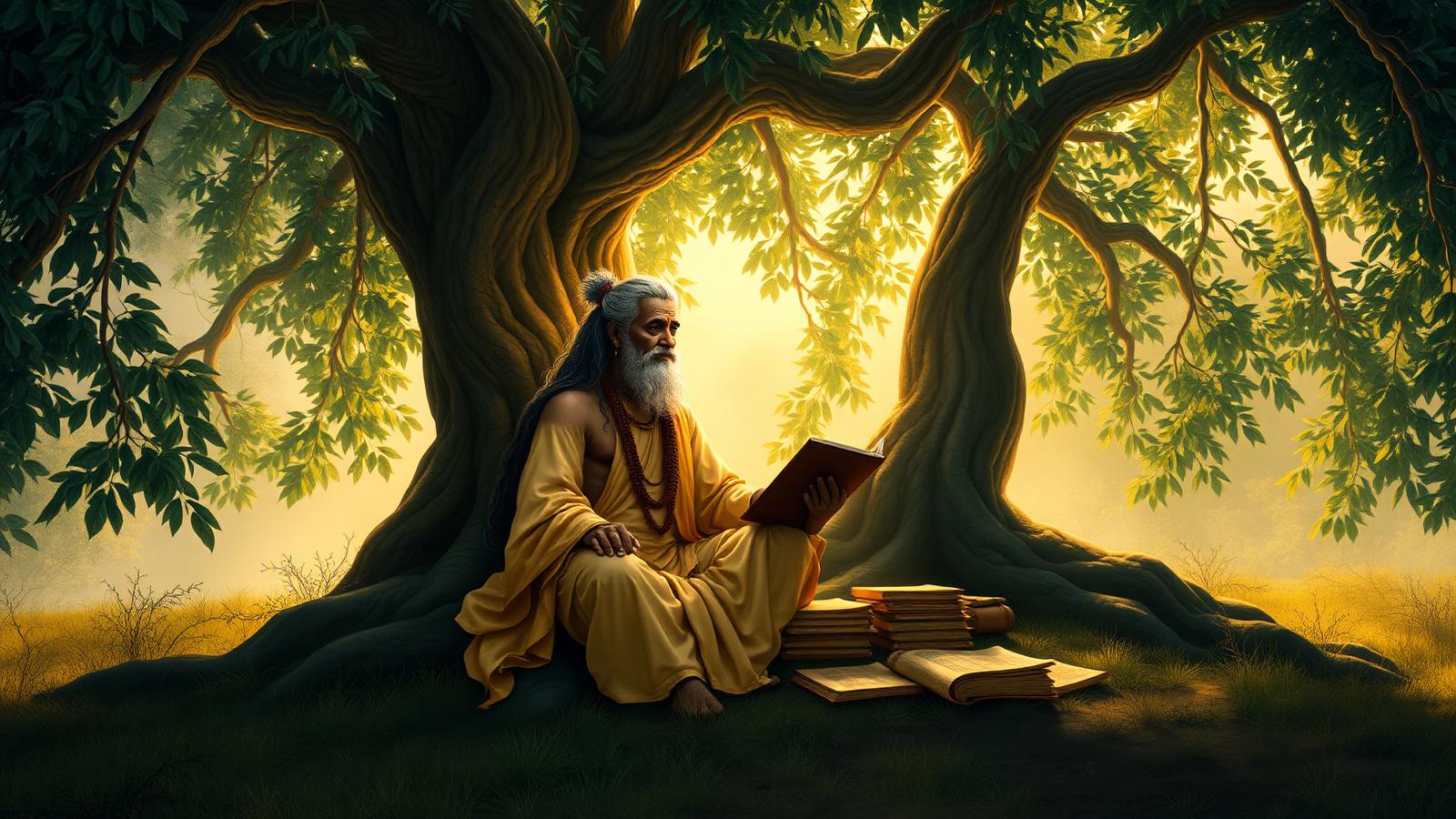
The Mahāpurāṇas (महापुराण — "great ancient narratives") are eighteen vast encyclopedic texts traditionally compiled by Vyāsa. They belong to Smṛti — "what is remembered" — and bring the metaphysical insights of the Vedas and Upaniṣads to life through story, dialogue and song.

Cosmology, mythology, theology, ethics, sacred geography, ritual, astrology, medicine, dynastic chronicles — almost every dimension of classical Hindu civilization finds its first systematic expression here.

Where the Vedas chant and the Upaniṣads inquire, the Purāṇas narrate. They are the bridge between the highest philosophy and the living devotion of millions — the reason the Divine has, in India, always also been a story.
Chapter I

The Five Marks (Pañca-lakṣaṇa)

Every classical Purāṇa is said to treat five subjects — the architecture of a complete cosmic narrative.

Sarga

Primary Creation

The first unfolding of the universe from the unmanifest.

Pratisarga

Re-creation

Cycles of creation and dissolution — kalpas without end.

Vaṃśa

Divine Genealogies

Lineages of gods, sages and the primordial fathers.

Manvantara

Ages of Manu

The fourteen Manus, each presiding over a cosmic epoch.

Vaṃśānucarita

Royal Dynasties

Chronicles of kings — bridging myth and remembered history.

Chapter II

Eighteen Purāṇas, Three Guṇas

Tradition groups the eighteen into three sets of six, according to the qualities of nature they emphasise.

Sattva · Purity

Sāttvic — toward Viṣṇu

  • Viṣṇu Purāṇa

    One of the oldest and most systematic. Cosmology, the avatars of Vishnu and Prahlāda's devotion.

  • Bhāgavata Purāṇa

    The crown jewel — life and teachings of Krishna, the Rāsa Līlā, the highest expression of bhakti.

  • Nāradīya Purāṇa

    Sage Nārada's discourses on devotional practice and the glory of Hari.

  • Garuḍa Purāṇa

    Famed for its description of the afterlife, funeral rites and the soul's journey.

  • Padma Purāṇa

    Five sections glorifying many deities and sacred geographies — stories of Viṣṇu and Lakṣmī.

  • Varāha Purāṇa

    Centered on Viṣṇu's Boar incarnation — the rescue of the earth from cosmic waters.

Rajas · Activity

Rājasic — toward Brahmā

  • Brahmā Purāṇa

    Glorifies Brahmā, the creator; rich in genealogies and pilgrimage descriptions.

  • Brahmāṇḍa Purāṇa

    The 'cosmic egg' Purāṇa — vast cosmographic accounts of the universe.

  • Brahmavaivarta Purāṇa

    Emphasises the divine play of Krishna and Rādhā — beloved in certain Vaiṣṇava traditions.

  • Mārkaṇḍeya Purāṇa

    Contains the Devī Māhātmya — the foundational scripture of Goddess worship.

  • Bhaviṣya Purāṇa

    The 'Purāṇa of the future' — prophecies, vratas and the cycle of ages.

  • Vāmana Purāṇa

    Centered on Viṣṇu's Dwarf incarnation and the humbling of King Bali.

Tamas · Stillness & Power

Tāmasic — toward Śiva

  • Śiva Purāṇa

    Extensive accounts of Śiva's forms, līlās, the marriage to Pārvatī and the origin of the Liṅga.

  • Liṅga Purāṇa

    Profound treatment of Śiva as the formless Liṅga — pillar of light beyond Brahmā and Viṣṇu.

  • Skanda Purāṇa

    The longest of all Purāṇas — focuses on Kārtikeya but ranges across pilgrimage and regional lore.

  • Agni Purāṇa

    An encyclopedic Purāṇa — rituals, astrology, medicine, architecture, grammar and poetics.

  • Matsya Purāṇa

    The story of the great deluge, Manu and the Fish avatar that saved the Vedas.

  • Kūrma Purāṇa

    Viṣṇu as the Tortoise — supporting Mount Mandara during the churning of the cosmic ocean.

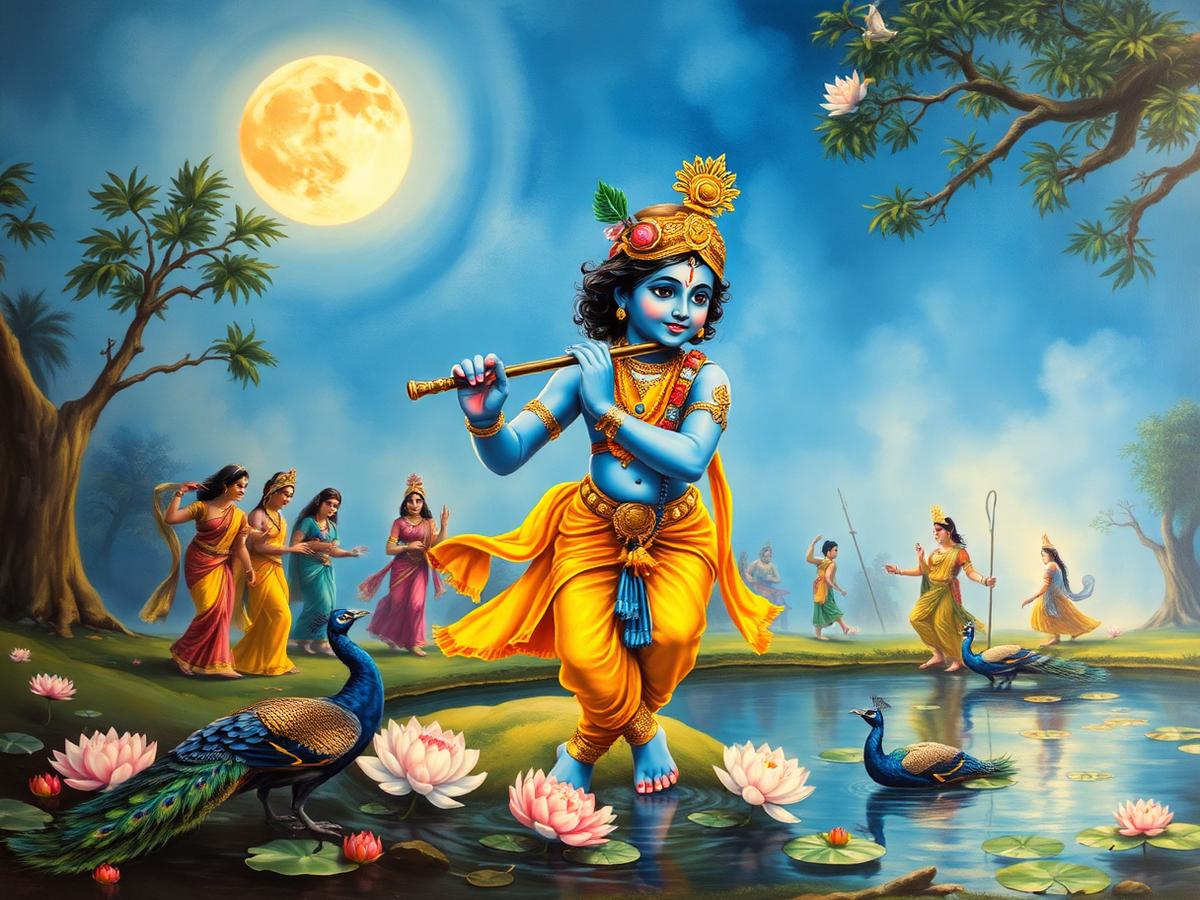
Krishna's Rasa Lila in Vrindavan

Bhāgavata Purāṇa · The Crown Jewel

The Song of Krishna

The Śrīmad Bhāgavatam — 18,000 verses across twelve cantos — is the most beloved of all Purāṇas. Its tenth canto narrates the life of Krishna: the butter-thief, the flute-player, the friend of Arjuna, the lifter of Govardhana, the dancer of the Rāsa. It is Vedānta in the language of love.

कृष्णस्तु भगवान्स्वयम् ॥

"Kṛṣṇa Himself is Bhagavān." — Bhāgavata 1.3.28

Chapter III

The Living Themes

A handful of ideas the Purāṇas return to again and again — the spine of popular Hinduism.

Avatāra — God Descends

The Puranas are the great storybook of divine incarnations — the ten avatars of Viṣṇu, the līlās of Śiva, the manifestations of the Goddess.

Bhakti — The Heart's Path

Where the Upaniṣads taught knowledge, the Purāṇas teach love. Surrender to a personal deity becomes the most accessible road to liberation.

Cosmic Time

Kalpas, yugas, manvantaras — the Purāṇas hold humanity inside time-scales of breathtaking immensity, where worlds rise and fall like waves.

Sacred Geography

Every river, mountain and town is given its māhātmya — its story. India itself becomes a living scripture, walkable as pilgrimage.

Inclusive Theology

One Purāṇa exalts Viṣṇu, another Śiva, another the Devī — yet each affirms the others. Many forms; one supreme reality.

Story as Teaching

Prahlāda's faith, Dhruva's resolve, Sāvitrī's love, Hariścandra's truth — moral wisdom transmitted not as rule but as tale.

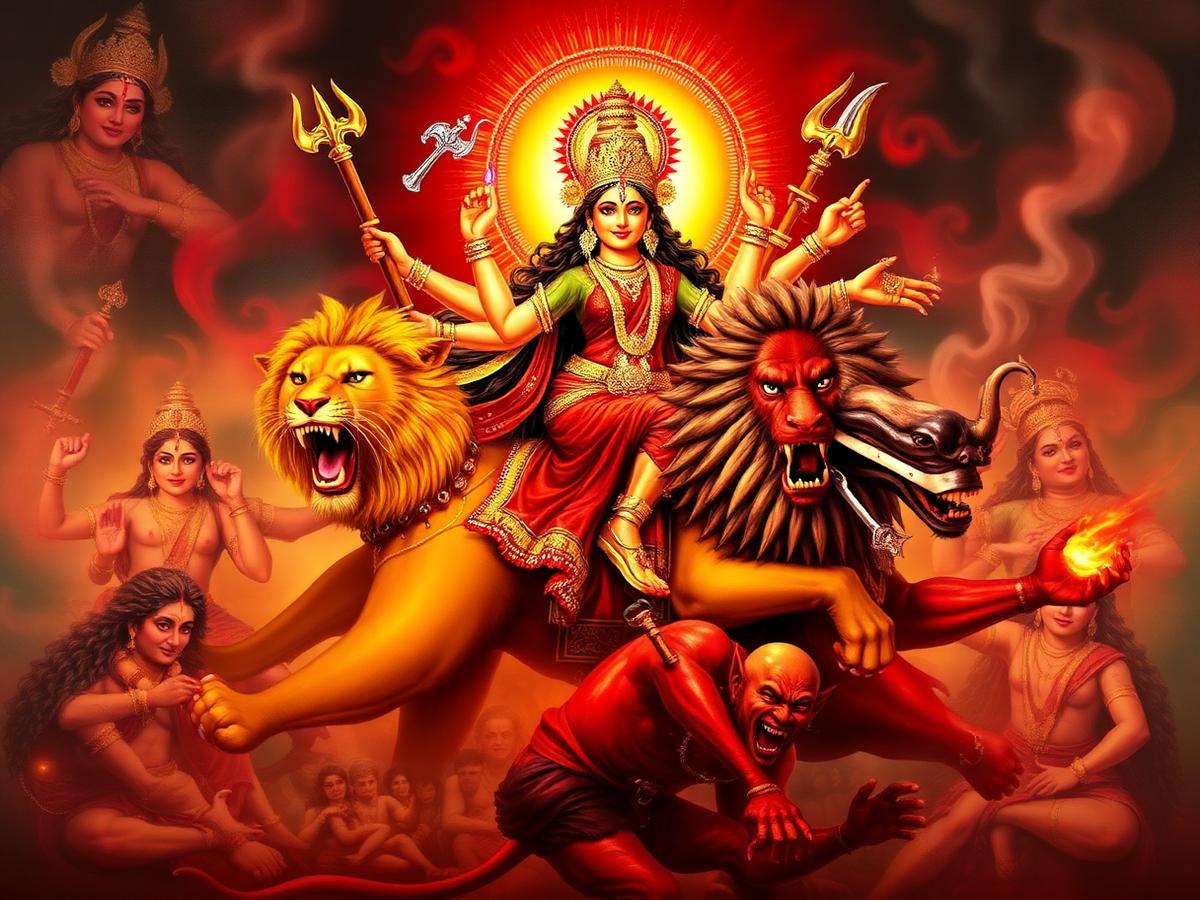
Durga slaying Mahishasura
Mahiṣāsuramardinī — the Goddess who ends adharma

Mārkaṇḍeya · Devī Māhātmya

The Glory of the Goddess

Embedded in the Mārkaṇḍeya Purāṇa, the Devī Māhātmya ("Saptaśatī" — 700 verses) is the foundational scripture of Śākta devotion. In three great battles, the Goddess defeats Madhu-Kaiṭabha, Mahiṣāsura and Śumbha-Niśumbha — restoring cosmic order each time.

Chanted in countless homes and temples during Navarātri, its hymns to Caṇḍī, Durgā and Mahālakṣmī are among the most powerful in the entire tradition.

Iconic Episodes

Stories That Shape a Civilization

॥ ॐ ॥

Bhāgavata Purāṇa

The Rāsa Līlā

Krishna's autumn-night dance with the gopīs of Vrindavan — the soul of bhakti, where every devotee finds herself called into the circle.

Mārkaṇḍeya · Devī Māhātmya

Durgā Slays Mahiṣāsura

When even the gods cannot stand against the buffalo-demon, their combined radiance becomes the Goddess — Durgā astride her lion, ending adharma in three great battles.

Śiva Purāṇa

The Pillar of Light

Brahmā and Viṣṇu argue over who is supreme. A pillar of fire appears with no beginning, no end — and reveals itself as Śiva, the Liṅga beyond all forms.

Viṣṇu Purāṇa

Prahlāda's Devotion

A demon's son who would not stop loving Viṣṇu — saved from every torture by the very name on his lips. The story that defined the meaning of bhakti.

Matsya Purāṇa

The Great Deluge

Manu saves a tiny fish that grows immense; it warns him of the coming flood and tows his ark of seeds and sages to the next world-age.

Garuḍa Purāṇa

The Soul's Journey

A vast and sobering account of what awaits after death — read in many homes during the rites for the departed, as a teaching for the living.

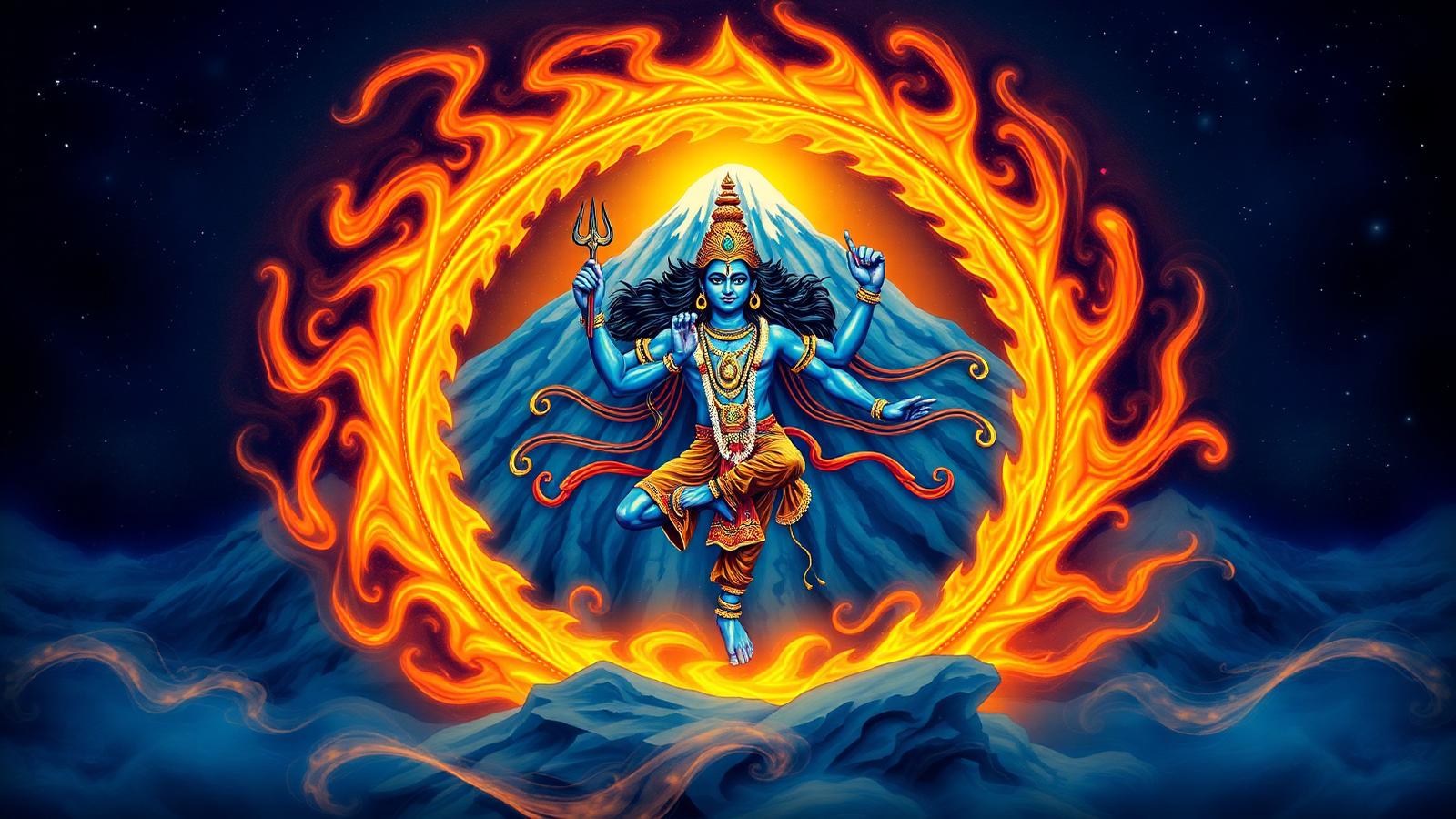
Shiva as Nataraja in the ring of fire

Śiva & Liṅga Purāṇas

The Cosmic Dancer

The Śaiva Purāṇas reveal Śiva as both the auspicious householder of Kailāsa with Pārvatī and Gaṇeśa, and the formless absolute — the Liṅga of light without beginning or end. He dances the universe into being and dissolves it again in the same breath.

Eternal Verses

Words from the Great Stories

॥ ॐ ॥

Bhāgavata Purāṇa · 1.2.6

स वै पुंसां परो धर्मो यतो भक्तिरधोक्षजे । अहैतुक्यप्रतिहता ययात्मा सुप्रसीदति ॥

"The highest dharma for humanity is that by which loving devotion to the Lord arises — causeless and uninterrupted — by which the soul finds perfect peace."

Devī Māhātmya · 5.9 (Mārkaṇḍeya)

या देवी सर्वभूतेषु शक्तिरूपेण संस्थिता । नमस्तस्यै नमस्तस्यै नमस्तस्यै नमो नमः ॥

"To the Goddess who abides in all beings as power — to Her, to Her, to Her, salutations, salutations."

Śiva Purāṇa · Vidyeśvara Saṃhitā

शिवाय गुरवे नमः ।

"Salutations to Śiva, the eternal teacher — auspicious, formless, the source of all knowledge."

Viṣṇu Purāṇa · 1.22.53

यतो विश्वं समुद्भूतं येन जातं च तिष्ठति । यस्मिन् सर्वाणि भूतानि स देवः परमेश्वरः ॥

"From whom the universe arises, by whom it is sustained, in whom all beings exist — He is the supreme Lord."

Living Transmission

Kathā — Story as Worship

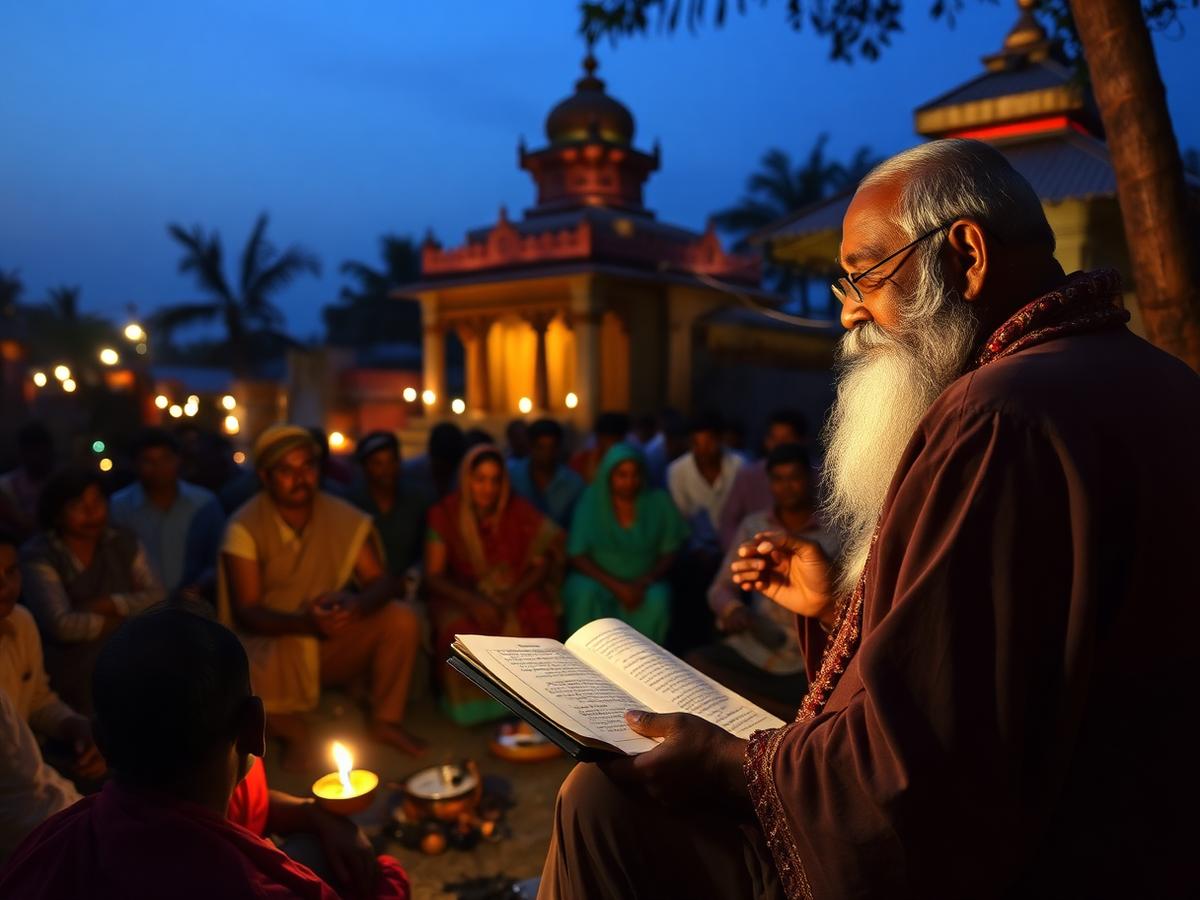
For two thousand years, the Purāṇas have travelled not only on palm-leaf but on the tongue. In temple courtyards, village squares and household halls, the kathā-vācaka opens the text by lamplight — Bhāgavata Saptāha, Rāmkathā, Śiva-mahāpurāṇa — and the listeners step into worlds of god and demon, sage and king.

It is here that philosophy becomes participation. To hear the story is the devotion.

A storyteller reciting katha by lamplight
An evening kathā outside the village temple

Chapter IV

A Living Legacy

Festivals

Diwali, Holi, Navarātri, Janmāṣṭamī, Śivarātri — every great festival draws its story from the Purāṇas.

Temple Traditions

The rituals, iconography and sthala-māhātmyas of nearly every major temple are described in a Purāṇa.

Kathā & Pravacana

Public storytelling — Rāmkathā, Bhāgavata Saptāha — keeps the Purāṇas alive in millions of homes every year.

Pilgrimage

The Tīrtha-māhātmya sections turned India into one continuous sacred geography — Kāśī, Mathurā, Rāmeśvaram, Badrīnāth.

Arts & Performance

Temple sculpture, classical dance, Kathākaḷi, Yakṣagāna, Pichwai painting — all draw their narratives from Purāṇic story.

Popular Hinduism

What most Hindus believe and celebrate today comes — directly or indirectly — through the Purāṇas.

॥ ॐ ॥

The Storytelling Heart of Sanātana Dharma

The eighteen Mahāpurāṇas remind us that the Divine is not distant but playfully present in every corner of existence — and that the highest wisdom can be conveyed through the simple, profound act of telling a sacred story.