The Upanishads

Vedānta · Upaniṣadaḥ

The Upanishads

॥ उपनिषदः ॥

Sitting near the teacher — the philosophical heart of the Vedas, where ritual gives way to direct realisation of the Self.

॥ ॐ ॥

108

Total Upaniṣads

10–13

Principal (Mukhya)

800–200 BCE

Composed

Vedānta

Tradition

Introduction

The End of the Vedas

॥ ॐ ॥

The word Upaniṣad (उपनिषद्) comes from upa (near), ni (down), and ṣad (to sit) — "sitting down close to the teacher" for the intimate, transformative teaching that cannot be shouted across a hall.

The Upaniṣads are the concluding portion of the Vedas, known collectively as Vedānta — both "the end of the Vedas" and "the essence of the Vedas." Where the Saṃhitās praise, the Brāhmaṇas ritualise, and the Āraṇyakas contemplate, the Upaniṣads realise.

They ask the deepest questions a human being can ask: Who am I? What is real? What survives death? What is the relation of the soul to God? And they answer not with dogma but with dialogues, parables and pointing instructions — urging every seeker to discover the truth for themselves.
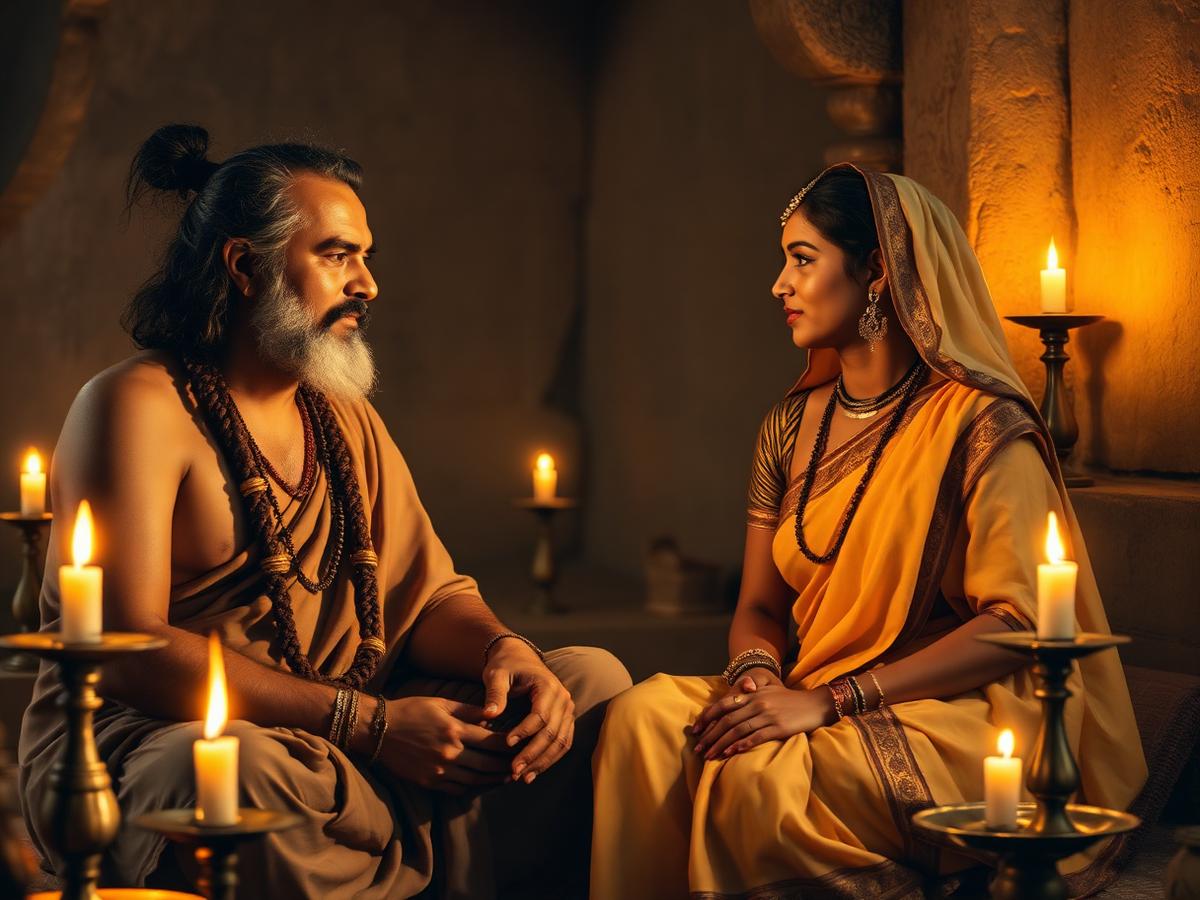
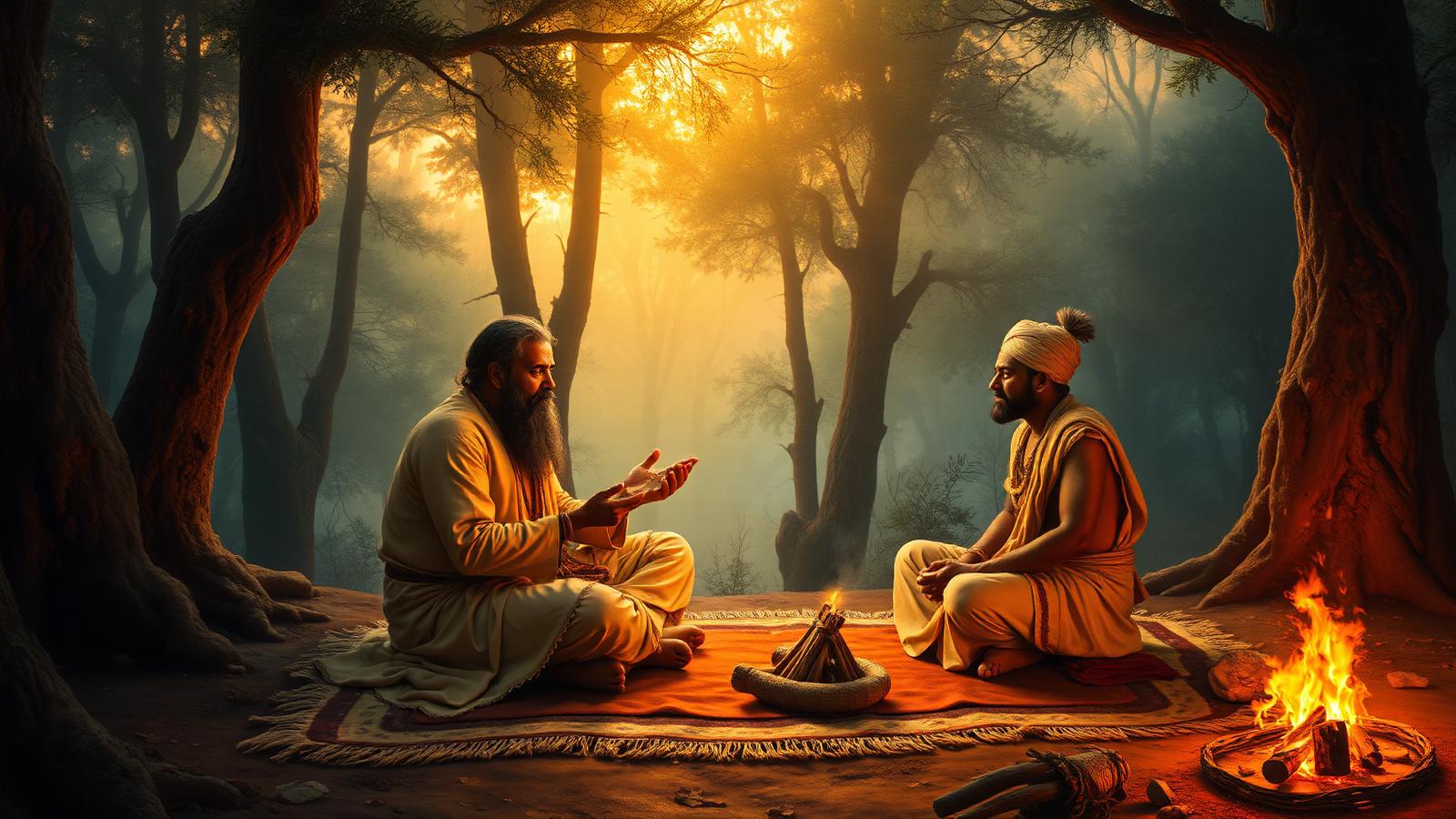
Yajnavalkya and Maitreyi in dialogue
Yājñavalkya and Maitreyī — the householder's deepest dialogue

Chapter I

The Four Mahāvākyas

The "great statements" — each one a complete teaching, drawn from one of the four Vedas.

Chāndogya 6.8.7

तत् त्वम् असि

Tat Tvam Asi

Thou art That.

Bṛhadāraṇyaka 1.4.10

अहं ब्रह्मास्मि

Ahaṃ Brahmāsmi

I am Brahman.

Aitareya 3.1.3

प्रज्ञानं ब्रह्म

Prajñānaṃ Brahma

Consciousness is Brahman.

Māṇḍūkya 2

अयम् आत्मा ब्रह्म

Ayam Ātmā Brahma

This Self is Brahman.

Chapter II

The Principal Upaniṣads

Of 108 traditional Upaniṣads, these ten to thirteen form the philosophical foundation on which all Vedānta is built.

1

Īśā Upaniṣad

Yajurveda

18 verses · seeing the Divine in all that moves and rests.

2

Kena Upaniṣad

Samaveda

By whose power do mind and senses move? Brahman is the power behind perception.

3

Kaṭha Upaniṣad

Yajurveda

Nachiketa and Yama · the path beyond death; the chariot of body and Self.

4

Praśna Upaniṣad

Atharvaveda

Six disciples, six questions — on creation, prāṇa and the supreme Puruṣa.

5

Muṇḍaka Upaniṣad

Atharvaveda

Higher knowledge (parā vidyā) and lower knowledge (aparā vidyā) — and two birds on one tree.

6

Māṇḍūkya Upaniṣad

Atharvaveda

Twelve verses · Om and the four states of consciousness — waking, dream, deep sleep, turīya.

7

Taittirīya Upaniṣad

Yajurveda

The five sheaths (kośas) of the Self and the famous śīkṣā-vallī on right conduct.

8

Aitareya Upaniṣad

Rigveda

Creation from the Self · Prajñānam Brahma — Consciousness is Brahman.

9

Chāndogya Upaniṣad

Samaveda

Long and rich · Uddālaka to Śvetaketu: Tat Tvam Asi — Thou art That.

10

Bṛhadāraṇyaka Upaniṣad

Yajurveda

Longest and oldest · Yājñavalkya, Maitreyī and King Janaka · Ahaṃ Brahmāsmi.

11

Śvetāśvatara Upaniṣad

Yajurveda

Theistic Vedānta · Rudra-Śiva as the supreme Brahman, beyond all dualities.

12

Kauṣītaki Upaniṣad

Rigveda

Prāṇa as the unifying life-principle; the journey of the soul after death.

13

Maitrī Upaniṣad

Yajurveda

Later text · weaves Sāṃkhya, Yoga and meditation into Vedāntic insight.

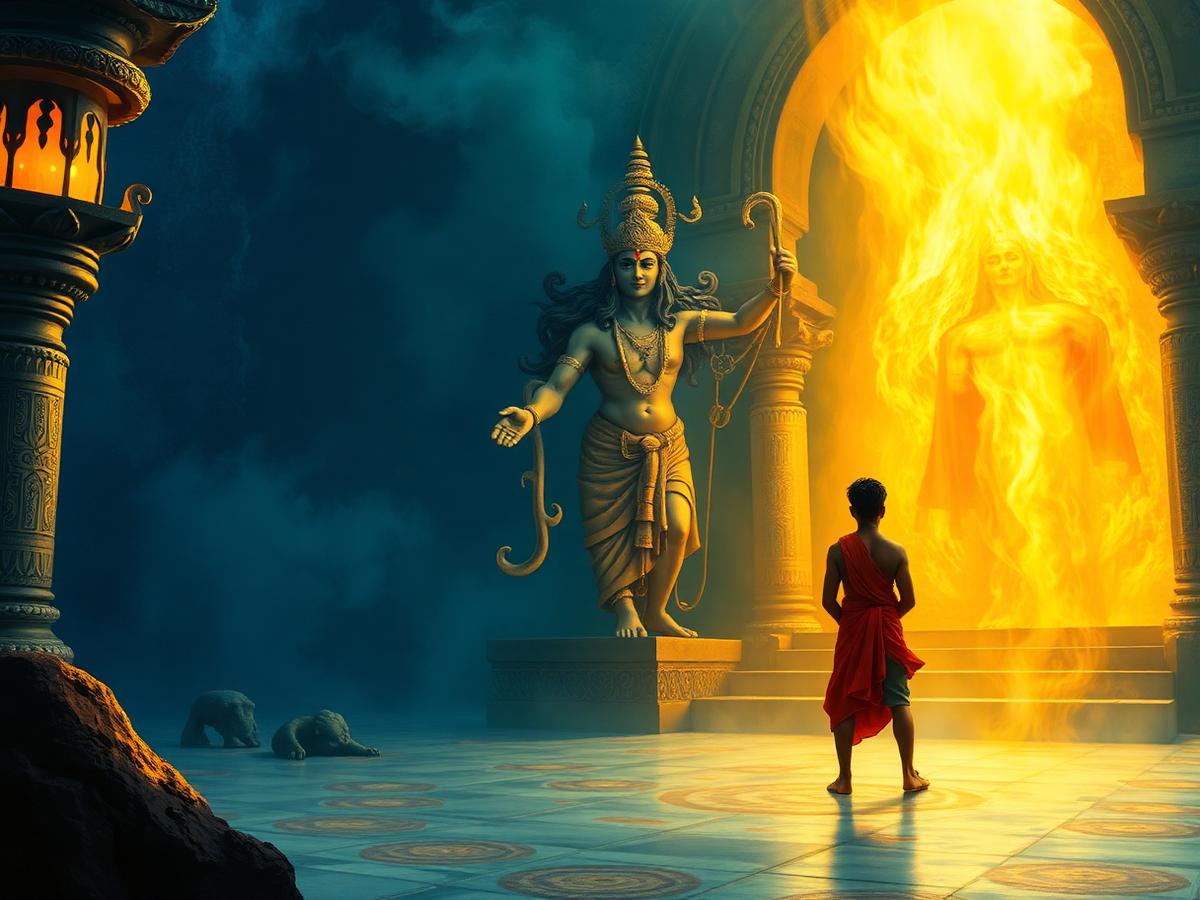
Nachiketa before Yama, lord of death

Kaṭha Upaniṣad · The Door Beyond Death

Nachiketa Asks Yama

A boy waits three days at the gate of Death. When Yama appears, he offers Nachiketa three boons. The boy asks for reconciliation with his father, the secret of the sacred fire — and then the question that breaks every kingdom: "When a man dies, some say he is, some say he is not. Teach me. Which is true?"

श्रेयश्च प्रेयश्च मनुष्यमेतस्तौ सम्परीत्य विविनक्ति धीरः ॥

"The good (śreyas) and the pleasant (preyas) approach a man. The wise examine both — and choose the good."

Chapter III

The Central Teachings

A handful of insights — and the entire history of Indian philosophy unfolds from them.

Ātman = Brahman

The individual Self is not a fragment of Brahman — it is Brahman. The whole Vedānta turns on this single, world-shaking recognition.

Four States of Consciousness

Waking (jāgrat), dream (svapna), deep sleep (suṣupti), and the silent fourth — turīya, pure awareness itself.

Karma, Rebirth, Mokṣa

Action binds; knowledge liberates. Mokṣa is not a destination after death but the direct seeing of what was always already true.

Two Knowledges

Aparā vidyā — rituals, sciences, even the Vedas as texts. Parā vidyā — direct realisation of the Imperishable. Only the second sets one free.

The Five Kośas

Sheaths of food, breath, mind, intellect and bliss — peeled away one by one to reveal the Self that is not any of them.

Om — The Sound of Brahman

A · U · M and the silence after — the audible image of the Absolute. To meditate on Om is to meditate on Brahman itself.

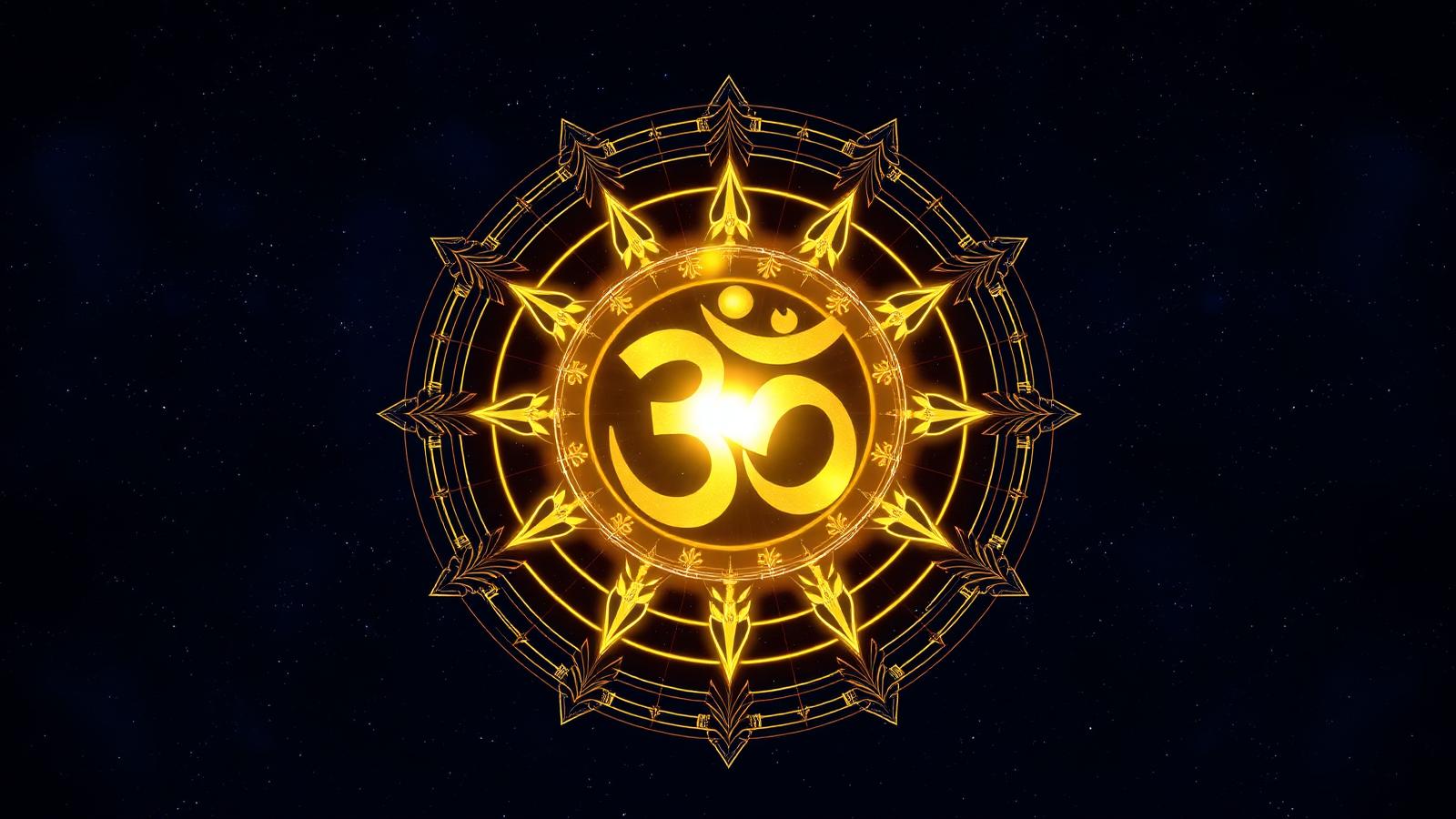
The sacred Om symbol with four states of consciousness
Om — A, U, M and the silence after

Māṇḍūkya Upaniṣad · Twelve Verses

Om & the Four States

The shortest of the principal Upaniṣads is also called the seed of them all. In twelve verses it maps Om onto the four states of consciousness — A as waking, U as dream, M as deep sleep — and the silence after the sound as turīya, pure awareness.

Gauḍapāda's Kārikā on the Māṇḍūkya — and Śaṅkara's commentary on both — became the launching point of classical Advaita Vedānta.

Living Dialogues

Stories That Awaken

॥ ॐ ॥

Kaṭha Upaniṣad

Nachiketa & Yama

A boy of nine, given by his father in anger to Death, refuses every worldly gift Yama offers — empires, music, long life — and asks instead: 'When a man dies, does he exist or not? Teach me that.' Yama relents. The teaching becomes the Kaṭha Upaniṣad.

Chāndogya 6

Tat Tvam Asi

Uddālaka tells Śvetaketu to dissolve salt in water. Where is the salt? Everywhere, though invisible. So too the subtle Self pervades all that is. 'That subtle essence — this whole world has That as its Self. That is the Truth. That is the Self. Tat Tvam Asi.'

Bṛhadāraṇyaka 2.4

Yājñavalkya & Maitreyī

Renouncing the world, the sage offers his wealth to his two wives. Maitreyī asks instead: 'Can wealth give immortality?' 'No.' 'Then what shall I do with it? Teach me what you know.' What follows is one of the deepest dialogues on the Self ever recorded.

Muṇḍaka 3.1

Two Birds on One Tree

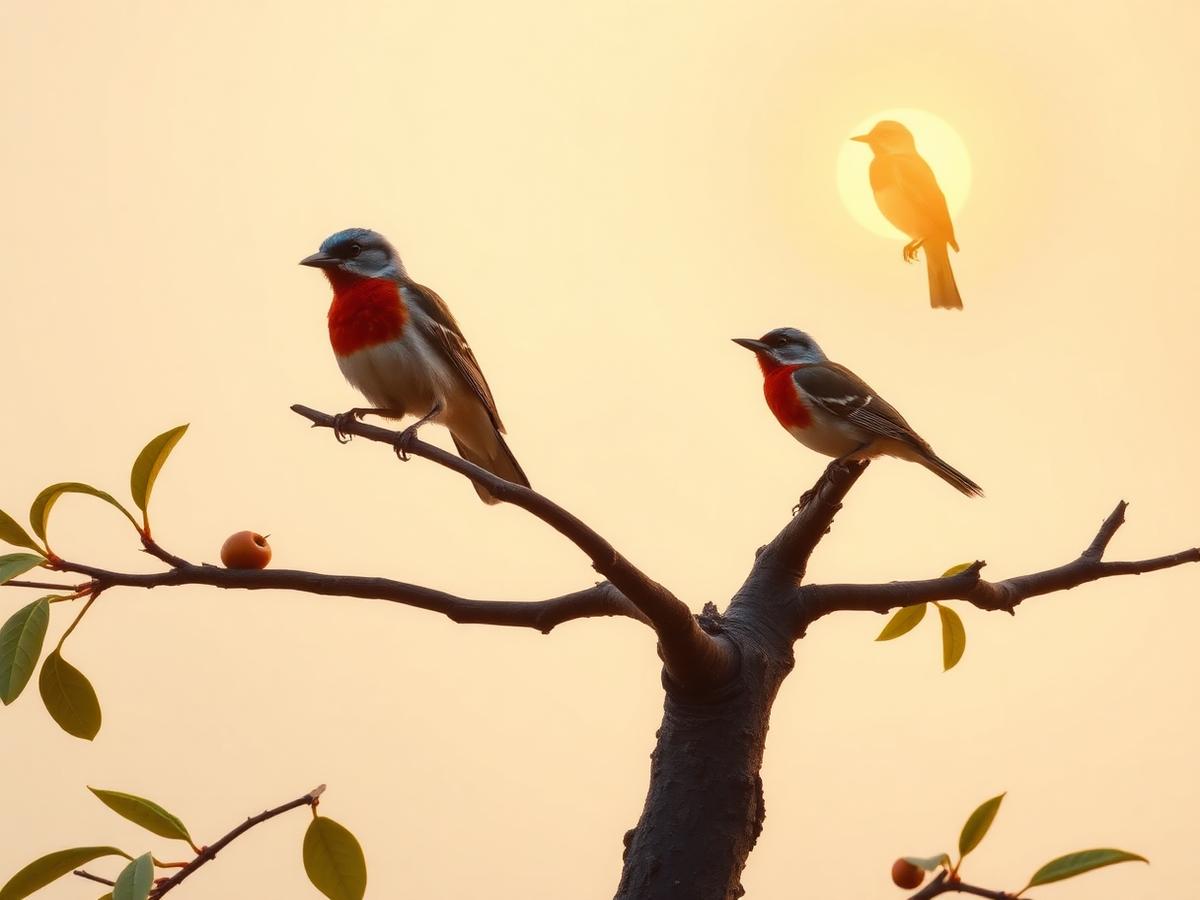
Two birds, ever-companions, perch on the same tree. One eats the sweet and bitter fruit; the other watches without eating. When the first looks up and sees the second — its grief vanishes. The eater is the small self; the watcher is the Self.

Taittirīya 2

The Five Sheaths

The Self is not the body of food. Not the breath. Not the mind. Not even the intellect. It is the bliss within bliss — and beyond even that, the Knower of bliss itself.

Māṇḍūkya

Om and the Fourth

A — waking. U — dream. M — deep sleep. And the silence after Om — turīya, the fourth, which is the Self alone, non-dual, peaceful, auspicious.

Muṇḍaka Upaniṣad · 3.1

Two Birds on One Tree

On a single tree perch two birds, inseparable companions. One eats the sweet and bitter fruit of action. The other watches in silence, eating nothing. When the first, lost in sorrow, looks up and beholds the other — its glory, its lordship — its grief vanishes.

The eater is the individual soul, caught in karma. The watcher is the witness-Self, untouched, eternally free. To remember the second is to be released.

Two birds on one tree — the soul and the Self
The eater and the watcher — one tree, two birds

Eternal Verses

Words from the Forest

॥ ॐ ॥

Īśā Upaniṣad · 1

ईशा वास्यमिदं सर्वं यत्किञ्च जगत्यां जगत् । तेन त्यक्तेन भुञ्जीथा मा गृधः कस्यस्विद्धनम् ॥

"All this — whatever moves in this moving world — is enveloped by the Lord. Enjoy it through renunciation; do not covet anyone's wealth."

Bṛhadāraṇyaka · 1.3.28

असतो मा सद्गमय । तमसो मा ज्योतिर्गमय । मृत्योर्मा अमृतं गमय ॥

"Lead me from the unreal to the real. From darkness to light. From death to immortality."

Kaṭha Upaniṣad · 1.3.14

उत्तिष्ठत जाग्रत प्राप्य वरान्निबोधत । क्षुरस्य धारा निशिता दुरत्यया दुर्गं पथस्तत्कवयो वदन्ति ॥

"Arise! Awake! Approach the great teachers and learn. Sharp as a razor's edge, hard to cross — the wise call this path."

Muṇḍaka · 3.1.6

सत्यमेव जयते नानृतं सत्येन पन्था विततो देवयानः ।

"Truth alone triumphs, never untruth. By truth is laid the divine path along which the sages ascend."

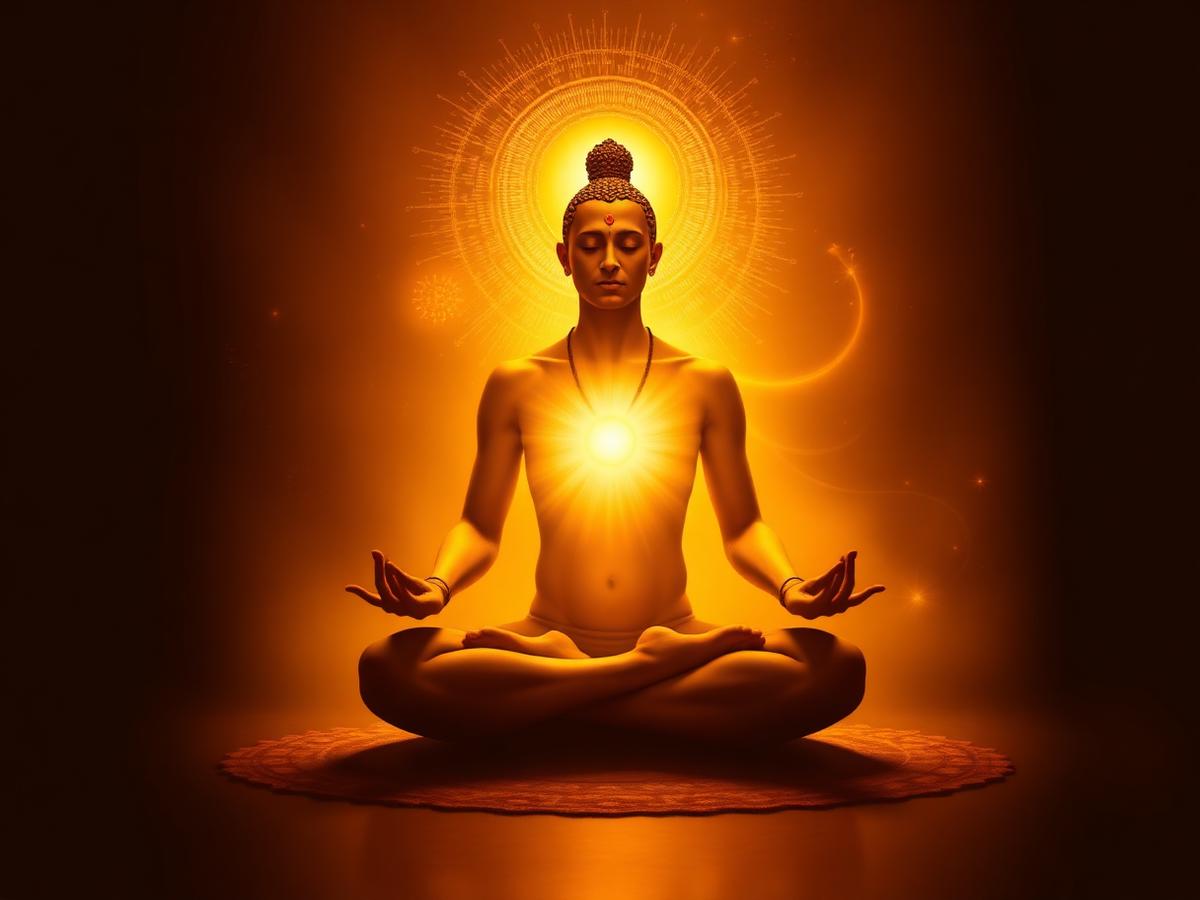
A meditating sage realising the Self within

The Heart of Vedānta

You Are Not What You Think You Are

You are not the body that ages, not the mind that wanders, not the breath that comes and goes. You are the silent Knower in whose light all of these are seen. That is Brahman — infinite, eternal, ever-free — and That is your own true Self.

Chapter IV

Schools & Commentators

One source, many readings — every great Vedāntic teacher returns to the Upaniṣads.

Advaita Vedānta8th CE

Ādi Śaṅkarācārya

Wrote bhāṣyas on the ten principal Upaniṣads — the bedrock of non-dual Vedānta.

Viśiṣṭādvaita11th CE

Rāmānujācārya

Read the same texts as qualified non-dualism — the Self is real, distinct, yet wholly of God.

Dvaita13th CE

Madhvācārya

Insisted on eternal distinction between jīva, jagat and Īśvara — devotion as the path.

Practical Vedānta19th–20th CE

Swami Vivekananda

Brought the Upaniṣads to the modern world — strength, fearlessness, and the divinity of every soul.

Integral Vedānta20th CE

Sri Aurobindo

Translated and re-interpreted the Īśā, Kena and others as a vision of evolutionary consciousness.

Philosophical Translation20th CE

S. Radhakrishnan

His Principal Upaniṣads with Sanskrit, translation and commentary remains a standard reference.

Chapter V

A Global Inheritance

Yoga & Meditation

The Yoga Sūtras, Tantra, and every modern school of meditation rest quietly on Upaniṣadic ground — Self-inquiry, prāṇa, Om, turīya.

Western Thought

Schopenhauer called the Upaniṣads 'the consolation of my life.' Emerson, Thoreau, Yeats and Eliot all drank from them.

Modern Science of Mind

Consciousness studies, the witness in psychotherapy, and contemplative neuroscience all rediscover what the forest sages saw long ago.

Daily Practice

Chanting Om, the śānti pāṭha ('asato mā sadgamaya'), and self-inquiry remain living daily disciplines for millions.

The Gītā's Source

The Bhagavad Gītā is itself a Upaniṣad — distilling the forest teachings into Krishna's song on the battlefield.

Interfaith Resonance

The non-dual heart of the Upaniṣads speaks across traditions — to Sufism, Christian mysticism, Zen and beyond.

॥ ॐ ॥

Tat Tvam Asi — Thou Art That

The Upaniṣads are the inner light of the Vedas — the moment ritual falls silent and the seeker sits down close to the teacher to hear the one thing that matters. Their message has not aged in three thousand years: you are not the limited body-mind, but the infinite, eternal Brahman.